Published: 17 October 2026. The English Chronicle Desk. The English Chronicle Online
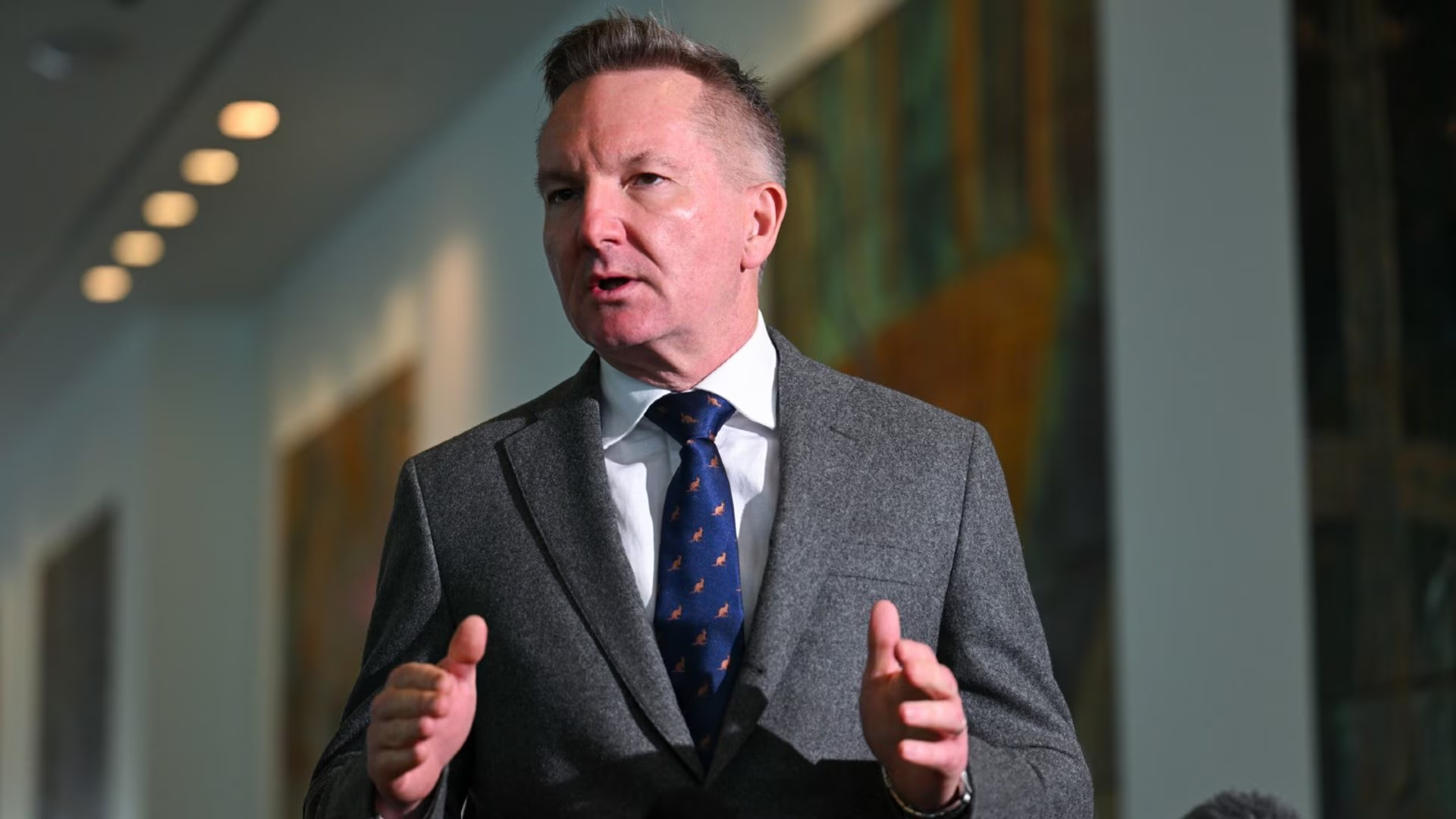
Australia’s mainstream political parties have been warned against adopting populist policies, including strict migration caps and tariffs, as a response to growing public frustration over the cost of living. Mathias Cormann, Australia’s longest-serving finance minister and the current secretary-general of the Organisation for Economic Co-operation and Development (OECD), argues that such measures risk worsening economic pressures rather than addressing the underlying causes of household financial hardship.
Cormann is expected to use a speech to the Centre for Independent Studies on Saturday evening to make the case that stronger productivity, expanded housing supply, sustainable wage growth and lower energy costs offer a more reliable path towards improving living standards. His central message is that political leaders should focus on solving the economic problems driving public dissatisfaction instead of copying the policies promoted by populist movements.
The warning comes as the cost of housing, rising energy bills and concerns about stagnant real incomes continue to influence Australia’s political debate. Many households are struggling to balance essential expenses, while prospective homeowners face the challenge of entering an increasingly expensive property market. Against this backdrop, immigration has become a particularly contentious issue, with some voters viewing population growth as a contributing factor to pressure on housing and public services.

The political consequences are becoming increasingly visible. One Nation, a party that has built much of its platform around opposition to immigration, has gained substantial support since the 2025 federal election. According to the latest Guardian Essential poll cited in the report, the party’s primary vote has reached 25 per cent, putting it ahead of the Coalition on 22 per cent. The figures illustrate the growing appeal of tougher immigration policies among a section of the electorate and the pressure facing Australia’s established political parties.
Cormann’s intervention is directed at the broader political response to that shift. Although his planned speech does not directly name One Nation, he is expected to argue that Labor and the Coalition should resist the temptation to adopt the economic positions of their populist rivals in an effort to win back voters. In his assessment, parties that imitate their competitors risk losing support from both sides of the political spectrum.
His argument is that voters who favour a populist party are unlikely to abandon it simply because a mainstream party adopts similar policies. At the same time, moderate voters may become disillusioned if established parties move away from their traditional positions. The result, he believes, could be a political strategy that weakens mainstream parties without resolving the concerns that made populist alternatives attractive in the first place.
For Cormann, the more effective response is to deliver tangible improvements in people’s daily lives. That means making housing more accessible, reducing pressure from energy prices, supporting growth in real wages and maintaining a credible approach to public finances. Rather than concentrating on policies that appear decisive but may create new economic difficulties, political leaders should demonstrate that they can improve living standards through practical and sustainable measures.
Migration is at the centre of this debate because it touches several interconnected issues, including population growth, labour supply, housing demand and the capacity of public services. Cormann is expected to acknowledge that concern about immigration has become widespread, with more Australians now believing that migration levels are too high than at any point in the past two decades. Housing affordability is among the reasons frequently associated with these concerns.
However, he argues that reducing migration through arbitrary caps would not necessarily solve the problems voters are experiencing. A blanket restriction imposed without considering the needs of different industries could leave employers struggling to recruit workers and place additional pressure on essential services. Hospitals, aged-care facilities, universities and businesses all depend, to varying degrees, on access to workers with appropriate skills and experience.
A more effective approach, in his view, would involve increasing the supply of housing, improving infrastructure, strengthening public services and considering the composition of the migration intake. These measures would allow policymakers to address the pressures associated with population growth while recognising the contribution migrants can make to the economy.
Housing supply is particularly important to the debate. When population growth increases demand for accommodation but construction fails to keep pace, competition for available homes can intensify. Renters may face higher costs, while people hoping to buy a property can find themselves priced out of the market. Restricting migration may reduce one source of demand, but it would not automatically resolve shortages caused by insufficient construction, infrastructure constraints or difficulties in delivering new homes.
Cormann’s position therefore places greater emphasis on expanding the economy’s capacity to accommodate population growth. Better planning, more effective infrastructure investment and a stronger housing pipeline could help reduce pressure on communities while supporting economic activity. The challenge for policymakers is to ensure that population growth is matched by the homes, transport links, healthcare facilities and other services people need.
Research cited in the report also challenges the argument that migration necessarily reduces employment opportunities for people born in Australia. According to OECD research examining Australia’s regions, areas receiving more migrants experienced faster employment growth among Australian-born workers, rather than slower growth. The research also found no measurable effect on their wages.
These findings suggest that migration and employment do not always operate as a simple contest in which newcomers gain jobs at the expense of existing residents. Migrants can increase the supply of labour, but they also contribute to demand for goods and services, establish businesses, fill specialised roles and support industries that depend on a sufficient workforce. Their economic effects can therefore extend beyond the jobs they directly occupy.
The research does not mean that every community experiences population growth in the same way or that migration creates no challenges. Local conditions, the availability of housing and the capacity of infrastructure can influence how population changes affect residents. Instead, the findings underline the importance of examining actual economic outcomes rather than assuming that lower migration will automatically produce better employment and wage results.
An ageing population adds another dimension to the issue. As the proportion of older Australians increases, demand for healthcare, aged care and other essential services is expected to remain significant. At the same time, the number of people of working age becomes increasingly important to the economy’s ability to support those services and maintain public finances.
Cormann is expected to argue that deliberately shrinking the working-age population while promising increased spending on healthcare, care services and defence would create a fundamental contradiction. If fewer workers are available to produce goods and services, pay taxes and meet labour demands, the government could face greater difficulty funding public commitments.
Migration can help support the working-age population, although it is not a complete solution to the challenges of an ageing society. Australia must also consider workforce participation, skills development, productivity, training and the long-term sustainability of public services. The broader question is how the country can maintain an adequately skilled workforce while ensuring that population growth does not outstrip the capacity of housing and infrastructure.
Cormann is also expected to challenge the use of tariffs as a response to economic frustration. Tariffs, including those imposed by United States President Donald Trump and proposed by One Nation, are often presented as a way to protect domestic industries from overseas competition. However, they can increase the cost of imported goods and materials, creating additional expenses for businesses and consumers.
For Australian farmers, miners and builders, higher costs for equipment, materials and other inputs could make production more expensive. Businesses may then pass some of those costs on to customers, putting further pressure on household budgets. Measures intended to protect domestic economic activity could therefore have the unintended consequence of increasing the prices people pay.
Cormann is also sceptical of proposals that promise quick economic relief through tariffs, migration caps or state banks. He argues that these approaches do not address the fundamental challenge of improving the economy’s ability to produce goods and services efficiently. Without stronger productivity, efforts to increase incomes or reduce costs may struggle to deliver lasting improvements.
Productivity refers broadly to how efficiently labour, capital, technology and other resources are used to produce economic output. When productivity improves, businesses can potentially produce more with the resources available, creating opportunities for stronger real wages, more competitive prices and sustainable economic growth. Productivity gains do not automatically guarantee that every household will benefit equally, but they can provide a stronger foundation for rising living standards.
For Australia, improving productivity could involve better infrastructure, investment in technology, more effective competition, workforce training and reforms that help businesses operate efficiently. Policymakers would also need to consider whether housing, energy and transport costs are making it harder for workers and businesses to participate fully in the economy.
The political challenge is translating those long-term objectives into visible improvements for households already under pressure. Productivity reforms can take time to deliver results, while increases in rent, electricity bills and everyday expenses can affect families immediately. Governments therefore face the difficult task of responding to urgent cost-of-living concerns while implementing policies that strengthen the economy over the longer term.
Cormann’s warning is that populist promises should not be confused with practical solutions. Measures such as migration caps and tariffs may appear politically attractive when voters are frustrated, but their effectiveness depends on their economic consequences rather than their popularity. If they increase business costs, restrict access to essential workers or leave structural housing shortages unresolved, they could intensify some of the problems they are intended to address.
His argument ultimately places responsibility on mainstream political parties to demonstrate that they can respond to public grievances with credible economic policies. Voters concerned about housing, wages and energy costs are looking for improvements in their everyday circumstances. Merely adopting the language or policies of populist rivals may not persuade them that established parties can deliver those changes.
Australia’s debate over immigration and living standards is unlikely to disappear quickly. Housing affordability, population growth, labour shortages, public services and economic productivity will continue to shape decisions about the country’s future. The challenge is to balance legitimate community concerns with evidence about the role migration plays in employment and economic growth.

Cormann’s message is that sustainable improvements require more than restrictions or promises of a rapid fix. Expanding housing supply, lowering energy costs, supporting real wage growth and improving productivity may demand difficult decisions and sustained policy attention. But he argues that these are the areas where governments must concentrate if they want to ease financial pressure on households and restore confidence in the economy.
For Australia’s political leaders, the choice is therefore not simply whether to take a tougher position on migration. It is whether to pursue policies that respond to public frustration in the short term or address the structural problems that contribute to it. Cormann believes the more durable answer lies in building a more productive economy capable of delivering stronger incomes, affordable essentials and sustainable growth.
Related News:
 France Faces Debt Crisis as Protests and Markets Clash
 Reeves Fights to Keep Treasury Role Amid Labour Turmoil
 Thinktank Calls for Abolition of UK State Pension
 Tony Blair Calls for Britain to Rejoin EU Within a Decade
 Saudi intercepts Houthi missiles as oil fears grow
 Burnham Opens Door to Possible UK Return to EU
 EU-China Talks Target Surge in Hybrid Car Imports
 Ministers Push ATO to Reconsider Credit Card Ban
 Australia Delays Tax Credit Card Payment Ban After Backlash
 Labour Fears Budget Will Fail to Lift Living Standards
 Greens Block Labor’s Health Rebate Cuts for Pensioners
 Australian Mortgages Now Cheaper Than Rent in Some Suburbs
 UK Wage Growth Slows as Jobs Market Holds Firm
 Athens Mayor Moves to Tackle Overtourism Crisis
 BBC News Faces Deep Cuts in 2,000 Job Plan
 UK Pushes for New EU Goods Trade Deal
 Labour MPs Urge Burnham to Revive UK Aid Target
 UK Households Could Save £173 on Fixed Energy Deals
 Burnham Faces Mounting Budget Challenges
 Dutch Bank Moves 86 Tonnes of Gold to London
 Trump Hardens Canada Trade Stance as Talks Stall
 Green Leader Targets Starmer’s Former Seat
 Swedish Mining Push Puts Sami Land Rights Under Pressure
 UK House Prices Fall as Mortgage Rates Rise
 Oil nears $100 as Saudi attacks shake markets
 Trump Pledges $5,000 if Republicans Win Midterms
 Thames Water Revises Oxfordshire Mega-Reservoir Plan
 UK Pay Growth Slows to 3.9% as Rate Decision Nears
 Bank Urged to Slow Bond Sales as UK Costs Rise
 UK Inflation Hits 3.1% as Household Pressure Grows
 Slave-Trade Wealth Embedded in Britain’s Financial System
 UK Youth Jobs Gap Reveals Deep Regional Divide
 Trump Threatens EU With Tariffs Over Canada Proposal
 Trump Threatens EU Over Canada Partnership Proposal
 US House Passes Russia Sanctions Bill Amid Debate
 Japan Raises Rates to 31-Year High
 UK Rent Gap Puts Low-Income Families Under Pressure
 Trump Eyes Major Belarus Fertiliser Deal Amid Canada Trade Dispute
 Burnham Leaves Door Open to Future Brexit Reversal
 MPs Defend UK Economic Watchdog Against Critics
 Iran Rejects Claims of Shift in US Talks
 Madrid Tent Camp Grows as Spain Housing Crisis Deepens
 New UK Homes in Flood Zones Face Insurance Risk
 Ukraine Faces $45m Hourly Cost From Missile Alerts
 Poundland Rescue Bid Could Protect 11,000 Jobs
 Healey urged to act as UK energy bills rise 4%
 French Debt Fears Put Euro Markets Under Pressure
 Badenoch Raises Prospect of 2027 UK Election
 UK Diesel Reaches £2 as Inflation Surges Across Europe
 Minister Rejects Fears of UK Diesel Shortage
 London Council Warns of 150% Council Tax Rise
 Spain Sets Snap Election as Housing Crisis Deepens
 Informa Agrees £2.24bn Deal to Buy Clarion
 IMF Warns Governments Over Rising Debt Burdens
 France Urges UK to Consider Returning to EU
 Oil Shock Sends Markets Lower as Middle East Risks Grow
 US Senate Debates Turn Bitter as Midterms Near
 Sydney Town Square Plans Face New Planning Hurdle
 Turkey Rules Out Troops in Saudi Arabia’s Houthi Conflict
 Trader Wins Unfair Dismissal Case After Overseas Work
 Labour MP Urges Billions for Affordable Homes
 Hanson Attacks Taylor as Australian Conservatives Clash
 Australia Rejects Russian Fuel as Trump Strikes Deal
 IFS Warns UK Budget Faces £35bn Spending Gap
 Hall and Woodford Win Nobel Economics Prize
 IMF Warns Global Economy Is Nearing Its Limits
 Brazil Court Scandal Threatens Lula as Bolsonaros Rise
 Millions Face Tougher Medicaid Rules From January
IMF Raises UK Growth Forecast Ahead of Healey’s Budget
Millions Face Tougher Medicaid Rules From January
IMF Raises UK Growth Forecast Ahead of Healey’s Budget
 Brazil Cuts Working Week to 40 Hours in Lula Election Boost
 Trump Rallies GOP as Senate Democrats Boost Key Races
 One Nation Pledges $2,000 Baby Subsidy in Victoria
 Business Chief Urges Burnham to Fix Brexit Damage
 UK Could Rejoin EU Through a Switzerland Plus Deal
 Trump Halts New Russia Sanctions Amid Ukraine Rift
 North Sea Firms Urge Early End to Windfall Tax
 Entain Plans 400 Job Cuts After Profit Update
 AO Acquires Jessops in Camera Retail Expansion
 South Korea Probes Fuel Shipments to Russia
 Trump Names Katie Zachariah as Next White House Press Secretary