Published: 09 October 2026. The English Chronicle Desk. The English Chronicle Online
Plans for a major new public square in central Sydney have been thrown into uncertainty after the New South Wales government intervened in the project’s approval process, raising questions about its future, construction timetable and the balance between local decision-making and state-level oversight.
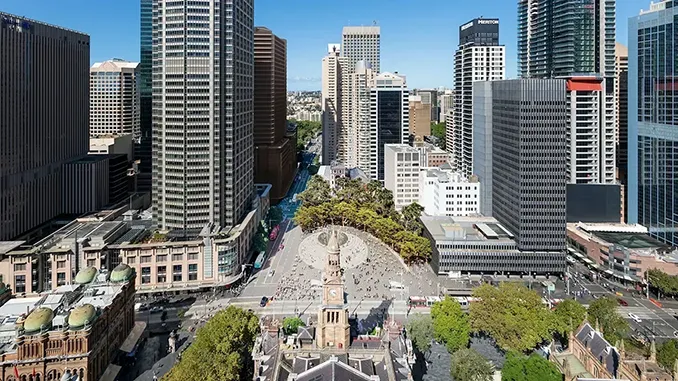
The proposed Sydney Town Square, planned for the area opposite Sydney Town Hall, has been championed by the City of Sydney as a long-term investment in public space. However, the state government’s decision to classify the development as “state significant” means the project will no longer follow the ordinary local council approval pathway. Instead, it will undergo a broader assessment involving state authorities, with the final decision resting with the planning minister unless the Independent Planning Commission is formally given responsibility.
The intervention comes at a sensitive stage for the project. The council, led by Lord Mayor Clover Moore, unveiled designs in August for a new civic space that would transform a prominent part of the city centre. The proposal includes a semi-circular open area extending eastwards towards Hyde Park, alongside a fountain and a grove of native trees. The design aims to create an inviting destination where residents, workers and visitors can gather, relax and participate in public life.

The City of Sydney had expected the square to be completed by 2031. Yet the change in the planning process has introduced fresh uncertainty over whether the proposed schedule can be maintained, particularly as political disagreement surrounding the development continues.
Moore has argued that the project represents the culmination of decades of planning and financial preparation. The council has now acquired the final property among seven buildings identified for demolition to make way for the new square. The demolition and construction work was expected to cost approximately A$150 million, a substantial investment intended to reshape one of Sydney’s most prominent urban spaces.
The council maintains that it has saved the money needed to deliver the project without taking on debt. Moore has also highlighted the involvement of leading international designers and architects, arguing that the proposal has been developed through extensive consideration and should be assessed on its planning merits rather than through political disagreement.
However, the development has faced strong opposition from New South Wales Premier Chris Minns, who has questioned both its cost and its potential impact on businesses in the surrounding area. Minns has described the proposal as excessively expensive and disruptive, warning that construction could affect commercial activity and lead to the closure of businesses during the redevelopment.
One of the most prominent objections concerns a Woolworths supermarket occupying a building that would be demolished under the council’s plans. The store is described by industry representatives as Australia’s busiest supermarket, making its proposed removal a significant point of contention in the debate over the square.
Chris Rodwell, chief executive of the Australian Retail Council, welcomed the state government’s intervention during a press conference outside the supermarket on Friday. He questioned the need to demolish the building, arguing that it remains an important part of Sydney’s retail infrastructure. His comments reflected wider concerns among opponents about whether the public benefits of the proposed square would justify the financial cost and disruption associated with the redevelopment.
The controversy has extended beyond questions of planning, cost and commercial impact. The proposal has become a subject of political and cultural debate, with critics challenging the council’s broader approach to urban development. Moore, a progressive independent mayor who has led the City of Sydney since 2004, has previously faced criticism over initiatives including proposals for cycling infrastructure along Oxford Street.
The dispute has also attracted attention through sensational media coverage. The Sydney tabloid The Daily Telegraph published AI-generated images depicting the proposed square crowded with protesters, adding to an increasingly polarised public discussion. The controversy illustrates how debates about public spaces can become entangled with broader disagreements over urban priorities, political leadership and the future character of city centres.
The immediate change to the project’s prospects was announced on Friday by New South Wales Planning Minister Paul Scully. He said the development had been declared state significant following advice from the NSW Independent Planning Commission. The decision transfers the assessment away from the City of Sydney’s ordinary local approval process and places the proposal within a state-level planning framework.
Scully said the new process would enable a rigorous, whole-of-government assessment by the relevant department. He added that individuals, community groups and other stakeholders would have an opportunity to express their views on any development application submitted for consideration.
Under the state significant development pathway, the planning minister generally acts as the consent authority unless responsibility is delegated to the Independent Planning Commission. The commission’s role in providing advice has therefore become central to the next stage of the project, although the final outcome will depend on the formal assessment and decision-making arrangements.
The commission’s advice acknowledged that the proposal presents significant technical and administrative challenges. It identified complex connections with state-owned transport infrastructure and the need to coordinate engineering, construction, operational and stakeholder considerations. These issues may require detailed assessment before authorities can determine whether the development can proceed as proposed.
At the same time, the commission recognised potential public and economic benefits. Its advice described the square as an opportunity to deliver significant civic and social infrastructure, while also identifying the possibility of increased tourism, events, cultural activity and visitation to Sydney’s central business district.
Those potential benefits form a central part of the argument made by the council. Supporters of the proposal view a major public square as more than a landscaping project: they see it as an opportunity to create a destination that could improve the experience of the city centre, provide space for gatherings and cultural events, and strengthen Sydney’s appeal to residents and international visitors.
A well-designed civic space can offer an accessible setting for people who might otherwise have few opportunities to pause in a busy commercial district. It can also provide a venue for public celebrations, community activities and informal encounters, helping a city centre remain a place for social life rather than functioning solely as an area for shopping, offices and transport.
Nevertheless, delivering such benefits requires careful consideration of the businesses, buildings and infrastructure that would be affected. The planned demolition of seven buildings, the removal of the Woolworths store and the estimated A$150 million construction bill mean the proposal carries consequences beyond its architectural design. The state assessment is expected to examine these competing considerations in greater detail.
In a surprising response to the government’s announcement, Moore welcomed the decision to classify the project as state significant, saying she could not agree more with the move. Her reaction suggested that the council was prepared to accept the revised assessment process, provided it remained fair and did not unnecessarily delay the development.
Moore reiterated her confidence in the proposal and said she saw no planning reason why it should ultimately be rejected. She also pointed to the government’s recent approval of the acquisition of the final property required for the redevelopment, describing the council’s preparations as a responsible, long-term effort to deliver the project.
However, the mayor raised concerns about the timing of the intervention. With the next New South Wales state election scheduled for March, she warned that it would be deeply disappointing if the assessment process delayed progress until after the election. She called on Scully to guarantee a transparent, genuine, fair and impartial examination that would not be used to postpone the project.
Scully declined to comment further on the matter.
The next stage will depend on the submission and assessment of a development application, the consideration of community and stakeholder views, and the resolution of technical and planning issues identified by the commission. The outcome could determine not only whether the square proceeds, but also how quickly Sydney can move ahead with a redevelopment that has already been debated for decades.

For now, the project remains caught between competing visions of the city’s future. The council sees the proposed square as a major public investment that could enhance civic life and economic activity. Opponents question its cost, disruption and impact on an important retail location. The state government’s intervention creates a new route towards a decision, but it does not settle the underlying dispute.
The future of Sydney Town Square will ultimately depend on whether the proposal can demonstrate that its public and economic benefits justify the expense, demolition and disruption involved. Until the assessment process reaches a conclusion, the vision of a new civic landmark opposite Town Hall remains ambitious but uncertain.
Related News:
 Harry and Meghan’s Australia Visit Sparks Debate
 Athens Mayor Moves to Tackle Overtourism Crisis
 Reform UK funding: mystery billionaire revealed
 US Labor Department in turmoil after secretary resigns
 Hybrid village stores fight rural decline
 Italy’s Beach Lunch Ban Sparks Holiday Backlash
 Burnham unveils £65m drought aid for farmers
 Green Leader Targets Starmer’s Former Seat
 Trump and Mamdani Hold Cordial Gracie Mansion Meeting
 Thinktank Calls for Abolition of UK State Pension
 Avanti West Coast Set for Public Ownership in March
 Dale Vince Plans New London-Wide News Operation
 Burnham Opens Door to Possible UK Return to EU
 Senators warn US childcare policies could raise costs
 Badenoch Raises Prospect of 2027 UK Election
 Rome Cracks Down on Rising Golf Cart Tours
 Pritzker’s National Profile Grows Ahead of 2028
 Spain Sets Snap Election as Housing Crisis Deepens
 NSW Leader Downplays Impact of Landmark Coal Ruling
 NSW Police Bid Delays Inquiry Into Sydney Protest
 Ministers Push ATO to Reconsider Credit Card Ban
 Houthi Missile Claim Sparks Riyadh Airport Disruption
 US Senate Debates Turn Bitter as Midterms Near
 Australia Delays Tax Credit Card Payment Ban After Backlash
 Trump’s UK Ambassador Urges North Sea Drilling to Strengthen US Ties
 Millionaires group urge Reeves to introduce wealth tax to ‘lift kids out of poverty’
 Canada Passes Carney’s First Budget in Tight Parliamentary Vote
 Starmer Says Labour’s Economic Plan Needs Years to Deliver
 Liberal Turmoil Threatens Victorian Election Hopes
 Trump Fed bid heads to Supreme Court
 UK Government Borrowing Drops to £11.6bn in December
 EU Signals Open Mind on UK Customs Union Talks
 UK shelves £110m border project amid trade strain
 Rising Costs Force Families to Rethink Days Out
 M&S Demands Urgent Action on Rising Violent Retail Crime
 Oil Prices Surge Above $120 Amid Iran Blockade Fears
 Silent Tracks: Rail Line Without Passengers
 Trump approval plunges amid Iran war fears
 Tough Fiscal Realities Await Next Scottish Government
 US Awaits Iran Reply on New Ceasefire Proposal
 Tony Abbott Returns as New Liberal Party President
 Belfast Approves Pilot Extension of Sunday Trading Hours
 Kevin Warsh sworn in as Fed chair amid economic backlash
 Farage and Reform UK Reshape British Politics
 Starmer Leadership Under Pressure After Setbacks
 Trump Faces Backlash Over $2bn Earnings Since Return
 Trump’s Mount Rushmore Speech: A Divisive Anniversary
 Ukraine Creates Long-Range Strike Command
 England and Norway Fans Turn Miami Into World Cup Carnival
 Olympus Awaits Unesco Heritage Recognition
 Unions Warn Labour Over Zero-Hours Contract Reforms
 Queue row erupts on Wales’ highest mountain
 RAF Barnham Protests Fuel Tensions in Norfolk Town
 London Launches First Self-Driving Taxis
 Trump Hardens Canada Trade Stance as Talks Stall
 Trump Calls Iran War ‘Small Potatoes’ Despite US Deaths
 Swedish Mining Push Puts Sami Land Rights Under Pressure
 UK plans tougher Israel stance with settlement trade ban
 UK Retailers Accused of Breaking Refund Laws
 UK Pay Growth Slows to 3.9% as Rate Decision Nears
 UK Heatwaves Set to Worsen Pothole Damage, RAC Warns
 Mayors Could Gain Greater Powers Over Water Firms
 Tom Watson Takes Senior Role at Palantir
 Mahmood Warns Far Right Over Asylum Protests
 UK Rent Gap Puts Low-Income Families Under Pressure
 Democrat Says ICE Restricted Detention Camp Oversight
 MPs Defend UK Economic Watchdog Against Critics
 Roman Finds Reveal Bath’s Suburban Past
 Xi urges Trump to avoid US-China military conflict
 Frome Community Loses Bid for Major Regeneration Site
 The Tests Awaiting Andy Burnham After Labour Conference
 Free Speech Emerges as Key UK Election Issue
 Madrid Tent Camp Grows as Spain Housing Crisis Deepens
 UK University Strikes Spread as Financial Pressure Grows
 Healey urged to act as UK energy bills rise 4%
 French School Protests Escalate as 400 Schools Close
 Salinas Struggles to Keep the American Dream Alive
 Families Await USS Abraham Lincoln Homecoming
 Gosport Protesters Clash With Police Over Migrant Rescue
 South Korea Probes Fuel Shipments to Russia