Published: 02 October 2026. The English Chronicle Desk. The English Chronicle Online
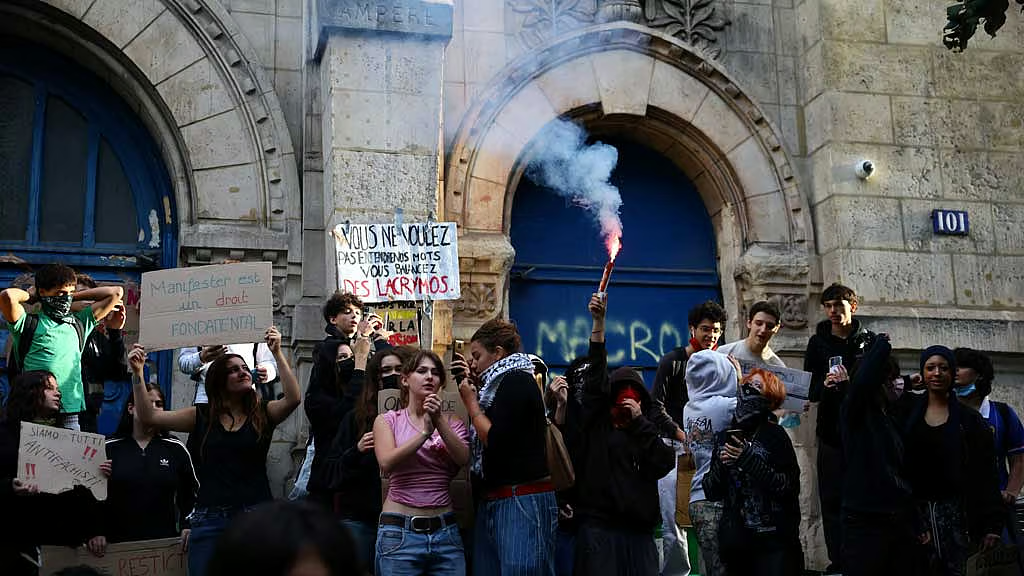
France is facing a growing wave of student unrest after around 400 schools were closed on Friday as protests over deteriorating education conditions escalated into violent confrontations in several cities. What began as demonstrations led largely by high school students has rapidly spread across the country, bringing clashes with police, school closures, property damage and thousands of detentions.
The protests have been driven by a range of concerns about the state of France’s secondary education system. Students have complained about overcrowded classrooms, long and demanding timetables, shortages of teachers and inadequate school facilities. Extreme heat experienced earlier in the year has also become part of the wider frustration, with students and educators raising concerns about classrooms that can become difficult to use during periods of high temperature.
Authorities say the situation has now moved beyond conventional student demonstrations in some areas. French officials have described parts of the unrest as “urban violence”, as barricades have been erected, rubbish containers set on fire and confrontations with police reported in a number of cities.

The scale of the disruption has prompted an increasingly forceful government response. Riot police have been deployed around schools and universities where blockades have developed, while ministers have urged parents and local authorities to help prevent young people from becoming involved in dangerous confrontations.
Education Minister Édouard Geffray has appealed directly to parents, warning that children are putting themselves at risk by remaining on the streets as clashes intensify. The government has also sought to distinguish between legitimate complaints about education and acts of violence or destruction carried out during the demonstrations.
The latest figures underline the seriousness of the situation. French authorities have reported that nearly 3,000 lycée students have been detained since the beginning of the protests. Almost 2,000 detentions were recorded on Thursday alone, according to the interior ministry. The students involved are generally between 15 and 18 years old, meaning that many of those caught up in the unrest are minors.
The education ministry has also reported that around 100 schools have suffered serious damage, while approximately 40 headteachers have been injured during the unrest. The damage has extended beyond schools to public property and other facilities, raising fears that the financial cost of the demonstrations could reach hundreds of millions of euros.
The Auvergne-Rhône-Alpes region alone has estimated damage at about €25 million, illustrating the scale of the financial consequences already being faced by local authorities. Further costs could emerge as damaged buildings are assessed and schools attempt to return to normal operations.
Friday brought fresh signs of unrest despite efforts by the authorities to contain the situation. Incidents were reported around schools in Strasbourg and Marseille, while clashes also occurred in Paris and Nantes. In Strasbourg, students erected barriers and confronted police, with tear gas reportedly used as officers attempted to clear blockades.
Images from the city showed students moving barricades while police stood behind lines formed to prevent protesters from occupying access routes. Other scenes showed students dealing with tear gas during demonstrations around educational institutions.
Nantes has also become a significant point of concern after a fire affected a school during the protests. In Paris, students gathered around blocked entrances at several schools, while police intervened in areas where demonstrations became increasingly confrontational.
The authorities are particularly concerned about the possibility that the movement could continue spreading beyond its original education-related demands. The protests initially centred on problems experienced directly by students and teachers, but the participation of wider groups and the emergence of violent incidents have complicated the government’s response.
Justice Minister Gérald Darmanin has instructed prosecutors to examine possible civil liability claims against parents whose children are found responsible for damage. Such action could potentially leave families financially responsible for destruction caused by minors, adding another layer to the government’s attempt to discourage further violence.
The move reflects the growing pressure on the government to restore public order while addressing the underlying concerns that brought students onto the streets. Authorities face the difficult task of responding to legitimate complaints about education without allowing demonstrations to develop into wider disorder.
The political debate surrounding the protests has also intensified. Government figures have accused political groups on the radical left of attempting to exploit the unrest, while members of those movements have rejected suggestions that they are responsible for violence and have maintained that students have legitimate reasons to protest.
The disagreement has added a political dimension to an issue that initially focused heavily on education. For students, the central concerns remain practical: the number of teachers available, the condition of school buildings, the size of classes and the pressure created by long schedules and academic demands.
The protests have also raised questions about the relationship between young people and public institutions. Many of the students taking part are at an important stage of their education, preparing for examinations, university applications or entry into employment. Disruption to classes therefore carries consequences beyond the immediate demonstrations.
Some schools have shifted to remote learning as a precaution, while others have remained closed because of security concerns. In some areas, parents have been advised to keep children away from affected schools until authorities consider conditions safe.
The unrest has not been confined entirely to France. Demonstrations and disturbances have also been reported in neighbouring Belgium, where schools in Liège have been affected by student protests. The developments have raised concerns that similar grievances could spread across borders, although the scale and circumstances vary between countries.
The French government is now under pressure on two fronts. It must restore security around schools while demonstrating that the complaints of students and educators are being taken seriously. A response focused solely on policing could leave the underlying educational concerns unresolved, while failing to contain violence could result in further damage and disruption.
Prime Minister Sébastien Lecornu has convened crisis discussions with ministers and local authorities as the government attempts to coordinate its response. The authorities have also been working with prosecutors and police forces to deal with arrests, damaged property and incidents involving teachers and school officials.
At the local level, the situation remains uneven. Some areas have reported fewer protesters and a calmer atmosphere compared with Thursday, while other cities have experienced renewed confrontations. Officials in southern France have described conditions in some areas as significantly less severe than during the previous day’s unrest, although schools have continued to be affected.
The uncertainty has left teachers, parents and students facing a difficult situation. Educators must balance their desire to address long-standing concerns with the immediate responsibility of keeping pupils safe. Parents are similarly concerned about whether their children can attend classes without becoming caught up in clashes.
For many students, however, the protests represent a broader expression of frustration with the educational environment in which they are expected to study. Complaints about overcrowding, staff shortages, infrastructure and extreme classroom temperatures have existed independently of the violence now dominating national attention.

The coming days are likely to determine whether the movement returns to largely peaceful demonstrations or continues along a more confrontational path. The government will face growing demands to restore normal education while also explaining what measures it intends to take to address the problems identified by students.
For now, hundreds of schools remain closed, thousands of young people have been detained and substantial damage has been reported across the country. France’s education system has become the centre of a rapidly developing national crisis, with authorities attempting to prevent further disorder while confronting the grievances that brought students into the streets in the first place.
The events have highlighted a difficult reality for policymakers: restoring order may address the immediate security challenge, but the long-term stability of schools will also depend on whether students, teachers and families believe that their concerns about education are being heard and addressed.
Related News:
 French Student Protests Escalate Into Violent Clashes
 Irish Gangland Figure Fails in Dublin Election Bid
 King Refers Jamaica Slavery Petition to Privy Council
 UK University Faces Counter-Terror Probe Over China Pressure
China-critical UK academics face ‘extremely heavy’ pressure from Beijing
UK University Faces Counter-Terror Probe Over China Pressure
China-critical UK academics face ‘extremely heavy’ pressure from Beijing
 Hungary election: Orbán faces biggest test amid scandal
 Canadian astronaut French words ease language row
 NHS Safety Fears as Nurses Cover Doctor Gaps
 Cartel crackdown raises fears of fresh violence
 France Faces Record Presidential Crowded Race Amid Far-Right Surge
 Trump’s Revenge Drive Deepens GOP Divide
 Former ICC prosecutor condemns US sanctions
 Gunman Killed After White House Security Shootout
 Le Pen’s Popularity Holds Despite Conviction
 Dreyfus Statue Finally Gets Permanent Paris Home
 Teen Charged After Layla Jeffery Found Dead
 Pradhan Resigns Amid Protests
 Cambridge Professor Jason Arday Found Dead at Home
 Exeter Approves Saudi Military Training Partnership
 Ukraine Villagers Demand Answers After Deadly Arms Depot Strike
 British Man Faces Deportation Threat in Sweden
 Masked Protesters Bring Dover Port Traffic to Standstill
 UN expert urges UK to rethink Israel policy
 Armed Suspect Attacks Ohio Governor Candidate
 Ministers Condemn Far-Right Unrest in Portsmouth
 Councils spend £125m on illegal children’s care
 British widow says deportation from Sweden feels like a death sentence
 Miliband Rejects Chief Rabbi’s West Bank Warning
 Patriot Platform Raises Concern Across Britain
 Israel Accused of Undermining Palestinian Life
 Iran School Strike Raises War Crimes Questions, UN Says
 Texas Transfers Raise Fears for Migrant Children
 Memphis Questions National Guard Crime Surge
 Mahmood Warns Far Right Over Asylum Protests
 Briton Faces Cyprus Court Over Son’s Fatal Fall
 UK Reviews Hague Child Abduction Cases Involving Abuse
 Democrat Says ICE Restricted Detention Camp Oversight
 Japan PM Backs International Criminal Court
 Paris child pickpocketing gang leader jailed for eight years
 Elif Eralp Emerges as Berlin’s Next Political Force
 Far-Right Activist Arrested After Channel Dinghy Incident
 Portadown protest ends after tense Orange Order standoff
 Three Die in Channel Crossing Attempt Near France
 Madrid Tent Camp Grows as Spain Housing Crisis Deepens
 Cornell Fraternity Assault Investigation Reopened
 Israel-bound Plane Lands in Saudi Arabia After Cockpit Fight
 Burnham Opens Door to Possible UK Return to EU
 Drumcree Talks Falter as Legal Challenge Deepens
 UK-France Returns Deal Faces Expiry as Talks Stall
 Hundreds of UK prisoners released early amid overcrowding
 Drumcree Talks End Without Agreement Ahead of Appeal
 French Taxi Driver Cleared in David Lammy Theft Case After Fare Dispute
 Just Stop Oil Protesters Convicted Amid Climate Defence Row
 Greene Pushes Epstein Files Amid Trump Fallout
 Trump Deploys DHS to Charlotte in Major Arrest Operation
 Venezuela Threatens Nobel Winner Machado with Fugitive Status
 Thousands Protest ICE Operations in Nationwide US Day of Action
 Italian Town Buys Mussolini Villa to Keep Away Fascist Fans
 Report Says Pezzullo Acted ‘Recklessly’ in Dealings
 Suspected Plot Targets Pipeline Before Hungary Vote
 Ben Roberts-Smith Denies War Crime Allegations in First Statement
 Learner Driver Charged After Expo Tragedy
 US ‘Narco Boat’ Strikes Draw Global Outcry
 Barrister Criticises Trial After Suicide Case Verdict
 Pope Meets Families in Italy Toxic Waste Zone
 Farage and Reform UK Reshape British Politics
 New Footage Revives Peter Falconio Mystery
 England and Norway Fans Turn Miami Into World Cup Carnival
 Westminster Council Threatens Charing Cross Soup Kitchen
 Ghent Professors Questioned Cofnas Appointment
 Bayeux Tapestry Revives Franco-British Ties
 Turkey LGBTQ Crackdown Expands With New Arrests
 British Columbia Sues OpenAI Over School Shooting
 US Networks Suspend Trump White House Pool Coverage
 Republican Senator Questions Trump Ad Spending
 Free Speech Emerges as Key UK Election Issue
 Tennessee Set to Execute Woman After Clemency Denied
 London Facial Recognition Trial Ends With False Alert
 UK University Strikes Spread as Financial Pressure Grows
 Badenoch Raises Prospect of 2027 UK Election