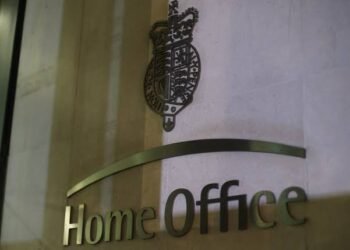
The UK Home Office has come under criticism following allegations that government officials attempted to pressure Hackney Council in east London into cancelling an online appearance by Swedish climate academic Andreas Malm at a political magazine launch event. The controversy has sparked renewed concerns about freedom of expression, political debate and the government’s approach to individuals associated with controversial political movements.
Zoe Garbett, Hackney’s Green Party mayor, has accused Home Secretary Shabana Mahmood and her department of an “appalling assault on free speech”. She has demanded an explanation from the Home Office over what she considers an inappropriate attempt to influence the cancellation of a lawful public event.

The event, organised to mark the launch of the socialist magazine Tribune, took place in Hackney on 4 November despite warnings communicated by Home Office officials to the local authority. Malm, who had been prevented from travelling to the United Kingdom, was scheduled to address the gathering through a video link. Another speaker was Huda Ammori, co-founder of Palestine Action, whose organisation has been at the centre of a major legal and political controversy.
The dispute has raised important questions about the boundaries between national security responsibilities and the protection of democratic freedoms. Although the Home Office has categorically denied attempting to cancel the event, documents obtained by Tribune through freedom of information legislation have provided further details about communications between government officials and Hackney Council.
According to the documents, the Home Office’s extremism disruptions team contacted the council in October after receiving a referral concerning Malm’s planned visit to Britain. An email dated 12 October indicated that officials had received information from the counter-extremism group about his participation in the November event.
The communication described Malm as someone who had made numerous statements supporting terrorists and direct action, particularly in relation to Palestine and climate change. However, the department’s assessment reportedly indicated that the proposed gathering was unlikely to meet the threshold for disruption.
That assessment has become a central element of the controversy. Garbett has questioned why council employees were subsequently approached about the possibility of cancelling the event despite the initial assessment suggesting that it was unlikely to cause significant disruption.
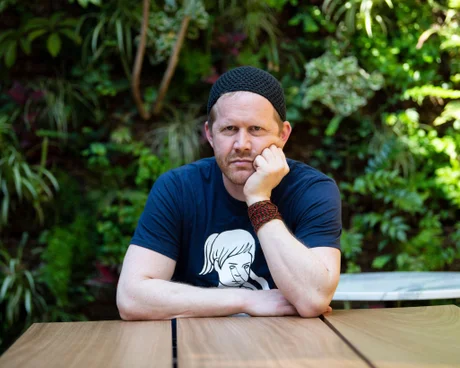
Malm, a prominent Swedish academic and climate campaigner, is internationally recognised for his research and writing on climate change, environmental activism and political resistance. His book, How to Blow Up a Pipeline, has attracted considerable attention because of its arguments about the effectiveness and limitations of different forms of climate activism.
Days before the Tribune event, Malm was prevented from travelling to the UK. Officials informed him that his presence in the country was “not considered to be conducive to the public good”. However, no detailed explanation was provided for the decision.
The travel restriction attracted criticism from supporters of freedom of expression and those concerned about the treatment of international academics and political commentators. Following the decision, Tribune announced that Malm would participate remotely rather than abandon his scheduled appearance.
However, the controversy intensified on the day before the event when a Home Office official contacted Hackney Council’s Prevent and hate-crime coordinator. The communication reportedly identified Malm and Ammori as two speakers of concern and raised questions about whether the venue’s management had been informed of the government’s objections.
Officials also referred to the Terrorism Act 2000, warning that certain arrangements for meetings involving members of proscribed organisations could constitute a criminal offence. The legislation makes it an offence in specified circumstances to assist in arranging a meeting that the organiser knows will be addressed by a person belonging to a proscribed organisation.
The warning placed council officials and the venue’s management in a difficult position, particularly because the proposed event involved political discussion and an online contribution from a speaker who had already been denied entry into Britain.
A Home Office representative reportedly acknowledged that the department could not instruct the council to cancel the gathering. The official stated that the final decision rested with the local authority. Nevertheless, the subsequent communication raised concerns about the potential legal implications of allowing the event to proceed.
According to Oliver Eagleton, Tribune’s editor, a manager at the venue contacted the magazine after receiving information about the government’s concerns and said the event would have to be cancelled. The decision was subsequently overturned following intervention by Garbett, allowing the gathering to proceed as originally planned.
In her letter to Mahmood, the mayor strongly criticised what she described as pressure placed on council employees to interfere with the event. She argued that encouraging the cancellation of lawful public gatherings undermines fundamental democratic principles and threatens the ability of individuals to express political opinions peacefully.
Garbett also made clear that she would not participate in efforts to suppress lawful public discussion. She questioned why local government officials had been encouraged to consider cancelling or vetoing speakers and asked how such actions could be reconciled with the statutory responsibilities of local authorities to protect freedom of expression and peaceful assembly.
Her intervention has brought the responsibilities of local councils into sharper focus. Local authorities must consider public safety, legal obligations and the rights of individuals when managing public venues. However, the Hackney dispute illustrates the difficulties that can arise when national security advice intersects with politically sensitive public discussions.
The Home Office has rejected the allegations that it attempted to force the cancellation of the Tribune event. A spokesperson described suggestions that the department had pushed for the gathering to be called off as categorically untrue.
The department maintained that the decision belonged to Hackney Council and said the local authority had been provided with relevant advice to inform its decision. The government has therefore sought to distinguish between communicating potential security and legal concerns and directly requesting that an event be cancelled.
Nevertheless, the disagreement has continued to generate questions about the nature and impact of government advice. Critics argue that even without a formal instruction, warnings from central government departments can place considerable pressure on local officials and venue operators, particularly when those communications refer to potentially serious criminal consequences.
Ammori also criticised the Home Office’s intervention, arguing that officials had wrongly suggested that her participation in a political discussion could make the event unlawful. She pointed out that she had never been convicted of any criminal offence, let alone a terrorism-related offence.
She linked the controversy to her legal challenge concerning the proscription of Palestine Action, which was being considered by the Supreme Court on the same day as the Tribune event. Her argument was that the authorities were misapplying the law in ways that could result in unlawful arrests and restrictions on public expression.
Ammori further argued that even individuals convicted under terrorism legislation are not automatically prohibited from speaking publicly. She described the suggestion that her participation in a political discussion could make the entire gathering unlawful as unreasonable.
Malm also expressed alarm at what he sees as a broader pattern of restrictions on political and cultural expression in Britain. He described the country’s approach to freedom of expression as increasingly authoritarian and questioned how far restrictions on controversial speakers and writers might extend.
His comments referred to wider concerns about restrictions affecting individuals associated with pro-Palestinian activism and political literature. He argued that preventing academics from entering the country and attempting to discourage public discussions could create an atmosphere in which controversial political opinions are increasingly marginalised.
The dispute comes at a sensitive time for the British government, as debates over national security, protest movements, political activism and freedom of expression continue to shape public discussion. The use of counter-terrorism legislation in cases involving political organisations has become particularly contentious, with supporters of stronger restrictions emphasising security considerations while critics warn against the excessive use of legal powers.
At the centre of the Hackney controversy is a fundamental democratic question: how should governments balance their responsibility to address potential security risks with the obligation to protect lawful political debate?
While the Home Office insists that it did not seek to cancel the event, Garbett’s demand for an explanation reflects broader concerns about whether government communications can indirectly discourage public gatherings even when no formal cancellation order is issued.

The Tribune launch ultimately went ahead, with Malm participating remotely. However, the disagreement between the mayor and the Home Office has left important questions unanswered about the limits of government intervention, the interpretation of counter-terrorism legislation and the protection of peaceful political expression.
As the debate continues, the case is likely to remain significant for discussions about the relationship between national security policies and civil liberties in the United Kingdom. It also highlights the importance of ensuring that legal warnings and administrative decisions do not unnecessarily restrict the right to organise lawful events, hear controversial opinions and participate in democratic debate.
Related News:
 UK may ban protests amid rising antisemitism fears
 Ministers Condemn Far-Right Unrest in Portsmouth
 Patriot Platform Raises Concern Across Britain
 Reform UK Receives Record £36m Donation From Crypto Billionaire
 Election Candidate Abuse Raises Alarm in England
 Mahmood Warns Far Right Over Asylum Protests
 Disabled Travellers Seek Fairer UK Care Rules
 UK Reviews Hague Child Abduction Cases Involving Abuse
 King Refers Jamaica Slavery Petition to Privy Council
 Far-Right Activist Arrested After Channel Dinghy Incident
 Portadown protest ends after tense Orange Order standoff
 Free Speech Emerges as Key UK Election Issue
 Burnham Opens Door to Possible UK Return to EU
 Drumcree Talks Falter as Legal Challenge Deepens
 UK-France Returns Deal Faces Expiry as Talks Stall
 Hundreds of UK prisoners released early amid overcrowding
 Drumcree Talks End Without Agreement Ahead of Appeal
 Badenoch Raises Prospect of 2027 UK Election
 Gosport Protesters Clash With Police Over Migrant Rescue
 Recruitment Boss Accused of Leading Doxxing Campaign
 UK Passport Rules Leave Family Facing Separation
 England and Wales Begin Second Wave of Early Prison Releases
 Farage Rejects Claims Reform Would Let Troops Shoot Migrants
 UK Pledges Stronger Protections for Disabled Air Passengers
 Jess Phillips Urges Supreme Court to Reverse Abuse Ruling
 UK Land Registry Plan Faces Opposition From Landowners
 Ministers Clash Over Mahmood’s Migration Reforms
 King Charles Faces Reparations Protests at Antigua Summit
 Henry Nowak Family Rejects Political Use of His Death
 UK Employers to Be Forced to Publish Job Salaries
 English Mayors Warn Police Merger Could Weaken Local Policing
 Early-Release Prisoners Face Rising Risk of Homelessness
 EU Citizens Sue Home Office Over UK Residency Rights
 Rayner Approves Controversial Oxfordshire Asylum Centre
 Blind Nigerian Pensioner Faces 20-Year UK Settlement Wait
 French Taxi Driver Cleared in David Lammy Theft Case After Fare Dispute
 Major Rent Reform Ends No-Fault Evictions in England
 Peers Flood Assisted Dying Bill with 942 Amendments
 Tim Walz urges Trump to withdraw federal agents immediately
 Proposed Law Leaves Gap for Children of Convicted Paedophiles
 Kezia Dugdale Warns of Possible Reversal of Equal Rights Gains
 Synagogue Arson Attempt Sparks Security Fears
 Crackdown Backfires on UK Climate Protesters
 Greens Face Internal Row Over Antisemitism Claims
 Barrister Criticises Trial After Suicide Case Verdict
 Immigration Judges Fear Pressure in Trump Era
 Farage and Reform UK Reshape British Politics
 Starmer Leadership Under Pressure After Setbacks
 Westminster Council Threatens Charing Cross Soup Kitchen
 BBC Warned About Missing Clothes of Murder Victim
 Burnham unveils £65m drought aid for farmers
 Unions Warn Labour Over Zero-Hours Contract Reforms
 RAF Barnham Protests Fuel Tensions in Norfolk Town
 UK plans tougher Israel stance with settlement trade ban
 UK Retailers Accused of Breaking Refund Laws
 Lib Dems Prepare for Election Amid Reform Challenge
 Democrat Says ICE Restricted Detention Camp Oversight
 London Facial Recognition Trial Ends With False Alert
 UK University Strikes Spread as Financial Pressure Grows
 French School Protests Escalate as 400 Schools Close
 Palace Rejects Funding Andrew’s Police Legal Challenge
 Police accused of failing abuse victims
 UK Mission in East Jerusalem to Remain Open
 South Africa Withdraws Directive on Asylum Applications
 US Execution Livestream Plan Sparks Global Outrage
 British Military School Abuse Victims Denied Justice
 Gadi Eisenkot: Israel’s Anti-Netanyahu Challenger
 UK Bill Faces Warning Over Fayed Trafficking Victims
 UK Could Rejoin EU Through a Switzerland Plus Deal
 UK Visa Refusal Threatens Baby’s Family Christmas
 Up to 20 English Maternity Units Face Possible Closure
 Middleton Revitalisation Blueprint for UK Towns
 Greens Face Leadership Test as Jordon Steele-John Misconduct Claims Leave Party in Limbo
 MoD Seeks Out-of-Court Resolution in LGBT Veterans Compensation Fight
 Yvette Cooper Reverses NHS Patient Watchdog Abolition Plan
 Met Police Chief Urges More Russell Brand Victims to Speak Out
 Russell Brand’s Barrister Reports Himself to Legal Watchdog
 Burnham’s Christmas Homelessness Pledge Faces Uncertainty
 Zelenskyy Sees Peace Opportunity as US Envoys Meet Putin
 Ilse Aigner Set to Make German History as First Female President