Published: 09 October 2026. The English Chronicle Desk. The English Chronicle Online
South Africa has withdrawn a directive that had allowed asylum seekers to submit applications under broader conditions, just one day after anti-immigration protests in Johannesburg and Durban escalated into violence. The decision has placed renewed attention on the country’s increasingly contentious immigration debate, as authorities attempt to balance constitutional obligations, public order and growing political pressure over migration.
The Department of Home Affairs announced the withdrawal on Friday, saying the directive had been introduced to implement a Constitutional Court ruling issued on 7 July. The court had determined that asylum seekers should not be denied access to South Africa’s asylum system solely because of procedural circumstances surrounding their entry into the country.
Under the principle reflected in the court ruling, entering South Africa irregularly could not by itself be used as a reason to refuse to accept an asylum application. The legal position was intended to ensure that people seeking international protection could have their claims considered rather than being excluded from the process because of the circumstances of their arrival.

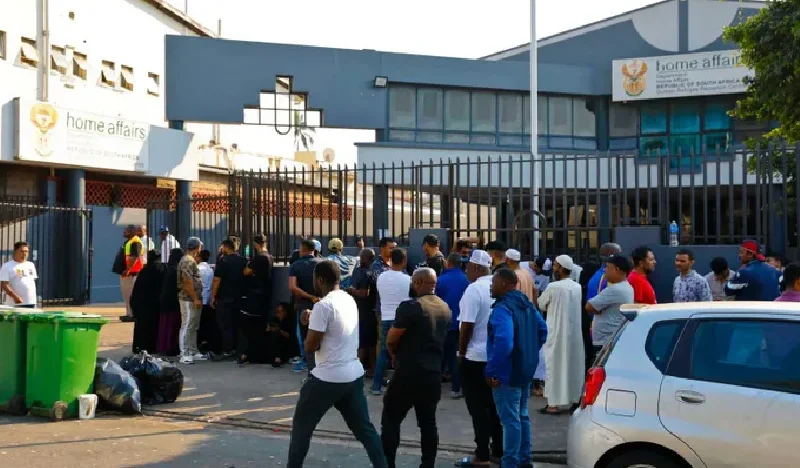
However, the Home Affairs Department said the practical consequences of the directive had quickly become difficult to manage. Within days of its implementation, offices responsible for receiving asylum applications experienced a sharp increase in demand. Officials faced growing pressure and, according to the department, concerns emerged over their safety as well as wider public security and law-and-order conditions.
The government has also sought to counter what it described as misinformation surrounding the Constitutional Court judgment. Authorities stressed that the ruling does not automatically grant undocumented migrants refugee status, permanent residency or any other legal entitlement merely because they are able to submit an asylum application.
The distinction is important because an application for asylum and recognition as a refugee are separate stages of the legal process. Allowing an individual to lodge a claim does not mean that the claim will ultimately be accepted. Applicants remain subject to assessment under the country’s asylum and immigration framework.
The withdrawal came against a backdrop of growing anti-immigration sentiment in South Africa, where economic hardship and pressure on public services have increasingly become intertwined with debates over migration. South Africa has one of Africa’s largest economies and has long attracted migrants from neighbouring and other African countries seeking employment, security and economic opportunities.
Foreign nationals have nevertheless increasingly faced hostility in some communities. Immigration has become a politically sensitive issue amid high unemployment, concerns over crime and frustration about access to government services. Migrants are frequently blamed for some of these problems, although social scientists have argued that there is insufficient evidence to support broad claims that foreigners are responsible for the country’s economic and social difficulties.
The latest unrest illustrates the intensity of those tensions. In Durban, rioters set fire to 14 vehicles on Thursday, while another 10 vehicles were reportedly burned in the Soweto area of Johannesburg. Businesses owned by foreign nationals were also looted during the disturbances.
Police officials said the situation had been brought under control by Friday. Lieutenant General Puleng Dimpane told reporters in Soweto that conditions in the area had returned to calm. The briefing was held close to the remains of vehicles destroyed during the violence, underscoring the scale of the previous day’s unrest.
In Durban, police spokesperson Robert Netshiunda also said the situation was under control. He credited a rapid police response with preventing further damage and containing the violence before it could spread more widely.
The unrest has broader implications because South Africa’s immigration debate extends beyond domestic politics. The country maintains important economic, social and political relationships with other African states, many of which have citizens living and working inside South Africa. Previous waves of anti-foreigner violence have generated diplomatic tensions and concerns among neighbouring governments about the treatment of their nationals.
Thousands of foreign citizens have previously left South Africa amid heightened anti-immigrant sentiment, and continued unrest could place additional strain on regional relations. The prospect of renewed violence is particularly sensitive in a country where migration is closely connected to regional labour markets, trade and cross-border communities.
For the government, the challenge is complicated by the need to respect judicial decisions while maintaining functioning immigration services and public safety. The Constitutional Court’s ruling establishes a legal principle concerning access to the asylum system, while the Home Affairs Department has highlighted the operational difficulties that emerged after the directive was introduced.
The controversy also demonstrates how quickly legal decisions involving migration can become politically and socially charged. A measure intended to ensure access to a constitutional protection system can be interpreted very differently by communities already concerned about unemployment, crime or pressure on public resources.
Government officials have therefore attempted to clarify that the court ruling does not provide undocumented migrants with automatic permission to remain permanently in South Africa. At the same time, rights advocates and legal experts are likely to continue watching how the authorities reconcile the withdrawal of the directive with the constitutional principles established by the court.
The immediate priority for police remains preventing further violence and protecting people and businesses from attacks. The Home Affairs Department, meanwhile, faces the task of managing asylum applications while dealing with pressure on its offices and maintaining public confidence in the immigration system.
The developments underline the increasingly difficult environment surrounding migration in South Africa. The country must navigate competing demands from people seeking protection, communities worried about economic conditions, officials responsible for immigration management and political forces calling for tougher controls.

As tensions continue, the government’s handling of asylum applications is likely to remain under close scrutiny. The withdrawal of the directive may ease pressure on overwhelmed offices in the short term, but it does not resolve the deeper questions at the heart of the dispute: how South Africa should protect genuine asylum seekers, enforce immigration laws and address public concerns without allowing misinformation or hostility towards foreign nationals to fuel further violence.
The events in Johannesburg and Durban have once again demonstrated the human and political consequences of that unresolved debate. For thousands of people seeking safety or opportunity in South Africa, the outcome could determine whether they are able to access a formal legal process. For the government, the challenge will be ensuring that immigration policy remains both workable and consistent with the country’s constitutional obligations while preventing social tensions from escalating further.
Related News:
 Armed Suspect Attacks Ohio Governor Candidate
 Ministers Condemn Far-Right Unrest in Portsmouth
 Patriot Platform Raises Concern Across Britain
 Texas Transfers Raise Fears for Migrant Children
 Memphis Questions National Guard Crime Surge
 Mahmood Warns Far Right Over Asylum Protests
 UK Reviews Hague Child Abduction Cases Involving Abuse
 Democrat Says ICE Restricted Detention Camp Oversight
 King Refers Jamaica Slavery Petition to Privy Council
 Far-Right Activist Arrested After Channel Dinghy Incident
 Portadown protest ends after tense Orange Order standoff
 French Student Protests Escalate Into Violent Clashes
 Hundreds of UK prisoners released early amid overcrowding
 Drumcree Talks End Without Agreement Ahead of Appeal
 French School Protests Escalate as 400 Schools Close
 Latin America women fear rollback of rights
 Gosport Protesters Clash With Police Over Migrant Rescue
 Botstein Quits Bard Amid Epstein Investigation Calls
 NSW Police Bid Delays Inquiry Into Sydney Protest
 ICE Agent Shoots Man in New York as Child Escapes Harm
 French Taxi Driver Cleared in David Lammy Theft Case After Fare Dispute
 Met Police Culture Makes Racial Harm ‘Inevitable’
 Remaining rebel Labour MPs have whip restored
 South African Detained After Neo-Nazi Rally in Australia
 Trump Signs Bill Releasing Justice Department Files on Epstein
 Melania Trump Epstein remarks spark survivor backlash
 NHS Safety Fears as Nurses Cover Doctor Gaps
 US Court Weighs Fate of TPS for Migrants
 Cartel crackdown raises fears of fresh violence
 Barrister Criticises Trial After Suicide Case Verdict
 Immigration Judges Fear Pressure in Trump Era
 Victim says non-custodial rape sentence ‘rock in my face’
 Gunman Killed After White House Security Shootout
 Irish Gangland Figure Fails in Dublin Election Bid
 Le Pen’s Popularity Holds Despite Conviction
 Dreyfus Statue Finally Gets Permanent Paris Home
 Trump Orders Signs Criticising Smithsonian Museum
 Westminster Council Threatens Charing Cross Soup Kitchen
 BBC Warned About Missing Clothes of Murder Victim
 Cambridge Professor Jason Arday Found Dead at Home
 Masked Protesters Bring Dover Port Traffic to Standstill
 UN expert urges UK to rethink Israel policy
 Councils spend £125m on illegal children’s care
 Miliband Rejects Chief Rabbi’s West Bank Warning
 Reform UK Receives Record £36m Donation From Crypto Billionaire
 Israel Accused of Undermining Palestinian Life
 Election Candidate Abuse Raises Alarm in England
 Lisa Nandy Calls for Tougher Action on Social Media Doxxing
 Piddington Votes for Symbolic Independence Over Asylum Plan
 Seven Women’s Deaths Renew South Africa Femicide Anger
 Texas Charges Seven Noncitizens in Voting Crackdown
 Iran School Strike Raises War Crimes Questions, UN Says
 Disabled Travellers Seek Fairer UK Care Rules
 South Africa’s Femicide Crisis Deepens
 Patrick Clancy speaks publicly about children’s deaths
 Clancy Defense Seeks Inquiry Into Lone Juror
 Trump and Mamdani Hold Cordial Gracie Mansion Meeting
 Briton Faces Cyprus Court Over Son’s Fatal Fall
 Japan PM Backs International Criminal Court
 UK Pauses Chagos Deal Amid US Opposition
 Judge orders Trump to restore access for three media outlets
 Free Speech Emerges as Key UK Election Issue
 Three Die in Channel Crossing Attempt Near France
 Tennessee Set to Execute Woman After Clemency Denied
 Cornell Fraternity Assault Investigation Reopened
 London Facial Recognition Trial Ends With False Alert
 Israel-bound Plane Lands in Saudi Arabia After Cockpit Fight
 Burnham Opens Door to Possible UK Return to EU
 Drumcree Talks Falter as Legal Challenge Deepens
 UK-France Returns Deal Faces Expiry as Talks Stall
 Calls Grow to Halt US Executions After Pike Failure
 Badenoch Raises Prospect of 2027 UK Election
 New Prosecutor Takes Over Cornell Assault Case
 Palace Rejects Funding Andrew’s Police Legal Challenge
 Police accused of failing abuse victims
 Royal Navy Sailor Charged With Alleged Spying
 Luton Residents Reject Claims of ‘No-Go Zones’
 South Sudan Trauma Wards Struggle as Fighting Intensifies
 Sri Lanka Ex-First Lady Arrested Over Donation Probe
 US Senate Debates Turn Bitter as Midterms Near