Published: 05 October 2026. The English Chronicle Desk. The English Chronicle Online
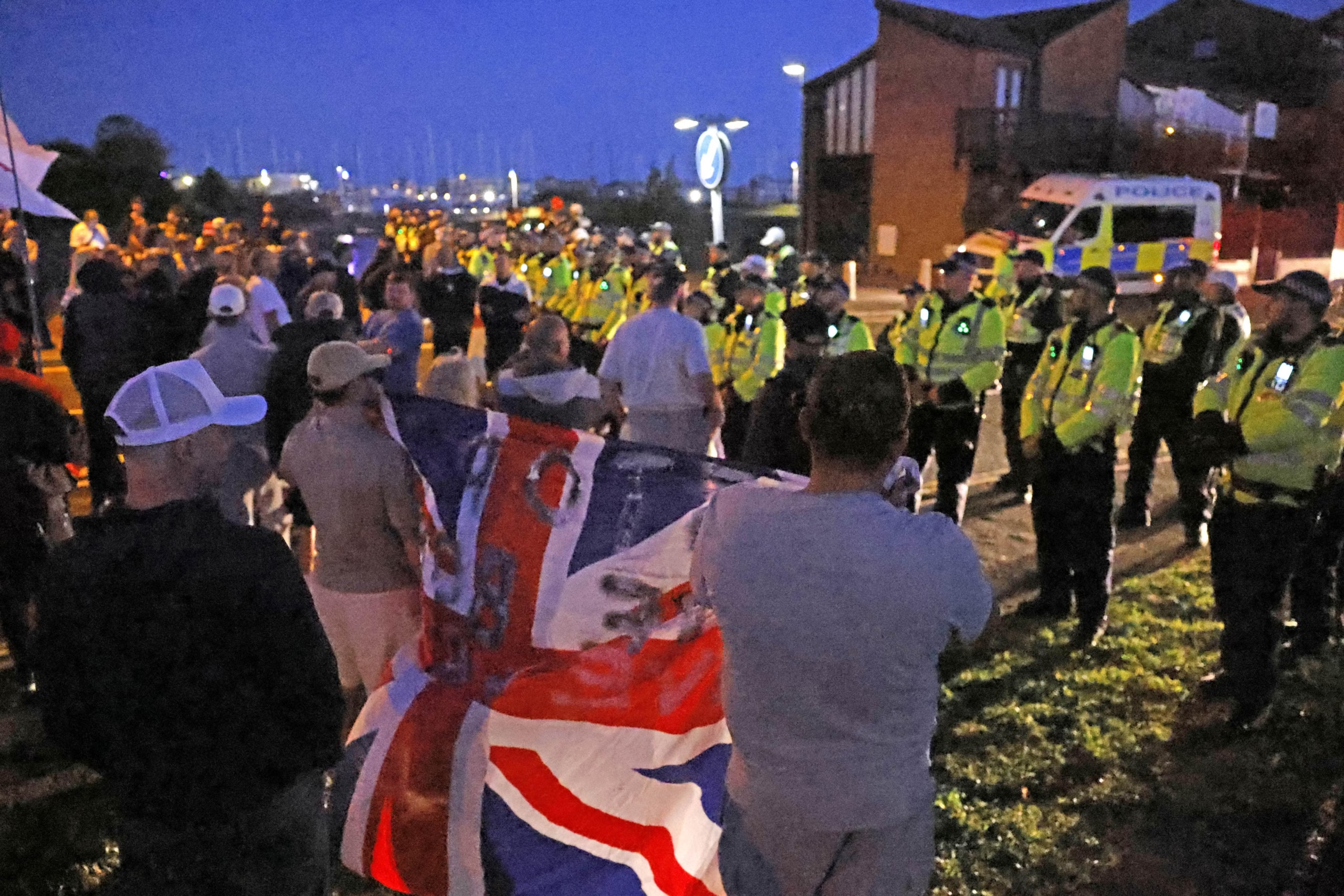
Anti-migrant demonstrators have clashed with police in the Hampshire coastal town of Gosport following the rescue of nearly 150 people attempting to cross the English Channel in a small boat, highlighting renewed tensions over irregular migration and the government’s handling of arrivals by sea.
Protesters gathered near Haslar Marina after reports circulated that a group of people rescued from a small boat could be brought ashore in the town. The gathering was the second recent protest in Gosport linked to rumours about the arrival of migrants, with a significant police presence deployed to manage the situation.
Several of those rescued were seen arriving at a marina late on Sunday after being transported on two boats operated by the Royal National Lifeboat Institution. The small vessel carrying the group had reportedly been monitored by French rescue vessels while travelling through the Channel before RNLI crews encountered it in English waters.

The Home Office said 149 people were believed to have been on board the vessel. Officials said contingency arrangements were already in place to ensure that people rescued from small boats could be safely brought ashore, identified and processed.
The Border Security Command said arrangements were designed to protect the UK border while allowing authorities to respond to emergencies at sea. Those arriving by small boat are expected to be transferred to short-term holding facilities in Kent, where they undergo health, security and biometric checks as part of the standard processing procedure.
The arrival triggered a rapid response from local authorities. Hampshire and Isle of Wight Constabulary said on Sunday that officers had been deployed to Gosport to support partner agencies in case an emergency developed at sea. Ambulances and coaches were also seen in the area, adding to speculation that rescued passengers could be brought to the town.
As demonstrators gathered near the marina, police introduced conditions under the Public Order Act and exercised powers relating to face coverings. The measures were intended to help officers manage the demonstration and maintain public order as tensions increased.
The protest was largely peaceful for much of the evening, but the atmosphere became more confrontational at points. Reports indicated that flares were set off and that some demonstrators became involved in scuffles with police officers.
The latest confrontation follows similar scenes in Gosport during the previous month. Protesters had gathered after rumours circulated that migrants rescued at sea would be taken to the town. On that occasion, however, the rescued passengers were transported by sea to Dover instead.
The repeated demonstrations illustrate the sensitivity surrounding small-boat arrivals in coastal communities. Local authorities and emergency services can face significant operational pressures when large groups are expected to arrive, while residents and protesters may respond strongly to reports of planned disembarkations.
The incident also comes as authorities monitor changes in the routes being used by people attempting to cross the Channel. Departures from the western section of the northern French coast have historically been less common than crossings from areas further east, but officials have recorded several such journeys recently.
The latest crossing was reportedly the third from that part of the French coast within a month. In September, British rescue crews collected passengers from another small boat that had spent roughly 30 hours at sea after departing from Normandy.
The journeys demonstrate the continuing dangers associated with Channel crossings. Small inflatable vessels can be vulnerable to changing weather, strong currents, commercial shipping and mechanical failure. Rescue agencies on both sides of the Channel therefore continue to play a central role in responding when boats encounter difficulties or reach British waters.
The political debate surrounding the crossings remains intense. Anti-migrant groups argue that the continued arrival of people in small boats demonstrates that existing government measures are failing to deter irregular migration. Supporters of a more humanitarian approach, meanwhile, stress the risks faced by people making the journey and the importance of rescue operations when lives are at risk.
The British government has made reducing small-boat crossings a major political priority and has increased resources devoted to border enforcement and processing. Border Security Command is responsible for coordinating a range of measures intended to disrupt people-smuggling networks and strengthen control of the Channel border.
At the same time, the arrival of migrants places significant demands on emergency and administrative services. Police, ambulance crews, maritime rescue organisations and immigration authorities can all become involved when a boat is intercepted or rescued.
In Gosport, the deployment of coaches and ambulances contributed to heightened public interest before the rescued passengers arrived. The presence of demonstrators then required police to balance the right to protest with the need to maintain safety around the marina and prevent disorder.
The authorities have not indicated that the rescued passengers were responsible for the confrontation between protesters and police. The tensions were primarily connected to the demonstration and opposition to the arrival of migrants.
The latest figures provide a broader picture of Channel migration this year. The provisional number of people who have crossed the Channel in small boats in 2026 stands at 19,451. That figure is 43 per cent lower than the corresponding point last year and 23 per cent below the total recorded at the same stage in 2024.
Despite the decline, the number remains politically significant. Each new arrival tends to generate renewed debate over border controls, asylum policy, accommodation, international cooperation and the effectiveness of government efforts to prevent crossings.
For communities along the southern English coast, the issue can also have a direct local impact. Towns such as Gosport may suddenly become focal points for national immigration debates when rescue operations result in people being brought ashore. The presence of protesters can create additional pressure for local police and emergency services.
The situation is further complicated by the unpredictable nature of Channel crossings. Boats can change direction, encounter difficulties or require rescue with little warning. This makes it difficult for authorities to predict exactly where passengers will eventually be brought ashore.
The involvement of the RNLI also underlines the humanitarian dimension of the crisis. The organisation’s crews are trained to respond to people in distress at sea, regardless of nationality or immigration status. Their role can place them at the centre of politically charged situations even when their immediate priority is simply saving lives.
Meanwhile, authorities continue to focus on identifying those arriving and determining their individual circumstances. The Home Office has said people brought ashore from small boats will be subject to health, security and biometric checks before being processed through the appropriate immigration procedures.
The Gosport demonstrations are therefore part of a wider and increasingly complex national debate. While the number of crossings has fallen compared with previous years, the issue remains highly visible and politically contentious.
For the protesters, the arrival of migrants represents a symbol of what they regard as inadequate border enforcement. For the authorities, the immediate responsibility is to ensure that people rescued from potentially dangerous conditions are safely brought ashore and processed according to established procedures.

The confrontation between demonstrators and police demonstrates how quickly such incidents can become tense. Maintaining public order will remain an important challenge if more rescue operations result in arrivals along the southern coast.
As Britain continues to debate its approach to irregular migration, the events in Gosport highlight the competing pressures facing the country. The government is under pressure to control its borders and reduce small-boat crossings, while emergency services remain responsible for responding when vulnerable people are found at sea.
The latest incident ended without the much larger disruption that some had feared, but it has once again placed Gosport at the centre of the migration debate. With further Channel crossings expected and political disagreements continuing, coastal communities and authorities are likely to face similar challenges in the months ahead.
Related News:
 Ministers Condemn Far-Right Unrest in Portsmouth
 Patriot Platform Raises Concern Across Britain
 Mahmood Warns Far Right Over Asylum Protests
 UK Reviews Hague Child Abduction Cases Involving Abuse
 King Refers Jamaica Slavery Petition to Privy Council
 Far-Right Activist Arrested After Channel Dinghy Incident
 Portadown protest ends after tense Orange Order standoff
 Hundreds of UK prisoners released early amid overcrowding
 Drumcree Talks End Without Agreement Ahead of Appeal
 It’s time to come clean on the China spy case
 French Taxi Driver Cleared in David Lammy Theft Case After Fare Dispute
 Met Police Culture Makes Racial Harm ‘Inevitable’
 Remaining rebel Labour MPs have whip restored
 Undercover officer deceived women with ‘grotesque and cruel’ lies, spycops inquiry told
 Mass Arrests at London Palestine Protest Spark Debate
 NHS Safety Fears as Nurses Cover Doctor Gaps
 UK may ban protests amid rising antisemitism fears
 Barrister Criticises Trial After Suicide Case Verdict
 Victim says non-custodial rape sentence ‘rock in my face’
 Murder Probe Continues After Arrest Release
 Westminster Council Threatens Charing Cross Soup Kitchen
 BBC Warned About Missing Clothes of Murder Victim
 Cambridge Professor Jason Arday Found Dead at Home
 Masked Protesters Bring Dover Port Traffic to Standstill
 UN expert urges UK to rethink Israel policy
 Armed Suspect Attacks Ohio Governor Candidate
 Councils spend £125m on illegal children’s care
 Miliband Rejects Chief Rabbi’s West Bank Warning
 Reform UK Receives Record £36m Donation From Crypto Billionaire
 Election Candidate Abuse Raises Alarm in England
 UK Urged to Probe US Diplomat Case
 Lisa Nandy Calls for Tougher Action on Social Media Doxxing
 Piddington Votes for Symbolic Independence Over Asylum Plan
 Texas Transfers Raise Fears for Migrant Children
 Memphis Questions National Guard Crime Surge
 Disabled Travellers Seek Fairer UK Care Rules
 Briton Faces Cyprus Court Over Son’s Fatal Fall
 Democrat Says ICE Restricted Detention Camp Oversight
 Far-Right Activist Slashes Dinghy in Channel
 Free Speech Emerges as Key UK Election Issue
 Three Die in Channel Crossing Attempt Near France
 Fayed Survivors Demand Inquiry Into Medical Regulator
 London Facial Recognition Trial Ends With False Alert
 French Student Protests Escalate Into Violent Clashes
 Burnham Opens Door to Possible UK Return to EU
 Drumcree Talks Falter as Legal Challenge Deepens
 UK-France Returns Deal Faces Expiry as Talks Stall
 Early Prison Releases Raise Homelessness Concerns
 Almost Half of Fayed Accusers May Be Trafficking Victims
 Badenoch Raises Prospect of 2027 UK Election
 French School Protests Escalate as 400 Schools Close
 Latin America women fear rollback of rights
 Tasers Introduced in UK Prisons to Combat Rising Violence and Protect Staff
 FBI Director Kash Patel Defends Girlfriend Amid Government Jet Claims
 Just Stop Oil Protesters Convicted Amid Climate Defence Row
 ‘Reckless’ cuts to victims’ services will cost more than they save
 Major Rent Reform Ends No-Fault Evictions in England
 Peers Flood Assisted Dying Bill with 942 Amendments
 Serial Rapist and Former Cop Found Guilty Again
 Most Tories Expect to Support a Farage-Led Government
 Tim Walz urges Trump to withdraw federal agents immediately
 Proposed Law Leaves Gap for Children of Convicted Paedophiles
 Kezia Dugdale Warns of Possible Reversal of Equal Rights Gains
 Synagogue Arson Attempt Sparks Security Fears
 Crackdown Backfires on UK Climate Protesters
 Greens Face Internal Row Over Antisemitism Claims
 Farage and Reform UK Reshape British Politics
 Starmer Leadership Under Pressure After Setbacks
 Burnham unveils £65m drought aid for farmers
 Unions Warn Labour Over Zero-Hours Contract Reforms
 RAF Barnham Protests Fuel Tensions in Norfolk Town
 UK plans tougher Israel stance with settlement trade ban
 Israel Accused of Undermining Palestinian Life
 UK Retailers Accused of Breaking Refund Laws
 Harrods Faces Dispute Over Fayed Abuse Compensation
 Lib Dems Prepare for Election Amid Reform Challenge
 Japan PM Backs International Criminal Court
 Tennessee Set to Execute Woman After Clemency Denied
 Pelicot Trial Play Comes to London for One Night
 UK University Strikes Spread as Financial Pressure Grows