Published: 30 September 2026. The English Chronicle Desk. The English Chronicle Online
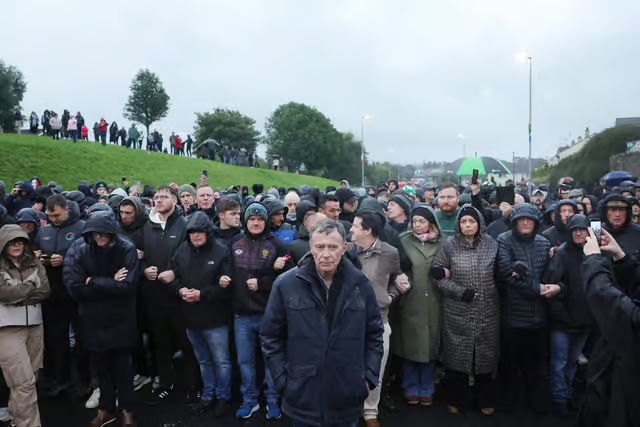
Efforts to resolve the renewed dispute over the Drumcree parade in Northern Ireland have reached a difficult stage, with nationalist representatives saying mediation between the opposing communities appears to have stalled while a fresh legal challenge is being prepared over the decision that allowed the controversial march along the Garvaghy Road.
Northern Ireland Secretary Chris Bryant is continuing discussions with representatives of both sides as political leaders attempt to prevent the dispute from escalating. The talks come amid heightened tensions in Portadown, where the proposed Orange Order parade has reopened a confrontation that has remained one of the most sensitive issues in the region’s recent history.
The Garvaghy Road Residents’ Coalition has launched a further legal challenge, arguing that the Parades Commission failed to properly consider future risks when making its decision. The challenge follows earlier court proceedings concerning the commission’s determination to permit the parade.
At the same time, representatives of the Portadown Orange Order have maintained that the decision allowing the march should be respected and have called for the law to be applied. The opposing positions leave little immediate indication that an agreement acceptable to both communities is close.

Breandán Mac Cionnaith, who leads the Garvaghy Road residents’ group, said after meeting Bryant that mediation was effectively no longer viable from his community’s perspective. He said residents’ objective remained preventing the parade from travelling down the road and argued that this reflected the wishes of the local community.
The Orange Order has taken a different position, insisting on its right to carry out the parade under the determination issued by the Parades Commission. Portadown district master Nigel Dawson described his discussions with the Northern Ireland secretary as constructive and said the organisation wanted the law governing the parade to be implemented.
The disagreement reflects the competing principles at the centre of the dispute. For the Orange Order and its supporters, the issue concerns the right to conduct a lawful cultural and religious parade. For many residents along Garvaghy Road, the proposed route is associated with the area’s history of confrontation and is regarded as unwanted and deeply sensitive.
The current dispute was triggered by the Parades Commission’s decision to permit an Orange Order parade along the Garvaghy Road, a route that had been at the centre of a long-running controversy during the 1990s. Northern Ireland’s Department of Justice has stressed that the Parades Commission is the statutory body responsible for making decisions on contentious parades and that its determinations are subject to legal challenge.
The department has also called on all parties to respect the legal process and maintain peaceful behaviour. It has warned that the progress made in community relations in Portadown over recent decades should not be undermined by the renewed confrontation.
The British government has separately ordered an independent review of the Parades Commission’s decision-making procedures following the recent court proceedings. Sir John O’Hara KC has been appointed to lead the review, which is intended to examine how decisions are reached and how the organisation is governed. The review followed concerns raised about the commission’s handling of the Drumcree decision.
The legal dispute surrounding the latest determination centres partly on how potential public disorder was assessed. During a special High Court hearing, lawyers representing the Garvaghy Road residents argued that documentation considered by the Parades Commission focused on previous incidents rather than adequately assessing future risks associated with the proposed march.
The residents’ legal team questioned whether the commission had properly evaluated the possibility of disorder, property damage or other consequences that could arise from allowing the parade to proceed.
The challenge does not, however, remove the underlying tension between the two communities. Even where legal proceedings are taking place, political and community leaders must contend with the possibility that confrontation on the ground could intensify.
The situation has also produced divisions within Northern Ireland’s political institutions. Members of the Executive and the Northern Ireland Assembly have expressed sharply different views about the parade, the residents’ protests and the application of the rule of law.
Some unionist representatives have criticised nationalist politicians for participating in or supporting protests that they regard as unlawful. They argue that the Parades Commission’s decision was a lawful determination and should be respected, regardless of whether particular politicians or communities agree with it.
Nationalist representatives, meanwhile, have emphasised the historical experience of the Garvaghy Road community and the fears associated with the return of the dispute. They have argued that the issue cannot be viewed solely through the question of whether a parade has received legal authorisation.
The political disagreement has extended to the role of First Minister Michelle O’Neill, who was among nationalist representatives present in the Garvaghy Road area during the confrontation. Unionist politicians have criticised her involvement, while nationalist representatives have defended engagement with local residents.
The dispute has also prompted concern in the Republic of Ireland. Sinn Féin leader Mary Lou McDonald and Northern Ireland’s first minister have held discussions with Irish government leaders as political figures attempt to assess the wider implications of the confrontation.
Irish political leaders have warned that a return to prolonged community conflict would have consequences beyond the immediate parade dispute. The Drumcree controversy became closely associated with some of the most difficult years of the Northern Ireland peace process, and memories of that period remain particularly strong among residents who experienced it.
Former Irish taoiseach Bertie Ahern, who played a central role in the negotiations that produced the 1998 peace settlement, has warned against a return to what he described as the region’s “tribal past”. His intervention reflects concerns that a local dispute over a parade could acquire a much wider political significance.
The historical context is central to understanding why the present confrontation has generated such strong reactions. Drumcree was a major flashpoint during the Troubles, when disputes over Orange Order parades became intertwined with wider questions about identity, sovereignty and community relations.
The peace process subsequently helped establish a framework in which contentious parades could be assessed through an independent regulatory mechanism rather than through direct confrontation between communities. The Parades Commission became a key part of that framework.
The latest dispute has therefore placed considerable pressure on confidence in the system. The British government’s decision to commission an independent review reflects the seriousness of the questions raised about the commission’s procedures.
Meanwhile, police face a difficult operational situation. A gathering by protesters on the Garvaghy Road has continued, while authorities have been conscious of the potential consequences of attempting to clear the area. Any enforcement action in a highly charged environment could carry risks of confrontation.
At the same time, the legal position surrounding public demonstrations remains an important part of the debate. Northern Ireland’s parading legislation establishes procedures for notifying and regulating contentious parades and related gatherings. Political representatives on both sides have invoked the rule of law while accusing the opposing camp of failing to respect it.
The dispute therefore involves several overlapping questions: the rights of those organising a parade, the rights and concerns of residents along the proposed route, the authority of the Parades Commission, the role of the courts and police, and the responsibility of political leaders to prevent tensions from escalating.
For residents of Garvaghy Road, the issue has a deeply personal dimension. Many remember the confrontations of the 1990s and fear that the renewed dispute could reopen old divisions. For members of the Orange Order, meanwhile, the restrictions historically placed on their parades remain a matter of cultural and civil rights.
Bryant’s continuing meetings with both sides indicate that the British government is attempting to keep communication open even as the prospects of an immediate agreement remain uncertain. Whether mediation can be revived may depend on developments in the legal challenge, the response of the Parades Commission and the willingness of both communities to engage.
The scheduled court hearing later in the week could become an important next stage. Any judicial decision could affect the immediate status of the parade and potentially influence the wider debate over how contentious marches are assessed.
Beyond the courtroom, however, the central challenge will remain preventing a dispute over a particular route from becoming a broader confrontation between communities. Northern Ireland’s peace has been built over decades through political agreements, legal institutions and efforts at reconciliation, but community relations can remain vulnerable when historical grievances are reopened.
For now, there is no clear indication that the competing sides have reached common ground. Nationalist representatives continue to oppose the parade, while the Orange Order maintains that the legal determination should be implemented.

The British and Irish governments, alongside Northern Ireland’s political institutions, are consequently facing renewed pressure to help contain the dispute. The coming days will test whether legal proceedings and political dialogue can provide a route out of the standoff without further damaging relationships between communities.
The significance of Drumcree extends beyond the proposed movement of a parade along one road. It has become a test of how Northern Ireland manages competing rights, historical memory and public order within the institutions established after decades of conflict.
As talks continue and the legal challenge moves forward, the immediate priority for authorities will be to maintain public safety and prevent further escalation. The longer-term challenge will be finding a framework that allows contentious cultural traditions to be addressed while ensuring that affected communities have confidence in the process used to make decisions about them.
Related News:
 Patriot Platform Raises Concern Across Britain
 Reform UK Receives Record £36m Donation From Crypto Billionaire
 Election Candidate Abuse Raises Alarm in England
 Lib Dems Prepare for Election Amid Reform Challenge
 King Refers Jamaica Slavery Petition to Privy Council
 UK Pauses Chagos Deal Amid US Opposition
 Elif Eralp Emerges as Berlin’s Next Political Force
 Free Speech Emerges as Key UK Election Issue
 Burnham Opens Door to Possible UK Return to EU
 UK and EU Signal Fresh Push for Defence Cooperation Talks
 Undercover officer deceived women with ‘grotesque and cruel’ lies, spycops inquiry told
 Cartel crackdown raises fears of fresh violence
 US states redraw maps after voting rights ruling
 UK may ban protests amid rising antisemitism fears
 Barrister Criticises Trial After Suicide Case Verdict
 Immigration Judges Fear Pressure in Trump Era
 Trump’s Revenge Drive Deepens GOP Divide
 Farage and Reform UK Reshape British Politics
 Starmer Leadership Under Pressure After Setbacks
 Murder Probe Continues After Arrest Release
 Le Pen’s Popularity Holds Despite Conviction
 Westminster Council Threatens Charing Cross Soup Kitchen
 BBC Warned About Missing Clothes of Murder Victim
 Is America Ready for an AOC Presidential Run?
 Cambridge Professor Jason Arday Found Dead at Home
 Five Years of Taliban Rule Leave Afghanistan in Crisis
 Ghent Professors Questioned Cofnas Appointment
 RAF Barnham Protests Fuel Tensions in Norfolk Town
 Exeter Approves Saudi Military Training Partnership
 British Man Faces Deportation Threat in Sweden
 Internal Exclusions Surge in England’s Schools
 Green Leader Targets Starmer’s Former Seat
 Masked Protesters Bring Dover Port Traffic to Standstill
 UN expert urges UK to rethink Israel policy
 Ministers Condemn Far-Right Unrest in Portsmouth
 UK plans tougher Israel stance with settlement trade ban
 Councils spend £125m on illegal children’s care
 British widow says deportation from Sweden feels like a death sentence
 Europe’s democracies face a growing far-right threat
 Miliband Rejects Chief Rabbi’s West Bank Warning
 Pavlohrad Strike Kills Five, Injures 67
 Israel Accused of Undermining Palestinian Life
 Slave-Trade Wealth Embedded in Britain’s Financial System
 New Evidence Deepens Church of England Slavery Reckoning
 Piddington Votes for Symbolic Independence Over Asylum Plan
 Amnesty Finds Coordinated Abuses in Iran Protest Crackdown
 Turkey LGBTQ Crackdown Expands With New Arrests
 Iran School Strike Raises War Crimes Questions, UN Says
 Mahmood Warns Far Right Over Asylum Protests
 Disabled Travellers Seek Fairer UK Care Rules
 NHS Breast Care Review Finds Serious Patient Harm
 Trump Media Ban Triggers First Amendment Clash
 US Networks Suspend Trump White House Pool Coverage
 Briton Faces Cyprus Court Over Son’s Fatal Fall
 UK Reviews Hague Child Abduction Cases Involving Abuse
 Democrat Says ICE Restricted Detention Camp Oversight
 UK Plans New Centre to Counter Information Warfare
 Court Says Judge Should Not Have Heard Case From Bed
 Judge orders Trump to restore access for three media outlets
 Far-Right Activist Arrested After Channel Dinghy Incident
 Portadown protest ends after tense Orange Order standoff
 Republican Senator Questions Trump Ad Spending
 Three Die in Channel Crossing Attempt Near France
 Fayed Survivors Demand Inquiry Into Medical Regulator
 Dale Vince Plans New London-Wide News Operation
 London Facial Recognition Trial Ends With False Alert
 French Student Protests Escalate Into Violent Clashes
 Trump Ads Trigger Fight Over Taxpayer Money
 UK University Strikes Spread as Financial Pressure Grows
 Major Rent Reform Ends No-Fault Evictions in England
 Gordon Brown urges court for crimes against children
 Relationship with Trump may be beyond repair, Starmer warned
 Ben Roberts-Smith Denies War Crime Allegations in First Statement
 New Footage Revives Peter Falconio Mystery
 Burnham unveils £65m drought aid for farmers
 Unions Warn Labour Over Zero-Hours Contract Reforms
 British Museum Faces Questions Over Peter Thiel’s Private Bayeux Viewing
 Bayeux Tapestry Revives Franco-British Ties
 UK Retailers Accused of Breaking Refund Laws
 Trump Threatens EU With Tariffs Over Canada Proposal