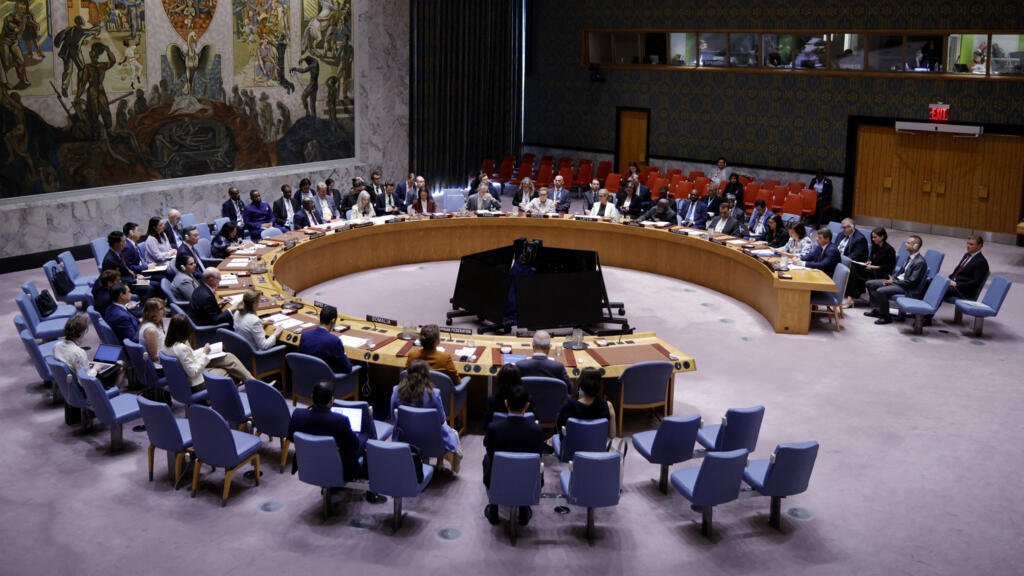
The contest to select the next secretary-general of the United Nations is exposing growing divisions among the world’s major powers, with diplomatic disagreements threatening to complicate the appointment of the organisation’s next leader. A crucial Security Council vote is expected to provide a clearer indication of whether Costa Rican candidate Rebeca Grynspan can overcome opposition from influential permanent members or whether the selection process will become another example of political rivalry shaping international institutions.
The election has entered a particularly sensitive stage after more than four months of diplomatic negotiations and repeated informal ballots. Grynspan, an economist and experienced United Nations official, has maintained a leading position in almost all the voting rounds conducted since the first secret ballot on 30 July. However, her prospects remain uncertain because the five permanent members of the Security Council possess the power to veto any candidate recommended for the position.

Grynspan comes from a family of Polish-Jewish refugees who settled in Costa Rica during the Second World War. Her professional background in economics, international development and multilateral diplomacy has helped establish her reputation as a serious contender for the world’s most prominent diplomatic position. Despite her consistent performance in the informal voting, concerns remain that political resistance from Washington and Moscow could prevent her appointment.
The United Nations Security Council consists of 15 members, including five permanent members and 10 elected members. The permanent five, known as the P5, are the United States, Russia, China, France and the United Kingdom. Under the organisation’s appointment procedures, a candidate must secure at least nine votes in the Security Council without receiving a veto from any permanent member before being recommended to the General Assembly.
The informal voting process uses three possible responses: encourage, discourage and no opinion. Although countries are not required to disclose their individual choices, diplomats attempt to understand the balance of support through private discussions, intelligence gathering and information circulating among delegations.
Friday’s ballot is particularly significant because it is expected to distinguish the voting positions of permanent and elected Security Council members through a colour-coded system. The five permanent members will cast red ballots, while the 10 elected members will use white ballots. This distinction could reveal whether opposition to Grynspan is concentrated among the countries holding veto powers or whether resistance is also growing among the wider membership.
One diplomat involved in the process described the electoral system as a contest in which gaining support is important, but avoiding opposition from particular countries is equally essential. Even a candidate with substantial international backing can fail if one permanent member decides to exercise its veto.
The prolonged selection process has also highlighted the political divisions that have affected the leadership of the United Nations under outgoing secretary-general António Guterres. The organisation has increasingly struggled to respond effectively to major international conflicts and diplomatic disagreements, with competing interests among powerful countries frequently limiting the possibility of collective action.
Nevertheless, the intense competition for the next secretary-general demonstrates that the position remains strategically important. The individual appointed will have to manage international disputes, coordinate humanitarian responses, defend the principles of the UN Charter and maintain diplomatic relationships among countries with sharply conflicting interests.
Another major development in the race concerns the candidacy of Lana Nusseibeh, a senior Emirati diplomat supported by the United Arab Emirates. Her campaign has attracted backing from powerful international partners, including the United States and Russia, but has also generated considerable opposition from countries concerned about the UAE’s foreign policy and regional activities.
Nusseibeh has demonstrated significant diplomatic experience and is widely recognised for her negotiating abilities. However, her performance in the informal voting rounds has raised questions about whether international support from influential capitals can translate into broader acceptance within the Security Council.
In the two ballots she has contested, she reportedly received seven votes encouraging her candidacy, six discouraging it and two expressing no opinion. The results suggest that despite strong backing from major powers, she faces considerable resistance among other Security Council members.
The UAE’s foreign policy has become an important issue in the campaign. Critics have raised concerns about its involvement in regional conflicts and its relationships with political and military actors in countries including Sudan, Somalia, Libya and Yemen. Some diplomats believe that the UAE’s commercially driven approach to international relations has created opposition among countries that view its growing influence with suspicion.
Somalia has emerged as one of the most vocal critics. Its president, Hassan Sheikh Mohamud, recently accused the UAE of acquiring ports, establishing military facilities and supporting armed groups outside Somalia’s national security framework without the approval of the federal government. These allegations have intensified concerns about the UAE’s influence in the Horn of Africa.
The situation has also created difficulties for countries seeking to balance their strategic relationships with the UAE against their diplomatic commitments and international responsibilities.
In Europe, the UK’s political position is attracting particular attention. Foreign Secretary Ed Miliband has not publicly clarified his position on Nusseibeh’s candidacy. However, concerns about the UAE’s human rights record and its relationship with Russia could complicate Britain’s diplomatic calculations.
The issue has also reached the British parliament. Sixty-eight MPs, including Sarah Champion, chair of the International Development Select Committee, signed a letter urging Prime Minister Andy Burnham to oppose Nusseibeh’s appointment. The lawmakers described her as a compromised figure and raised concerns about the implications of allowing someone closely associated with the UAE’s leadership to become the head of the United Nations.
At the same time, the British political leadership has its own diplomatic and economic relationships with the Emirates. Burnham’s previous connections with the UAE during his time as mayor of Manchester and Nusseibeh’s educational background at the University of Cambridge add further dimensions to the political discussion.
Regional representation is another significant factor influencing the contest. Several Latin American countries believe that an informal geographical rotation arrangement should give their region an opportunity to lead the United Nations. Panama and Colombia, both elected members of the Security Council, are therefore expected to oppose Nusseibeh’s candidacy. China has also expressed support for the principle of regional rotation.
The dispute over geographical representation reflects a wider concern about how leadership positions within international organisations are distributed. Many countries believe that the UN should become more representative of the global community rather than allowing a small group of powerful states to dominate its most important decisions.
Russia’s position has also complicated the prospects of another candidate, Argentine diplomat Rafael Grossi, who heads the International Atomic Energy Agency. Moscow has reportedly opposed Grossi because of his interventions concerning the Zaporizhzhia nuclear power plant in Ukraine. His involvement in monitoring the facility during the conflict has become a point of disagreement with Russian authorities.
Meanwhile, Grynspan’s campaign faces its own challenges in Washington. The personalised nature of decision-making within the Trump administration has reportedly made it difficult for her to establish influence. US Ambassador to the United Nations Mike Waltz is believed by diplomats to play an important role in shaping Washington’s position on the candidates.
Grynspan’s Jewish heritage has also attracted attention, although she has avoided making it a central feature of her campaign. Some observers believe that the election of a Jewish secretary-general could carry historical significance and potentially appeal to parts of the American political establishment. However, her age, at 70, could become a disadvantage among those advocating generational renewal within the United Nations.
The latest voting history has demonstrated both her strengths and vulnerabilities. On 5 November, Grynspan reportedly secured 12 votes in favour and three against. However, an earlier colour-coded ballot on 16 October revealed that two permanent members had discouraged her candidacy, an outcome equivalent to veto opposition. At that stage, Nusseibeh had not yet entered the competition.
The next secretary-general will inherit an organisation facing enormous challenges, including wars, humanitarian emergencies, geopolitical rivalry, climate change and declining confidence in multilateral cooperation. The successful candidate will need to maintain the confidence of powerful governments while demonstrating independence and credibility among smaller nations.

The growing competition has therefore become more than a contest between individual diplomats. It represents a wider struggle over international influence, regional representation and the future direction of global governance.
As diplomatic negotiations intensify, the Security Council faces mounting pressure to break the prolonged deadlock. Whether Grynspan can overcome opposition from permanent members, or another candidate emerges as a compromise choice, remains uncertain. What is increasingly clear is that the selection process has exposed deep divisions among the world’s leading powers and renewed questions about the balance of authority within the United Nations.
Related News:
 Yvette Cooper: UK Must Follow Principles, Not US Pressure
 Former Diplomats Urge UK and France to Act on Palestine
 UN expert urges UK to rethink Israel policy
 Europe’s democracies face a growing far-right threat
 Lib Dems Prepare for Election Amid Reform Challenge
 UK Plans New Centre to Counter Information Warfare
 UK Pauses Chagos Deal Amid US Opposition
 Elif Eralp Emerges as Berlin’s Next Political Force
 Drumcree Talks Falter as Legal Challenge Deepens
 UK-France Returns Deal Faces Expiry as Talks Stall
 Green Party faces dispute over Zionism motion
 Report Urges UK to Rethink Overseas Military Spending
 UK Mission in East Jerusalem to Remain Open
 UK Gaza Refugee Route Criticised Over False Hope Claims
 UK Greens Face Crisis Over Zionism and Extremism Row
 Farage Rejects Claims Reform Would Let Troops Shoot Migrants
 UK Urges Interpol to Reject Argentina’s Falklands Arrest Requests
 Serbia Leader Linked to Controversial Trump Tower Plan
 King Charles Faces Calls for Slavery Reparations Talks
 Exiled Journalists Defy Putin’s Growing Media Crackdown
 US Pushes for Final Russia-Ukraine Peace Deal
 Zelenskyy Sees Peace Opportunity as US Envoys Meet Putin
 US Indictment Reveals New Links in RAF Fairford Case
 Iran unrest slows under brutal crackdown and global tensions
 Thousands Protest ICE Operations in Nationwide US Day of Action
 Epstein Files Reveal Trump Officials’ Emails with Financier
 Starmer Condemns ‘Depraved’ Russian Strikes on Ukraine
 Trump Tariffs Threat Spark UK and EU Alarm
 Gordon Brown urges court for crimes against children
 Starmer Praised for Stance on Trump and Iran Conflict
 Army Probes Apache Flyover at Kid Rock’s Nashville Estate
 Relationship with Trump may be beyond repair, Starmer warned
 UK Stands Firm on Falklands Amid US Rift
 Oil Prices Surge Above $120 Amid Iran Blockade Fears
 Trump orders US troop pullout from Germany
 US ‘Narco Boat’ Strikes Draw Global Outcry
 Fear and Betrayal: The Chilling Case of Kouri Richins
 Discontent grows around Putin amid war strain
 Farage and Reform UK Reshape British Politics
 Starmer Leadership Under Pressure After Setbacks
 New South Wales Premier Chris Minns Signals Tough Road Ahead for Labor
 Houthis Strike Saudi Arabia as Middle East Tensions Rise
 Ghent Professors Questioned Cofnas Appointment
 RAF Barnham Protests Fuel Tensions in Norfolk Town
 Ukraine Villagers Demand Answers After Deadly Arms Depot Strike
 Trump Hardens Canada Trade Stance as Talks Stall
 Bayeux Tapestry Revives Franco-British Ties
 Trump Calls Iran War ‘Small Potatoes’ Despite US Deaths
 UK plans tougher Israel stance with settlement trade ban
 Royal Crown Branded Enslaved Africans in Britain’s Slave Trade
 Israel Accused of Undermining Palestinian Life
 US Networks Suspend Trump White House Pool Coverage
 Republican Senator Questions Trump Ad Spending
 Free Speech Emerges as Key UK Election Issue
 Burnham Opens Door to Possible UK Return to EU
 Pilot and Passengers Help Save Flydubai Flight
 Badenoch Raises Prospect of 2027 UK Election
 US bombers leave RAF Fairford after terror threat
 Israeli Settlers Assault Palestinian Photographer
 Trump Says He Deserves Nobel Peace Prize
 French Students Protest Poor Conditions in Paris Suburbs
 Brazil Court Scandal Threatens Lula as Bolsonaros Rise
 Greta Thunberg Backs French Students in School Protests
 India’s Voter Roll Crisis Sparks Nationwide Protests
 Gadi Eisenkot: Israel’s Anti-Netanyahu Challenger
 UK Threatens Eritrea With Visa Ban Over Returns Dispute
 UK Could Rejoin EU Through a Switzerland Plus Deal
 Brexit Debate Returns as UK Voters Reconsider EU Exit
 Xi Jinping Tightens China’s Anti-Corruption Campaign
 Palestinian Parties Gain Power in Israel’s Election
 Trump’s Global Policies Put Republicans at Risk
King Charles Faces Reparations Protests at Antigua Summit
 Canada Joins Boycott of Russian Ice Hockey Teams
 EU Citizens Sue Home Office Over UK Residency Rights
 Knesset Speaker Race Could Decide Netanyahu’s Future
 One Nation Candidate Apologises for Offensive Posts
 Ilse Aigner Set to Make German History as First Female President
 Eisenkot Accuses Netanyahu of Racist Anti-Arab Campaign
 CEU Eyes Budapest Return as Hungary Enters New Era
 Australia’s Election Funding Changes Face Fresh Backlash