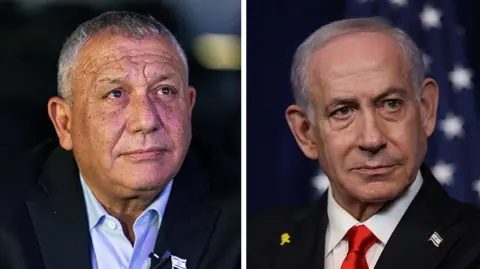
The projected gains have created a difficult choice for opposition leader Gadi Eisenkot and his political allies. If they hope to form a government and end Benjamin Netanyahu’s lengthy period of influence, they may need to negotiate with Arab-Israeli parties whose participation in national coalition politics has often been limited by ideological divisions and longstanding disputes over national identity.
The preliminary projections indicate a closely divided parliament, with neither Eisenkot’s opposition bloc nor Netanyahu’s governing coalition securing the 61 seats required for a majority. Although the final results could differ from the exit polls, the anticipated rise of Palestinian parties has already placed questions of political representation, democratic participation and coalition-building at the centre of Israel’s post-election debate.
The outcome could also determine whether Netanyahu retains a path back to power despite the apparent electoral challenge facing his coalition.

The projected increase in Palestinian representation marks one of the most significant developments of the election. According to the exit polls, Palestinian political groupings could hold between 17 and 18 seats in the next Knesset, giving them greater influence over negotiations to establish a government.
The principal groups involved are the Joint List and Ra’am, also known as the United Arab List. Although they represent Arab citizens of Israel, their political priorities, ideological positions and approaches to cooperation with Zionist parties are not identical.
Their increased representation could make it more difficult for mainstream Israeli politicians to form a stable government without addressing the demands of Arab voters.
For years, Palestinian parties have faced political obstacles in influencing national government formation. Disagreements over Israel’s national identity, the treatment of Palestinian citizens, security policy and the Israeli-Palestinian conflict have often limited cooperation with Jewish-majority parties.
The latest projections suggest that this political arrangement may become harder to sustain.
Eisenkot, who leads the opposition bloc seeking to replace Netanyahu, initially described the election as a victory for Israel’s Zionist national majority. However, the anticipated parliamentary arithmetic suggests that the opposition could struggle to turn its electoral performance into a governing majority without reaching beyond its existing political alliances.
The result presents a broader question for Israeli democracy: whether Arab political representatives can participate as influential partners in government formation or remain largely excluded from the country’s most consequential political decisions.
The exit polls placed Eisenkot’s opposition bloc and Netanyahu’s governing coalition in a closely balanced position. Neither side appeared to have secured the 61 seats required to command a majority in the Knesset.
Even if Netanyahu’s Likud party emerges as the largest single party, that achievement alone would not guarantee that he could assemble a government.
Israel’s president, Isaac Herzog, is expected to play a crucial constitutional role once the official results are established. Under the country’s government-formation process, the president consults political representatives before assigning a candidate the task of forming a government.
If the first candidate cannot secure sufficient support within the prescribed period, another candidate may receive an opportunity. The process can extend over several weeks, during which the outgoing government generally remains in a caretaker capacity.
For Eisenkot, the challenge will be translating the opposition’s electoral support into an agreement that satisfies parties with different ideological commitments.
His existing allies include politicians who have previously opposed Netanyahu but may not agree on the extent of cooperation with Palestinian parties. Some could regard a formal coalition arrangement as politically risky, particularly if it requires concessions on national identity, military service or security policy.
Nevertheless, without additional parliamentary support, Eisenkot could find it difficult to establish a stable administration.
The Palestinian parties therefore occupy a potentially decisive position in the negotiations, even though their projected seat totals do not automatically guarantee a place in the next government.
Among the Palestinian parties, Ra’am and its leader, Mansour Abbas, may prove comparatively easier for Eisenkot’s bloc to approach.
Abbas has previously demonstrated a willingness to cooperate with Jewish-led political parties, including participation in the government led by Naftali Bennett. Bennett is now a junior partner in the opposition grouping associated with Eisenkot, creating an existing political connection that could help facilitate discussions.
Ra’am has generally emphasised practical issues affecting Arab communities, including public services, housing, infrastructure, employment and crime prevention. Its approach has sought to translate parliamentary participation into tangible benefits for Arab citizens.
Abbas has also indicated that removing Netanyahu and his far-right allies from government is a central political objective.
Speaking during election night, he reportedly identified Netanyahu, Bezalel Smotrich and Itamar Ben-Gvir as figures whose political influence he wanted to see reduced.
However, Ra’am is projected to win approximately seven seats, according to estimates based on the exit polls. That number may be insufficient to give Eisenkot a majority, even if the other members of his bloc agree to cooperation.
The final outcome will depend on the confirmed distribution of seats, the positions taken by Eisenkot’s existing partners and the precise form of any agreement with Ra’am.
A formal coalition arrangement would be only one possibility. The party could also provide parliamentary support on confidence votes or selected legislation without joining the government directly.
Such an arrangement could give Ra’am influence over policy while allowing its partners to avoid some of the political costs associated with a formal alliance.
Negotiations with the Joint List could prove considerably more complicated.
Exit-poll projections suggest that the grouping could secure 11 or more seats, making it potentially more influential than Ra’am. The Joint List includes political forces with stronger ideological objections to Zionism and different views on the relationship between Palestinian national identity and the Israeli state.
Eisenkot has reportedly outlined four conditions for cooperation: recognition of Israel as a Jewish and democratic state, acceptance of the principles expressed in Israel’s Declaration of Independence, acceptance of military conscription for Palestinian Israeli citizens who are generally exempt, and condemnation of Hamas as a terrorist organisation.
These demands touch on fundamental disagreements over citizenship, equality, national identity and security.
For the Joint List, accepting such conditions without substantial negotiations could undermine its political identity and alienate sections of its electorate.
Amjad Shbita, general secretary of Hadash, the socialist party forming the largest faction within the Joint List, rejected the idea that Eisenkot could dictate the terms of cooperation.
Shbita indicated that negotiations would need to take place between political equals, arguing that both sides required the support of the other.
His remarks suggest that the Joint List intends to use its projected parliamentary strength to secure meaningful concessions rather than simply provide votes for an opposition-led government.
Any negotiations could therefore involve difficult discussions over public spending, equal rights, housing, policing, employment and the political status of Arab citizens.
The two sides would also need to determine whether their disagreements on Israel’s national identity and military policy could be managed through a practical parliamentary arrangement.
If negotiations with Ra’am and the Joint List fail, Eisenkot could consider leading a minority government supported through informal agreements on individual parliamentary votes.
Under such an arrangement, his government would not necessarily possess a permanent majority but could seek support from different parties for legislation, budgets and confidence motions.
The strategy could provide a temporary route around the deadlock. However, it would leave the government vulnerable to political disputes and potentially make it difficult to pass major legislation.
The lack of a stable majority could also increase the likelihood of another election, particularly if disagreements over security, public spending or relations with Palestinian political representatives become impossible to resolve.
For Netanyahu, such instability could provide an opportunity to rebuild support among conservative Jewish voters.
His campaign reportedly used the slogan “the Right or Palestine”, presenting the contest as a choice between a right-wing government and a political alternative dependent on Palestinian parties.
If Eisenkot struggles to establish a functioning administration, Netanyahu could argue that the opposition’s reliance on Arab political support demonstrates the risks of its approach.
However, Netanyahu has repeatedly demonstrated an ability to survive political crises through tactical negotiations and alliances. His continued influence means that the election result should not be interpreted as a definitive end to his political career.
A divided parliament could create opportunities for both sides, with the final balance determined by the ability of political leaders to negotiate agreements that can withstand internal pressure.
The election has placed Netanyahu’s leadership under renewed pressure, but the exit polls do not establish that his political influence has ended.
His Likud party could remain the largest individual party even if the broader governing coalition falls short of a parliamentary majority. In Israel’s proportional parliamentary system, coalition-building is essential, meaning the largest party does not automatically form the government.
Netanyahu’s experience in political negotiations could help him seek support from smaller parties or exploit disagreements within the opposition.
Yet the growing representation of Palestinian parties complicates his position. If Eisenkot can reach an agreement with Ra’am, the Joint List or both, he could potentially assemble a parliamentary majority that excludes Netanyahu’s current allies.
Such an outcome would represent a significant change in the country’s political direction and demonstrate that Arab-Israeli representation can influence the formation of a national government.
Conversely, if the opposition rejects cooperation and cannot find sufficient support elsewhere, Netanyahu could remain in contention despite the apparent electoral setback.
The coming negotiations will therefore test not only the strength of individual parties but also the willingness of Israeli political leaders to reconsider established boundaries around coalition-building.
The projected gains for Palestinian parties have implications beyond the immediate contest between Eisenkot and Netanyahu.
Arab citizens of Israel constitute a substantial minority of the population, but their political representation has often been constrained by disputes over national identity and the willingness of Jewish-majority parties to cooperate with Arab political leaders.
The projected increase to 17 or 18 Knesset seats could strengthen their ability to influence public policy, particularly on issues affecting Arab communities.
Housing shortages, local government funding, economic inequality, public safety and access to services are likely to remain important concerns for Arab representatives seeking to demonstrate the value of parliamentary participation.
At the same time, the negotiations could expose the limits of political cooperation. Parties may find it difficult to reconcile their positions on the Israeli-Palestinian conflict, military service, constitutional identity and security.
The central question is whether the new parliamentary balance will produce a more inclusive approach to government or deepen the political divisions already affecting Israeli society.

Speaking at the Joint List’s election-night gathering in Nazareth, a party official framed the choice as one between maintaining political supremacy and building a more democratic system.
That argument captures the broader significance of the election. Palestinian parties may not determine the final outcome on their own, but their projected gains could make their participation indispensable to the next government’s formation.
As official results emerge and coalition negotiations begin, Israel faces a consequential political test. Eisenkot must decide whether cooperation with Arab-Israeli leaders is a viable route to power, while Netanyahu will seek to exploit any divisions that emerge.
The final outcome will depend on the confirmed seat distribution and the compromises political leaders are willing to make. What appears increasingly clear from the exit polls is that Palestinian political representation can no longer be treated as a marginal factor in Israel’s national electoral calculations.
The next phase of negotiations could reshape the country’s political alliances and establish a new precedent for the role of Arab parties in determining who governs Israel.
Related News:
 Middle East Crisis Escalates as Oil Routes Shake Markets
 Houthis Strike Saudi Arabia as Middle East Tensions Rise
 Trump Calls Strait of Hormuz ‘American Territory’
 Trump Faces Iran War Crisis Before Midterm Vote
 Netanyahu faces protests and pressure at UN
 Iran Awaits Trump Response on Seven-Day Hormuz Plan
 Israeli Settlers Assault Palestinian Photographer
 UK Prepares Aircraft Carrier for Middle East Crisis
 Activists allege abuse after Gaza flotilla seizure
 Global order shifts amid Trump-era turmoil
 Tensions Emerge in Netanyahu-Trump Alliance
 Putin Declares Russia Victory at Scaled Victory Day Parade
 Hunger increasingly weaponised in global conflicts
 Former ICC prosecutor condemns US sanctions
 Taliban global ties grow as rights fears mount
 Russian Missiles Intensify Pressure on Kyiv
 Former Diplomats Urge UK and France to Act on Palestine
 UN expert urges UK to rethink Israel policy
 Nearly 50,000 Flee as Houthis Advance in Yemen
 Saudi Pact Raises Risk of Pakistan Entering War
 South Korea-Ukraine Row Erupts Over North Korean POWs
 Pilot and Passengers Help Save Flydubai Flight
 New Maps Reveal Gaza’s Vast Destruction
 Ukraine’s New FP-7 Missile Makes Combat Debut
 Three Years On, October 7 Survivors Face Lasting Trauma
 Yemen Conflict Escalates as Houthis Expand Their Front
 Vance Demands Iran Cut Nuclear Enrichment
 Israel Marks Three Years Since October 7 Attack
 Tanker Attacked Near Qatar as Hormuz Tensions Escalate
 Israel Promotes Film Challenging Controversial Gaza Documentary
 Trump Rules Out Iran Attack Before US Elections
 Riyadh Airport Hit Again as Yemen Conflict Escalates
 Trump Slams Ukraine Strikes as Russia Ceasefire Collapses
 Netanyahu Faces Defining Election Test as Israel Divides
 Iran unrest slows under brutal crackdown and global tensions
 Thousands Protest ICE Operations in Nationwide US Day of Action
 Epstein Files Reveal Trump Officials’ Emails with Financier
 Thousands Protest ICE in New York Against Trump Deportation Campaign
 Thousands Protest Iran Strikes Outside US Embassy London
 Ukraine war briefing: Zelenskyy offers help to Saudi Crown prince on combatting Iranian drones
 Mojtaba Khamenei Chosen as Iran’s New Supreme Leader
 Tehran Oil Depot Strikes Darken City With Toxic Smoke
 Mojtaba Khamenei Supporters Rally as Iranians Fear Repression
 Iran Defiance Grows Amid US-Israel War Pressure
 Hormuz Crisis Sparks Global Oil Market Fears
 Injured Mojtaba Khamenei Elevated as Iran Leader
 Yvette Cooper: UK Must Follow Principles, Not US Pressure
 Trump Iran War Stance Hardens as Conflict Widens
 Iran Crisis Tests Trump’s Global Leadership
 Ukraine Urges UK to Seize Russian Oil Tankers
 US Calls Australia Media Law “Foreign Extortion”
 Oil Prices Surge Above $120 Amid Iran Blockade Fears
 Trump orders US troop pullout from Germany
 Trump Announces 3-Day Russia–Ukraine Ceasefire Deal
 Discontent grows around Putin amid war strain
 Grief and Devotion Amidst the Rubble of Nabatieh
 Iran Prepares for Massive Six-Day Funeral for Khamenei
 Millions Gather for Khamenei’s Six-Day State Funeral
 Iran Mourns: Millions at Khamenei’s Final Procession
 Israeli Strike in Southern Lebanon Kills Seven
 Trump Hardens Canada Trade Stance as Talks Stall
 Trump Calls Iran War ‘Small Potatoes’ Despite US Deaths
 Saudi Arabia Shuts Oil Pipeline After Drone Attack
 Israel Accused of Undermining Palestinian Life
 Saudi intercepts Houthi missiles as oil fears grow
 South Korea demands apology over DMZ mine blast
 US Sends Third Carrier to Middle East
 Yemen government launches offensive against Houthis
 Germany Pledges €1bn Military Aid to Ukraine
 Ukraine claims strikes have crippled Russia’s oil refining
 Iran Nobel Laureate Reveals Prison Torture and Fears
 Trump Comments on Iran Strike Draw US Backlash
 Canadian Veterans Condemn Trump Allies’ Military Remarks
 Argentina Protesters Resist Milei’s Land Sale Drive
 UK Mission in East Jerusalem to Remain Open
 Turkey Rules Out Troops in Saudi Arabia’s Houthi Conflict
 EU Divisions Deepen Over Israel Policy
 Serbia Leader Linked to Controversial Trump Tower Plan
 Japan’s Takaichi Faces a Crucial Second Year in Power
 Ukraine Peace Talks Set to Resume in November