Published: 25 September 2026. The English Chronicle Desk. The English Chronicle Online
Iran is waiting for a response from US President Donald Trump to a proposal that could reopen the strategically vital Strait of Hormuz within seven days and bring Washington and Tehran back into direct negotiations over Iran’s nuclear programme. The proposal, presented through mediators, links the reopening of the major shipping route to a series of conditions that include the lifting of US sanctions on Iranian oil exports, an end to military hostilities across the region and the release of some frozen Iranian assets.
Iranian Foreign Minister Abbas Araghchi said the proposal was designed to accelerate commitments previously discussed between the two countries and create a practical sequence for reducing tensions. Under the plan, Iran would open the strait within six or seven days after the necessary conditions were met, while formal discussions on its nuclear programme could begin the following day.
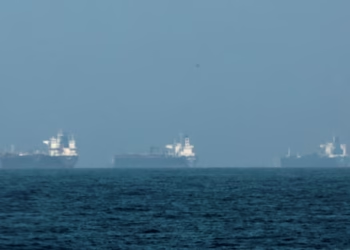
The proposal places the Strait of Hormuz at the centre of a wider diplomatic effort to bring the current conflict closer to an end. The waterway, situated between Iran and Oman, is one of the world’s most important energy routes, carrying a substantial share of internationally traded oil and gas. Any prolonged disruption has the potential to affect energy prices, shipping costs and supply chains far beyond the Middle East.
Araghchi said Iran had already reached an understanding with Oman concerning a temporary arrangement for maritime traffic through the strait. Tehran has described the proposed arrangement as effectively agreed and indicated that the technical details could be formally registered with the International Maritime Organization.

The Iranian foreign minister said he was now waiting for Washington to respond. He also said Iran had consulted China about the proposal and that Beijing had expressed support for the initiative.
The timing of the proposal is significant because diplomatic contacts between Iran and the United States have intensified around the United Nations General Assembly in New York. Iranian and American officials have held discussions through intermediaries, while regional governments have continued trying to find a way to prevent the conflict from spreading further.
Araghchi said the conditions attached to the proposal were not new demands but were linked to commitments previously included in a memorandum of understanding reached between Iran and the United States in June. Tehran’s latest initiative would, however, bring forward the timetable for nuclear negotiations. Instead of waiting for the longer period originally envisaged, Iran is proposing that discussions begin almost immediately after the reopening of the waterway.
For Iran, the issue of sanctions remains central. Tehran wants restrictions on its oil exports removed as part of any arrangement, arguing that an agreement cannot be sustainable if economic pressure remains in place while the country is expected to make concessions on maritime access and nuclear negotiations.
The Iranian proposal also extends beyond the Strait of Hormuz. Tehran wants the broader war to end on all fronts, including the conflict involving Israel and Lebanon. That condition creates a major diplomatic challenge because Washington would have to consider how such an arrangement could affect its regional partners and ongoing military commitments.
Another issue concerns Iranian assets frozen under sanctions. Tehran is seeking the release of some of those funds as part of the proposed process. For Iran, access to frozen assets would provide an economic benefit at a time when sanctions and conflict have placed additional pressure on its economy.
The situation is further complicated by developments in Yemen. Iran-backed Houthi forces have been involved in renewed fighting with Saudi Arabia, while attacks and threats around the Red Sea and Bab al-Mandab have created another layer of uncertainty for international shipping.
Saudi Arabia had previously been expected to support an Oman-Iran arrangement concerning the Strait of Hormuz, but its position became more difficult as fighting involving the Houthis intensified. Riyadh has expressed serious concerns over attacks attributed to the Iran-backed group and the potential impact on Saudi territory and energy infrastructure.
Iran has said it has urged the Houthis to stop attacks on Saudi Arabia. At the same time, Iranian officials have maintained that Tehran does not exercise complete control over the group’s decisions. The distinction is important because Saudi Arabia’s position could influence the prospects for any regional agreement concerning the movement of ships through Hormuz.
The situation also carries a wider security dimension. Iranian military officials have warned that any further US escalation could lead to additional pressure on maritime routes, including the Bab al-Mandab Strait. Such warnings underline the possibility that the conflict could affect more than one major international shipping corridor.
The economic consequences are already being closely watched. Oil prices have remained elevated amid uncertainty over supplies and shipping security. Any credible agreement that allows traffic through Hormuz to resume could ease some of the pressure on energy markets, although the broader impact would depend on whether the arrangement proves durable and whether other regional conflicts also subside.
The Strait of Hormuz is particularly important because alternative export routes cannot easily replace its capacity. Gulf producers have explored pipelines and other maritime routes to reduce their dependence on the waterway, but regional insecurity has complicated those efforts. Disruptions around the Red Sea have also demonstrated how quickly attacks on shipping routes can affect energy markets and international trade.
The diplomatic process is therefore being closely monitored not only in Washington and Tehran but also in Gulf capitals and other major economies. A reopening of Hormuz could provide immediate relief for shipping and energy markets, while a broader agreement could potentially reduce the risk of further military escalation.
Britain has also entered the diplomatic discussions. UK Foreign Secretary Ed Miliband met Araghchi in New York, marking the first meeting between British and Iranian foreign ministers in about a year. Relations between London and Tehran have remained strained, including after Britain designated Iran’s Islamic Revolutionary Guard Corps as a terrorist organisation.
During the meeting, Miliband reportedly stressed Britain’s support for freedom of navigation through the Strait of Hormuz and expressed support for a diplomatic solution. He also raised British concerns about Iran’s activities in the United Kingdom and called for consular access to British nationals imprisoned in Iran.
The British position reflects the wider international concern over the safety of commercial shipping. Freedom of navigation through Hormuz has become one of the central questions surrounding the current crisis, with governments seeking guarantees that commercial vessels can continue operating without being drawn into military confrontations.
Meanwhile, the United States faces its own difficult calculations. Washington would have to determine whether Iran’s proposed conditions provide sufficient guarantees for a lasting arrangement. The question of who would control and regulate maritime traffic through the strait could become particularly sensitive.
Iran wants to maintain a degree of control over shipping through the waterway, including restrictions on certain military movements. The United States and its regional partners may have concerns about accepting arrangements that could give Tehran significant authority over an international maritime route.
Questions about navigation fees, tolls and other technical arrangements have also yet to be fully resolved. These issues could potentially be addressed later if the broader diplomatic framework succeeds, but they could become obstacles if the parties fail to agree on the practical details of implementation.
Araghchi has indicated that Iran is prepared to wait for Washington’s answer. He has also suggested that Tehran does not want to rush the process, despite the importance it attaches to reopening the strait and beginning nuclear negotiations.
Iranian President Masoud Pezeshkian has simultaneously sought to present Tehran’s position as one that combines resistance to military pressure with an openness to diplomacy. His recent appearance at the United Nations reflected that approach, as he rejected what Iran considers unacceptable pressure while signalling that negotiations remain possible.
The United States, meanwhile, must weigh the diplomatic opportunity against concerns about sanctions enforcement, regional security and its commitments to allies. Any agreement would also have to address the conflicts involving Israel, Lebanon, Saudi Arabia and Yemen, making the negotiations substantially broader than a simple arrangement over maritime traffic.

For global markets, the immediate question is whether the proposal can translate into a verifiable reopening of Hormuz. For diplomats, the larger issue is whether the seven-day framework can establish enough confidence between Washington and Tehran to move from crisis management towards sustained negotiations.
The coming days could therefore prove important. If Washington accepts the proposal or moves towards negotiations on its conditions, the Strait of Hormuz could become the starting point for a wider diplomatic process. If the two sides remain divided over sanctions, military operations and regional security, the waterway is likely to remain at the centre of the confrontation.
For now, Tehran says the proposal is on the table and that it is waiting for the American response. Whether the initiative becomes a practical agreement will depend on the ability of Iran, the United States and their regional partners to resolve the substantial political, military and economic differences that continue to separate them.
Related News:
 Middle East Crisis Escalates as Oil Routes Shake Markets
 Houthis Strike Saudi Arabia as Middle East Tensions Rise
 Trump Calls Strait of Hormuz ‘American Territory’
 Trump Faces Iran War Crisis Before Midterm Vote
 Netanyahu faces protests and pressure at UN
 UK Prepares Aircraft Carrier for Middle East Crisis
 Activists allege abuse after Gaza flotilla seizure
 Global order shifts amid Trump-era turmoil
 Tensions Emerge in Netanyahu-Trump Alliance
 Putin Declares Russia Victory at Scaled Victory Day Parade
 Hunger increasingly weaponised in global conflicts
 Former ICC prosecutor condemns US sanctions
 Taliban global ties grow as rights fears mount
 Russian Missiles Intensify Pressure on Kyiv
 Former Diplomats Urge UK and France to Act on Palestine
 Trump announces major US oil deal with Venezuela
 UN expert urges UK to rethink Israel policy
 Saudi Arabia Shuts Oil Pipeline After Drone Attack
 Nearly 50,000 Flee as Houthis Advance in Yemen
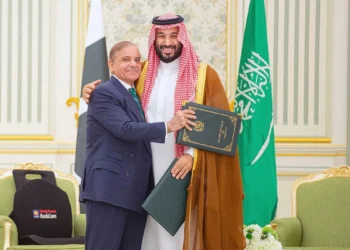 Saudi Pact Raises Risk of Pakistan Entering War
 Machado Trump medal gesture reshapes Venezuela power struggle
 Trump Receives Machado’s Nobel Medal in White House Meeting
 Iran unrest slows under brutal crackdown and global tensions
 US Considers Asylum for British Jews Amid Rising Antisemitism
 Russia Strikes Kyiv and Kharkiv as Peace Talks Enter Day Two
 Thousands Protest ICE Operations in Nationwide US Day of Action
 Epstein Files Reveal Trump Officials’ Emails with Financier
 Thousands Protest ICE in New York Against Trump Deportation Campaign
 Middle East Flights Halted After Iran Strikes
 Thousands Protest Iran Strikes Outside US Embassy London
 US Bombers Arrive at RAF Base Amid Rising Iran Tensions
 Ukraine war briefing: Zelenskyy offers help to Saudi Crown prince on combatting Iranian drones
 Mojtaba Khamenei Chosen as Iran’s New Supreme Leader
 Tehran Oil Depot Strikes Darken City With Toxic Smoke
 Mojtaba Khamenei Supporters Rally as Iranians Fear Repression
 Iran Defiance Grows Amid US-Israel War Pressure
 Hormuz Crisis Sparks Global Oil Market Fears
 Iranian Exile Factions Seek US Backing for Iran’s Future
 Injured Mojtaba Khamenei Elevated as Iran Leader
 Yvette Cooper: UK Must Follow Principles, Not US Pressure
 Trump Iran War Stance Hardens as Conflict Widens
 Philippines energy emergency sparks coal power surge
 Saudi Arabia Urging US to Keep Up Iran Attacks
 Death, displacement and military duties: children plunged into crisis
 Netanyahu Vows Continued Lebanon Strikes Amid Peace Talks
 Iran Crisis Tests Trump’s Global Leadership
 US and Iran Pursue Extension of Ceasefire via Pakistan
 Ukraine Urges UK to Seize Russian Oil Tankers
 US Calls Australia Media Law “Foreign Extortion”
 Aid Crisis Grows as Hormuz War Disrupts Supply
 Oil Prices Surge Above $120 Amid Iran Blockade Fears
 Trump orders US troop pullout from Germany
 Trump likens US Navy actions to ‘pirates’
 Australia pushes Pacific security pact amid China tension
 Ceasefire Standoff Deepens in Ukraine War
 Indiana Republicans Defy Trump in Key Vote Test
 Trump Announces 3-Day Russia–Ukraine Ceasefire Deal
 Israeli Strikes in Lebanon Kill 10 Amid Ceasefire Strain
 Zelenskyy warns over Oreshnik threat as Kyiv hit
 Discontent grows around Putin amid war strain
 Trump Claims Iran Peace Deal Near Completion
 Iran To Propose New Shipping Fees In Strait Of Hormuz
 Trump’s Iran Legacy Hangs on Tehran Deal
 Grief and Devotion Amidst the Rubble of Nabatieh
 High Drama in Tehran Over Secret Nuclear Letters
 Iran Prepares for Massive Six-Day Funeral for Khamenei
 Millions Gather for Khamenei’s Six-Day State Funeral
 Iran Mourns: Millions at Khamenei’s Final Procession
 Seoul proposes historic peace talks to replace Korean War armistice
 Israeli Strike in Southern Lebanon Kills Seven
 Trump dismisses concerns over 250-day carrier deployment
 Trump Hardens Canada Trade Stance as Talks Stall
 Trump Calls Iran War ‘Small Potatoes’ Despite US Deaths
 Susan Sarandon Says Palestine Stand Costs Roles
 Miliband Rejects Chief Rabbi’s West Bank Warning
 North Korea Expands Uranium Facility at Yongbyon
 Israel Accused of Undermining Palestinian Life
 South Korea Rules Out Military Role in Iran War
 Irish PM Backs Coach in Israel Football Dispute
 Saudi intercepts Houthi missiles as oil fears grow