Published: 23 September 2026. The English Chronicle Desk. The English Chronicle Online.
Ireland’s Prime Minister Micheál Martin has backed national football manager Heimir Hallgrímsson after the Israel Football Association criticised the coach over remarks about the war in Gaza, intensifying an already heated dispute ahead of two Nations League fixtures between Ireland and Israel.
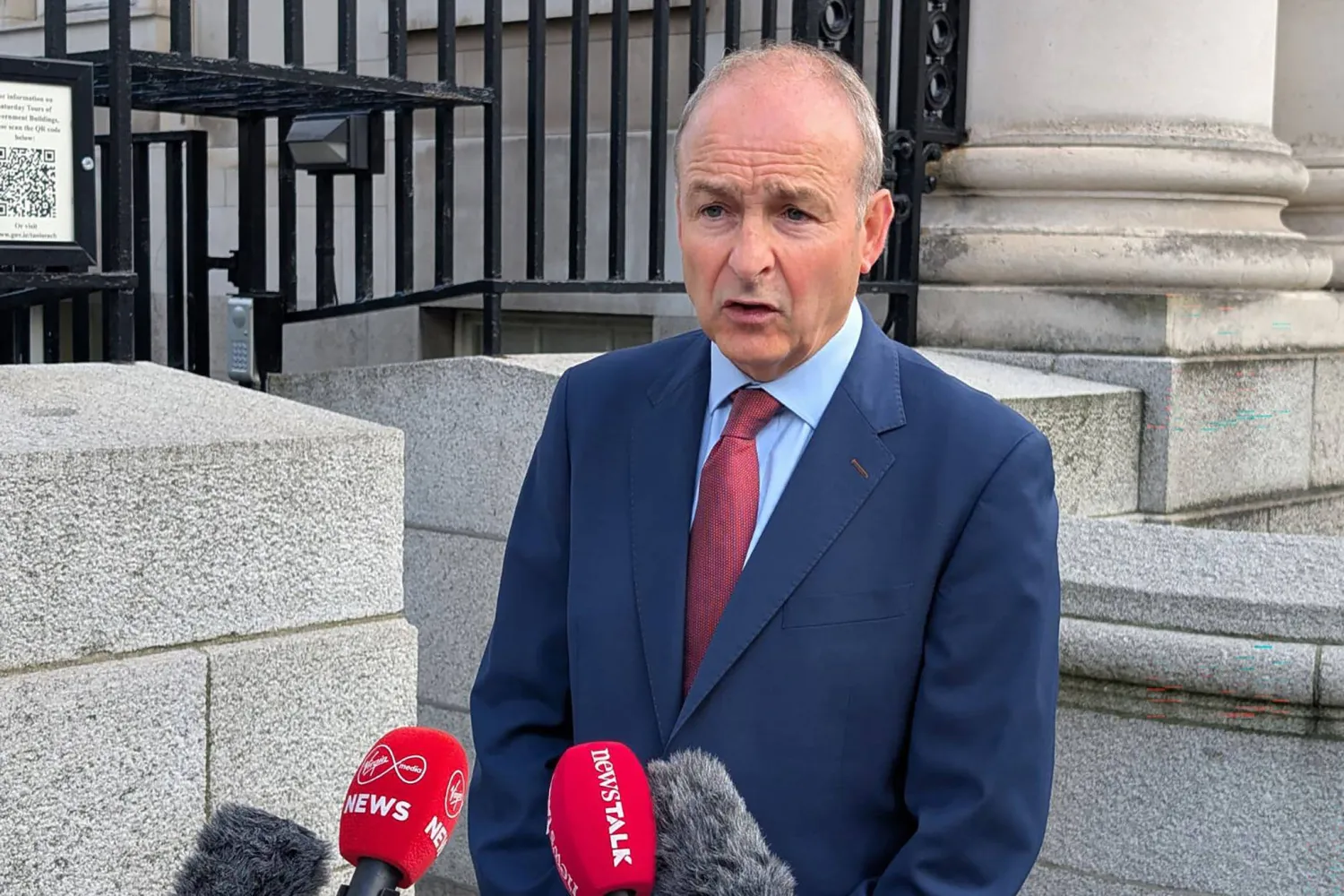
Martin, speaking to reporters in New York while attending the United Nations General Assembly, described the comments made by the Israeli football federation about Hallgrímsson as “unacceptable” and said they should be withdrawn. His intervention has brought the political controversy surrounding the upcoming matches into sharper focus, with the fixtures already attracting protests, calls for a boycott and debate within Irish football.
The dispute began after Hallgrímsson was asked about Ireland’s preparations for the two matches against Israel. The Icelandic-born manager said his players were not comfortable with the political circumstances surrounding the fixtures but would remain united once the decision had been made to play. He then made a direct reference to the war in Gaza, saying that Ireland was “playing against genocide” rather than “playing with” Israel.
The remarks prompted a strong response from the Israel Football Association, which accused the Irish manager of “stupidity, ignorance and hypocrisy”. The language used by the Israeli federation quickly became part of the wider controversy, drawing criticism from the Irish prime minister.

Martin said Hallgrímsson’s comments reflected concerns over the scale of death and destruction in Gaza. He also referred to statements by United Nations Secretary-General António Guterres while discussing the broader international debate over the conflict.
“I think those are unacceptable remarks; they should be withdrawn,” Martin told reporters. “Israel can’t keep denying what the world knows, and what the world understands.” His comments represented a direct public defence of the Irish national team manager at a time when the football dispute has become closely connected with Ireland’s broader foreign-policy position on the conflict.
The controversy comes only days before Ireland and Israel are scheduled to meet in the Nations League. The first match is due to take place on 27 September, with Israel designated as the home side. The return fixture is scheduled for 4 October, when Ireland is officially the home team.
Neither match will take place in the country normally associated with the designated home team. The September fixture has been moved to Debrecen in Hungary, while Ireland’s October home fixture has been relocated to Bačka Topola in Serbia. The changes followed concerns about security and possible disruption.
The matches have been politically sensitive in Ireland for months. More than 160 Irish sportspeople have signed an open letter calling for the national team to boycott the fixtures. Demonstrators have also gathered outside the Irish team’s hotel in Dublin, while further protests are expected before the matches.
The Football Association of Ireland has previously taken a formal position on Israel’s participation in European football. In November last year, the FAI passed a motion asking UEFA to suspend the Israel Football Association from international competition. UEFA did not adopt that request, leaving Ireland and Israel scheduled to face each other in the Nations League.
The FAI has said that withdrawing from the fixtures would expose Irish football to possible sporting and financial consequences. The organisation therefore intends to fulfil its obligations under the competition despite the political pressure surrounding the matches.
The issue has also raised questions about whether international sporting organisations should separate sporting competition from major political and humanitarian disputes. UEFA has said decisions concerning whether particular national teams should be prevented from being drawn against each other are considered individually, with security conditions among the factors taken into account.
The governing body has indicated that Ireland and Israel were not separated in the competition draw because the two countries have not been in direct conflict. The FAI has nevertheless continued to express concern about future pairings, reflecting the political and public sensitivity surrounding matches involving the two teams.
The Israeli Football Association has rejected the criticism directed at Israel over the Gaza war and has defended its position. Israel strongly rejects allegations that its conduct in Gaza amounts to genocide. Israeli officials have argued that their military campaign was launched in response to the Hamas-led attack of 7 October 2023 and that Israel is fighting Hamas while seeking to avoid civilian casualties.
According to Israeli official figures cited in international reporting, the 7 October attack killed 1,221 people in Israel and resulted in 251 hostages being taken to Gaza, with 44 of those hostages subsequently identified as already dead. The attack triggered Israel’s military campaign in Gaza and the continuing conflict that has generated widespread international condemnation and legal scrutiny.
Palestinian authorities in Gaza have reported a death toll exceeding 73,000 since the start of the war. The Gaza health ministry operates under Hamas, and while its figures are not independently verified in every individual case, international organisations and researchers have generally used its overall casualty figures when assessing the scale of the conflict.
Israel disputes allegations of genocide, while the issue is also the subject of proceedings at the International Court of Justice. The legal process remains separate from the football dispute and has not resulted in a final judgment determining the allegations.
Ireland has historically taken a prominent position in support of Palestinian rights. Dublin formally recognised a Palestinian state in 2024, alongside Spain and Norway, and Irish officials have repeatedly criticised Israeli military actions and called for greater protection of civilians in Gaza.
The country’s position is influenced by both contemporary foreign policy and a longstanding domestic political and public debate over the Israeli-Palestinian conflict. Support for the Palestinian cause has become particularly visible among Irish civil society groups, trade unions, political organisations and sections of the sporting community.
For the Irish football team, however, the immediate challenge is to prepare for competitive matches while operating under extraordinary political pressure. Hallgrímsson has sought to separate the players from the wider dispute, saying that once the decision to play has been made, the team must remain united and concentrate on football.
His comments nevertheless demonstrate how difficult that separation can be. National football managers are normally expected to focus on sporting matters, but international fixtures can carry wider political significance when the teams involved are connected to a major international conflict.
The response from Israel’s football federation has also ensured that the dispute extends beyond Hallgrímsson’s original comments. Martin’s intervention has now placed the Irish government directly into the public discussion surrounding the coach, although the matches remain under the authority of football’s governing bodies.

The controversy is expected to continue as the first match approaches. Demonstrations, security arrangements and calls for a boycott are likely to remain part of the discussion around the fixtures, while both teams prepare for matches that carry sporting consequences as well as considerable public attention.
For Ireland, the immediate position is that the matches will go ahead despite the protests and political controversy. For Israel, participation provides an opportunity to compete in the Nations League while facing sustained criticism over the Gaza war. For UEFA and the FAI, the fixtures illustrate the increasingly complicated relationship between international sport, security concerns and major geopolitical disputes.
The row between Hallgrímsson and the Israel Football Association has therefore become more than an exchange of statements. It reflects a broader disagreement over how sporting institutions and athletes should respond when international competition takes place against the backdrop of war and allegations of serious violations of international law.
As the two matches approach, the focus will shift between the football field and the continuing political debate surrounding the fixtures. Martin’s public defence of Hallgrímsson has made clear that the Irish government is prepared to stand behind the coach while the Football Association of Ireland continues to navigate its sporting obligations and the intense public pressure surrounding the matches.
Related News:
 Former ICC prosecutor condemns US sanctions
 Miliband Rejects Chief Rabbi’s West Bank Warning
 Israel Accused of Undermining Palestinian Life
 Saudi Pact Raises Risk of Pakistan Entering War
 China-critical UK academics face ‘extremely heavy’ pressure from Beijing
 US Justice Department Files Lawsuit Against California Over Partisan Voting Maps
 Trump Deploys DHS to Charlotte in Major Arrest Operation
 Congress Approves Release of Epstein Files, Trump Expected to Sign
 Texas Governor Faces Lawsuit From CAIR
 Chinese & Japanese Boats Clash Near Disputed Islands
 Putin Meets US Envoy Amid Key Ukraine Peace Talks
 UK and EU Signal Fresh Push for Defence Cooperation Talks
 Thousands Protest ICE Operations in Nationwide US Day of Action
 Sydney Protest Clash Triggers Police Probe
 Middle East Flights Halted After Iran Strikes
 UK Prepares Aircraft Carrier for Middle East Crisis
 Mojtaba Khamenei Chosen as Iran’s New Supreme Leader
 Tehran Oil Depot Strikes Darken City With Toxic Smoke
 Mojtaba Khamenei Supporters Rally as Iranians Fear Repression
 Iran Defiance Grows Amid US-Israel War Pressure
 Hormuz Crisis Sparks Global Oil Market Fears
 Iranian Exile Factions Seek US Backing for Iran’s Future
 Injured Mojtaba Khamenei Elevated as Iran Leader
 Queensland Protest Laws Spark Free Speech Backlash
 Trump Iran War Stance Hardens as Conflict Widens
 Ghalibaf Iran: Survivor Emerges in Shifting Power Game
 Report Says Pezzullo Acted ‘Recklessly’ in Dealings
 Hungary election: Orbán faces biggest test amid scandal
 Suspected Plot Targets Pipeline Before Hungary Vote
 Iran Crisis Tests Trump’s Global Leadership
 US Court Ruling Reshapes Voting Rights Landscape
 Cartel crackdown raises fears of fresh violence
 US states redraw maps after voting rights ruling
 Judge halts deportation of Yemeni refugees in US
 Trump likens US Navy actions to ‘pirates’
 Global order shifts amid Trump-era turmoil
 Trump warns Iran as Middle East tensions surge again
 US Court Restores Abortion Pill Access Temporarily
 Middle East Crisis Escalates as Oil Routes Shake Markets
 Tensions Emerge in Netanyahu-Trump Alliance
 Israeli Strikes in Lebanon Kill 10 Amid Ceasefire Strain
 Trump’s Revenge Drive Deepens GOP Divide
 Hunger increasingly weaponised in global conflicts
 Gunman Killed After White House Security Shootout
 Trump Claims Iran Peace Deal Near Completion
 Irish Gangland Figure Fails in Dublin Election Bid
 Football Hopes to Outshine World Cup Drama in Mexico
 Trump’s Red-Card Intervention Hurts the US World Cup
 Le Pen’s Popularity Holds Despite Conviction
 Bryne Backs Haaland Before England World Cup Clash
 Mystery Grows Over Mitch McConnell’s Health
 England and Norway Fans Turn Miami Into World Cup Carnival
 Lamine Yamal’s Birthday: Football, Fame, and France
 Houthis Strike Saudi Arabia as Middle East Tensions Rise
 Trump Calls Strait of Hormuz ‘American Territory’
 Trump Faces Iran War Crisis Before Midterm Vote
 Former Diplomats Urge UK and France to Act on Palestine
 Exeter Approves Saudi Military Training Partnership
 Premier League Midfielders Cost More Than Ever
 Trump Calls Iran War ‘Small Potatoes’ Despite US Deaths
 UN expert urges UK to rethink Israel policy
 Susan Sarandon Says Palestine Stand Costs Roles
 UK plans tougher Israel stance with settlement trade ban
 Saudi Arabia Shuts Oil Pipeline After Drone Attack
 Nearly 50,000 Flee as Houthis Advance in Yemen
 South Korea Rules Out Military Role in Iran War
 Trump Media Ban Triggers First Amendment Clash
 US Networks Suspend Trump White House Pool Coverage
 Japan PM Backs International Criminal Court
 King Refers Jamaica Slavery Petition to Privy Council
 Shadow Fleet at Sea: Europe’s Battle Against Illicit Oil Shipping
 Australia grants Asio powers to designate hate groups under new laws
 UK and US Drop in Global Corruption Index Rankings
 Canberra Poster Seizure Sparks Free Speech Row
 Fifa Official Under Investigation Over Hand Gesture Controversy
 Grief and Devotion Amidst the Rubble of Nabatieh
 England Triumph in Azteca World Cup Thriller
 Unions Warn Labour Over Zero-Hours Contract Reforms
 Bayeux Tapestry Revives Franco-British Ties
 Trump gives $45,000 holiday gifts to White House aides