Published: 06 October 2026. The English Chronicle Desk. The English Chronicle Online.
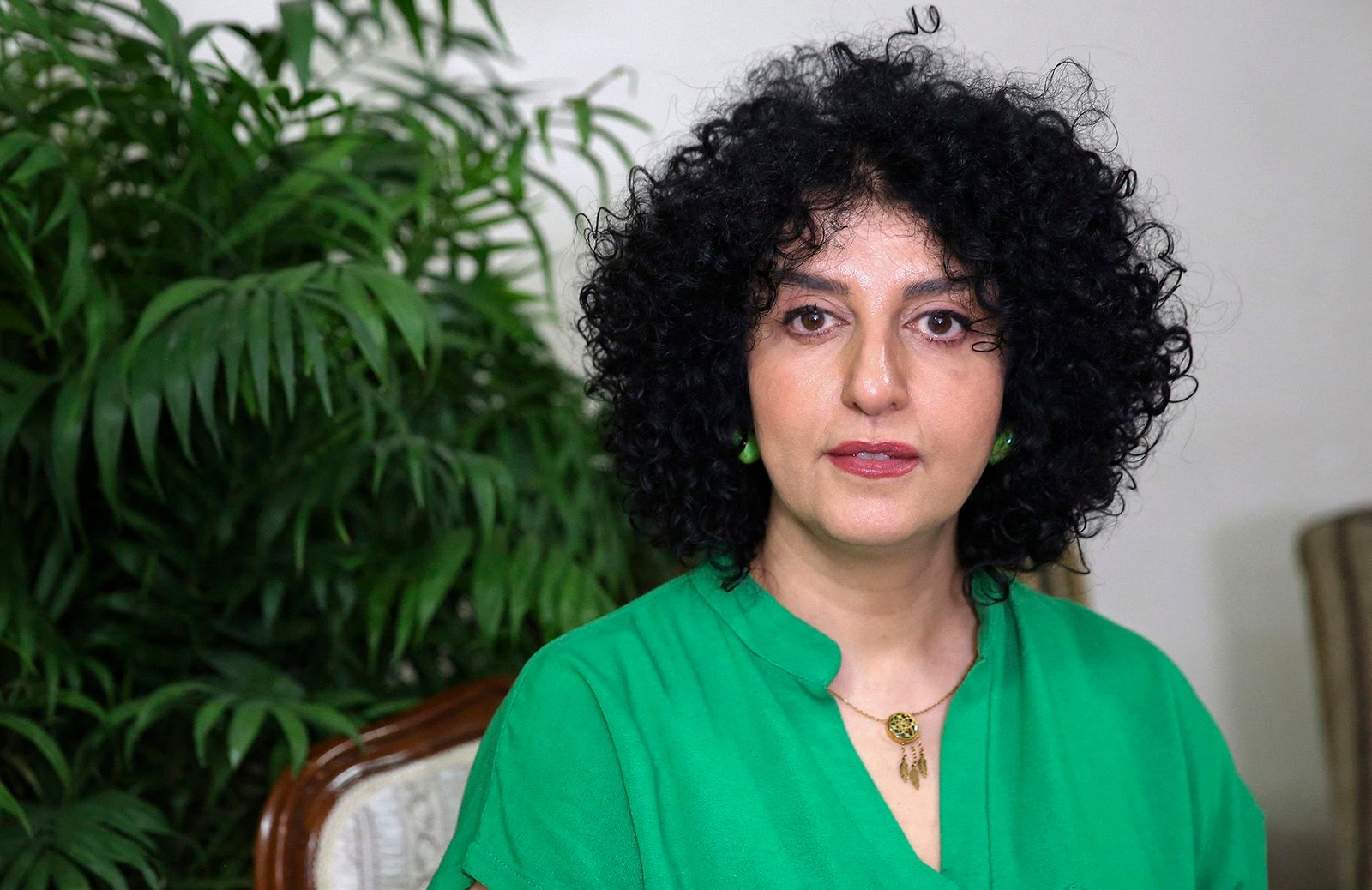
Nobel Peace Prize laureate and Iranian human rights activist Narges Mohammadi has spoken about the severe physical and psychological consequences of her repeated imprisonment, describing brutal treatment by security forces, prolonged solitary confinement and the constant fear that she could be sent back to prison.
In an interview, the 54-year-old activist said she was beaten so severely during her arrest in December that she required two brain scans. Despite suffering dizziness, nausea and repeated vomiting after the assault, she said she was denied an independent forensic examination and was instead transferred to solitary confinement.
Mohammadi said security agents struck her repeatedly on the head and body, pulled her by the hair and kicked and punched her. The injuries left extensive bruising across her body and caused serious symptoms in the days that followed.

She said that while she was experiencing severe physical distress, authorities moved her into a solitary cell. She was later taken to hospital twice for brain CT scans, but, according to her account, officials still refused to permit a forensic medical examiner to document the injuries.
The experience has added to a long history of imprisonment and medical complications for Mohammadi, whose campaign for women’s rights, freedom and human rights has repeatedly brought her into conflict with Iranian authorities.
Her current health problems became particularly serious after she was found unconscious in her prison cell following a cardiac arrest. She was temporarily released in May so that she could receive medical treatment.
Although her release allowed her to continue receiving care, Mohammadi said the possibility of being returned to prison remains a constant threat.
“A return to prison is always looming,” she said, describing imprisonment as a potentially life-threatening prospect. She said previous periods of detention had caused serious damage to her heart, lungs and nervous system and that she continues to require medication, physical therapy, rehabilitation and other medical treatment.
Her concern is heightened by her previous experiences of being returned to prison after medical procedures. Over the years, she has undergone several operations and repeatedly faced the prospect of being taken back into detention while still recovering.
Mohammadi was arrested on 12 December 2025 while attending a memorial gathering for human rights lawyer Khosrow Alikordi in Mashhad. Her arrest came amid continuing tensions between Iranian authorities and activists who have challenged restrictions on political freedoms and women’s rights.
In February, an Iranian court sentenced her to another seven and a half years in prison and ordered two years of internal exile in the town of Khosf. She was subsequently transferred to Zanjan prison.
Her latest sentence added to an extraordinary record of persecution. Mohammadi has endured 14 arrests, 10 trials and five periods of solitary confinement during her long campaign for civil liberties and human rights.
Her international profile grew significantly after she received the Nobel Peace Prize in 2023 for her campaign against the oppression of women in Iran and her broader struggle for human rights and freedom.
Yet the Nobel recognition has not prevented further detention. Instead, Mohammadi’s continued activism has made her one of the most prominent Iranian voices challenging the treatment of political prisoners and protesters.
Her experiences have also shaped her latest memoir, A Woman Never Stops Fighting, published last month. The book was written secretly while she was imprisoned, with sections of the manuscript reportedly smuggled out of Iran through fellow prisoners and trusted contacts.
The memoir explores not only the political consequences of her activism but also the personal cost of repeatedly being separated from her family.
For Mohammadi, one of the most painful aspects of imprisonment has been the psychological impact of prolonged isolation. She described solitary confinement as a form of “white torture”, arguing that isolation can gradually alter a person’s understanding of themselves and the world around them.
Without family members to speak with, people to embrace or meaningful contact with the outside world, she said prisoners can experience a profound erosion of identity.
Her account reveals that the most difficult questions she confronted in prison were not necessarily about whether she had chosen the correct political cause. Instead, she repeatedly questioned the impact of her activism on her children.
Mohammadi is the mother of twins, Ali and Kiana, who experienced their mother’s arrests while they were still very young. She said the children witnessed her being taken away on three occasions when they were three, five and eight years old.
Those memories have remained a source of deep emotional pain for her.
During her imprisonment, she questioned whether her primary responsibility should have been to remain with her children and ensure that they had their mother present during their formative years, or whether continuing to fight for freedom, justice, democracy and human rights was the greater responsibility.
She said she generally did not doubt her political convictions, but the suffering experienced by her children was different. Thinking about what happened to them when she was arrested forced her to confront the consequences of her choices in a deeply personal way.
Her concerns extend beyond her own family. Mohammadi has also expressed alarm about the treatment of protesters and political detainees in Iran following a deadly crackdown on nationwide demonstrations in January.
While she was herself imprisoned during the unrest, she later learned more about the scale of the repression. She said she was particularly disturbed by reports concerning detained protesters and what she described as an acceleration in executions following trials that failed to meet basic standards of due process.
For Mohammadi, the executions represent one of the most serious threats to Iranian society. She argued that defendants facing the most severe punishments must be guaranteed legal representation and fair judicial proceedings, warning that executions following fundamentally unfair trials deepen the wounds created by political repression.
She also described a country under pressure from several directions simultaneously. Ordinary Iranians, she said, are facing economic hardship while also dealing with domestic repression and the consequences of external conflict.
The combination has created an increasingly difficult environment for people trying to make a living and express dissatisfaction with government policies.
According to Mohammadi, economic desperation can itself become a trigger for protest. Yet when people demonstrate because they believe they can no longer survive under difficult economic conditions, she said they can face further repression rather than meaningful political responses.
Despite the risks, Mohammadi has rejected the idea of leaving Iran. She remains in the country while continuing medical treatment following her transfer from Zanjan to Tehran.
The possibility of another prison sentence remains real, but she said she has repeatedly chosen to remain in Iran and intends to continue doing so.
Her decision reflects a central feature of her political philosophy: that meaningful change must ultimately come from Iranian society itself. Rather than abandoning the country, she says she wants to remain alongside the people whose rights she has spent years defending.
Mohammadi said her greatest source of hope is Iran’s younger generation, particularly women and young people who continue to demand greater rights despite the risks.
She believes younger Iranians are increasingly conscious of their rights and unwilling to surrender them. Their determination, she argued, represents a force that repression cannot permanently eliminate.
Her own experiences have demonstrated the enormous personal price of resistance. Years of imprisonment have damaged her health, separated her from her children and subjected her to repeated legal proceedings and solitary confinement.
Yet she continues to view hope as a form of resistance.
For Mohammadi, the struggle is no longer simply about her own freedom. It is connected to a wider demand for dignity, equality, justice and democratic rights in Iran. Her story has become an example of how political repression can affect not only activists but also their families and the wider society around them.
As she continues medical treatment outside prison, uncertainty remains over whether Iranian authorities will once again detain her. The prospect weighs heavily on her because of the serious consequences another period of imprisonment could have for her health.

Still, she maintains that fear cannot determine her future.
Her continued presence in Iran and her determination to speak about her experiences illustrate the difficult balance between personal survival and political conviction. For a woman who has spent years in detention, the prospect of freedom remains inseparable from the broader struggle for the rights of others.
And despite the pain of imprisonment, separation and uncertainty, Mohammadi continues to place her faith in the younger generation. She believes that hope cannot be permanently suppressed and that no political system can maintain tyranny forever.
Her message is therefore both a warning and an expression of confidence: Iran’s human rights struggle remains dangerous, but the determination of its people, particularly its women and young citizens, continues to provide her with reason to believe that change remains possible.
Related News:
 Miliband Rejects Chief Rabbi’s West Bank Warning
 Israel Accused of Undermining Palestinian Life
 Former ICC prosecutor condemns US sanctions
 Ukraine Creates Long-Range Strike Command
 Dreyfus Statue Finally Gets Permanent Paris Home
 Israeli Strike in Southern Lebanon Kills Seven
 Ukraine Villagers Demand Answers After Deadly Arms Depot Strike
 UN expert urges UK to rethink Israel policy
 Gaza Strike Kills Child and Paramedic
 Saudi Pact Raises Risk of Pakistan Entering War
 Japan PM Backs International Criminal Court
 King Refers Jamaica Slavery Petition to Privy Council
 New Maps Reveal Gaza’s Vast Destruction
 Latin America women fear rollback of rights
 UK University Faces Counter-Terror Probe Over China Pressure
 Ukraine-Russia war latest: Putin’s troops exploit bad weather to force Kyiv withdrawal from multiple towns
 New Epstein Files Spark Political Clash in Washington
 Ukraine Energy Corruption Scandal Hits Zelensky’s Inner Circle
 Greene Pushes Epstein Files Amid Trump Fallout
 UN Security Council Approves Trump’s Gaza Peace Plan
 WhatsApp Messages Expose Nathan Gill’s Bribery
 Venezuela Threatens Nobel Winner Machado with Fugitive Status
 Trump Envoy to Discuss Ukraine Peace at Kremlin
 Video shows Israeli troops kill Palestinians after surrender
 Guinea-Bissau President Flees After Military Coup
 Iran Leader Blames Protesters, Says They Serve Trump
 Files Link Andrew to Epstein Dinner After Prison Release
 Thousands Protest ICE in New York Against Trump Deportation Campaign
 Middle East Flights Halted After Iran Strikes
 UK Prepares Aircraft Carrier for Middle East Crisis
 Mojtaba Khamenei Chosen as Iran’s New Supreme Leader
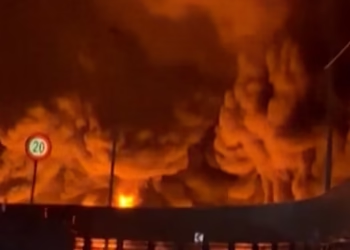 Tehran Oil Depot Strikes Darken City With Toxic Smoke
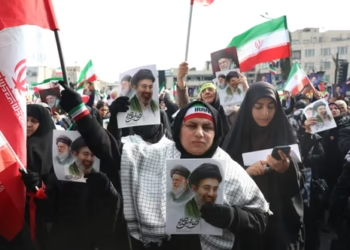 Mojtaba Khamenei Supporters Rally as Iranians Fear Repression
 Iran Defiance Grows Amid US-Israel War Pressure
 Hormuz Crisis Sparks Global Oil Market Fears
 Iranian Exile Factions Seek US Backing for Iran’s Future
 Injured Mojtaba Khamenei Elevated as Iran Leader
 Trump Iran War Stance Hardens as Conflict Widens
 Death, displacement and military duties: children plunged into crisis
 Iran Crisis Tests Trump’s Global Leadership
 Aid Crisis Grows as Hormuz War Disrupts Supply
 Cartel crackdown raises fears of fresh violence
 Judge halts deportation of Yemeni refugees in US
 Activists allege abuse after Gaza flotilla seizure
 US ‘Narco Boat’ Strikes Draw Global Outcry
 Afghan Families Left in Limbo Face Risk of Deportation
 Middle East Crisis Escalates as Oil Routes Shake Markets
 Trump Announces 3-Day Russia–Ukraine Ceasefire Deal
 Tensions Emerge in Netanyahu-Trump Alliance
 Israeli Strikes in Lebanon Kill 10 Amid Ceasefire Strain
 China mine blast death toll rises to 90
 Gunman Killed After White House Security Shootout
 Trump Claims Iran Peace Deal Near Completion
 Irish Gangland Figure Fails in Dublin Election Bid
 New Footage Revives Peter Falconio Mystery
 Houthis Strike Saudi Arabia as Middle East Tensions Rise
 Trump Calls Strait of Hormuz ‘American Territory’
 Former Diplomats Urge UK and France to Act on Palestine
 US immigration arrests hit record high in July
 Daughter Finds Bones in Parents’ Burned-Out Car
 Argentina Orders Return of Nazi-Looted Painting
 Trump Calls Iran War ‘Small Potatoes’ Despite US Deaths
 Masked Protesters Bring Dover Port Traffic to Standstill
 Susan Sarandon Says Palestine Stand Costs Roles
 Turning Point USA Faces Crisis After Kirk Killing
 Sweden Election Hangs on Far-Right Breakthrough
 Saudi Arabia Shuts Oil Pipeline After Drone Attack
 Nearly 50,000 Flee as Houthis Advance in Yemen
 Royal Crown Branded Enslaved Africans in Britain’s Slave Trade
 South Korea Rules Out Military Role in Iran War
 South Africa’s Femicide Crisis Deepens
 Irish PM Backs Coach in Israel Football Dispute
 Ukraine and Russia Escalate Long-Range Drone War
 Saudi intercepts Houthi missiles as oil fears grow
 Yemen fighting forces children out of school and into work
 Three Die in Channel Crossing Attempt Near France
 French Student Protests Escalate Into Violent Clashes
 Pilot and Passengers Help Save Flydubai Flight
 French School Protests Escalate as 400 Schools Close
 Yemen government launches offensive against Houthis