Published: 06 October 2026. The English Chronicle Desk. The English Chronicle Online.
Canadian veterans and families of fallen soldiers have reacted with anger and disappointment to recent remarks from senior figures in Donald Trump’s administration that have questioned Canada’s military strength and appeared to dismiss the contribution of Canadian troops to US-led and Nato operations.
For veterans who fought alongside American forces in Afghanistan and for families who lost relatives in overseas conflicts, the comments have struck a particularly sensitive nerve. Some say the remarks do more than damage diplomatic relations between two traditionally close neighbours: they diminish the sacrifices of Canadian service members who fought, suffered injuries and, in some cases, never returned home.
Among those expressing their frustration is Perry Chalmers, a former Canadian army corporal who was serving with the Royal Canadian Regiment’s specialised mortar platoon in New Brunswick when the September 11 attacks took place in 2001.

Chalmers remembers the atmosphere on the military base as news spread that the United States had been attacked. Canadian troops were quickly placed on alert and sent to nearby airports as North American authorities worked to respond to the sudden closure of commercial airspace.
The events eventually formed part of a much larger chapter in Chalmers’ military career. He later deployed to Afghanistan for nine months of combat duty, working alongside American troops and using his specialist training in operations against improvised explosive devices.
His experience was representative of the broader Canadian military contribution to the Afghanistan war. More than 40,000 Canadian military personnel served in Afghanistan in support of US and Nato operations. Canada lost 158 service members during the conflict, leaving a lasting impact on military families and communities across the country.
For Chalmers, the partnership with American forces was once a source of pride. He recalls being treated as an equal by the US troops with whom he served and believed Canadian soldiers were contributing to a shared mission following the attacks on the United States.
That sense of solidarity has been badly shaken by recent statements from senior American officials.
US Vice-President JD Vance has faced criticism after describing Canada as a state that had underinvested in its military and suggesting that the country could be vulnerable to invasion without protection from the United States. US Transportation Secretary Sean Duffy went further by saying that Canada “doesn’t have a military”.
The remarks have been particularly controversial among Canadian veterans because they appear to overlook decades of military cooperation between the two countries.
Canadian troops have served alongside American forces in numerous conflicts. During the Second World War, approximately 14,000 Canadians landed on Juno Beach during the D-Day invasion of Normandy. More than 26,000 Canadians served during the Korean War. Although Canada did not officially participate in the Vietnam War, thousands of Canadians are estimated to have crossed the border to volunteer for the US military.
The relationship between the two countries also extends beyond formal military alliances. For generations, Canadian and American service members have trained together, operated alongside one another and developed professional relationships that have often survived political disagreements.
Chalmers says the recent comments have changed his feelings about that relationship.
“It’s disrespect and betrayal,” he says, describing his reaction to the remarks. For someone who spent part of his career fighting alongside American soldiers, the suggestion that Canadian forces were insignificant is deeply painful.
Chris Banks, a retired Canadian army sergeant who served for nearly two decades, shares that frustration. He deployed to Afghanistan in 2008 and was involved in an operation in which Canadian troops provided cover for American soldiers under Taliban attack.
Banks remembers taking shelter alongside an American platoon as shrapnel tore through the trees above them. Those experiences created a powerful bond between the soldiers involved, regardless of nationality.
Yet the war left lasting personal consequences for Banks. After returning to Ontario in 2009, he struggled with heavy drinking and suicidal thoughts associated with post-traumatic stress. He eventually received treatment and became an advocate for the mental health and wellbeing of Canadian veterans.
For Banks, hearing American political figures dismiss Canada’s military contribution is therefore not simply a disagreement over defence spending. It touches memories of combat, comrades who died and the personal costs carried by veterans after returning home.
He says he remains proud of his service but has become increasingly bitter about the way the conflict and Canada’s role in it are being discussed by some American officials.
The controversy has also deeply affected families who lost loved ones.
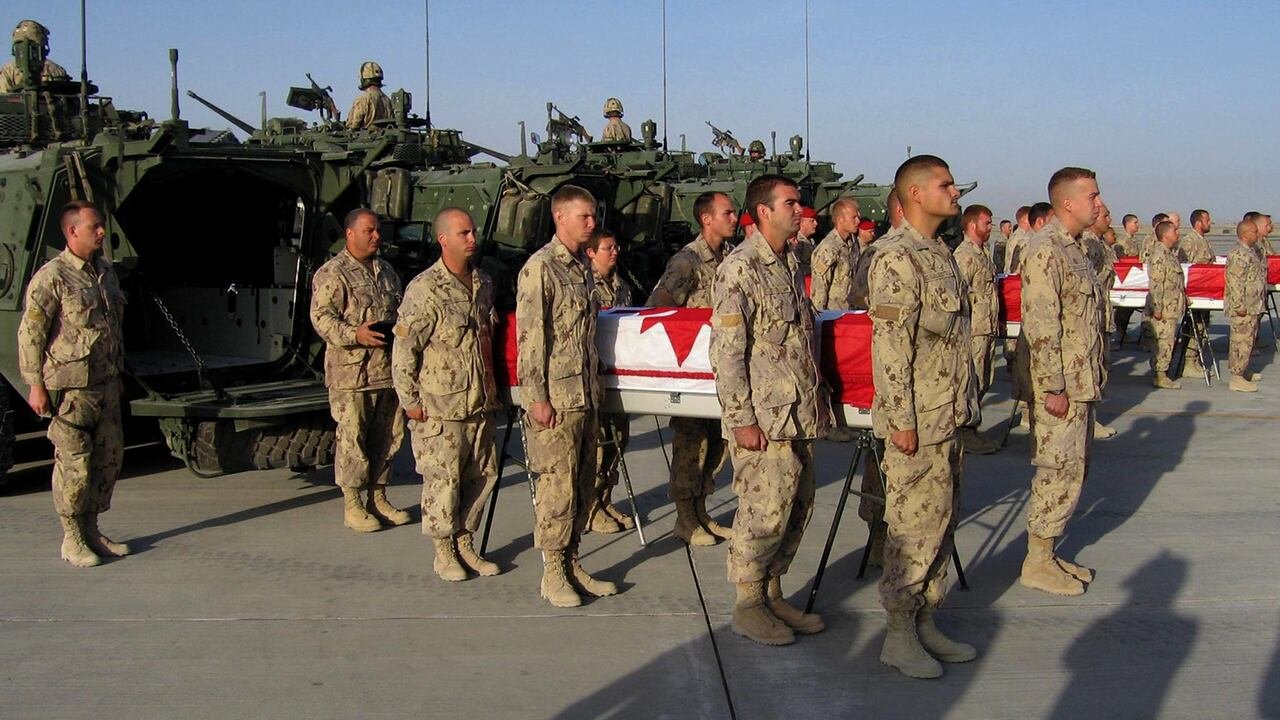
Nancy Payne knows the cost of military service in the most personal way. Her son, Corporal Randy Payne, was serving with a Canadian military police unit in Afghanistan when he was killed in April 2006.
Randy was part of a specialised close-protection team responsible for safeguarding senior officers, government officials and other important personnel in conflict zones. On 22 April 2006, an armoured vehicle struck a roadside bomb near Kandahar airbase. Randy Payne and three other Canadian soldiers were killed.
The attack was one of the deadliest incidents involving Canadian forces since the early years of the Afghanistan mission.
Nancy remembers receiving the telephone call in the middle of the night informing her that her son had died. The shock of losing a child in military service has remained with her for two decades.
In 2025, she was honoured by the Royal Canadian Legion with a Silver Cross, recognising the sacrifices made by Canadian military mothers. She later participated in Remembrance Day ceremonies in Ottawa and has continued to honour her son through a school award recognising students who demonstrate leadership and achievement in athletics.
For Payne, the recent comments from American officials are difficult to reconcile with the history she associates with Canada and the United States.
She says the two countries had been neighbours for so long that their relationship had seemed almost permanent. The current political tensions, she believes, have changed that assumption.
She is not alone among military families in demanding greater respect.
Jane McKay, whose son Master Corporal Tim Wilson died while serving, has also criticised the Trump administration and argued that soldiers from Canada, the United States and Nato countries deserve recognition rather than disparagement.
The comments have generated political criticism in Canada as well. Defence Minister David McGuinty described social media posts by US Defence Secretary Pete Hegseth as beneath the dignity of his office. Hegseth has faced criticism for posts mocking Canadian cadets and for comments targeting a Canadian Coast Guard detachment participating in a Pride event.
Prime Minister Mark Carney has also accused Trump and Hegseth of treating the relationship between the countries as material for online jokes and memes, at a time when Canada and the United States are already experiencing serious diplomatic and economic tensions.
The dispute comes against a broader deterioration in relations between Ottawa and Washington. Trump has repeatedly raised the idea of Canada becoming the 51st US state, comments that have been deeply unpopular in Canada and have added another layer of tension to an already difficult relationship.
Some American politicians have attempted to push back against the rhetoric.
Democratic Senator Ruben Gallego of Arizona travelled to Ottawa in September as part of a congressional visit aimed partly at strengthening trade relations between the two countries. During the visit, he specifically criticised remarks targeting Canada’s military and described them as disrespectful to Canadian service members who had died fighting alongside Americans.
But for veterans such as Chalmers and Banks, such statements may not be enough to restore the trust that has been damaged.
Chalmers previously maintained friendships with American civilians through online gaming and strategy communities. He also valued the personal relationships he built with Americans through military service. Those connections have become more difficult as political rhetoric about Canada has intensified.
Banks, meanwhile, once regularly travelled across the US with his family for holidays and shopping. He says those trips have stopped.
The changing relationship has created an uncomfortable contradiction for many Canadian veterans. They remember American service members as comrades who stood beside them in dangerous situations, yet now hear senior American officials questioning whether their own country had a meaningful military role.
The concern extends beyond hurt feelings. Veterans fear that dismissive political rhetoric could weaken the trust necessary for future military cooperation.
Canada and the United States have historically relied on close defence ties because of their shared geography, integrated economies and common security interests. Canadian forces have repeatedly operated with American and Nato personnel in international missions, while the two countries cooperate extensively on continental defence.
For Chalmers, the question is what such a relationship would look like if another major attack threatened the United States.

After everything he experienced following September 11 and during the Afghanistan war, he says he finds himself questioning whether Canada should again make the same commitment if its sacrifices could later be dismissed.
His doubts capture the broader frustration among Canadian veterans: the issue is not simply whether Canada spends enough on defence or how large its military is. It is about whether the sacrifices made by Canadian service members are remembered and respected by the allies with whom they shared the battlefield.
For families who lost loved ones, the debate is even more personal. The names of Canada’s fallen remain attached to memorials, ceremonies and memories that have lasted for generations.
As diplomatic tensions between Ottawa and Washington continue, Canadian veterans and military families are making clear that political disagreements should not erase that history. Their message is that whatever disputes exist between governments, the soldiers who served together—and those who died—deserve recognition, dignity and respect.
Related News:
 UK Prepares Aircraft Carrier for Middle East Crisis
 Trump dismisses concerns over 250-day carrier deployment
 Trump Asked Xi About Buying US Weapons
 Trump orders US troop pullout from Germany
 Trump likens US Navy actions to ‘pirates’
 Putin Declares Russia Victory at Scaled Victory Day Parade
 Houthis Strike Saudi Arabia as Middle East Tensions Rise
 Russian Missiles Intensify Pressure on Kyiv
 Trump Calls Strait of Hormuz ‘American Territory’
 Trump Faces Iran War Crisis Before Midterm Vote
 Netanyahu faces protests and pressure at UN
 Ukraine’s New FP-7 Missile Makes Combat Debut
 US Sends Third Carrier to Middle East
 Germany Pledges €1bn Military Aid to Ukraine
 Lithuania Offers to Fund Permanent US Military Base
 Trump to Recheck Green Cards from 19 Nations After DC Attack
 Trump Escalates Minnesota Immigration Surge Amid Rising Tensions
 Greenland Faces Pivotal Summit Over Arctic Power Struggle
 EU Says US Ties Have Suffered ‘Big Blow’ After Greenland Crisis
 Thousands Protest ICE Operations in Nationwide US Day of Action
 Epstein Files Reveal Trump Officials’ Emails with Financier
 Thousands Protest ICE in New York Against Trump Deportation Campaign
 Clinton Testimony Erupts in Fiery Exchange
 Thousands Protest Iran Strikes Outside US Embassy London
 US Bombers Arrive at RAF Base Amid Rising Iran Tensions
 Pete Hegseth Iran War Remarks Spark Alarm
 Trump Faces Crisis as Iran Reopens Hormuz Tensions
 Charles Faces Trump Test in High-Stakes US Visit
 UK Stands Firm on Falklands Amid US Rift
 US Court Ruling Reshapes Voting Rights Landscape
 US states redraw maps after voting rights ruling
 Judge halts deportation of Yemeni refugees in US
 Activists allege abuse after Gaza flotilla seizure
 Trump approval plunges amid Iran war fears
 Ohio’s Battle for Trust: Democrats Vying to Flip the Buckeye State
 Trump Threatens UN Budget Cuts as US Pushes ‘Trade Over Aid’ Agenda
 Trump warns Iran as Middle East tensions surge again
 US ‘Narco Boat’ Strikes Draw Global Outcry
 Ohio Primaries Set Stage for Crucial Midterms
 Afghan Families Left in Limbo Face Risk of Deportation
 Middle East Crisis Escalates as Oil Routes Shake Markets
 Trump Announces 3-Day Russia–Ukraine Ceasefire Deal
 Tensions Emerge in Netanyahu-Trump Alliance
 US Awaits Iran Reply on New Ceasefire Proposal
 Hormuz Talks Near Critical Stage
 Discontent grows around Putin amid war strain
 Former ICC prosecutor condemns US sanctions
 Gunman Killed After White House Security Shootout
 Trump Claims Iran Peace Deal Near Completion
 House Curbs Trump’s War Powers in Rare Rebellion
 Millions Gather for Khamenei’s Six-Day State Funeral
 Israeli Strike in Southern Lebanon Kills Seven
 Is America Ready for an AOC Presidential Run?
 Trump Hardens Canada Trade Stance as Talks Stall
 Trump Calls Iran War ‘Small Potatoes’ Despite US Deaths
 UN expert urges UK to rethink Israel policy
 Saudi Pact Raises Risk of Pakistan Entering War
 Middle powers seek new alliances amid Trump era
 Macron and Carney deepen France-Canada ties
 US Networks Suspend Trump White House Pool Coverage
 Trump Eyes Major Belarus Fertiliser Deal Amid Canada Trade Dispute
 Xi urges Trump to avoid US-China military conflict
 Lula accuses Trump of seeking control over Brazil
 Russia Targets Ukraine’s Digital Economy With Strikes
 Republican Senator Questions Trump Ad Spending
 Putin Orders Russian Army Expansion as War Intensifies
 South Korea-Ukraine Row Erupts Over North Korean POWs
 South Korea demands apology over DMZ mine blast
 New Maps Reveal Gaza’s Vast Destruction
 Brazil Election Draws Religion Into Final Campaign
 Trump Immigration Policy Faces New Legal Tests
 Lula Warns of Bolsonaro Family Return as Brazil Votes
 Families Await USS Abraham Lincoln Homecoming
 Yemen government launches offensive against Houthis
 US bombers leave RAF Fairford after terror threat
 Latin America women fear rollback of rights
 Ukraine claims strikes have crippled Russia’s oil refining
 Flávio Bolsonaro takes shock lead in Brazil election
 Quebec separatists return to power without majority
 Trump Comments on Iran Strike Draw US Backlash