Published: 02 October 2026. The English Chronicle Desk. The English Chronicle Online
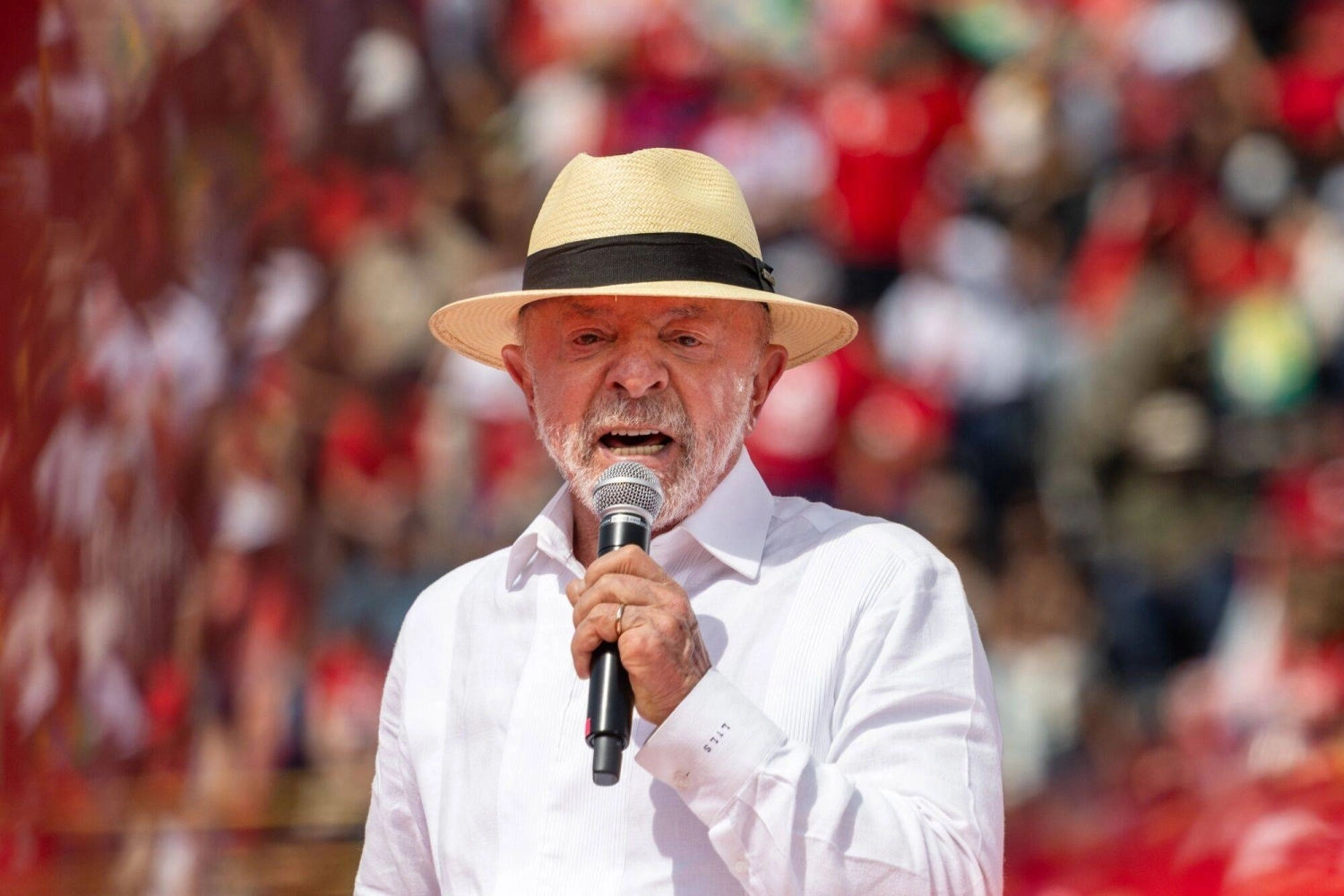
A deeply sensitive religious dispute has become a major feature of Brazil’s final presidential campaign days, after claims surrounding the country’s patron saint, Our Lady of Aparecida, spread rapidly online and triggered concern among Catholics. The controversy has drawn President Luiz Inácio Lula da Silva and his conservative challenger Flávio Bolsonaro into an increasingly intense debate over religion, cultural identity and the role of faith in Brazilian public life.
The controversy centres on speculation that Bolsonaro could seek to remove Our Lady of Aparecida from her position as Brazil’s patroness if elected. Bolsonaro has rejected that allegation, describing it as false. Available evidence indicates that the claim arose largely from his comments about declaring Brazil a country belonging to Jesus Christ, combined with older proposals from figures associated with the broader Bolsonaro movement concerning the status of the Catholic patroness.
Our Lady of Aparecida holds an exceptionally important place in Brazilian Catholic life. The image, discovered by fishermen in the Paraíba do Sul River in 1717, gradually became one of the country’s most recognised religious symbols. Pope Pius XI formally proclaimed Our Lady of Aparecida the principal patroness of Brazil in 1930, while the formal public proclamation took place in 1931. The devotion has since become deeply embedded in Brazilian religious and cultural traditions.

The significance of the issue became clear during the final days of the election campaign, when social media posts suggesting that Bolsonaro wanted to remove the patroness circulated widely. Brazil’s electoral authorities have intervened in some cases involving posts that falsely linked Bolsonaro to a plan to strip Our Lady of Aparecida of her title. The dispute has consequently become not only a religious controversy but also a question about misinformation and political campaigning.
Bolsonaro has repeatedly denied that he intends to remove the patroness. His campaign has argued that the controversy is being used by political opponents to portray him as hostile to Catholic traditions. The candidate has also criticised organisations and individuals whom he believes contributed to the claims, while Catholic representatives have rejected suggestions that they are participating in a coordinated partisan campaign against him.
The controversy nevertheless gained considerable attention because of Bolsonaro’s political base and the changing religious composition of Brazil. The country remains home to a large Catholic population, while evangelical Christianity has expanded significantly over recent decades. The relationship between the two religious communities has increasingly become part of Brazil’s political debate, particularly among conservative movements.
Bolsonaro’s comment that, if elected, he would declare that Brazil belongs to the Lord Jesus Christ was interpreted differently by different groups. Supporters have presented such language as an expression of Christian faith and a statement about national values. Some Catholics, however, interpreted the remarks alongside the online claims about Our Lady of Aparecida and became concerned that Catholic traditions could lose their place in national public life.
The distinction between those interpretations is important. Bolsonaro has not announced a policy to remove Our Lady of Aparecida as patroness, and the viral claim that he intends to do so has been challenged by electoral authorities and fact-checking organisations. The Catholic Church’s formal recognition of the patroness also has a religious dimension distinct from ordinary political appointments.
Yet the emotional force of the controversy has been difficult to separate from the presidential campaign. Brazil’s Catholic tradition is not confined to church buildings or formal religious ceremonies. Our Lady of Aparecida appears in homes, public celebrations, football culture, popular festivals and other expressions of Brazilian identity. Her image has also become associated with communities beyond strictly institutional Catholic life.
Historians and cultural observers have therefore described the controversy as reflecting deeper questions about Brazilian identity. The image of Aparecida is traditionally represented as a Black Madonna, and her cultural importance extends into communities and traditions that do not always fit neatly into a single religious category.
That history helps explain why a political dispute over the patroness has generated such a strong response. For many Brazilians, the issue is not simply about the formal title of a religious figure. It touches questions of family tradition, cultural heritage, race, religious coexistence and the changing balance between Catholic and evangelical influence.
The dispute also reflects a long-running tension between Catholicism and sections of the evangelical movement. Evangelical churches have expanded rapidly in Brazil since the late 20th century and have become increasingly influential in political life. Many evangelical Christians do not practise the Catholic veneration of saints or religious images, creating differences over how religious symbols should be understood in public life.
There have been previous controversies involving Our Lady of Aparecida. In 1995, widespread outrage followed a television incident in which an evangelical pastor kicked a statue representing the patroness. The incident became a lasting example of how attacks or perceived attacks on the image can generate a strong reaction among Brazilian Catholics.
The current controversy has revived some of those memories at an especially politically sensitive moment. Brazil is preparing for its first-round presidential vote on 4 October, with a second round scheduled for later in the month if no candidate receives the required majority. More than 155 million voters are eligible to participate in the national election, which also includes races for other political offices.
Recent polling has shown a close contest between Lula and Flávio Bolsonaro, although individual surveys differ and polling should not be treated as a prediction of the final result. A Datafolha survey published on 1 October placed Lula ahead nationally in first-round voting intentions, while Bolsonaro maintained stronger support among evangelical voters. The figures illustrate the importance of religious identity within different parts of the electorate but do not establish how the broader electorate will ultimately vote.
Lula has moved visibly to associate himself with Catholic traditions during the controversy. At campaign appearances, he has been seen holding statuettes of the Virgin Mary, while his wife, Janja da Silva, has worn a pendant associated with Our Lady of Aparecida. Lula has also publicly said that religious traditions should be respected and that, while he is president, nobody should disrespect the patroness.
The campaign response reflects a wider effort to reassure Catholic voters that traditional religious symbols will retain their place in Brazilian public life. Lula’s vice-presidential running mate, Geraldo Alckmin, has similarly sought to reassure Catholics who contacted him with concerns about the controversy.
For Bolsonaro, the challenge has been to maintain support among evangelical voters while responding to concerns among Catholics who may interpret his religious rhetoric differently. His denial of any intention to remove the patroness has become an important part of his response to the controversy.
The dispute has also raised questions about the role of social media during elections. Political claims can spread rapidly online, particularly when they involve religion, identity and emotionally powerful symbols. Once such claims become widely circulated, candidates and institutions can find it difficult to separate verified statements from interpretations, speculation and deliberately misleading content.
Brazil’s electoral authorities have therefore become involved in determining which online claims cross the line into demonstrably false political information. The legal disputes surrounding the posts also illustrate the difficult balance between protecting voters from misinformation and preserving freedom of political expression during an election.
Beyond the immediate campaign, the controversy highlights a broader transformation in Brazilian society. Catholicism remains deeply rooted, but evangelical churches have developed significant social and political influence. Political candidates increasingly have to navigate both traditions while addressing voters whose religious identities may overlap with cultural and political concerns.
The debate over Our Lady of Aparecida has consequently become a symbol of these wider changes. For some voters, the controversy is about protecting a centuries-old religious tradition. For others, it represents an attempt to use religious symbolism for political purposes. For still others, it illustrates the increasingly important role of evangelical Christianity in Brazilian politics.

What remains clear is that the patroness has become an unusually prominent subject during the final hours of a presidential campaign. Bolsonaro has denied plans to remove her status, while Lula has used public displays of Catholic devotion and assurances about religious respect to address concerns surrounding the issue.
The controversy may continue to generate political discussion beyond the election itself because it touches questions that are larger than any individual candidate. Brazil’s relationship with Catholicism, the rise of evangelical political influence, the treatment of religious minorities and the spread of political claims through social media are all part of a changing national conversation.
As Brazilians head toward the polls, the debate over Our Lady of Aparecida demonstrates how religion can intersect with politics, culture and national identity. The patroness remains a powerful symbol for millions of Brazilians, while the dispute surrounding her has become one of the most unusual issues to emerge during the final stage of the 2026 presidential campaign.
Related News:
 Netanyahu faces protests and pressure at UN
 Putin Intensifies Territorial Demands Before US Talks
 Trump to Recheck Green Cards from 19 Nations After DC Attack
 Trump Escalates Minnesota Immigration Surge Amid Rising Tensions
 Greenland Faces Pivotal Summit Over Arctic Power Struggle
 Trump Threatens Strong Action If Iran Executes Protesters
 Trump Receives Machado’s Nobel Medal in White House Meeting
 EU Says US Ties Have Suffered ‘Big Blow’ After Greenland Crisis
 Thousands Protest ICE Operations in Nationwide US Day of Action
 Epstein Files Reveal Trump Officials’ Emails with Financier
 Thousands Protest ICE in New York Against Trump Deportation Campaign
 Trump Praises ‘Terrific’ Petro After White House Talks
 Clinton Testimony Erupts in Fiery Exchange
 Trump Faces Questions Over Iran Conflict Plan
 UK Prepares Aircraft Carrier for Middle East Crisis
 Pete Hegseth Iran War Remarks Spark Alarm
 Trump’s Harsh Rhetoric on Iran Sparks Global Alarm
 Trump Faces Crisis as Iran Reopens Hormuz Tensions
 Charles Faces Trump Test in High-Stakes US Visit
 UK Stands Firm on Falklands Amid US Rift
 US Court Ruling Reshapes Voting Rights Landscape
 US states redraw maps after voting rights ruling
 Trump orders US troop pullout from Germany
 Judge halts deportation of Yemeni refugees in US
 Trump likens US Navy actions to ‘pirates’
 Trump approval plunges amid Iran war fears
 Giuliani hospitalised in critical condition
 Ohio’s Battle for Trust: Democrats Vying to Flip the Buckeye State
 Trump Threatens UN Budget Cuts as US Pushes ‘Trade Over Aid’ Agenda
 Trump warns Iran as Middle East tensions surge again
 US ‘Narco Boat’ Strikes Draw Global Outcry
 Indiana Republicans Defy Trump in Key Vote Test
 US Court Restores Abortion Pill Access Temporarily
 Ohio Primaries Set Stage for Crucial Midterms
 Afghan Families Left in Limbo Face Risk of Deportation
 Tensions Emerge in Netanyahu-Trump Alliance
 US Awaits Iran Reply on New Ceasefire Proposal
 Hormuz Talks Near Critical Stage
 Trump’s Revenge Drive Deepens GOP Divide
 Former ICC prosecutor condemns US sanctions
 Gunman Killed After White House Security Shootout
 Trump Claims Iran Peace Deal Near Completion
 US Midterm Primaries: Democrats Target Key Republican Seats
 House Curbs Trump’s War Powers in Rare Rebellion
 Millions Gather for Khamenei’s Six-Day State Funeral
 Dreyfus Statue Finally Gets Permanent Paris Home
 Mystery Grows Over Mitch McConnell’s Health
 Senate Halts Defense Bill Over Iran Clashes
 Trump Jokes, Jabs and Press Tensions at WHCA Dinner
 Houthis Strike Saudi Arabia as Middle East Tensions Rise
 Is America Ready for an AOC Presidential Run?
 Trump dismisses concerns over 250-day carrier deployment
 Trump Calls Strait of Hormuz ‘American Territory’
 Trump Faces Iran War Crisis Before Midterm Vote
 Trump announces major US oil deal with Venezuela
 Trump Hardens Canada Trade Stance as Talks Stall
 Trump Calls Iran War ‘Small Potatoes’ Despite US Deaths
 Trump Pledges $5,000 if Republicans Win Midterms
 Experts Warn of Growing US Terrorism Risks 25 Years After 9/11
 Trump Media Ban Triggers First Amendment Clash
 Middle powers seek new alliances amid Trump era
 Macron and Carney deepen France-Canada ties
 US Networks Suspend Trump White House Pool Coverage
 Trump Eyes Major Belarus Fertiliser Deal Amid Canada Trade Dispute
 Xi urges Trump to avoid US-China military conflict
 Lula accuses Trump of seeking control over Brazil
 Trump Faces Growing Pressure as Political Support Shifts
 White House Bars CNN From Air Force One Trip
 Trump Asked Xi About Buying US Weapons
 Republican Senator Questions Trump Ad Spending
 AI Deepfakes Put New Pressure on Election Trust
 Trump Ads Trigger Fight Over Taxpayer Money
 BBC to Apologise Over Edited Trump Speech Amid Backlash
 Greene Pushes Epstein Files Amid Trump Fallout
 Jacinda Ardern Move Sparks Kiwi Reflection
 Injured Mojtaba Khamenei Elevated as Iran Leader
 Air Canada CEO Faces Outcry Over Recent Language Misstep
 Relationship with Trump may be beyond repair, Starmer warned
 Investigation Into Anti-Trump Motives After Gala Shooting
 Trump gives Xi red-carpet welcome as trade truce extends