Published: 06 October 2026. The English Chronicle Desk. The English Chronicle Online.
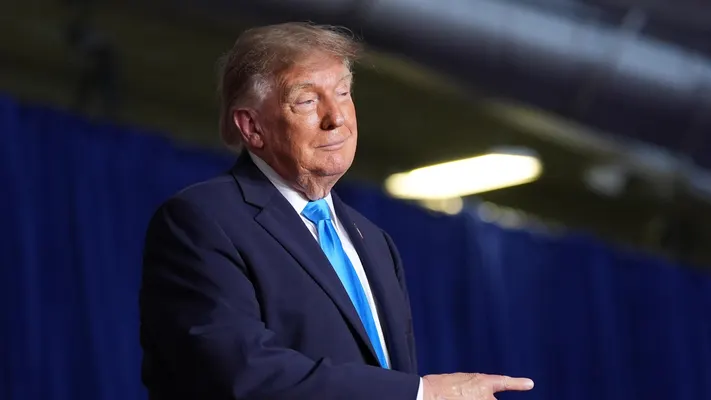
US President Donald Trump has triggered a fierce political backlash in California after appearing to suggest that Iran could “take out” Los Angeles or San Diego, two of the largest cities in the United States, during a speech in Nebraska.
The comments, delivered at a political rally as Trump sought to energise Republican voters ahead of the November midterm elections, were immediately condemned by California leaders, who described the remarks as reckless, dangerous and deeply inappropriate for a sitting president.
Trump was speaking to supporters in Grand Island on Monday night when he discussed the economic consequences of the ongoing war with Iran. He argued that higher prices resulting from the conflict represented a relatively small cost if the war ultimately helped protect the United States and the wider world.

He then made the controversial reference to California’s major cities, telling the crowd that Iran could “take out a city” and specifically naming Los Angeles and San Diego. The audience applauded the remarks.
Trump subsequently suggested that the conflict would end soon, but his comments quickly became the subject of intense debate across the country.
California Governor Gavin Newsom was among the most prominent figures to condemn the president. The Democratic governor, who has repeatedly clashed with Trump during the president’s two terms in office, described the remarks as dangerous and accused Trump of effectively advocating an attack on American residents.
Newsom argued that millions of people live in Los Angeles and San Diego and said a president should not speak about the potential destruction of American cities in such terms.
The governor also linked Trump’s comments to the broader political confrontation between the White House and California. He pointed to the administration’s previous deployment of National Guard forces and Marines to California, arguing that Trump’s latest remarks represented another troubling escalation in the president’s rhetoric toward the state.
Los Angeles Mayor Karen Bass also strongly criticised Trump. She described his comments as irresponsible threats that could potentially put public safety at risk.
Bass argued that the president’s constitutional and political responsibility is to protect American citizens rather than make statements that could be interpreted as encouraging attacks against them.
Her response reflected concerns in Los Angeles, a metropolitan area with millions of residents and extensive economic, cultural and strategic importance to the United States.
San Diego Mayor Todd Gloria was similarly direct in rejecting the president’s language. He said San Diego should not be treated as expendable or as collateral damage in the conflict with Iran.
San Diego is the eighth-largest city in the United States and has a particularly important strategic position because it contains major US military facilities and infrastructure. The mayor’s comments therefore carried additional significance amid a war in which Iran and the United States remain locked in a dangerous confrontation.
Trump’s remarks have also generated uncertainty over what he intended to communicate.
The president’s speech lasted nearly an hour and a half and included a number of loosely connected political and economic arguments. As a result, commentators and political activists have offered different interpretations of the statement about Los Angeles and San Diego.
Some conservative supporters argued that Trump was speaking in an exaggerated or elliptical manner about the consequences of the conflict, particularly elevated energy prices. They suggested that his reference to cities should not necessarily be interpreted as an indication that Iran possesses the capability or intention to attack those locations.
Others questioned whether the president was making a crude political joke about two major cities in a state that has consistently voted Democratic, or whether his comments inadvertently referred to information about potential Iranian targets.
The uncertainty was heightened by the broader context of Trump’s statements about Iran’s military capabilities and the potential threat posed by the country’s missile and nuclear programmes.
US defence officials have previously said that Iran does not currently possess the capability to launch a direct missile attack against the continental United States. That assessment makes the immediate prospect of an Iranian strike on Los Angeles or San Diego highly questionable.
Nevertheless, Trump’s repeated warnings about Iran have focused heavily on the possibility of the country eventually developing weapons capable of threatening the United States.
During previous speeches, Trump has argued that preventing Iran from acquiring a nuclear weapon is essential to American national security. In his most recent State of the Union address, he claimed that Iran was developing missiles that could eventually reach US territory.
Those arguments have formed part of the administration’s broader justification for military action against Iran.
The latest controversy comes at a politically sensitive moment for Trump and the Republican Party. The president was speaking in Nebraska, a state that normally provides strong Republican support but where an unexpectedly competitive Senate contest has generated concern among party strategists.
Trump used the rally to urge voters to support Republican candidates in November and encouraged supporters to behave as though his own name were appearing on the ballot.
He claimed that he was performing strongly politically and sought to make the midterm elections a referendum on his administration.
But his remarks about California could complicate Republican efforts in the state.
Trump has invested political capital in California’s gubernatorial race, where Republican candidate Steve Hilton is attempting to achieve an upset victory. California remains overwhelmingly Democratic in national politics, but Republicans have been hoping that dissatisfaction over economic conditions, public safety and other issues could create openings in selected races.
Trump’s remarks, however, risk reinforcing the political divide between his administration and California voters.
The Democratic candidate for governor, Xavier Becerra, quickly seized on the controversy. He pointed to the large number of people living in Los Angeles and San Diego counties and argued that their lives should never be treated as a political punchline or an acceptable cost of war.
The reaction illustrates the wider challenge facing Trump’s administration as the conflict with Iran increasingly intersects with domestic American politics.
The war has already contributed to concerns about energy costs and inflation, issues that could have a significant impact on voters heading into the midterm elections. Trump has attempted to persuade Americans that the economic sacrifices associated with the conflict are justified by national security considerations.
However, remarks suggesting that major American cities could be destroyed by an enemy have raised a different set of concerns, particularly among residents and local officials in California.
For city leaders, the issue is not simply political rhetoric. Los Angeles is one of America’s most populous and internationally recognised cities, while San Diego is a major coastal city with substantial military importance. Both are home to diverse populations and critical infrastructure.
The possibility that the president’s comments were intended as sarcasm or exaggeration has done little to calm the controversy.
The White House had not immediately provided a detailed explanation of what Trump meant by the remarks. Without clarification, the comments continued to fuel speculation about whether the president was referring to a hypothetical scenario, making a rhetorical point about the costs of war or communicating something more specific about the conflict.
The controversy also highlights the growing difficulty of separating Trump’s campaign rhetoric from his responsibilities as president.
Trump has long used provocative language at political rallies, often relying on dramatic statements to energise supporters and dominate media coverage. But comments involving potential attacks on American cities carry greater consequences when they come from the country’s commander-in-chief.
For California’s Democratic leadership, the remarks provide another example of what they view as an increasingly confrontational relationship between the Trump administration and the state.
For Trump’s supporters, meanwhile, the statement is likely to be viewed within the broader context of his aggressive approach to Iran and his argument that military strength is necessary to prevent threats to the United States.

The dispute is therefore unlikely to disappear quickly. As the war continues and the midterm elections approach, Trump’s comments about Los Angeles and San Diego could become part of a larger national debate over the costs of the conflict, presidential rhetoric and the responsibilities of political leaders during wartime.
What began as a sentence during a lengthy campaign speech has consequently become a significant political controversy. California officials insist that the safety of their residents must never be treated casually, while the White House faces growing pressure to clarify exactly what the president intended.
With the conflict in Iran continuing and American voters preparing to cast ballots in November, Trump’s remarks have once again demonstrated how foreign policy, national security and domestic electoral politics can collide in an increasingly polarised United States.
Related News:
 Thousands Protest Iran Strikes Outside US Embassy London
 US Bombers Arrive at RAF Base Amid Rising Iran Tensions
 UK Prepares Aircraft Carrier for Middle East Crisis
 Houthis Strike Saudi Arabia as Middle East Tensions Rise
 Trump Calls Strait of Hormuz ‘American Territory’
 Trump Faces Iran War Crisis Before Midterm Vote
 Netanyahu faces protests and pressure at UN
 US Sends Third Carrier to Middle East
 Ukraine war briefing: Zelenskyy offers help to Saudi Crown prince on combatting Iranian drones
 Trump likens US Navy actions to ‘pirates’
 Middle East Crisis Escalates as Oil Routes Shake Markets
 Tensions Emerge in Netanyahu-Trump Alliance
 Former ICC prosecutor condemns US sanctions
 Trump Claims Iran Peace Deal Near Completion
 Trump dismisses concerns over 250-day carrier deployment
 Trump Calls Iran War ‘Small Potatoes’ Despite US Deaths
 Saudi Pact Raises Risk of Pakistan Entering War
 Iran Awaits Trump Response on Seven-Day Hormuz Plan
 Trump Asked Xi About Buying US Weapons
 New Maps Reveal Gaza’s Vast Destruction
 Yemen government launches offensive against Houthis
 US bombers leave RAF Fairford after terror threat
 US National Guard Member Killed in DC Shooting
 Government Unveils Northern Powerhouse Rail Plans
 Trump press secretary attacks reporter over ICE question
 Kyrsten Sinema Faces High-Profile Lawsuit Over Marriage Interference
 Trump Fed bid heads to Supreme Court
 Partial US Government Shutdown Hits Homeland Security Funding
 Thousands Protest ICE Operations in Nationwide US Day of Action
 Epstein Files Reveal Trump Officials’ Emails with Financier
 Sinema payment row deepens after $9,000 transfer claim
 Nurses’ families fear breakup under UK immigration crackdown
 California Democrats Vow Trump Reckoning
 Trump’s Surgeon General Pick Evades Vaccine Questions
 Adelaide University Faces Backlash Over Event Cancellation
 Iran Defiance Grows Amid US-Israel War Pressure
 Injured Mojtaba Khamenei Elevated as Iran Leader
 Trump Signals Hope for New Iran Talks as Ceasefire Fades
 US Catholics Caught Between President and the Pope
 GOP Senator Criticizes Trump’s Feud With Pope Leo XIV
 UK Stands Firm on Falklands Amid US Rift
 Investigation Into Anti-Trump Motives After Gala Shooting
 Trump Defiant After Washington Hotel Shooting
 Identity Revealed: Suspected Washington Gunman Named
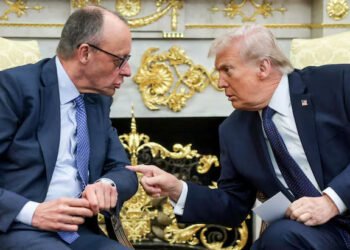 Trump orders US troop pullout from Germany
 Judge halts deportation of Yemeni refugees in US
 White House Security Case Sparks Political Firestorm
 Trump approval plunges amid Iran war fears
 Ohio’s Battle for Trust: Democrats Vying to Flip the Buckeye State
 US ‘Narco Boat’ Strikes Draw Global Outcry
 Afghan Families Left in Limbo Face Risk of Deportation
 Trump Announces 3-Day Russia–Ukraine Ceasefire Deal
 US Awaits Iran Reply on New Ceasefire Proposal
 Immigration Judges Fear Pressure in Trump Era
 Kevin Warsh sworn in as Fed chair amid economic backlash
 US green card applicants must apply from abroad, DHS says
 DeSantis’s ‘Alligator Alcatraz’ Faces Final Shutdown
 House Curbs Trump’s War Powers in Rare Rebellion
 AOC Backs El-Sayed in Tight Michigan Senate Primary
 US Courts Back Trump on Park Signage Removals
 Trump’s Mount Rushmore Speech: A Divisive Anniversary
 Former Diplomats Urge UK and France to Act on Palestine
 Trump Hardens Canada Trade Stance as Talks Stall
 Trump gives $45,000 holiday gifts to White House aides
 New Mexico Takes Facebook to Trial Over Data Scandal
 Israel Accused of Undermining Palestinian Life
 US Networks Suspend Trump White House Pool Coverage
 Democrat Says ICE Restricted Detention Camp Oversight
 Xi urges Trump to avoid US-China military conflict
 Lula accuses Trump of seeking control over Brazil
 Republican Senator Questions Trump Ad Spending
 Pilot and Passengers Help Save Flydubai Flight
 Brazil Election Draws Religion Into Final Campaign
 Lula Warns of Bolsonaro Family Return as Brazil Votes
 DOJ Declines to Reopen Powell Renovation Probe
 Families Await USS Abraham Lincoln Homecoming
 White House defends new aide over anti-Biden photo
 Quebec separatists return to power without majority
 Bolsonaro Dynasty Gains Momentum in Brazil
 Iran Nobel Laureate Reveals Prison Torture and Fears