Published: 06 October 2026. The English Chronicle Desk. The English Chronicle Online.
Brazil’s latest elections have delivered a striking political message: the Bolsonaro name remains a powerful force in the country’s right-wing politics, even after the dramatic fall from power of former president Jair Bolsonaro.
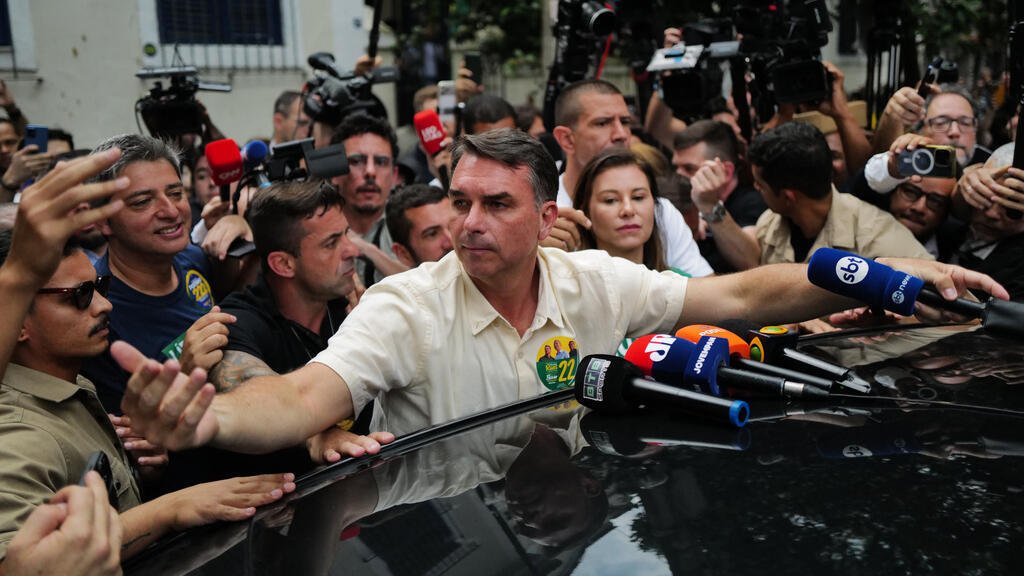
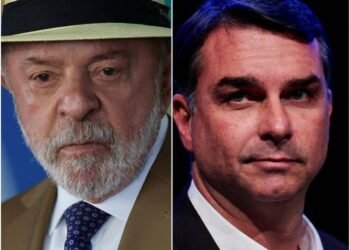
Flávio Bolsonaro, Jair Bolsonaro’s eldest son, has emerged as the leading candidate after winning the first round of Brazil’s presidential election, setting up a runoff against left-wing incumbent Luiz Inácio Lula da Silva. At the same time, several other members of the Bolsonaro family secured elected positions, strengthening the family’s influence across Brazil’s political institutions.
The results have revived debate over whether Brazil is witnessing the consolidation of a political dynasty rather than simply another electoral surge by the country’s conservative movement. Four members of the Bolsonaro family were elected in the latest contest, while another prominent son remains politically active from abroad.

For a family whose political influence began with Jair Bolsonaro’s own rise decades ago, the expansion into senior national offices represents a significant development. What once appeared to be a single politician’s highly personal movement has increasingly become a family-based political network capable of mobilising voters across different parts of the country.
Flávio Bolsonaro’s first-round performance was particularly important. His victory gave the Bolsonaro family a renewed opportunity to return to the centre of national power after Jair Bolsonaro’s turbulent presidency and subsequent legal troubles. He will now face Lula in a closely watched runoff, with the outcome likely to shape Brazil’s political direction for years to come.
Yet Flávio’s support is not necessarily a straightforward endorsement of his political programme. Analysts have suggested that a substantial part of his vote may reflect dissatisfaction with Lula and the current government rather than an overwhelming personal preference for the senator.
Nevertheless, his performance demonstrated that the Bolsonaro brand remains electorally potent.
The family’s gains extended well beyond the presidential race. Michelle Bolsonaro, Jair Bolsonaro’s wife and Brazil’s former first lady, was elected to the Senate in her first attempt at winning public office. At 44, Michelle has rapidly developed a political identity of her own and is increasingly regarded as one of the most influential figures within Brazil’s conservative movement.
Her success is particularly notable because of the contrast between her relatively recent entry into electoral politics and the extensive political experience of her husband and sons. While she has long appeared beside Jair Bolsonaro at political events, her personal popularity has grown to the point where some supporters regard her as a potential national leader in her own right.
Michelle’s political appeal is strongly connected to her religious background and relationship with Brazil’s large evangelical community. Before becoming first lady, she worked as a parliamentary secretary and was involved in evangelical church activities, including work as a Brazilian Sign Language interpreter.
Her public profile rose significantly during Jair Bolsonaro’s presidency. During his inauguration in 2019, she made history by becoming the first Brazilian first lady to deliver a speech at a presidential inauguration. Rather than speaking in Portuguese, she addressed the audience in Brazilian Sign Language, highlighting an issue that had been central to her public identity.
Her communication style and close ties with evangelical voters have helped distinguish her from other members of the Bolsonaro family.
However, the campaign also exposed tensions within the family. Michelle publicly complained that she had been humiliated, disrespected and mistreated by Flávio during a disagreement connected to the presidential campaign. The incident created an unusual political challenge for Flávio, who was forced to apologise publicly.
Although Michelle accepted his apology, the two did not appear together extensively during the campaign. The episode highlighted the complicated personal relationships behind a family that has increasingly become a central institution within Brazil’s political right.
Jair Bolsonaro’s second son, Carlos Bolsonaro, also achieved a major political promotion. Carlos, 43, was elected to the Senate after spending around 25 years as a city councillor in Rio de Janeiro.
Carlos is widely regarded as one of the most radical members of the family. He played a central role in managing his father’s social media presence and became closely associated with the aggressive digital political strategy that helped Jair Bolsonaro build a devoted online following.
Federal authorities have accused Carlos of involvement in a so-called “hate cabinet” allegedly used to spread misinformation and attack political opponents. Despite those controversies, his electoral success demonstrates that his political base remains resilient.
His political career began unusually early. He first won a seat as a Rio de Janeiro city councillor at just 17, reportedly defeating a candidate backed by his own father. That candidate was Rogéria Bolsonaro, Jair Bolsonaro’s former wife and Carlos’s mother.
Rogéria attempted another political comeback in the latest elections but failed to win a seat in the state legislature.
Another family member, Jair Renan Bolsonaro, also advanced his political career. The 28-year-old, who previously served as a city councillor, was elected to the federal congress. During the campaign, he reportedly dropped his middle names and appeared on the ballot simply as Jair Bolsonaro, placing the family surname prominently before voters.
Of Jair Bolsonaro’s five children, only his teenage daughter has never held political office.
The family’s electoral expansion even reached Jair Bolsonaro’s younger brother, Renato Bolsonaro. For years, Renato had developed a reputation as an unsuccessful political candidate after losing seven consecutive elections for lower-level positions.
That record changed dramatically in the latest election. Renato reportedly increased his support from fewer than 10,000 votes in a mayoral contest two years ago to approximately 380,000 votes in his successful congressional campaign.
His rise was not entirely without controversy. During the campaign, Renato openly questioned whether Flávio could reproduce the political strength of his father, arguing that Flávio did not attract crowds in the same way Jair Bolsonaro had.
The election results, however, gave Flávio a powerful answer. His first-round vote total exceeded the number secured by his father in both the 2018 and 2022 presidential elections.
That achievement does not mean that the Bolsonaro family has achieved complete political unity. Eduardo Bolsonaro, Jair Bolsonaro’s third son, remains outside Brazil after leaving his congressional seat and moving to the United States. He has spent considerable time lobbying Washington over Brazilian political and legal affairs and has been associated with efforts that Lula and other Brazilian politicians have criticised as foreign interference.
Eduardo’s absence meant that the Bolsonaro family’s representation in elected office could have been even greater.
Despite the controversies surrounding the family, political researchers say the Bolsonaro name continues to carry a powerful anti-establishment message among sections of the electorate. For many supporters, the family represents resistance to Brazil’s traditional political establishment and opposition to Lula’s left-wing government.
Political researcher Camila Rocha has argued that Bolsonaro voters do not necessarily hold all of Jair Bolsonaro’s sons in equally high regard. Michelle, however, appears to have developed a particularly strong connection with conservative voters because of her charisma and communication style.
That distinction could become increasingly important if the Bolsonaro political project survives beyond the current presidential election.
The family’s success also coincides with a broader strengthening of Brazil’s far-right political bloc. Bolsonaro-aligned candidates performed strongly in congressional contests, leaving the former president’s Liberal Party positioned to become the largest bloc in the next Congress.
The significance of that result goes beyond the presidential runoff. Even if Flávio Bolsonaro fails to defeat Lula, the family and its allies could retain substantial influence over legislation, national political debate and the direction of Brazil’s conservative movement.
The political circumstances surrounding Jair Bolsonaro have changed dramatically since he first entered national prominence. He is now serving a sentence under house arrest following his conviction over an attempt to undermine Brazil’s democratic order. Yet his family’s electoral performance suggests that his political influence has not disappeared.
Instead, it may be evolving into something more durable.

The Bolsonaro family’s latest victories demonstrate how a personal political movement can become a broader family enterprise, with different members occupying different levels of government while sharing a recognisable political identity.
For Brazil, the coming presidential runoff will therefore be about more than a contest between Flávio Bolsonaro and Lula. It will also provide a test of whether the Bolsonaro family has established a long-term political dynasty capable of surviving its patriarch’s downfall.
As voters prepare to make their final choice, the family’s expanding presence in Congress and national politics ensures that the Bolsonaro name is unlikely to disappear from Brazil’s political landscape anytime soon.
Related News:
 US National Guard Member Killed in DC Shooting
 Trump Escalates Minnesota Immigration Surge Amid Rising Tensions
 Democrats Push Affordability to Challenge Trump Ahead of Votes
 Greenland Faces Pivotal Summit Over Arctic Power Struggle
 Government Unveils Northern Powerhouse Rail Plans
 Trump press secretary attacks reporter over ICE question
 Kyrsten Sinema Faces High-Profile Lawsuit Over Marriage Interference
 ‘He Believed Help Was Coming’: Why Iran’s Protesters Feel Betrayed
 Trump Fed bid heads to Supreme Court
 Trump officials continue false claims after Alex Pretti shooting
 Fulton election raid hits Georgia election office
 Partial US Government Shutdown Hits Homeland Security Funding
 Thousands Protest ICE Operations in Nationwide US Day of Action
 Epstein Files Reveal Trump Officials’ Emails with Financier
 Thousands Protest ICE in New York Against Trump Deportation Campaign
 Sinema payment row deepens after $9,000 transfer claim
 Nurses’ families fear breakup under UK immigration crackdown
 California Democrats Vow Trump Reckoning
 Trump’s Surgeon General Pick Evades Vaccine Questions
 Clinton Testimony Erupts in Fiery Exchange
 Adelaide University Faces Backlash Over Event Cancellation
 Can King Charles Calm Trump on Key US Visit?
 Melania Trump Epstein remarks spark survivor backlash
 Trump Signals Hope for New Iran Talks as Ceasefire Fades
 US Catholics Caught Between President and the Pope
 Iron Worker Challenges Trump Loyalist in Ohio
 Trump Faces Crisis as Iran Reopens Hormuz Tensions
 GOP Senator Criticizes Trump’s Feud With Pope Leo XIV
 UK Stands Firm on Falklands Amid US Rift
 Trump at Press Dinner Sparks Tension
 Investigation Into Anti-Trump Motives After Gala Shooting
 Trump Defiant After Washington Hotel Shooting
 Identity Revealed: Suspected Washington Gunman Named
 US Court Weighs Fate of TPS for Migrants
 Trump orders US troop pullout from Germany
 Judge halts deportation of Yemeni refugees in US
 White House Security Case Sparks Political Firestorm
 Trump approval plunges amid Iran war fears
 Ohio’s Battle for Trust: Democrats Vying to Flip the Buckeye State
 Trump warns Iran as Middle East tensions surge again
 US ‘Narco Boat’ Strikes Draw Global Outcry
 Ohio Primaries Set Stage for Crucial Midterms
 Afghan Families Left in Limbo Face Risk of Deportation
 Tensions Emerge in Netanyahu-Trump Alliance
 US Awaits Iran Reply on New Ceasefire Proposal
 Immigration Judges Fear Pressure in Trump Era
 Kevin Warsh sworn in as Fed chair amid economic backlash
 US green card applicants must apply from abroad, DHS says
 Tulsi Gabbard exits after turbulent intelligence tenure
 Hormuz Talks Near Critical Stage
 Former ICC prosecutor condemns US sanctions
 DeSantis’s ‘Alligator Alcatraz’ Faces Final Shutdown
 Prosecutor Proposes Law to Combat Election Deceit
 House Curbs Trump’s War Powers in Rare Rebellion
 AOC Backs El-Sayed in Tight Michigan Senate Primary
 US Courts Back Trump on Park Signage Removals
 Trump’s Mount Rushmore Speech: A Divisive Anniversary
 Trump Refuses to Sign Housing Bill, But Law Takes Effect
 Houthis Strike Saudi Arabia as Middle East Tensions Rise
 Trump Hardens Canada Trade Stance as Talks Stall
 Trump Calls Iran War ‘Small Potatoes’ Despite US Deaths
 Trump gives $45,000 holiday gifts to White House aides
 New Mexico Takes Facebook to Trial Over Data Scandal
 Trump’s Washington Projects Face Architectural Criticism
 US Networks Suspend Trump White House Pool Coverage
 Trump and Mamdani Hold Cordial Gracie Mansion Meeting
 Democrat Says ICE Restricted Detention Camp Oversight
 Xi urges Trump to avoid US-China military conflict
 Lula accuses Trump of seeking control over Brazil
 Republican Senator Questions Trump Ad Spending
 US Sends Third Carrier to Middle East
 Brazil Election Draws Religion Into Final Campaign
 Trump Immigration Policy Faces New Legal Tests
 Lula Warns of Bolsonaro Family Return as Brazil Votes
 DOJ Declines to Reopen Powell Renovation Probe
 Musk’s DOGE Sparks Turmoil Inside US Government
 Families Await USS Abraham Lincoln Homecoming
 US bombers leave RAF Fairford after terror threat
 White House defends new aide over anti-Biden photo
 Quebec separatists return to power without majority