Published: 03 October 2026. The English Chronicle Desk. The English Chronicle Online
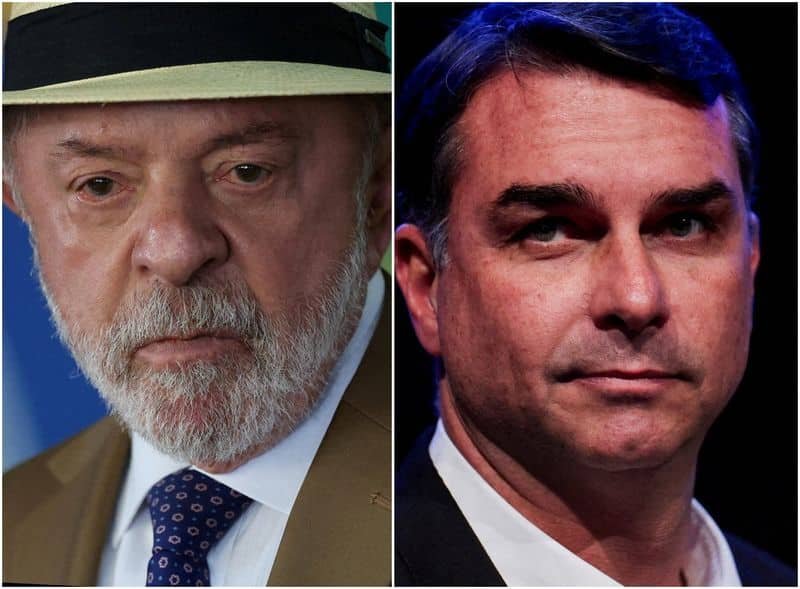
Brazilian President Luiz Inácio Lula da Silva has intensified his final appeal to voters, warning that the country faces a decisive moment for its democracy as the presidential election approaches. Speaking to supporters during a large campaign rally in Rio de Janeiro, Lula presented his candidacy as a barrier against the return of the Bolsonaro family to national power and described the election as a contest over the future direction of Brazil.
Lula, 80, is seeking a fourth non-consecutive term in office and is facing Senator Flávio Bolsonaro, the 45-year-old son of former president Jair Bolsonaro. The first round of voting is scheduled for 4 October, with 13 presidential tickets competing. If no candidate receives more than half of the valid votes, a second round will be held on 25 October. Recent polling has shown a closely contested race between Lula and Flávio Bolsonaro, with neither candidate establishing a decisive advantage.
In an interview before Friday’s demonstration, Lula argued that his continued presence in Brazilian politics was necessary to prevent what he described as a return of far-right forces. He said he had decided to seek another term because he believed his political movement remained central to preventing the Bolsonaro family from returning to government.

The president framed the choice in stark terms, saying that the election represented a decision between his political project and what he called “barbarism”. His remarks reflected the highly polarised character of a campaign in which both leading candidates have portrayed the election as a historic turning point.
Lula later travelled to Rio de Janeiro for a major campaign march through the centre of the city. The route was deliberately symbolic, beginning at the Candelária church and moving towards Cinelândia, two locations strongly associated with Brazil’s democratic history.
Candelária was the site of a major 1984 demonstration demanding direct presidential elections during the final years of military rule. Lula, then a rising politician in his 30s, was among those involved in that period of mobilisation. The march later moved towards Cinelândia, which was associated with the March of the Hundred Thousand protest in 1968, one of the most prominent demonstrations against the military dictatorship.
Thousands of Lula supporters, many dressed in red and carrying flags, joined Friday’s demonstration. The president used the historic setting to connect the present election with Brazil’s long struggle to restore and protect democratic institutions.
He told supporters that the issue was not simply whether one politician would win, but whether democracy would be strengthened. Lula also warned against foreign interference, declaring that outsiders would not be allowed to interfere in Brazil’s affairs. His comments came amid tensions between Brasília and the administration of US President Donald Trump.
Relations between Brazil and the United States have become an additional issue during the campaign. Lula has accused the Trump administration of attempting to influence Brazil’s political process through economic and diplomatic pressure. Washington has rejected accusations of election interference, while the dispute has contributed to broader tensions between the two governments.
The election is also taking place against the background of Jair Bolsonaro’s legal troubles. The former president was convicted over a plot to overturn the 2022 election result and is serving a lengthy prison sentence. His political legacy remains one of the central issues of the 2026 campaign, with Flávio Bolsonaro seeking to extend the family’s influence through his own presidential bid.
Flávio Bolsonaro has said he would seek to pardon his father if elected. He has also indicated that his government would pursue measures benefiting those convicted in connection with the unrest that followed the 2022 election. Those positions have become an important part of the debate over what a Bolsonaro return to power could mean for Brazil’s political institutions.
Supporters of Lula argue that a Bolsonaro victory could bring significant changes to institutions including the Supreme Federal Court. Flávio Bolsonaro has discussed appointing conservative judges to the court, while the next president will also have opportunities to fill vacancies in several major public institutions.
The institutional consequences of the election extend beyond the presidency. Brazil will also elect members of Congress, governors and state legislators, meaning the composition of the country’s political system could change significantly after the vote. Analysts have noted that the next government will have to work with a powerful Congress while addressing disputes over appointments, public spending and the balance of authority between branches of government.
Lula’s supporters at Friday’s rally repeatedly linked the election to the country’s experience under military rule. Some said they regarded the vote as one of the most consequential elections since Brazil returned to civilian government in the 1980s.
Among those attending was 74-year-old Noni Ostrower, who carried a banner declaring that democracy was valuable. She said her parents had fled Nazi Germany and that she did not want future generations in Brazil to experience the return of authoritarian politics.
Others at the rally expressed similar concerns about the country’s democratic institutions. Their arguments illustrate the emotional dimension of an election that has revived memories of dictatorship, political violence and the deep divisions surrounding the Bolsonaro movement.
The Bolsonaro campaign, meanwhile, has sought to present the election as an opportunity to bring an end to the Workers’ Party’s long period of influence. Flávio Bolsonaro has urged undecided voters to support him even if they do not personally identify with him, arguing that the country is approaching the end of an era.
The political contest has also exposed deep divisions over Brazil’s international role. Lula has emphasised national sovereignty, multilateral diplomacy and relationships with countries across the Global South. Flávio Bolsonaro has campaigned from a more conservative position and is politically aligned with his father’s movement, while also maintaining links with the broader political network associated with Trump.
Polling released shortly before the election illustrates how competitive the race has become. A Datafolha survey published on 1 October put Lula ahead of Flávio Bolsonaro among valid votes in the first round, with 45% compared with 40%. In a potential second-round contest, the same poll showed Lula on 48% and Flávio on 45%. Other recent surveys have produced similarly close results, with several showing the two candidates within their respective margins of error.
The figures are measurements of voter intentions rather than predictions of the final result, and the first-round vote will determine whether the contest proceeds to a runoff.
Lula nevertheless used his final major Rio rally to suggest that a first-round victory remained possible. His campaign sought to mobilise supporters by emphasising the importance of turnout and portraying the election as a referendum on Brazil’s democratic direction.
For Flávio Bolsonaro, the objective is to convert the strength of his family’s political base into a national mandate. For Lula, the challenge is to maintain support among voters who have backed his Workers’ Party while also convincing undecided voters that another term is necessary.

As Brazilians prepare to vote, the campaign has therefore become about more than personalities. It has brought questions about democracy, institutional independence, foreign policy, economic management, political accountability and the legacy of the Bolsonaro era to the centre of public debate.
The result on Sunday will provide the first nationwide electoral measure of the strength of the two competing political movements. If no candidate wins more than half of the valid votes, Lula and Flávio Bolsonaro could face each other again on 25 October, extending one of Brazil’s most closely watched political contests into a second round.
For a country that has repeatedly experienced intense political polarisation in recent years, the coming vote will mark another major test of its democratic system. Both sides are asking voters to see the election as a defining moment, but the decision ultimately rests with Brazil’s electorate as it chooses the country’s next president and the political direction it wants to pursue.
Related News:
 Putin Intensifies Territorial Demands Before US Talks
 Trump to Recheck Green Cards from 19 Nations After DC Attack
 Trump Escalates Minnesota Immigration Surge Amid Rising Tensions
 Greenland Faces Pivotal Summit Over Arctic Power Struggle
 Trump Threatens Strong Action If Iran Executes Protesters
 Trump Receives Machado’s Nobel Medal in White House Meeting
 EU Says US Ties Have Suffered ‘Big Blow’ After Greenland Crisis
 Thousands Protest ICE Operations in Nationwide US Day of Action
 Epstein Files Reveal Trump Officials’ Emails with Financier
 Thousands Protest ICE in New York Against Trump Deportation Campaign
 Trump Praises ‘Terrific’ Petro After White House Talks
 Clinton Testimony Erupts in Fiery Exchange
 Trump Faces Questions Over Iran Conflict Plan
 UK Prepares Aircraft Carrier for Middle East Crisis
 Pete Hegseth Iran War Remarks Spark Alarm
 Trump’s Harsh Rhetoric on Iran Sparks Global Alarm
 Trump Faces Crisis as Iran Reopens Hormuz Tensions
 Charles Faces Trump Test in High-Stakes US Visit
 UK Stands Firm on Falklands Amid US Rift
 US Court Ruling Reshapes Voting Rights Landscape
 US states redraw maps after voting rights ruling
 Trump orders US troop pullout from Germany
 Judge halts deportation of Yemeni refugees in US
 Trump likens US Navy actions to ‘pirates’
 Trump approval plunges amid Iran war fears
 Giuliani hospitalised in critical condition
 Ohio’s Battle for Trust: Democrats Vying to Flip the Buckeye State
 Trump Threatens UN Budget Cuts as US Pushes ‘Trade Over Aid’ Agenda
 Trump warns Iran as Middle East tensions surge again
 US ‘Narco Boat’ Strikes Draw Global Outcry
 Indiana Republicans Defy Trump in Key Vote Test
 US Court Restores Abortion Pill Access Temporarily
 Ohio Primaries Set Stage for Crucial Midterms
 Afghan Families Left in Limbo Face Risk of Deportation
 Tensions Emerge in Netanyahu-Trump Alliance
 US Awaits Iran Reply on New Ceasefire Proposal
 Hormuz Talks Near Critical Stage
 Trump’s Revenge Drive Deepens GOP Divide
 Former ICC prosecutor condemns US sanctions
 Gunman Killed After White House Security Shootout
 Trump Claims Iran Peace Deal Near Completion
 US Midterm Primaries: Democrats Target Key Republican Seats
 House Curbs Trump’s War Powers in Rare Rebellion
 Mystery Grows Over Mitch McConnell’s Health
 Senate Halts Defense Bill Over Iran Clashes
 Trump Jokes, Jabs and Press Tensions at WHCA Dinner
 Houthis Strike Saudi Arabia as Middle East Tensions Rise
 Is America Ready for an AOC Presidential Run?
 Trump dismisses concerns over 250-day carrier deployment
 Trump Calls Strait of Hormuz ‘American Territory’
 Trump Faces Iran War Crisis Before Midterm Vote
 Trump announces major US oil deal with Venezuela
 Trump Hardens Canada Trade Stance as Talks Stall
 Trump Calls Iran War ‘Small Potatoes’ Despite US Deaths
 Trump Pledges $5,000 if Republicans Win Midterms
 Experts Warn of Growing US Terrorism Risks 25 Years After 9/11
 Trump Media Ban Triggers First Amendment Clash
 Middle powers seek new alliances amid Trump era
 Macron and Carney deepen France-Canada ties
 US Networks Suspend Trump White House Pool Coverage
 Trump Eyes Major Belarus Fertiliser Deal Amid Canada Trade Dispute
 Netanyahu faces protests and pressure at UN
 Xi urges Trump to avoid US-China military conflict
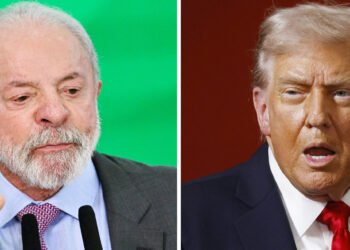 Lula accuses Trump of seeking control over Brazil
 Trump Faces Growing Pressure as Political Support Shifts
 White House Bars CNN From Air Force One Trip
 Trump Asked Xi About Buying US Weapons
 Republican Senator Questions Trump Ad Spending
 AI Deepfakes Put New Pressure on Election Trust
 Trump Ads Trigger Fight Over Taxpayer Money
 Brazil Election Draws Religion Into Final Campaign
 Trump Immigration Policy Faces New Legal Tests
 BBC to Apologise Over Edited Trump Speech Amid Backlash
 Greene Pushes Epstein Files Amid Trump Fallout
 Jacinda Ardern Move Sparks Kiwi Reflection
 Injured Mojtaba Khamenei Elevated as Iran Leader
 Air Canada CEO Faces Outcry Over Recent Language Misstep
 Relationship with Trump may be beyond repair, Starmer warned
 Investigation Into Anti-Trump Motives After Gala Shooting
 Trump gives Xi red-carpet welcome as trade truce extends