Published: 06 October 2026. The English Chronicle Desk. The English Chronicle Online
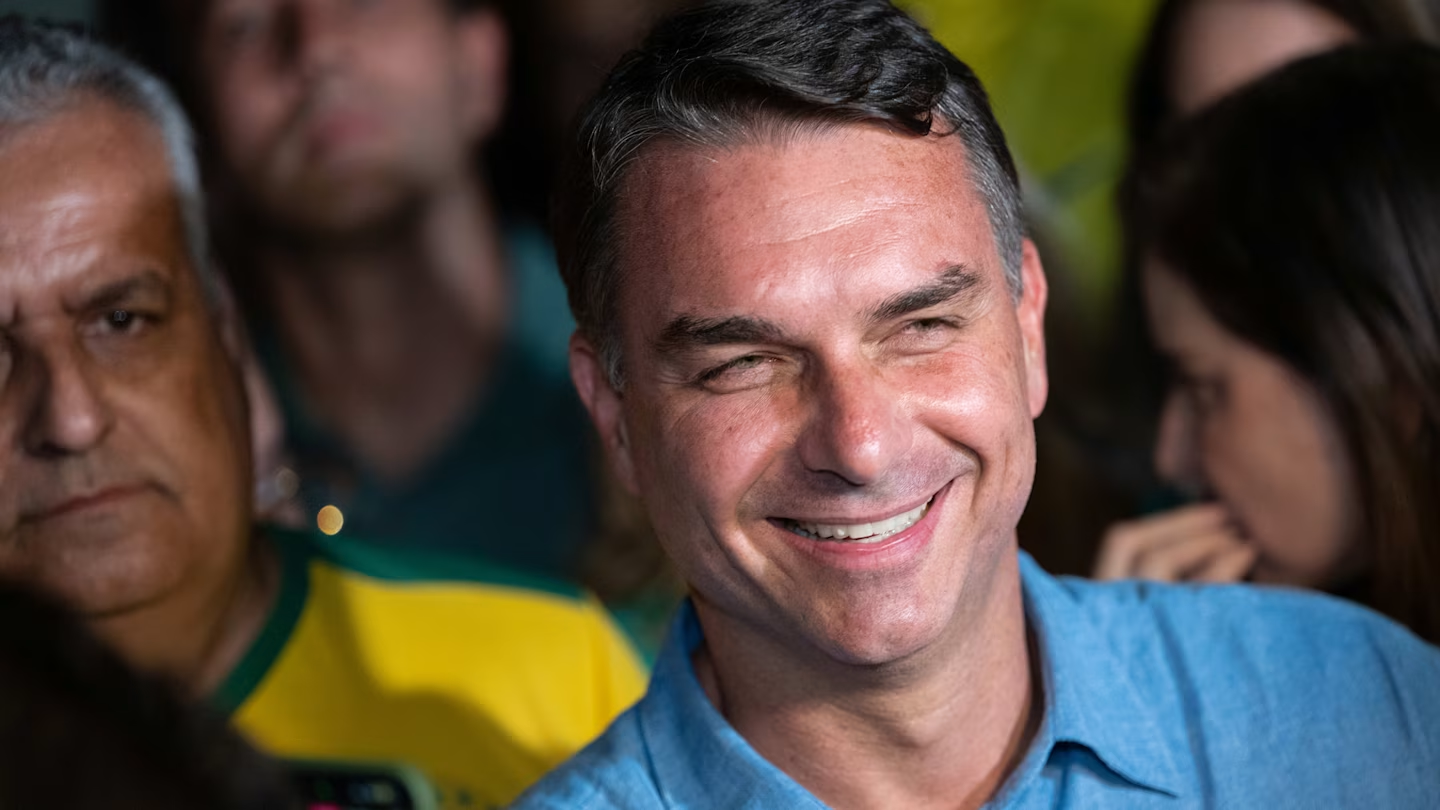
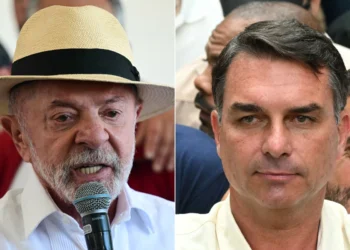
Brazil’s presidential election has been thrown into political turmoil after far-right candidate Flávio Bolsonaro emerged from the first round with a narrow but unexpected lead over incumbent President Luiz Inácio Lula da Silva, placing the Bolsonaro family in a powerful position ahead of the decisive second round.
Flávio Bolsonaro secured about 56.1 million votes, equivalent to 47.03% of the total, while Lula received approximately 53.8 million votes, or 45.16%. The result has left Brazil’s progressive movement facing a difficult political battle before voters return to the polls on 25 October.
The scale of Bolsonaro’s first-round performance surprised many observers, particularly because Lula entered the election seeking another mandate after a long political career and a return to national leadership. The result has also revived questions about the strength of the conservative movement associated with former president Jair Bolsonaro and its ability to shape Brazil’s political direction for years to come.

Political scientist Miguel Lago described the result as a devastating setback for progressive and moderate forces. He argued that while unexpected developments remain possible during a presidential campaign, Bolsonaro now holds a substantial advantage going into the runoff.
The first-round outcome was celebrated by supporters of the Bolsonaro family across several parts of Brazil. The result represented not only a strong performance by Flávio but also a broader advance for politicians aligned with the former president’s conservative movement.
Donald Trump welcomed the result, describing Bolsonaro’s first-round performance as a major victory while acknowledging that the second round was likely to be closely contested. Trump has maintained close political ties with the Bolsonaro family, and the Brazilian election has increasingly become part of a wider conservative political realignment across the Americas.
The election was particularly significant for Jair Bolsonaro, the former president whose political influence remains considerable despite his legal troubles. Bolsonaro is serving a lengthy sentence following his conviction over an alleged attempt to overturn the 2022 election result and undermine Brazil’s democratic institutions.
The former president nevertheless emerged from the first round with his political family considerably strengthened. Several relatives secured congressional positions, reinforcing the Bolsonaro movement’s presence inside Brazil’s political institutions.
Michelle Bolsonaro, Jair Bolsonaro’s wife, won a seat in the Senate, while his son Carlos Bolsonaro also secured a Senate position. Jair Renan Bolsonaro, another of the former president’s sons, won a seat in the lower house, as did Renato Bolsonaro, Jair Bolsonaro’s brother.
The broader congressional results were equally important. Politicians strongly associated with the Bolsonaro movement achieved major victories in state and national contests, including Tarcísio de Freitas, who retained the governorship of São Paulo, and Sérgio Moro, who won the governorship of Paraná. Both have previously served in Bolsonaro’s administration.
The Liberal Party, which represents the principal political vehicle for the Bolsonaro movement, is expected to emerge as the largest force in the Senate, holding 28 of the chamber’s 81 seats. When allied conservative and hard-right parties are included, the bloc could command a majority.
That parliamentary strength could become crucial if Flávio Bolsonaro wins the presidency. It would provide his administration with a stronger political base for legislation and could also influence the future of Jair Bolsonaro, whose supporters have continued to campaign for his release.
Some political analysts believe a Bolsonaro-led government could seek measures that would benefit the former president and potentially enable him to return to a more active political role. His influence over the conservative movement remains substantial, despite his conviction and restrictions on his political activities.
The Bolsonaro family’s international network could also play an important role in a future administration. Eduardo Bolsonaro, another of Jair Bolsonaro’s sons, has maintained close relationships with conservative political figures in the United States and has been associated with Trump’s wider political movement.
Eduardo has faced legal difficulties in Brazil and has remained outside the country. Supporters of the Bolsonaro camp have reportedly discussed a possible senior government role for him if Flávio succeeds in winning the presidency.
The election result has also been welcomed by several conservative leaders across Latin America. Argentine President Javier Milei celebrated Bolsonaro’s performance and presented the result as evidence of a wider ideological shift across the region.
The political developments in Brazil are being watched closely because the country is Latin America’s largest democracy and one of the world’s major economies. A Bolsonaro victory could therefore have significant consequences for Brazil’s domestic policy, foreign relations, environmental agenda and relationship with other governments in the region.
Israeli Prime Minister Benjamin Netanyahu also congratulated Bolsonaro following the first round and expressed hope for stronger relations between Israel and Brazil under a potential Bolsonaro administration.
For Lula, however, the first-round result was a major setback. His campaign now faces the difficult task of persuading voters who supported other candidates, particularly those from the centre and the right, while also attempting to mobilise millions of Brazilians who did not participate in the election.
Around 33 million eligible voters reportedly stayed away from the first round, creating a potentially decisive pool of voters for the runoff. Lula’s campaign is expected to focus heavily on these voters, particularly those who are politically disengaged rather than firmly committed to either Bolsonaro or the Workers’ Party.
The challenge is significant because several rightwing candidates collectively received millions of votes that could now determine the outcome of the second round. Ronaldo Caiado, Renan Santos and Romeu Zema all attracted support outside the two leading campaigns.
Their positions could become crucial during the next three weeks. Santos has indicated that he will not endorse either major candidate, while Zema has said he intends to oppose Lula’s Workers’ Party. Caiado has not yet made his position clear.
Lula’s campaign is expected to portray the second round as a direct choice between his political programme and Bolsonaro’s conservative agenda. The president has promised to highlight what he describes as his rival’s controversial political history and allegations surrounding Bolsonaro’s connections to criminal and paramilitary networks. Bolsonaro has rejected allegations of wrongdoing.
The political environment is likely to become increasingly polarised as the two candidates prepare for the final vote. Lula will need to convince voters that his administration represents stability and social protection, while Bolsonaro will seek to capitalise on dissatisfaction with the incumbent government and present himself as the candidate of political renewal.
Flávio Bolsonaro’s relative youth compared with Lula may also become a significant theme. Although Flávio has spent more than two decades in politics, some undecided voters reportedly view him as a newer face within the Bolsonaro movement compared with his father.
Political scientist Camila Rocha, who has studied Brazil’s conservative movement, has pointed to voter apathy as one of the most important factors in the runoff. Many voters who are not aligned with Bolsonaro’s movement may nevertheless be reluctant to support Lula, while some could potentially be persuaded to return to the polls if the campaign becomes more competitive.
The first-round result also demonstrated the continuing strength of the Bolsonaro political brand. Despite Jair Bolsonaro’s legal troubles and removal from the political mainstream, his name remains capable of mobilising millions of voters and generating strong support across Brazil.

The coming weeks will therefore be crucial for both campaigns. Bolsonaro enters the runoff with momentum, a powerful conservative political network and significant congressional support behind his movement. Lula, meanwhile, must overcome the historical disadvantage of entering the second round as the runner-up while attempting to rebuild enthusiasm among progressive and moderate voters.
Brazil’s presidential race is consequently entering its most decisive stage. The result on 25 October could determine not only who occupies the presidency but also whether the country continues under the political direction established by Lula or begins a new chapter under the Bolsonaro family.
For supporters of Brazil’s progressive movement, the first round has delivered a serious warning. For the Bolsonaro camp, it represents an opportunity to complete a political comeback that once appeared highly unlikely. With millions of undecided or disengaged voters still capable of changing the balance, however, the final result remains dependent on what happens during the intense campaign ahead.
Related News:
 Putin Intensifies Territorial Demands Before US Talks
 Trump to Recheck Green Cards from 19 Nations After DC Attack
 Trump Escalates Minnesota Immigration Surge Amid Rising Tensions
 Greenland Faces Pivotal Summit Over Arctic Power Struggle
 Trump Threatens Strong Action If Iran Executes Protesters
 Trump Receives Machado’s Nobel Medal in White House Meeting
 EU Says US Ties Have Suffered ‘Big Blow’ After Greenland Crisis
 Thousands Protest ICE Operations in Nationwide US Day of Action
 Epstein Files Reveal Trump Officials’ Emails with Financier
 Thousands Protest ICE in New York Against Trump Deportation Campaign
 Trump Praises ‘Terrific’ Petro After White House Talks
 Clinton Testimony Erupts in Fiery Exchange
 Trump Faces Questions Over Iran Conflict Plan
 UK Prepares Aircraft Carrier for Middle East Crisis
 Pete Hegseth Iran War Remarks Spark Alarm
 Trump’s Harsh Rhetoric on Iran Sparks Global Alarm
 Trump Faces Crisis as Iran Reopens Hormuz Tensions
 Charles Faces Trump Test in High-Stakes US Visit
 UK Stands Firm on Falklands Amid US Rift
 US Court Ruling Reshapes Voting Rights Landscape
 US states redraw maps after voting rights ruling
 Trump orders US troop pullout from Germany
 Judge halts deportation of Yemeni refugees in US
 Trump likens US Navy actions to ‘pirates’
 Trump approval plunges amid Iran war fears
 Giuliani hospitalised in critical condition
 Ohio’s Battle for Trust: Democrats Vying to Flip the Buckeye State
 Trump Threatens UN Budget Cuts as US Pushes ‘Trade Over Aid’ Agenda
 Trump warns Iran as Middle East tensions surge again
 US ‘Narco Boat’ Strikes Draw Global Outcry
 Indiana Republicans Defy Trump in Key Vote Test
 US Court Restores Abortion Pill Access Temporarily
 Ohio Primaries Set Stage for Crucial Midterms
 Afghan Families Left in Limbo Face Risk of Deportation
 Tensions Emerge in Netanyahu-Trump Alliance
 US Awaits Iran Reply on New Ceasefire Proposal
 Hormuz Talks Near Critical Stage
 Trump’s Revenge Drive Deepens GOP Divide
 Former ICC prosecutor condemns US sanctions
 Gunman Killed After White House Security Shootout
 Trump Claims Iran Peace Deal Near Completion
 US Midterm Primaries: Democrats Target Key Republican Seats
 House Curbs Trump’s War Powers in Rare Rebellion
 Mystery Grows Over Mitch McConnell’s Health
 Senate Halts Defense Bill Over Iran Clashes
 Trump Jokes, Jabs and Press Tensions at WHCA Dinner
 Houthis Strike Saudi Arabia as Middle East Tensions Rise
 Is America Ready for an AOC Presidential Run?
 Trump dismisses concerns over 250-day carrier deployment
 Trump Calls Strait of Hormuz ‘American Territory’
 Trump Faces Iran War Crisis Before Midterm Vote
 Trump announces major US oil deal with Venezuela
 Trump Hardens Canada Trade Stance as Talks Stall
 Trump Calls Iran War ‘Small Potatoes’ Despite US Deaths
 Trump Pledges $5,000 if Republicans Win Midterms
 Experts Warn of Growing US Terrorism Risks 25 Years After 9/11
 Trump Media Ban Triggers First Amendment Clash
 Middle powers seek new alliances amid Trump era
 Macron and Carney deepen France-Canada ties
 US Networks Suspend Trump White House Pool Coverage
 Trump Eyes Major Belarus Fertiliser Deal Amid Canada Trade Dispute
 Netanyahu faces protests and pressure at UN
 Xi urges Trump to avoid US-China military conflict
 Lula accuses Trump of seeking control over Brazil
 Trump Faces Growing Pressure as Political Support Shifts
 White House Bars CNN From Air Force One Trip
 Trump Asked Xi About Buying US Weapons
 Republican Senator Questions Trump Ad Spending
 AI Deepfakes Put New Pressure on Election Trust
 Trump Ads Trigger Fight Over Taxpayer Money
 Brazil Election Draws Religion Into Final Campaign
 Trump Immigration Policy Faces New Legal Tests
 Lula Warns of Bolsonaro Family Return as Brazil Votes
 Families Await USS Abraham Lincoln Homecoming
 Brazil heads for runoff as Bolsonaro leads Lula
 Latin America women fear rollback of rights
 BBC to Apologise Over Edited Trump Speech Amid Backlash
 Greene Pushes Epstein Files Amid Trump Fallout
 Shadow Fleet at Sea: Europe’s Battle Against Illicit Oil Shipping
 Investigation Into Anti-Trump Motives After Gala Shooting