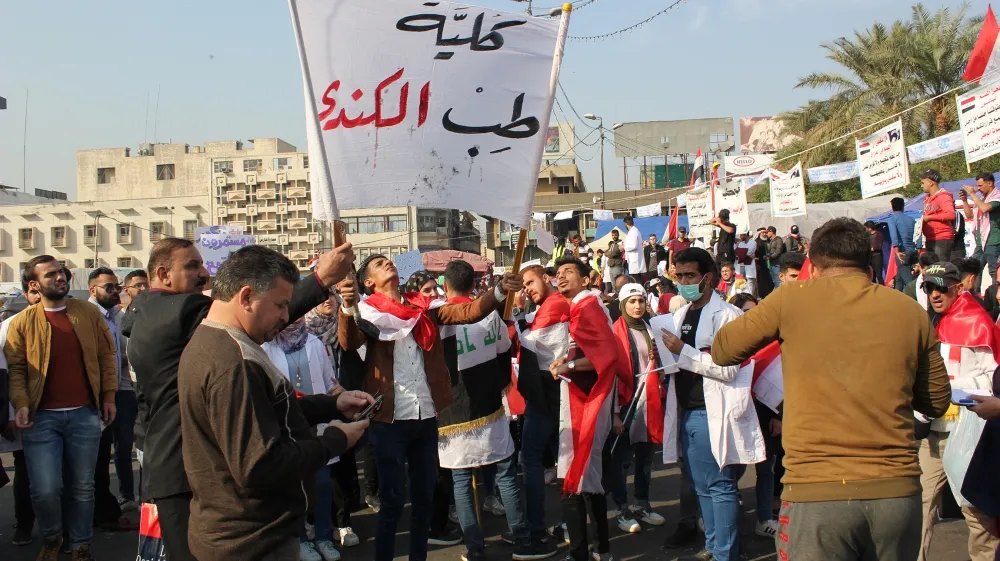
A decision by a university in southern Iraq to remove male professors from teaching female students has triggered weeks of protests, raising serious concerns about women’s educational rights, academic freedom and the growing influence of gender segregation in Iraqi society. The controversial policy at Al-Qadisiyah University has drawn criticism from students, women’s rights activists and human rights advocates, who warn that the decision could represent a worrying shift towards increasingly restrictive attitudes towards women.
Over the past two weeks, an estimated 400 female students have participated in demonstrations demanding the reinstatement of their male professors. The protests have exposed growing frustration among students who believe that university authorities have made a major decision affecting their academic futures without consulting them or considering the consequences for their education.

The university administration has defended the decision, claiming that removing male professors from teaching female students was necessary to prevent the mixing of men and women. Officials also reportedly maintained that the change had been requested by the families of female students. However, students have strongly challenged this explanation, arguing that their families were fully aware of the university’s male teaching staff when they enrolled and had supported their daughters’ decision to pursue higher education there.
The controversy has become particularly sensitive because the affected students say the decision was introduced unexpectedly, disrupting established academic arrangements and relationships between students and their supervisors. Many female students were already working on graduation projects, research assignments and other academic requirements under the guidance of male professors. They argue that replacing these teachers at such an advanced stage could undermine the quality of their work and create unnecessary difficulties in completing their degrees.
Students have also stressed that their professors were familiar with their individual academic strengths, weaknesses and learning requirements. Establishing similar working relationships with new teachers would require additional time and could affect their academic progress. For many students approaching graduation, the sudden changes have created uncertainty about their educational future.
The protests have reportedly received an unsympathetic response from university officials. Some students alleged that administrators mocked their demonstrations and refused to engage in meaningful discussions about their concerns. They also described an atmosphere of intimidation during one of the protests, further intensifying tensions between students and university management.
One of the demonstrators, 22-year-old Huda, said she and her classmates had attempted to express their concerns directly to the university leadership. According to her account, university president Rahi al-Yasiri blocked their path while accompanied by bodyguards. She alleged that the security personnel began making fun of the protesters and were instructed to photograph their faces, creating fears that the images could later be used to identify or intimidate participating students.
Huda said the students wanted to explain that men and women routinely work together across different sectors of Iraqi society. She questioned why male doctors could treat female patients and male professionals could work alongside women in other fields, while male university professors were suddenly being prevented from teaching female students.
She also recalled that the university president responded dismissively, indicating that the professors would not be reinstated regardless of how strongly the students protested. His reported response further strengthened the students’ determination to challenge the policy.
Another major concern is the reported suggestion that dissatisfied students should leave the university if they cannot accept the new arrangements. Female students said they had been told that they could withdraw rather than continue opposing the administration’s decision. For many young women, however, leaving university would mean abandoning years of academic effort, financial investment and personal ambition.
The dispute has attracted criticism from researchers and women’s rights advocates who believe the decision reflects a broader pattern of restrictions affecting women in Iraq. Balsam Mustafa, an Iraqi-British feminist researcher at Cardiff University, described the treatment of the protesting students as deeply concerning. She argued that the women were being treated as though they were minors who had no right to challenge decisions directly affecting their academic lives.
Mustafa also warned that the controversy should not be viewed as an isolated university dispute. In her assessment, discussions surrounding women’s clothing, modesty and perceived standards of chastity have become increasingly prominent in parts of Iraqi society. She pointed to the growing celebration of female students wearing the traditional abaya as another indication of changing social expectations surrounding women’s appearance and behaviour.
The debate has therefore extended beyond the immediate question of which professors should teach particular classes. It has raised wider concerns about women’s independence, participation in public life and the extent to which social and cultural expectations may influence educational institutions.
Ira Salman, an Iraqi lawyer and human rights activist, described the restrictions being imposed on women as a societal catastrophe. She warned that attempts to limit women’s opportunities could undermine the achievements of generations of Iraqi women who have contributed to education, professional services, public administration and other important areas of national development.
Salman expressed concern that Iraq could move towards a social environment resembling Kabul under Taliban rule, where women face severe restrictions on education, employment and participation in public life. She argued that such developments would contradict Iraq’s constitutional principles and the international treaties and conventions the country has signed and ratified.
Her criticism reflects a wider concern among women’s rights advocates that educational institutions should protect equal opportunities rather than introduce policies that restrict access to academic resources based on gender. They argue that female students should have the freedom to benefit from qualified teachers and supervisors, regardless of whether those educators are men or women.
Iraq has a complex social and political history, and the position of women has been influenced by changing political circumstances, religious debates, economic pressures and competing interpretations of cultural traditions. Iraqi women have historically played important roles in universities, professional organisations, public institutions and national development. However, activists say recent debates over gender roles and women’s personal freedoms have created growing uncertainty about the future direction of those achievements.
The situation at Al-Qadisiyah University has also highlighted the importance of student participation in institutional decision-making. University policies can directly affect academic performance, graduation schedules and professional opportunities. Students therefore argue that significant changes should be introduced through transparent consultation, clear academic justification and appropriate consideration of their educational needs.
The controversy is particularly important for female students who depend on consistent academic supervision to complete research projects and graduate successfully. Replacing experienced professors without an adequate transition plan could create practical problems, including delays in research assessments, changes in supervision arrangements and uncertainty over academic responsibilities.
At the same time, the administration’s stated objective of preventing gender mixing has raised questions about whether the policy is being driven by educational considerations or broader social restrictions. Critics maintain that universities should remain environments where academic qualifications, professional expertise and the quality of teaching take priority over gender-based assumptions.
For the protesting students, the issue is not simply about bringing back particular professors. It is also about defending their right to make decisions concerning their education and future careers. Their demonstrations have become a visible expression of resistance against a policy they believe threatens their academic independence.

As the dispute continues, attention is increasingly focused on whether university authorities will reconsider their decision and establish a meaningful dialogue with the affected students. A resolution will be important not only for those directly involved but also for the wider debate over women’s rights and educational freedom in Iraq.
The protests have demonstrated that many young Iraqi women are unwilling to remain silent when decisions threaten their academic opportunities. Their demands have brought renewed attention to the relationship between education, gender equality and personal freedom, raising a fundamental question about the future of women’s participation in Iraqi society.
Related News:
 Five Years of Taliban Rule Leave Afghanistan in Crisis
 Nepal Flood Survivors Face Unimaginable Loss
 Nepal Tunnel Rescue Offers Hope Amid Flood Devastation
 Nepal PM calls deadly flood a global climate warning
 India’s Youth Movement Alleges Mass Detentions Before Protest
 Gaza War Deepens India’s Strategic Ties With Israel
 Delhi Braces for Youth Protests Over Voter Roll Dispute
 PTI Announces Swabi Rally Ahead of Long March Plans
 French Students Protest Poor Conditions in Paris Suburbs
 Greta Thunberg Backs French Students in School Protests
 Gadi Eisenkot: Israel’s Anti-Netanyahu Challenger
 French Police Face Scrutiny Over Injured Teenagers
 Bedouin Women Drive Historic Arab Election Gains
 Eisenkot Accuses Netanyahu of Racist Anti-Arab Campaign
 Escobar’s Hippos May Be Moved to India Zoo
 China Fireworks Factory Blast Kills 21 in Hunan
 Maldives Cave Diving Tragedy Raises Safety Alarm
 Israeli Strike in Southern Lebanon Kills Seven
 Is America Ready for an AOC Presidential Run?
 Cambridge Professor Jason Arday Found Dead at Home
 Ghent Professors Questioned Cofnas Appointment
 Nepal-Tibet Flood Death Toll Rises as 2,478 Remain Missing
 Internal Exclusions Surge in England’s Schools
 Councils spend £125m on illegal children’s care
 Yemen War Displaces 125,000 as Fighting Intensifies
 Lib Dems Prepare for Election Amid Reform Challenge
 Greece Pushes for Parthenon Marbles Reunification
 Ukraine and Russia Escalate Long-Range Drone War
 Elif Eralp Emerges as Berlin’s Next Political Force
 Yemen fighting forces children out of school and into work
 Cornell Fraternity Assault Investigation Reopened
 French Student Protests Escalate Into Violent Clashes
 Israel-bound Plane Lands in Saudi Arabia After Cockpit Fight
 UK University Strikes Spread as Financial Pressure Grows
 Drumcree Talks Falter as Legal Challenge Deepens
 UK-France Returns Deal Faces Expiry as Talks Stall
 Green Party faces dispute over Zionism motion
 Pilot Recalls Fight to Save Flydubai Passengers
 French School Protests Escalate as 400 Schools Close
 New Prosecutor Takes Over Cornell Assault Case
 Germany Pledges €1bn Military Aid to Ukraine
 Latin America women fear rollback of rights
 French Student Protests Grow Despite Government Pledge
 Israel Promotes Film Challenging Controversial Gaza Documentary
 Turkey Rules Out Troops in Saudi Arabia’s Houthi Conflict
 Bolsonaro Gains Key Endorsement Ahead of Brazil Runoff
 UAE Says Co-Pilot Planned Suicide Attack on Israel
 Controversial Vaccine Trial Approved in Guinea-Bissau
 Australian Advocates Seek Subsidised Drugs for PMOS
 Delhi Detains Protest Leaders as Youth Rally Escalates
 UK Greens Face Crisis Over Zionism and Extremism Row
 Millions Face Tougher Medicaid Rules From January
 Ohio Airports Become Key Hubs for ICE Deportation Flights
 India’s Voter Roll Crisis Sparks Nationwide Protests
 Pakistan School Roof Collapse Kills 27 Students
 Albania’s Rama Defies Calls to Quit Amid Student Protests
 Suu Kyi Appears in Rare Photos After Royal Gift
 Zelenskyy Says US Failed to Warn Kyiv of Russian Strikes
 Nigeria Confirms Ebola Case as Regional Outbreak Spreads
 Fifth Foreign Firm Withdraws From Jerusalem Cable Car Plan
 Xi Jinping Tightens China’s Anti-Corruption Campaign
 Ukraine Peace Talks Set to Resume in November
 Taylor Faces Backlash Over Response to Haines Attack
 Serbia’s Student Victory Sparks a ‘Smell of Freedom’
 Spain Mourns 68 Dead After High-Speed Train Crash
 Novaya Gazeta to Close After Russian Government Pressure
 Alan Jones Trial Paused for Melbourne Cup Viewing
 Australia Reviews UK Visa Rules Amid Worker Influx
 ANC Faces Voter Backlash in South African Elections
 Exiled Journalists Defy Putin’s Growing Media Crackdown
 France Braces for Nationwide Strike and Mass Protests
 Kraków Shooting Suspect Dies After Killing Six
 Knesset Speaker Race Could Decide Netanyahu’s Future
 One Nation Candidate Apologises for Offensive Posts
 Teenager Found Alive After Six Days Lost in Australian Bush
 Iran Death Row Boxer Wins Prestigious Human Rights Award
 CEU Eyes Budapest Return as Hungary Enters New Era
 Zelenskyy Warns Starshield Curbs Weaken Ukraine Defences
 Trump, Xi and Putin Face Fears of a New Yalta
 Spain Election Could Bring Far Right Back to Government