Published: 20 October 2026. The English Chronicle Desk. The English Chronicle Online
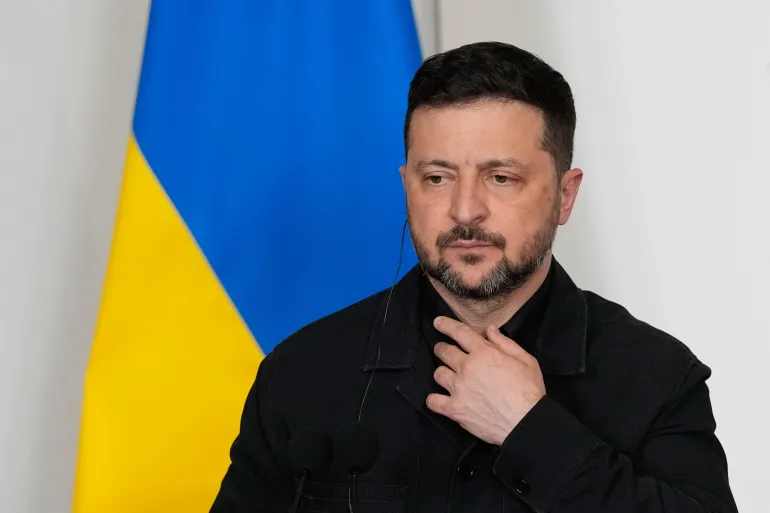
Ukrainian President Volodymyr Zelenskyy has accused the United States of failing to warn Kyiv ahead of a Russian missile attack on the capital’s energy infrastructure, intensifying an increasingly bitter dispute with President Donald Trump over Washington’s approach to the war and its apparent willingness to ease pressure on Moscow.
The allegation has raised fresh questions about the reliability of intelligence cooperation between Ukraine and its most influential military partner at a time when Russian attacks are placing renewed pressure on the country’s electricity, heating and water supplies. Ukrainian officials said the capital was not warned before a missile barrage struck power facilities late on Sunday evening, although a warning was issued ahead of a subsequent attack in the early hours of Monday.
The reported failure comes amid growing Ukrainian concerns over delayed American air defence missile deliveries, a decision by the Trump administration to pause a proposed package of sanctions against Russia, and wider uncertainty about the future of US support for Kyiv. Zelenskyy has suggested that these developments are undermining Ukraine’s ability to defend its population while giving Russian President Vladimir Putin greater room to continue the invasion.

In a social media statement on Monday morning, Zelenskyy said Russia had again launched ballistic missiles in multiple waves during the night without Ukraine receiving advance notification from its partners. He described the situation as another example of a troubling disconnect between the realities facing Ukrainians and the decisions being made by their international allies.
The Ukrainian president argued that restrictions or delays affecting air defence supplies, combined with sanctions relief or postponements for Russia, were difficult to reconcile with the urgency of protecting civilians. His comments reflected Kyiv’s concern that diplomatic calculations in Washington could be weakening the practical assistance Ukraine needs to withstand continued Russian attacks.
Yuri Ihnat, a spokesperson for the Ukrainian air force, said on television on Monday that the country had not received a warning before Russian missiles struck power plants in Kyiv at approximately 11pm on Sunday. A Ukrainian government official also said the capital had not been warned about the impending attack. Ihnat added that Ukraine did receive a warning before a later strike at around 3am.
For several years, American warnings have played an important role in Ukraine’s efforts to protect civilians from Russian ballistic missile attacks. Advance information can provide Ukrainian authorities with valuable minutes to activate air raid sirens, alert residents and encourage people to move into shelters before missiles reach their targets. Even a short delay in receiving such information can have serious consequences when attacks are directed at densely populated urban areas.
Ukrainian officials have reportedly said that warnings were absent on at least three days during the preceding week. The repeated incidents have fuelled speculation that intelligence cooperation may have been affected by the political confrontation between Zelenskyy and Trump. However, the precise reasons for the missing warnings remain unclear, and the available information does not establish that Washington deliberately withheld intelligence.
US Secretary of State Marco Rubio addressed the issue while travelling in Samarkand, Uzbekistan, in the early hours of Monday. Rubio said he did not know the precise circumstances surrounding the latest incident but recalled that a software problem had affected Ukraine’s early-warning system several nights earlier. He said the US military’s European Command was examining the strikes.
The explanation introduced another layer of uncertainty. American officials had not previously publicly identified a software glitch as the cause of the warning problems. In at least one earlier instance, Ukrainian officials had reportedly been told that bad weather over southern Russia had obscured preparations for a missile launch.
The differing explanations have left Kyiv seeking clarity about whether the failures resulted from technical difficulties, operational limitations or changes in intelligence-sharing arrangements. Until more information becomes available, the circumstances surrounding the missing warnings remain contested.
The dispute is unfolding against a broader deterioration in relations between Trump and Zelenskyy. On Friday, Trump paused a sweeping Russia sanctions package that had passed both chambers of Congress, saying the decision was in the national interest. The legislation, associated with the late senator Lindsey Graham, was intended to increase pressure on Moscow as the war continued.
Trump defended his decision on Sunday, arguing that maintaining the possibility of negotiations was more important than taking measures that might drive Russia away from the bargaining table. He said he was pursuing peace between Russia and Ukraine and did not want to jeopardise diplomatic efforts through additional pressure on Moscow.
The American president also accused Zelenskyy of failing to demonstrate sufficient interest in ending the war. Trump suggested that European financial support had not persuaded the Ukrainian leader to pursue a settlement, repeating a criticism that Kyiv has strongly disputed through its continued calls for security guarantees and military assistance.
For Ukraine, the timing of the sanctions pause is particularly sensitive. The government has repeatedly argued that sustained economic pressure is necessary to restrict Russia’s ability to finance military operations. Any delay in new measures could be interpreted in Kyiv as a weakening of the international campaign intended to raise the cost of the invasion.
Concerns have also emerged over the delivery of PAC-3 interceptor missiles, which are used by the Patriot air defence system to counter ballistic missile threats. Ukrainian officials have complained that deliveries from the United States have slowed, raising questions about whether the country will have sufficient defensive ammunition to protect major cities and critical infrastructure during continued Russian attacks.
Weapons supplied through the PURL arrangement have also reportedly faced delays. Under the programme, European countries purchase American weapons for delivery to Ukraine. Kyiv has additionally faced concerns about possible interruptions to other forms of support, including satellite internet services provided through Starlink, which are used by Ukrainian forces for communications and military operations.
The Trump administration has denied restricting Starlink services to pressure Ukraine. Nevertheless, the combination of concerns about intelligence warnings, weapons deliveries and technology support has increased Ukrainian anxiety about the dependability of its relationship with Washington. Reports that the administration threatened to slow important weapons deliveries unless Kyiv stopped attacking Russian oil refineries have added to the uncertainty.
The latest confrontation comes as both sides continue to conduct large-scale attacks. Ukraine launched more than 1,000 drones towards Russia on Sunday in one of the largest aerial operations of the war, setting fire to an oil export terminal and a depot in St Petersburg, according to the reported account of the attacks. The operation demonstrated Kyiv’s continuing capacity to strike targets far from the front line even as its own territory faced sustained bombardment.
Russia’s missile assault on Sunday evening caused extensive disruption in the Ukrainian capital and surrounding areas. Zelenskyy said 28 substations and other critical energy facilities were hit, leaving more than 500,000 people without electricity, heating and running water. The loss of these services is particularly dangerous as households depend on stable energy supplies for everyday needs and essential public services struggle to maintain normal operations.
Zelenskyy said Russia fired 16 ballistic missiles at Kyiv and the surrounding region. Officials in the capital reported that a 21-year-old woman had been killed. Damage to power infrastructure could also complicate efforts to maintain essential services, with electricity disruptions affecting heating systems, water distribution and other facilities used by residents.
The humanitarian toll extended beyond the capital. Drone strikes on a public park in Nova Vodolaha, in the northeastern Kharkiv region, killed six people, including three children, regional governor Oleg Synegubov said. One of the children was reportedly in a pushchair. Fourteen people were wounded, including seven children.
Images released by police showed damaged playground equipment, underscoring the impact of the attack on a place intended for public recreation rather than military activity. Synegubov condemned the strike as an act of terrorism, arguing that the area had no military infrastructure and that the attack had taken place in the middle of the day.
The incident added to Ukraine’s accusations that Russia is deliberately targeting civilian life and infrastructure to increase pressure on the population. Russian attacks have repeatedly affected transport networks, shopping centres, fuel stations, supermarkets and energy facilities, according to Ukrainian officials. Such strikes can disrupt employment, education, healthcare and the ability of families to obtain basic necessities.
Diplomatic efforts to address the humanitarian consequences continued on Monday. Pope Leo XIV spoke by telephone with Zelenskyy about conditions in Oleshky, a city in Ukraine’s Kherson region where residents are facing severe shortages of food and medication amid fighting between Russian and Ukrainian forces.
A Vatican statement said the pope had expressed deep concern about the humanitarian situation and had asked Putin for a humanitarian ceasefire during a conversation with the Russian president on Friday. The proposed pause was intended to allow aid deliveries and evacuations for civilians caught in the conflict.
The Kremlin said it had explained to the pope what it described as the Ukrainian authorities’ responsibility for the difficult humanitarian circumstances. The opposing accounts reflected the continuing dispute over responsibility for the suffering of civilians in contested areas.
The call came shortly after Leo was discharged from a hospital in Rome, where he had undergone surgery related to lung cancer. His intervention highlighted growing concern among international figures about the immediate needs of civilians trapped in areas where fighting and supply shortages have made daily life increasingly precarious.

For Ukraine, the latest missile attacks have therefore become more than another episode in the military campaign. They have exposed the vulnerability of critical infrastructure, the human cost of continued fighting and the importance of reliable early-warning arrangements. The dispute with Washington adds a further layer of uncertainty at a moment when Ukraine remains heavily dependent on international assistance.
Kyiv is seeking clear answers about why warnings were absent before the latest strikes and whether the problems will recur. Washington, meanwhile, has indicated that its military authorities are investigating the incidents, while Trump continues to defend his approach as an effort to preserve diplomatic opportunities.
Whether the warning failures resulted from technical problems or other circumstances remains unresolved. But the political consequences are already significant. With energy facilities damaged, civilians killed and air defence supplies under scrutiny, the episode has intensified concerns in Ukraine that uncertainty over American support could make an already dangerous security situation even more difficult to manage.
Related News:
 China mine blast death toll rises to 90
 Dreyfus Statue Finally Gets Permanent Paris Home
 Israeli Strike in Southern Lebanon Kills Seven
 Five Years of Taliban Rule Leave Afghanistan in Crisis
 Japan PM Backs International Criminal Court
 King Refers Jamaica Slavery Petition to Privy Council
 Ukraine and Russia Escalate Long-Range Drone War
 Latin America women fear rollback of rights
 Israel Promotes Film Challenging Controversial Gaza Documentary
 Navi Pillay Wins Nobel Peace Prize for Justice
 Zelenskyy Accuses US of Delaying Ukraine Missile Supplies
 Canadian astronaut French words ease language row
 RAF Typhoons scrambled amid Russian drone threat near Nato
 China Fireworks Factory Blast Kills 21 in Hunan
 Ebola outbreak in DRC overwhelms health system as cases surge
 Ukraine Creates Long-Range Strike Command
 Taliban global ties grow as rights fears mount
 Ukraine Villagers Demand Answers After Deadly Arms Depot Strike
 Masked Protesters Bring Dover Port Traffic to Standstill
 UN expert urges UK to rethink Israel policy
 Miliband Rejects Chief Rabbi’s West Bank Warning
 North Korea Expands Uranium Facility at Yongbyon
 Israel Accused of Undermining Palestinian Life
 Yemen War Displaces 125,000 as Fighting Intensifies
 Iran School Strike Raises War Crimes Questions, UN Says
 Gaza Strike Kills Child and Paramedic
 Texas Transfers Raise Fears for Migrant Children
 Saudi Pact Raises Risk of Pakistan Entering War
 South Africa’s Femicide Crisis Deepens
 Xi urges Trump to avoid US-China military conflict
 Yemen fighting forces children out of school and into work
 Three Die in Channel Crossing Attempt Near France
 French Student Protests Escalate Into Violent Clashes
 Israel-bound Plane Lands in Saudi Arabia After Cockpit Fight
 New Maps Reveal Gaza’s Vast Destruction
 Pilot Recalls Fight to Save Flydubai Passengers
 French School Protests Escalate as 400 Schools Close
 Pacific Climate Summit Draws Limited Global Leaders
 Japan PM condemns alleged killing by US Marine
 Iran Nobel Laureate Reveals Prison Torture and Fears
 WHO Seeks Russia Answers Over Suspected Plague Death
 South Sudan Trauma Wards Struggle as Fighting Intensifies
 France Promises 3,000 Teachers as Student Protests Grow
 India’s Youth Movement Alleges Mass Detentions Before Protest
 Gaza War Deepens India’s Strategic Ties With Israel
 Turkey Rules Out Troops in Saudi Arabia’s Houthi Conflict
 EU Divisions Deepen Over Israel Policy
 US Execution Livestream Plan Sparks Global Outrage
 Three Convicted in Mexico Surfing Trip Murders
 Controversial Vaccine Trial Approved in Guinea-Bissau
 Delhi Braces for Youth Protests Over Voter Roll Dispute
 Delhi Detains Protest Leaders as Youth Rally Escalates
 Recruitment Boss Accused of Leading Doxxing Campaign
 PTI Announces Swabi Rally Ahead of Long March Plans
 Iranian Woman Faces Death Sentence Over Social Media Post
 US Report Exposes Scale of Dating App Scams
 Gadi Eisenkot: Israel’s Anti-Netanyahu Challenger
 Macron Condemns Violence as France Faces 2,400 Arrests
 Marseille Activist Defies France’s Powerful Drug Gangs
 Milan Luxury Stores Shut as Italy Plans Troop Deployment
 Suu Kyi Appears in Rare Photos After Royal Gift
 Britain deploys RAF specialists to assist Belgium with drone threats
 Greene Pushes Epstein Files Amid Trump Fallout
 Trump Announces 3-Day Russia–Ukraine Ceasefire Deal
 New Footage Revives Peter Falconio Mystery
 British Columbia Sues OpenAI Over School Shooting
 Democrat Says ICE Restricted Detention Camp Oversight
 Trump gives Xi red-carpet welcome as trade truce extends
 Madrid Tent Camp Grows as Spain Housing Crisis Deepens
 London Facial Recognition Trial Ends With False Alert
 Yemen government launches offensive against Houthis
 Gosport Protesters Clash With Police Over Migrant Rescue
 South Korea Probes Fuel Shipments to Russia
 Japan’s Princess Aiko Fuels Debate Over Royal Succession
 South Africa Withdraws Directive on Asylum Applications
 Trump’s Russian Diesel Deal Sparks Ukraine Fury
 Australian Advocates Seek Subsidised Drugs for PMOS
 Trump Names Katie Zachariah as Next White House Press Secretary
 India’s Voter Roll Crisis Sparks Nationwide Protests
 UK Bill Faces Warning Over Fayed Trafficking Victims