Published: 10 October 2026. The English Chronicle Desk. The English Chronicle Online.
Indian authorities detained scores of protesters in New Delhi on Saturday, including the founder of the youth-led Cockroach Janta Party (CJP), Abhijeet Dipke, as thousands of police officers and paramilitary personnel were deployed across the capital to prevent an unauthorised demonstration demanding the resignation of the country’s chief election commissioner. The confrontation has intensified a growing political dispute over the revision of voter lists, with opposition groups accusing the electoral authorities of undermining democratic fairness and the government rejecting allegations of manipulation.
The protest, organised by the self-described Cockroach youth movement, was intended to draw attention to concerns surrounding Chief Election Commissioner Gyanesh Kumar and a voter-list revision process that critics say could benefit Prime Minister Narendra Modi’s Bharatiya Janata Party (BJP). Organisers described the demonstration as an effort to defend democracy and called for Kumar to step down amid questions about how the electoral changes were conducted.
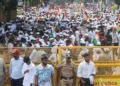
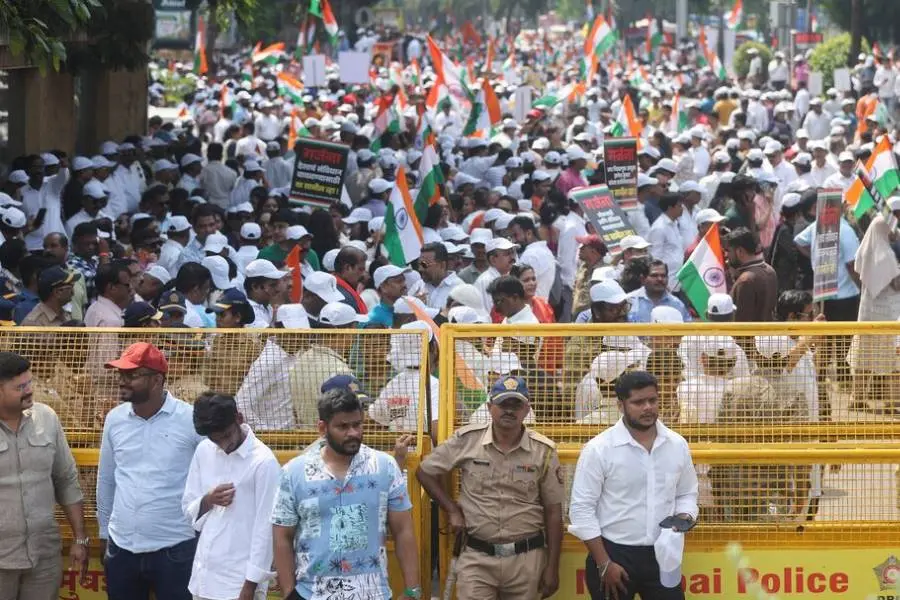
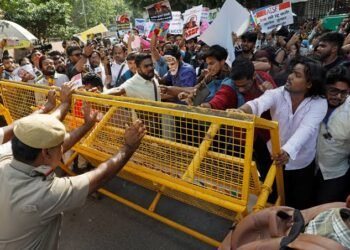
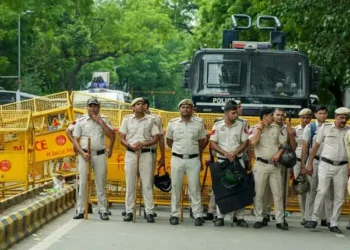
Authorities moved to restrict the gathering before it began, deploying security personnel across central New Delhi, placing barricades along roads leading towards the designated protest area and imposing transport and communications restrictions. Several metro stations were closed, some incoming trains were cancelled, and mobile internet services were suspended around the protest location. The measures disrupted travel in a city where millions depend on public transport and mobile connectivity for their daily activities.

Television footage showed police officers pursuing young demonstrators through the capital’s central business district before detaining them and taking them away in vehicles. A police source told Reuters that approximately 200 protesters had been detained in the area. Police also confirmed the detention of Dhruv Rathee, a prominent YouTube personality who had supported the protest, outside Delhi.
Dipke was detained at the airport after arriving from Mumbai, according to accounts from the movement. CJP said two other leaders, Saurav Das and Ashutosh Ranka, were also detained after their flight landed. The party alleged that police had asked Dipke to call off the demonstration because authorities had prohibited it. The detentions prevented key organisers from reaching the proposed gathering site and added to tensions between the movement and the authorities.
Before his detention, Dipke criticised the government’s response in a social media post, accusing it of placing restrictions on an entire capital rather than permitting a peaceful demonstration at an officially designated protest location. He argued that the shutdown measures would inconvenience large numbers of ordinary citizens. His comments reflected the movement’s broader claim that restrictions intended to maintain public order were being used to prevent political dissent.
Police, however, said permission had not been granted for the protest because the application was submitted too late. Authorities also alleged that the movement had breached undertakings made during earlier demonstrations. They maintained that enforcement action was necessary to uphold the law and prevent disorder, warning that participants who violated the restrictions could face legal consequences.
The dispute has developed against the backdrop of allegations about changes to India’s electoral rolls. The controversy intensified after a newspaper report said senior officials working under Kumar had questioned or disagreed with aspects of the revision process. According to the report, approximately 130 million voter names had been removed during the exercise, a figure that has become central to the concerns raised by critics.
The scale of the reported deletions has prompted questions about how the revision was carried out, what criteria were applied and whether eligible voters could be at risk of losing their registration. Electoral-roll revisions are an important part of maintaining accurate voter records, but large-scale changes can generate controversy when the process is perceived to lack transparency or adequate safeguards.
Opposition parties have repeatedly accused the government of seeking to influence voter lists to strengthen its electoral position. The BJP and the Election Commission have denied allegations of wrongdoing. The ruling party argues that its electoral success reflects Narendra Modi’s popularity and India’s economic performance, and it accuses opposition groups of misleading the public because they have struggled to win elections.
Kumar has not publicly commented on the allegations described in the report. The absence of a response from the chief election commissioner has left critics demanding further explanations, while the commission’s denial of wrongdoing has not ended the dispute. Establishing the circumstances surrounding the reported voter deletions will depend on transparent information about the revision process, the treatment of affected voters and the procedures available to challenge errors.
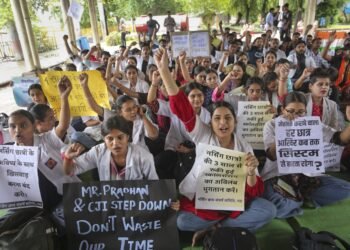
For the Cockroach Janta Party, the demonstration represented an attempt to turn public dissatisfaction into a visible challenge to the political establishment. The movement began as an online satire project, using humour and political commentary to attract attention before evolving into a platform for youth-led protests. Its supporters have presented the current campaign as a defence of democratic participation, particularly the right of eligible citizens to vote without unnecessary barriers.
The planned gathering was scheduled for Jantar Mantar, a central New Delhi location designated by authorities for demonstrations. Organisers said they intended to proceed despite the refusal of permission, arguing that their concerns justified public protest. The police response, including extensive barricades and detentions, demonstrated the authorities’ determination to prevent the gathering from developing into a larger confrontation.
Security arrangements were especially extensive. Tens of thousands of police officers and paramilitary personnel were deployed across the capital, while multiple layers of yellow metal barricades blocked roads leading to the protest site. The restrictions extended beyond the immediate gathering area, affecting transport and communications and creating uncertainty for residents, commuters and people travelling into Delhi.
Authorities ordered dozens of metro stations to close and cancelled several trains scheduled to arrive in the capital. India’s Supreme Court intervened on Friday, saying that some trains should continue operating and that there should not be a blanket closure of metro stations. The intervention highlighted the competing demands facing authorities: limiting the risk of unrest while ensuring that restrictions do not unnecessarily disrupt essential public services.
Mobile internet services were also ordered suspended within a four-kilometre radius of the protest area from Friday night until Saturday night, according to a report by ANI citing a government order. Such restrictions can limit organisers’ ability to coordinate gatherings and communicate with supporters, while also affecting residents and businesses that rely on mobile data. The measures have therefore become part of the wider dispute over whether the response was proportionate to the anticipated protest.
CJP claimed that at least 10,000 people, including demonstrators travelling to Delhi by train, had been detained across the country. That figure represents the party’s allegation and has not been independently established in the available account. Police had not responded to the movement’s broader claims of widespread detentions. A newspaper report said some people detained in the central state of Madhya Pradesh were taken to hotels, although the full circumstances of those detentions were not immediately clear.
The confrontation carries broader political implications because India is approaching a series of important state elections expected to begin in early 2027. Uttar Pradesh, the country’s most populous state and a BJP stronghold, is among the states scheduled to vote. Any sustained controversy over electoral administration could become an important issue for political parties seeking to mobilise supporters and challenge their opponents.
The latest protests also follow earlier demonstrations that reportedly contributed to the resignation of India’s education minister in July after a controversy involving examination-paper leaks. The recurrence of youth-led protests suggests that concerns about public institutions, accountability and the treatment of citizens are creating additional challenges for the government, although the demands and circumstances differ between the individual campaigns.

For many young demonstrators, the immediate issue is whether the electoral system can be trusted to protect every eligible voter’s participation. For the government and police, the challenge is to maintain public order while managing demonstrations that authorities say have not received the required permission. These competing positions have brought questions of civil liberties, election administration and state authority into sharp focus.
The outcome of the dispute will depend in part on whether the authorities provide clear explanations of the voter-list revision and whether the movement can pursue its demands without further confrontation. Transparent procedures, accessible mechanisms for correcting voter-registration errors and clear communication from election officials could help address public concerns. Until those questions are resolved, the detentions and restrictions in New Delhi are likely to remain a flashpoint in India’s wider political debate over democratic accountability and the right to protest.
Related News:
 Delhi Braces for Youth Protests Over Voter Roll Dispute
 India’s Youth Movement Alleges Mass Detentions Before Protest
 Trump’s Revenge Drive Deepens GOP Divide
 Le Pen’s Popularity Holds Despite Conviction
 Five Years of Taliban Rule Leave Afghanistan in Crisis
 Nepal Flood Survivors Face Unimaginable Loss
 Nepal Tunnel Rescue Offers Hope Amid Flood Devastation
 Saudi Pact Raises Risk of Pakistan Entering War
 Japan PM Backs International Criminal Court
 King Refers Jamaica Slavery Petition to Privy Council
 Nepal PM calls deadly flood a global climate warning
 Trump Asked Xi About Buying US Weapons
 South Korea-Ukraine Row Erupts Over North Korean POWs
 French Student Protests Escalate Into Violent Clashes
 Israel-bound Plane Lands in Saudi Arabia After Cockpit Fight
 Burnham Opens Door to Possible UK Return to EU
 Drumcree Talks Falter as Legal Challenge Deepens
 UK-France Returns Deal Faces Expiry as Talks Stall
 Pilot Recalls Fight to Save Flydubai Passengers
 French School Protests Escalate as 400 Schools Close
 Latin America women fear rollback of rights
 Pacific Climate Summit Draws Limited Global Leaders
 Delhi Freezes Promotion of Police Officer After Allegations
 Tanker Attacked Near Qatar as Hormuz Tensions Escalate
 Sri Lanka Ex-First Lady Arrested Over Donation Probe
 Gaza War Deepens India’s Strategic Ties With Israel
 Turkey Rules Out Troops in Saudi Arabia’s Houthi Conflict
 Pakistan Lawyers Back PTI Long March and Demands
 Delhi Tightens Security Ahead of Election Protest
 Navi Pillay Wins Nobel Peace Prize for Justice
 Controversial Vaccine Trial Approved in Guinea-Bissau
 Trump Attacks Norway After Nobel Peace Prize Snub
 US Justice Department Files Lawsuit Against California Over Partisan Voting Maps
 Trump Deploys DHS to Charlotte in Major Arrest Operation
 Thousands Protest ICE Operations in Nationwide US Day of Action
 Report Says Pezzullo Acted ‘Recklessly’ in Dealings
 Hungary election: Orbán faces biggest test amid scandal
 Suspected Plot Targets Pipeline Before Hungary Vote
 Judge halts deportation of Yemeni refugees in US
 China Fireworks Factory Blast Kills 21 in Hunan
 US Awaits Iran Reply on New Ceasefire Proposal
 Immigration Judges Fear Pressure in Trump Era
 Discontent grows around Putin amid war strain
 Farage and Reform UK Reshape British Politics
 Starmer Leadership Under Pressure After Setbacks
 Houthis Strike Saudi Arabia as Middle East Tensions Rise
 UK plans tougher Israel stance with settlement trade ban
 Saudi Arabia Shuts Oil Pipeline After Drone Attack
 Israel Accused of Undermining Palestinian Life
 Turkey LGBTQ Crackdown Expands With New Arrests
 Mahmood Warns Far Right Over Asylum Protests
 Disabled Travellers Seek Fairer UK Care Rules
 Lib Dems Prepare for Election Amid Reform Challenge
 US Networks Suspend Trump White House Pool Coverage
 Democrat Says ICE Restricted Detention Camp Oversight
 Greece Pushes for Parthenon Marbles Reunification
 Xi urges Trump to avoid US-China military conflict
 Republican Senator Questions Trump Ad Spending
 Free Speech Emerges as Key UK Election Issue
 Madrid Tent Camp Grows as Spain Housing Crisis Deepens
 South Korea demands apology over DMZ mine blast
 New Maps Reveal Gaza’s Vast Destruction
 Green Party faces dispute over Zionism motion
 Badenoch Raises Prospect of 2027 UK Election
 Families Await USS Abraham Lincoln Homecoming
 Bosnia’s Young People Look Beyond Election Hope
 Gosport Protesters Clash With Police Over Migrant Rescue
 Okinawa US Troops Face Curfew After Murder Case
 Israel Marks Three Years Since October 7 Attack
 South Korea Probes Fuel Shipments to Russia
 UK Mission in East Jerusalem to Remain Open
 Trump Says He Deserves Nobel Peace Prize
 USS Lincoln Ends Record 265-Day Deployment
 Japan’s Princess Aiko Fuels Debate Over Royal Succession
 Houthi Missile Claim Sparks Riyadh Airport Disruption
 Israel Promotes Film Challenging Controversial Gaza Documentary
 South Africa Withdraws Directive on Asylum Applications
 Trump Rules Out Iran Attack Before US Elections
 Trump’s Russian Diesel Deal Sparks Ukraine Fury
 US Execution Livestream Plan Sparks Global Outrage