Published: 09 October 2026. The English Chronicle Desk. The English Chronicle Online
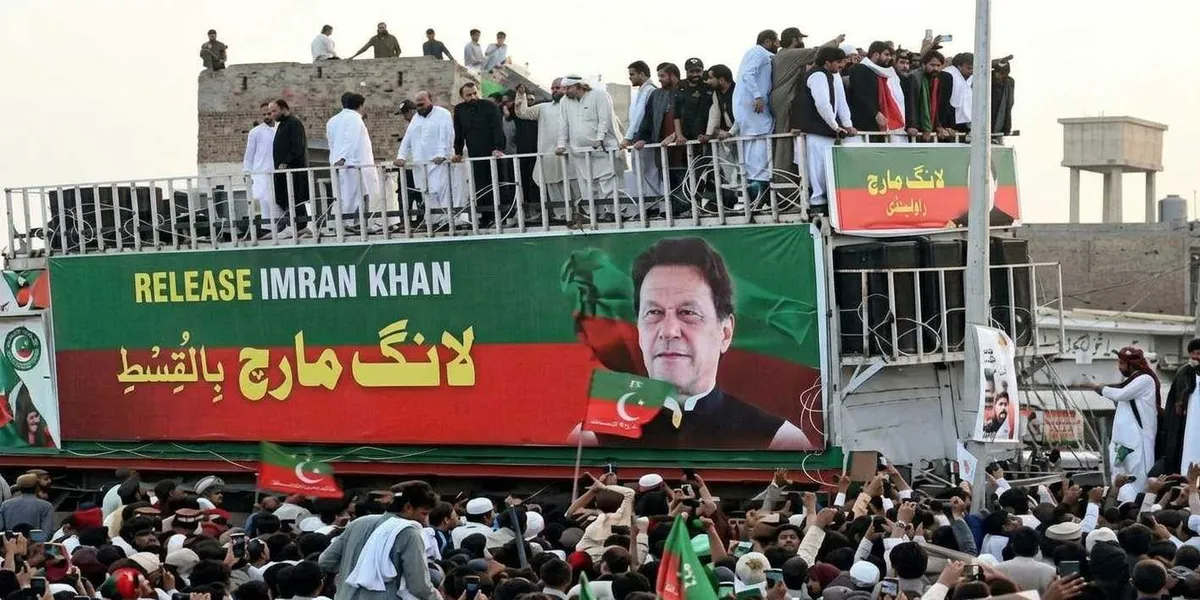
A major lawyers’ organisation in Pakistan has announced its full support for the Pakistan Tehreek-e-Insaf (PTI) party’s long march and political demands, adding fresh momentum to an increasingly tense national debate over democracy, constitutional rights and the rule of law. The All Pakistan Lawyers Action Committee has described the movement as a potentially historic effort to strengthen democratic institutions and protect the constitutional framework amid continuing political and economic difficulties.
The announcement was made in a statement issued in Quetta on Thursday by committee chairman Ali Ahmed Kurd and representatives of various bar associations and lawyers’ organisations. The statement expressed support for the PTI’s political programme and called on the government to address the party’s demands without delay. It also urged the authorities to ensure the safety of people participating in peaceful demonstrations.
The intervention is significant because lawyers and bar associations have historically played an important role in Pakistan’s political and constitutional debates. Their support could bring additional public attention to the PTI’s campaign, particularly as questions surrounding political freedoms, judicial independence and the treatment of detained opposition figures remain contentious.

The committee said the movement’s objectives included establishing the supremacy of the Constitution and the law, protecting an independent judiciary and ensuring the effective functioning of parliament. It also expressed concern about the country’s political and economic crisis, arguing that constitutional principles and democratic accountability should remain central to efforts to resolve the situation.
The statement raised several issues that have become prominent in Pakistan’s political discourse, including the deteriorating law and order situation, alleged unlawful arrests of political leaders and human rights activists, rising inflation and widespread irregularities. The lawyers argued that these concerns required serious attention and called for measures to protect fundamental rights and strengthen public confidence in state institutions.
The committee’s position places particular emphasis on the relationship between political stability and the rule of law. Pakistan has experienced repeated tensions between political parties and state institutions, with disagreements over elections, governance, judicial decisions and the exercise of executive authority frequently contributing to national uncertainty. The lawyers’ statement suggests that resolving these disputes requires adherence to constitutional procedures rather than actions that could further deepen political divisions.
One of the most prominent demands in the statement was the immediate release of PTI founder and former prime minister Imran Khan, alongside party leaders and workers detained in different parts of the country. The committee called for the release of those it identified as political detainees, making their cases a central part of its appeal to the authorities.
Khan remains a major figure in Pakistani politics, and developments concerning him continue to influence the country’s political landscape. His supporters have repeatedly called for relief for him and other detained party members, arguing that political participation and legal rights must be protected. The government and relevant authorities, however, have their own legal and administrative responsibilities, and the circumstances of individual detentions depend on the cases and proceedings involved.
The lawyers’ demand therefore adds to the continuing debate over due process, political freedoms and the role of the judiciary in resolving politically sensitive cases. Any decision concerning detained individuals must ultimately be considered within the applicable legal framework, including the rights of those accused and the responsibilities of the courts.
The committee also called on the government to accept the PTI’s demands promptly. While the statement did not establish that the government had agreed to any of the requests, it made clear that the lawyers’ organisation viewed the political dispute as a matter requiring urgent attention.
The appeal for the protection of peaceful marchers was another important element of the statement. The committee urged authorities to ensure that participants could exercise their rights to peaceful assembly and political expression without facing unnecessary risks. Such protections are particularly important during periods of heightened political tension, when demonstrations can place pressure on public order arrangements and relations between protesters and law enforcement agencies.
Peaceful political demonstrations are a recognised feature of democratic life, although authorities may impose lawful and proportionate restrictions where necessary to protect public safety. The challenge for governments is to balance the rights of demonstrators with the responsibility to maintain security, prevent violence and protect the rights of other members of the public.
The committee also issued a warning concerning the possibility of governor’s rule being imposed in Khyber Pakhtunkhwa province. It said that if such a measure were introduced, or if the authorities took what it described as an undemocratic step, lawyers would launch protest programmes across the country.
The warning raises the possibility that the dispute could extend beyond the PTI’s own demonstrations and attract participation from legal professionals in different regions. A nationwide response from lawyers’ organisations could increase political pressure on the authorities and place constitutional questions at the centre of public debate.
Khyber Pakhtunkhwa is particularly relevant to the current political situation because the PTI has a strong political presence in the province. Any move involving its administration or the use of exceptional constitutional arrangements would therefore be politically sensitive. The lawyers’ statement makes clear that the committee regards the prospect of governor’s rule as a potential threat to democratic governance, although the statement does not mean that such a measure has been implemented.
The broader issue concerns the constitutional balance between federal and provincial authority. Pakistan’s federal structure assigns powers and responsibilities to different levels of government, and disputes over provincial administration can become highly contentious when political parties disagree over the legitimacy or conduct of those in power. Any exceptional measure would need to be assessed against the relevant constitutional provisions and legal requirements.
The committee’s intervention also reflects the wider economic pressures confronting Pakistan. Inflation and financial uncertainty have affected households and businesses, making the cost of living a central public concern. Political instability can complicate efforts to establish consistent economic policies, while prolonged disputes between political parties and state institutions can undermine confidence among investors and consumers.
For ordinary citizens, these overlapping pressures can have practical consequences. Rising prices reduce purchasing power, uncertainty can discourage business investment, and political confrontation may distract public institutions from addressing essential economic and social needs. The lawyers’ statement links the current political crisis with these broader concerns, calling attention to the need for constitutional stability and accountable governance.
However, the precise impact of the PTI’s long march will depend on the scale of public participation, the authorities’ response and the willingness of political leaders to pursue dialogue. Demonstrations can bring attention to demands that might otherwise receive limited consideration, but they can also intensify confrontation if communication breaks down or competing sides adopt increasingly rigid positions.
The support of the All Pakistan Lawyers Action Committee could give the PTI’s campaign additional visibility and strengthen its argument that concerns about constitutional governance extend beyond party politics. Lawyers’ organisations possess professional expertise in legal and constitutional matters, allowing them to contribute to debates over judicial independence, due process and the lawful exercise of state power.
At the same time, the announcement represents the position of the committee and the representatives who endorsed its statement. It should not automatically be interpreted as evidence that every lawyer or bar association in Pakistan shares the same view. Political and legal opinion within the country remains diverse, and the response from other professional organisations and public institutions will help determine the wider significance of the development.
The government’s response will also be important. The available statement did not indicate that the authorities had agreed to release detained PTI figures, accept the party’s demands or rule out the possibility of measures affecting provincial governance. The absence of a confirmed government decision leaves the immediate political outcome uncertain.
If the authorities choose to engage with the demands, negotiations could provide an opportunity to address grievances through legal and institutional channels. If tensions continue to escalate, however, the lawyers’ warning of nationwide protests suggests that the dispute could widen beyond the party’s immediate supporters.
For Pakistan, the central challenge is to manage political disagreement while preserving constitutional order, protecting fundamental rights and maintaining public safety. Political parties, government institutions, courts and civil society groups all have a role in ensuring that disputes are handled through established legal procedures.

The lawyers’ endorsement of the PTI long march has added a significant voice to the ongoing debate over democratic accountability and the rule of law. Whether it leads to broader negotiations, further demonstrations or a more confrontational political environment remains to be seen. Much will depend on how the government responds, whether peaceful political activity is protected and whether the competing sides can find a way to resolve their differences within the constitutional framework.
For now, the committee’s message is clear: it supports the PTI’s demands, wants detained party leaders and workers released, and is prepared to organise protests if it believes democratic principles are threatened. The coming days may reveal whether this intervention becomes a catalyst for dialogue or another development in Pakistan’s prolonged political struggle.
Related News:
 Delhi Freezes Promotion of Police Officer After Allegations
 Sri Lanka Ex-First Lady Arrested Over Donation Probe
 Immigration Judges Fear Pressure in Trump Era
 Israeli Strike in Southern Lebanon Kills Seven
 Five Years of Taliban Rule Leave Afghanistan in Crisis
 Israel Accused of Undermining Palestinian Life
 Saudi Pact Raises Risk of Pakistan Entering War
 Japan PM Backs International Criminal Court
 Latin America women fear rollback of rights
 France Braces for Major Student Protest Mobilisation
 Israel Promotes Film Challenging Controversial Gaza Documentary
 India’s Youth Movement Alleges Mass Detentions Before Protest
 Files Link Andrew to Epstein Dinner After Prison Release
 Labour Attacks Reform Candidate Over Tommy Robinson Backing
 Police Suspect Help in Missing Alice Springs Girl Case
 Cartel crackdown raises fears of fresh violence
 US states redraw maps after voting rights ruling
 Judge halts deportation of Yemeni refugees in US
 Asylum deal sparks fears over Syria deportations
 UK may ban protests amid rising antisemitism fears
 US judge dismisses Kilmar Abrego Garcia indictment
 US green card applicants must apply from abroad, DHS says
 China mine blast death toll rises to 90
 Former ICC prosecutor condemns US sanctions
 Murder Probe Continues After Arrest Release
 New Footage Revives Peter Falconio Mystery
 Pradhan Resigns Amid Protests
 Taliban global ties grow as rights fears mount
 Nepal-Tibet Flood Death Toll Rises as 2,478 Remain Missing
 Ukraine Villagers Demand Answers After Deadly Arms Depot Strike
 Survivor Sues Musk’s xAI Over AI Abuse Images
 Nepal Flood Survivors Face Unimaginable Loss
 Argentina Orders Return of Nazi-Looted Painting
 Judge Allows Pentagon Firings at Stars and Stripes
 Nepal Tunnel Rescue Offers Hope Amid Flood Devastation
 UN expert urges UK to rethink Israel policy
 Miliband Rejects Chief Rabbi’s West Bank Warning
 New Mexico Takes Facebook to Trial Over Data Scandal
 Patriot Platform Raises Concern Across Britain
 Reform UK Receives Record £36m Donation From Crypto Billionaire
 Election Candidate Abuse Raises Alarm in England
 Texas Transfers Raise Fears for Migrant Children
 Trump Media Ban Triggers First Amendment Clash
 Harrods Faces Dispute Over Fayed Abuse Compensation
 China’s MeToo Movement Finds New Ways to Survive
 US Deportation Deals Send Migrants to Unfamiliar Countries
 US Networks Suspend Trump White House Pool Coverage
 Democrat Says ICE Restricted Detention Camp Oversight
 King Refers Jamaica Slavery Petition to Privy Council
 UK Pauses Chagos Deal Amid US Opposition
 Judge orders Trump to restore access for three media outlets
 Ukraine and Russia Escalate Long-Range Drone War
 Nepal PM calls deadly flood a global climate warning
 Trump Asked Xi About Buying US Weapons
 Republican Senator Questions Trump Ad Spending
 Free Speech Emerges as Key UK Election Issue
 South Korea-Ukraine Row Erupts Over North Korean POWs
 Fayed Survivors Demand Inquiry Into Medical Regulator
 Trump Ads Trigger Fight Over Taxpayer Money
 Drumcree Talks Falter as Legal Challenge Deepens
 UK-France Returns Deal Faces Expiry as Talks Stall
 Tennessee Execution Fails After Two Lethal Doses
 New Maps Reveal Gaza’s Vast Destruction
 Hundreds of UK prisoners released early amid overcrowding
 Drumcree Talks End Without Agreement Ahead of Appeal
 Almost Half of Fayed Accusers May Be Trafficking Victims
 Badenoch Raises Prospect of 2027 UK Election
 Musk’s DOGE Sparks Turmoil Inside US Government
 Yemen government launches offensive against Houthis
 Germany Pledges €1bn Military Aid to Ukraine
 Flydubai Co-Pilot Studied in Australia Before Attack
 Tanker Attacked Near Qatar as Hormuz Tensions Escalate
 Christa Pike Wakes After Failed Tennessee Execution
 Royal Navy Sailor Charged With Alleged Spying
 NSW Police Bid Delays Inquiry Into Sydney Protest
 Trump Says He Deserves Nobel Peace Prize
 ICE Agent Shoots Man in New York as Child Escapes Harm
 Gaza War Deepens India’s Strategic Ties With Israel
 Australia grants Asio powers to designate hate groups under new laws
 Maldives Cave Diving Tragedy Raises Safety Alarm