Published: 02 October 2026. The English Chronicle Desk. The English Chronicle Online
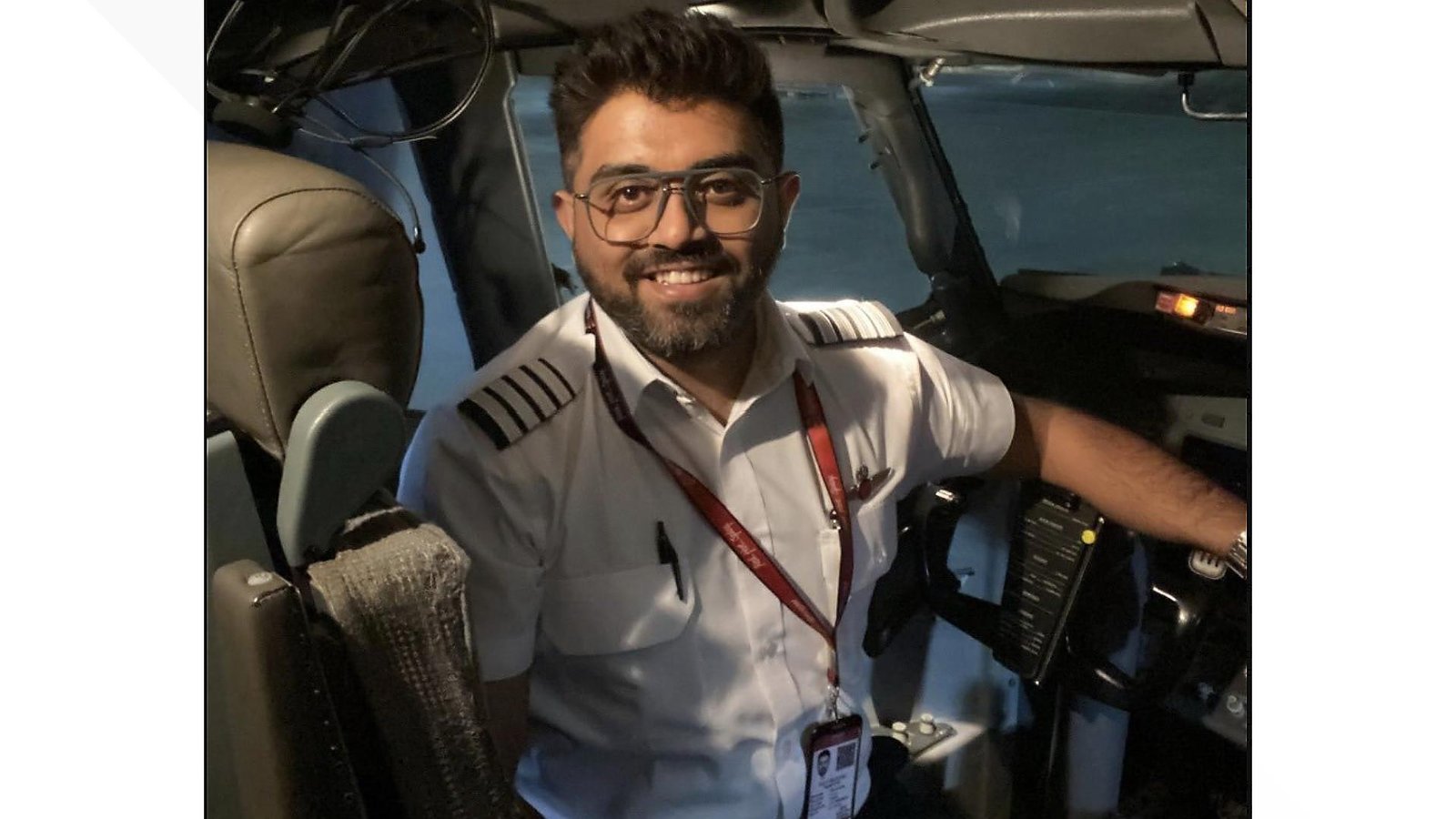
Indian pilot Captain Smit Machchhar has described the terrifying moments when he fought to regain control of himself after being attacked in the cockpit of a flydubai passenger aircraft, saying he realised that he had to get back on his feet because the lives of everyone on board could depend on him.
Machchhar, who is recovering in an Abu Dhabi hospital, spoke about the incident during a video call with Indian Prime Minister Narendra Modi on Friday. The conversation was broadcast on television, giving the public a glimpse of the pilot’s account of the attack and the physical and emotional toll it had taken on him.
With his head bandaged and medical tubes visible around his face, Machchhar became emotional while recalling the moments after his co-pilot allegedly stabbed him. He said he had suffered multiple wounds and had fallen to the cockpit floor, but eventually understood that remaining there could have devastating consequences for the passengers.

“I was fighting for my life,” Machchhar told Modi. He said that at one point he realised that if he did not manage to stand up again, the passengers could lose their lives.
The incident took place on Wednesday aboard a Boeing 737 operating a flight from Dubai to Tel Aviv. The aircraft was carrying 182 people when an apparent attack in the cockpit caused a serious emergency during the flight.
According to accounts of the incident, Machchhar was seriously injured after being attacked by his co-pilot. The aircraft subsequently entered a steep descent, creating a potentially dangerous situation for everyone on board.
Despite his injuries, Machchhar managed to regain enough strength to reach the cockpit door and open it. Passengers were then able to enter the cockpit and help restrain the alleged attacker. The aircraft was diverted from its original route and eventually made an emergency landing in Tabuk, in north-western Saudi Arabia.
The actions of the captain have led to widespread praise, with political leaders and others describing his response as instrumental in preventing what could have become a far more serious aviation disaster.
The circumstances surrounding the alleged attack remain under investigation. Israeli Prime Minister Benjamin Netanyahu said the suspected attacker was an Omani national who was arrested by Saudi authorities after the aircraft landed. He was reportedly being interrogated, while the precise motive behind the incident remained unclear.
The attack has raised serious questions about cockpit security and the procedures designed to protect pilots and passengers during an in-flight emergency. Commercial aviation relies heavily on strict cockpit-access controls and established procedures for dealing with threats, but an incident involving a member of the flight crew presents particularly complex challenges.
For Machchhar, however, the priority in those critical moments was not the wider investigation but the safety of the people travelling behind him.
His account suggests that his training and sense of responsibility remained central even after he had been seriously injured. Faced with the aircraft descending sharply, he understood that the situation required him to act despite his own condition.
The captain also spoke about the role of faith in helping him endure the attack. During the most difficult moments, he said he recited the Hanuman Chalisa, a Hindu devotional hymn traditionally associated with courage, strength and protection.
“Lord Hanuman gave me courage,” Machchhar told Modi.
The reference to the prayer offered a deeply personal dimension to an otherwise extraordinary aviation incident. For Machchhar, it appeared to provide emotional strength while he was attempting to recover physically and return to a position where he could help protect those on board.
The pilot’s background also helps explain his extensive experience in commercial aviation. Machchhar, who is from Mumbai, has worked for flydubai for approximately four years. Before joining the Dubai-based airline, he spent more than a decade with SpiceJet, one of India’s major low-cost carriers.
During his career with SpiceJet, Machchhar held senior operational responsibilities, including serving as a senior commander and line training captain. He accumulated more than 9,750 flying hours with the airline, giving him extensive experience in commercial flight operations and cockpit procedures.
He is married and has two children, according to publicly available professional information. His family and colleagues now face the aftermath of an incident that could have had much more serious consequences.
The aircraft’s emergency diversion to Saudi Arabia allowed authorities to secure the passengers and investigate the circumstances surrounding the alleged attack. The passengers were brought safely to the ground following the dramatic sequence of events in the air.
The incident has also highlighted the importance of cooperation between aviation authorities and security agencies when an emergency occurs across national borders. The flight originated in the United Arab Emirates, was bound for Israel and ultimately landed in Saudi Arabia, involving authorities from several countries.
Investigators will now have to establish precisely what happened inside the cockpit, how the attack began, what led to the aircraft’s steep descent and how the crew and passengers responded. The motive of the suspected attacker is also expected to remain an important part of the investigation.
For passengers, an incident of this nature can be particularly frightening because the cockpit is normally regarded as the most controlled and secure area of a commercial aircraft. Any disruption involving a pilot can therefore create an immediate threat to the operation of the flight.
The response of the passengers was also significant. Once the cockpit door was opened, passengers reportedly entered and helped restrain the attacker. Their intervention occurred at a moment when the aircraft was already experiencing a dangerous descent, adding another layer of urgency to the situation.
Machchhar’s recovery is now the immediate priority. His injuries were serious enough to require hospital treatment, but his conversation with Modi indicated that he was conscious and able to recount key parts of the incident.
For India, the episode has become a story of professional responsibility under extraordinary circumstances. For the aviation industry, it is also a reminder of the importance of preparedness for highly unusual emergencies involving crew members.
The captain’s words during the video call revealed the human cost of the incident. Rather than presenting himself simply as the pilot who helped avert a disaster, Machchhar described the fear, pain and uncertainty he experienced while attempting to survive the attack.
His decision to stand up despite his injuries was driven by an immediate calculation: if he could not act, the passengers might remain in danger. That sense of responsibility ultimately became central to the sequence of events that allowed the aircraft to be diverted and landed safely.
As investigations continue, authorities will seek to determine the full circumstances surrounding the attack and establish what led to the alleged assault. Until those findings are complete, questions about the suspect’s motive and the precise sequence of events remain unresolved.

What is already clear is that a routine international passenger flight became an extraordinary emergency in a matter of minutes. Machchhar’s account has provided a personal perspective on those moments, showing how an injured pilot attempted to overcome his own fear and physical limitations while carrying responsibility for the lives of everyone aboard.
His recovery, meanwhile, is being followed with widespread attention. The captain’s experience has placed him at the centre of an international aviation incident, but his own description of the ordeal remains strikingly personal: he was injured, frightened and fighting to survive, yet understood that he still had a responsibility to act.
The safe diversion and landing of the aircraft brought an end to the immediate danger. The investigation will now determine how the attack occurred and what further lessons may emerge for aviation security. For the passengers and crew who experienced the incident, however, the memory of those minutes in the air is likely to remain long after the aircraft has returned to normal service.
Related News:
 Israel-bound Plane Lands in Saudi Arabia After Cockpit Fight
 Two Dead in Adelaide Airport Plane Crash Fire
 China Fireworks Factory Blast Kills 21 in Hunan
 Nepal Flood Survivors Face Unimaginable Loss
 Nepal Tunnel Rescue Offers Hope Amid Flood Devastation
 Sri Lanka Easter Bombings: 15 Get Long Prison Terms
 Nepal PM calls deadly flood a global climate warning
 Escobar’s Hippos May Be Moved to India Zoo
 Search Intensifies for Missing Hiker on WA Bibbulmun Track
 China mine blast death toll rises to 90
 Thailand Tightens Visa Rules to Curb Tourist Misbehavior
 Dreyfus Statue Finally Gets Permanent Paris Home
 Teen Charged After Layla Jeffery Found Dead
 England and Norway Fans Turn Miami Into World Cup Carnival
 Olympus Awaits Unesco Heritage Recognition
 Israeli Strike in Southern Lebanon Kills Seven
 Five Years of Taliban Rule Leave Afghanistan in Crisis
 Australia Races to Find Tourists Missing in Nepal
 Nepal Flood Death Toll Tops 300 as Second Flood Feared
 Nepal-Tibet Flood Death Toll Rises as 2,478 Remain Missing
 Nepal Rescuers Race to Save Hundreds Trapped Underground
 Masked Protesters Bring Dover Port Traffic to Standstill
 Nepal seeks $20m climate compensation after deadly floods
 Yemen War Displaces 125,000 as Fighting Intensifies
 Gaza Strike Kills Child and Paramedic
 South Africa’s Femicide Crisis Deepens
 Briton Faces Cyprus Court Over Son’s Fatal Fall
 Japan PM Backs International Criminal Court
 King Refers Jamaica Slavery Petition to Privy Council
 Greece Pushes for Parthenon Marbles Reunification
 Ukraine and Russia Escalate Long-Range Drone War
 Yemen fighting forces children out of school and into work
 Trump Asked Xi About Buying US Weapons
 Three Die in Channel Crossing Attempt Near France
 South Korea-Ukraine Row Erupts Over North Korean POWs
 South Korea demands apology over DMZ mine blast
 French Student Protests Escalate Into Violent Clashes
 Just Stop Oil Protesters Convicted Amid Climate Defence Row
 Greene Pushes Epstein Files Amid Trump Fallout
 Deadly Russian Strikes Hit Western Ukraine, 20 Killed in Ternopil
 Venezuela Threatens Nobel Winner Machado with Fugitive Status
 Two National Guard Soldiers Critically Injured Near White House
 Southern Lebanon reels as Israeli strikes shatter communities
 American Mother Extradited From UK to U.S. on Murder Charges
 SA Police Intensify Search in Gus Lamont Case
 El Mencho Killed as Mexico Faces Violence
 Middle East Airspace Crisis Strands Thousands
 Kelly Wilkinson Inquest Reveals Bail Failure
 Bondi terror attack linked to global rise in IS plots
 M&S Demands Urgent Action on Rising Violent Retail Crime
 Ben Roberts-Smith Denies War Crime Allegations in First Statement
 Learner Driver Charged After Expo Tragedy
 US ‘Narco Boat’ Strikes Draw Global Outcry
 Barrister Criticises Trial After Suicide Case Verdict
 Maldives Cave Diving Tragedy Raises Safety Alarm
 Pope Meets Families in Italy Toxic Waste Zone
 Discontent grows around Putin amid war strain
 Farage and Reform UK Reshape British Politics
 New Footage Revives Peter Falconio Mystery
 Houthis Strike Saudi Arabia as Middle East Tensions Rise
 Powerful 7.7-Magnitude Earthquake Hits Eastern Indonesia
 Westminster Council Threatens Charing Cross Soup Kitchen
 Queue row erupts on Wales’ highest mountain
 Nepal-Tibet Flood Leaves 270 Dead and 1,400 Missing
 Families Fly to Nepal in Search of 33 Missing Britons
 Ukraine Villagers Demand Answers After Deadly Arms Depot Strike
 Man Arrested in Mississippi Woman’s Death
 Royal Crown Branded Enslaved Africans in Britain’s Slave Trade
 Mahmood Warns Far Right Over Asylum Protests
 British Columbia Sues OpenAI Over School Shooting
 Democrat Says ICE Restricted Detention Camp Oversight
 Tropics May Wait Longest for Net-Zero Climate Benefits
 Roman Finds Reveal Bath’s Suburban Past
 Trump gives Xi red-carpet welcome as trade truce extends
 Xi urges Trump to avoid US-China military conflict
 Madrid Tent Camp Grows as Spain Housing Crisis Deepens
 Tennessee Set to Execute Woman After Clemency Denied
 London Facial Recognition Trial Ends With False Alert
 Pelicot Trial Play Comes to London for One Night
 Burnham Opens Door to Possible UK Return to EU