Published: 20 October 2026. The English Chronicle Desk. The English Chronicle Online
Luxury shops across Milan have closed early, removed valuable merchandise from display windows and reinforced their premises as Italy prepares to deploy 500 additional army troops to the city following days of protests, looting and clashes between demonstrators and police. The move signals a tougher government response to growing unrest over the rising cost of living and dissatisfaction with public services.
Italy’s deputy prime minister Matteo Salvini announced on Monday that the government intended to send 500 more soldiers to Milan to help restore order and protect the city from further violence. The proposed deployment is expected to form part of a wider security package that ministers are scheduled to consider at a cabinet meeting on Tuesday.
The decision comes as businesses, residents and visitors in Italy’s financial capital face growing uncertainty following a weekend of disorder. What began as a demonstration over economic hardship and declining public services escalated into violent confrontations, with groups of protesters setting rubbish bins on fire, damaging property and breaking into shops in central Milan.

The unrest has raised concerns about public safety and the protection of commercial districts that attract international shoppers, tourists and major luxury brands. It has also intensified a national debate over the causes of public discontent and the government’s response to demonstrations involving young people.
“From words to action: 500 more troops to defend Milan,” Salvini wrote on social media, presenting the proposed deployment as a firm response to the disturbances. Salvini leads the right-wing League party, which is part of Italy’s governing coalition.
The planned reinforcement of security comes as shopkeepers take immediate steps to protect their businesses. In Via Montenapoleone, one of Milan’s most prestigious luxury shopping streets, many retailers had removed goods from their windows as a precaution. The district is home to internationally recognised brands, including Chanel, Tiffany and Dior, and represents an important part of the city’s luxury retail industry.
Police officers patrolled the street while a relatively small number of tourists continued to observe the area. The contrast between the district’s usual image of fashionable shopping and its heightened security arrangements reflected the anxiety spreading through the commercial centre.
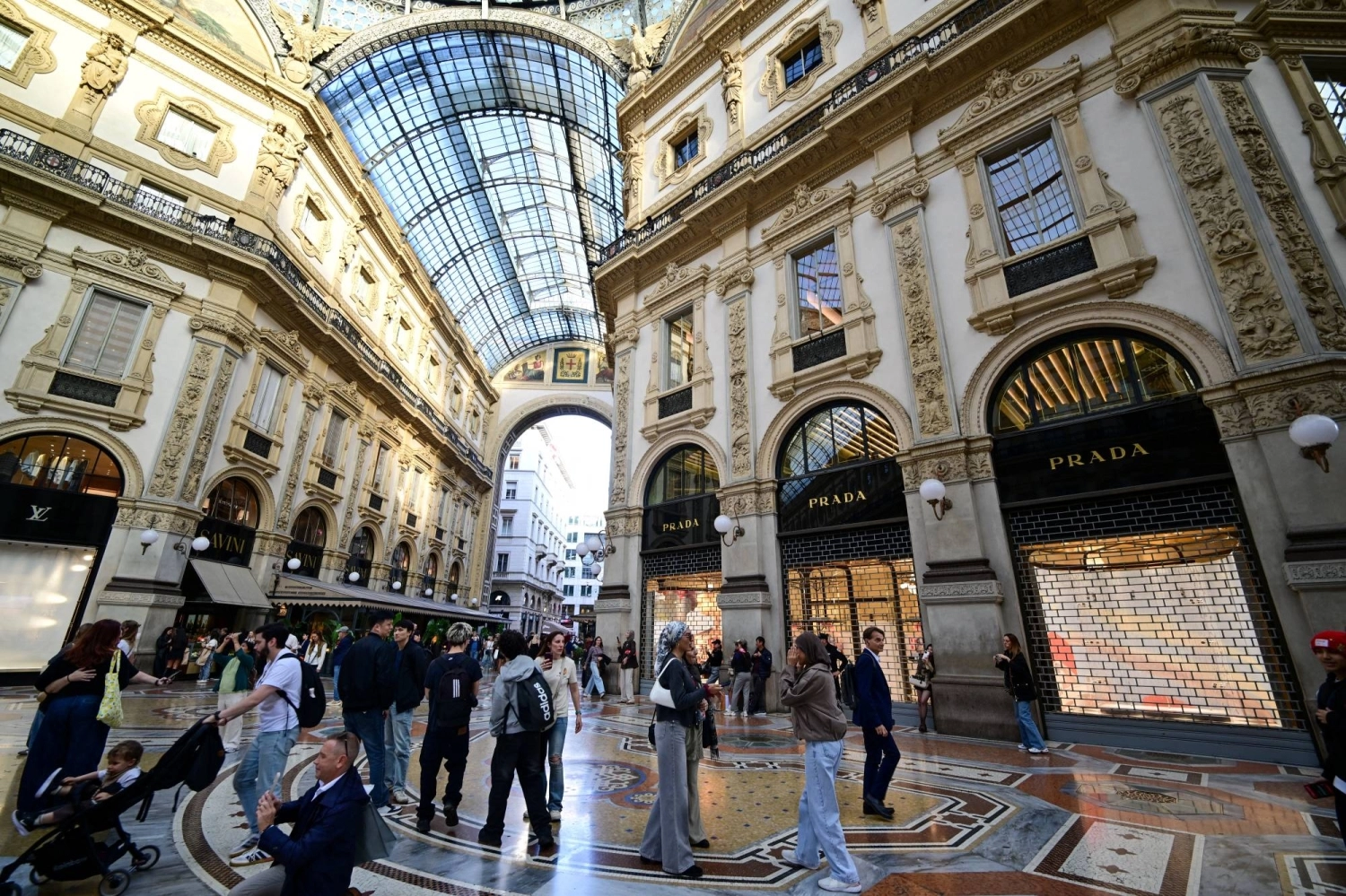
Some stores covered their display windows with protective materials, while others cleared valuable products from their premises. Similar precautions were reported at the Galleria Vittorio Emanuele, a landmark shopping arcade where several businesses closed temporarily, removed merchandise or increased security.
Retailers selling sportswear and everyday consumer goods were also affected. Television footage showed damage at Decathlon and Arc’teryx outlets, as well as at a Vodafone shop. Clothing retailers Levi’s and Under Armour, along with Decathlon, covered windows with cardboard or wooden panels to reduce the risk of further damage.
For businesses already dealing with changing consumer habits and pressure on household spending, the prospect of prolonged unrest presents an additional challenge. Temporary closures can mean lost sales, while repairing damaged premises and improving security can create further expenses. The effects may also extend to workers, delivery services and smaller businesses that depend on activity in central shopping areas.
The violence followed an initially peaceful demonstration on Saturday. Participants had gathered to express frustration over poor public services and rising living costs, issues that have become increasingly prominent in public debate across several European countries.
However, the situation deteriorated over the weekend as several hundred hooded protesters, many of whom were believed to be minors, became involved in disorder in central Milan. Rubbish bins were set alight, shops were looted and property was vandalised. Clashes between demonstrators and police further escalated tensions.
Italian police said they had detained 271 young people during Sunday’s unrest in Milan. According to figures released on Monday, 32 people were arrested among those taken to police stations. The group included 23 minors and 13 foreign nationals. Authorities also reported a further 28 people to judicial authorities.
The figures highlight the scale of the police operation and the involvement of young people in the disturbances. However, the arrests and detentions do not by themselves establish individual responsibility for every act of violence or damage reported during the protests.
The unrest was not confined to Milan. Clashes were also reported on Saturday in several other northern Italian cities, including Bologna, Brescia, Bergamo and Turin. A police report released on Sunday said 28 protesters had been arrested in connection with disturbances in those locations.
The spread of unrest across multiple cities has increased pressure on the government to demonstrate that it can maintain public order while addressing the underlying concerns that brought people onto the streets. Officials now face the challenge of preventing further violence without allowing security measures to overshadow legitimate public grievances over economic conditions and access to services.
Prime Minister Giorgia Meloni, who faces a national election next year, condemned the violence and chaired a meeting with ministers and security chiefs on Monday to discuss the situation. The meeting focused on the government’s response and the security measures that may be introduced in the coming days.
Foreign Minister Antonio Tajani, who also serves as one of Italy’s deputy prime ministers, said the government would respond firmly to attacks against the state. He also indicated that measures aimed at curbing violence involving minors could form part of the response.
The proposed measures could extend beyond deploying additional troops. Italian newspaper Corriere della Sera reported that Meloni was considering extending preventive detention for minors, taking tougher action against youth gangs and accelerating provisions contained in a security bill already being examined by parliament.
Such proposals could become part of a broader effort to strengthen law enforcement powers and discourage organised street violence. However, any changes affecting minors are likely to raise questions about proportionality, legal safeguards and the circumstances in which preventive detention should be used.
The government must also navigate the distinction between peaceful protest and criminal behaviour. Demonstrations over living costs and public services can reflect genuine concerns about household finances, access to essential services and confidence in public institutions. At the same time, looting, arson and attacks on property expose residents, shop workers and emergency personnel to additional risks.
Finding an effective response will require authorities to address both immediate security concerns and the wider pressures contributing to public frustration. A stronger police and military presence may help deter further disorder, but it cannot independently resolve concerns about affordability or the quality of public services.
Italy’s latest unrest also reflects a wider pattern of demonstrations across Europe. Neighbouring France experienced major protests on Saturday as hundreds of thousands of people took to the streets over rising living costs and declining public services. The demonstrations there were described as among the country’s most violent in years, with significant pressure placed on law enforcement.
The developments in Italy and France have brought renewed attention to the economic and social pressures affecting European communities. Higher everyday expenses can place particular strain on lower-income households, younger people and families already struggling to meet housing, transport and other essential costs. When dissatisfaction combines with a perception that public services are failing to meet expectations, protests can grow rapidly.
Nevertheless, the circumstances surrounding demonstrations differ between countries and cities. The concerns expressed by peaceful participants should not automatically be equated with the actions of people involved in violence or theft. Distinguishing between those groups remains important for both public confidence and the fair application of the law.
For Milan, the immediate priority is preventing another outbreak of violence while allowing the city to return to normal activity. The proposed deployment of 500 additional troops is intended to reinforce security, but its practical impact will depend on how the wider measures are implemented and whether authorities can maintain order in the areas most affected.

The early closure of luxury stores and the protective measures taken by retailers demonstrate how quickly public disorder can disrupt everyday commercial life. Even businesses that have not suffered direct damage may face reduced footfall, nervous customers and uncertainty over when normal trading can safely resume.
As the cabinet prepares to consider the government’s security package, residents, business owners and demonstrators will be watching for signs of what happens next. The authorities must respond to violence and protect the public, while the wider debate over living costs and public services continues.
The coming days will therefore be important in determining whether the additional security presence can prevent further clashes and reassure the city’s commercial community. More broadly, the situation will test Italy’s ability to balance public order, individual rights and the economic concerns driving demonstrations across the country.
Related News:
 French Student Protests Escalate Into Violent Clashes
 French School Protests Escalate as 400 Schools Close
 Spain Sets Snap Election as Housing Crisis Deepens
 France Promises 3,000 Teachers as Student Protests Grow
 France Faces Debt Crisis as Protests and Markets Clash
 Macron Condemns Violence as France Faces 2,400 Arrests
 Athens Mayor Moves to Tackle Overtourism Crisis
 US Labor Department in turmoil after secretary resigns
 France Faces Record Presidential Crowded Race Amid Far-Right Surge
 Norway Doubles Down on Oil and Gas for Europe Energy Security
 Hybrid village stores fight rural decline
 Irish Gangland Figure Fails in Dublin Election Bid
 Ukraine Creates Long-Range Strike Command
 Dreyfus Statue Finally Gets Permanent Paris Home
 Ukraine Villagers Demand Answers After Deadly Arms Depot Strike
 Green Leader Targets Starmer’s Former Seat
 Masked Protesters Bring Dover Port Traffic to Standstill
 Macron and Carney deepen France-Canada ties
 King Refers Jamaica Slavery Petition to Privy Council
 Elif Eralp Emerges as Berlin’s Next Political Force
 Three Die in Channel Crossing Attempt Near France
 Madrid Tent Camp Grows as Spain Housing Crisis Deepens
 Burnham Opens Door to Possible UK Return to EU
 Bosnia’s Young People Look Beyond Election Hope
 Latin America women fear rollback of rights
 Former German Intelligence Chief Arrested Over Espionage
 EU-China Talks Target Surge in Hybrid Car Imports
 France Urges UK to Consider Returning to EU
 French Student Protests Grow Despite Government Pledge
 Turkey Rules Out Troops in Saudi Arabia’s Houthi Conflict
 EU Divisions Deepen Over Israel Policy
 Navi Pillay Wins Nobel Peace Prize for Justice
 French Students Protest Poor Conditions in Paris Suburbs
 Greta Thunberg Backs French Students in School Protests
 Millions Face Tougher Medicaid Rules From January
 Brazil Cuts Working Week to 40 Hours in Lula Election Boost
 French Police Face Scrutiny Over Injured Teenagers
 Trump Slams Ukraine Strikes as Russia Ceasefire Collapses
 Cormann Warns Australia Against Populist Migration Caps
 Alberta Referendum Exposes Deep Divisions Over Independence
 Marseille Activist Defies France’s Powerful Drug Gangs
 Greene Pushes Epstein Files Amid Trump Fallout
 Canada Passes Carney’s First Budget in Tight Parliamentary Vote
 Venezuela Threatens Nobel Winner Machado with Fugitive Status
 M&S Demands Urgent Action on Rising Violent Retail Crime
 Italian Town Buys Mussolini Villa to Keep Away Fascist Fans
 Oil Prices Surge Above $120 Amid Iran Blockade Fears
 Trump approval plunges amid Iran war fears
 US ‘Narco Boat’ Strikes Draw Global Outcry
 US Awaits Iran Reply on New Ceasefire Proposal
 Pope Meets Families in Italy Toxic Waste Zone
 Farage and Reform UK Reshape British Politics
 Starmer Leadership Under Pressure After Setbacks
 Le Pen to Run for President Despite Embezzlement Conviction
 England and Norway Fans Turn Miami Into World Cup Carnival
 Burnham unveils £65m drought aid for farmers
 Trump Hardens Canada Trade Stance as Talks Stall
 Bayeux Tapestry Revives Franco-British Ties
 Trump Calls Iran War ‘Small Potatoes’ Despite US Deaths
 Swedish Mining Push Puts Sami Land Rights Under Pressure
 UK plans tougher Israel stance with settlement trade ban
 Europe’s democracies face a growing far-right threat
 Sweden Election Hangs on Far-Right Breakthrough
 Mahmood Warns Far Right Over Asylum Protests
 Democrat Says ICE Restricted Detention Camp Oversight
 Xi urges Trump to avoid US-China military conflict
 French Debt Fears Put Euro Markets Under Pressure
 Badenoch Raises Prospect of 2027 UK Election
 Families Await USS Abraham Lincoln Homecoming
 Gosport Protesters Clash With Police Over Migrant Rescue
 France Schools Protests Draw 250,000 as Police Clash
 South Korea Probes Fuel Shipments to Russia
 Houthi Missile Claim Sparks Riyadh Airport Disruption
 UK Pharmacy Body Drops Teva After Ethical Concerns
 South Africa Withdraws Directive on Asylum Applications
 Trump’s Russian Diesel Deal Sparks Ukraine Fury
 Hanson Attacks Taylor as Australian Conservatives Clash
 Trump Names Katie Zachariah as Next White House Press Secretary
 Brazil Court Scandal Threatens Lula as Bolsonaros Rise
 UK Could Rejoin EU Through a Switzerland Plus Deal