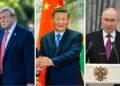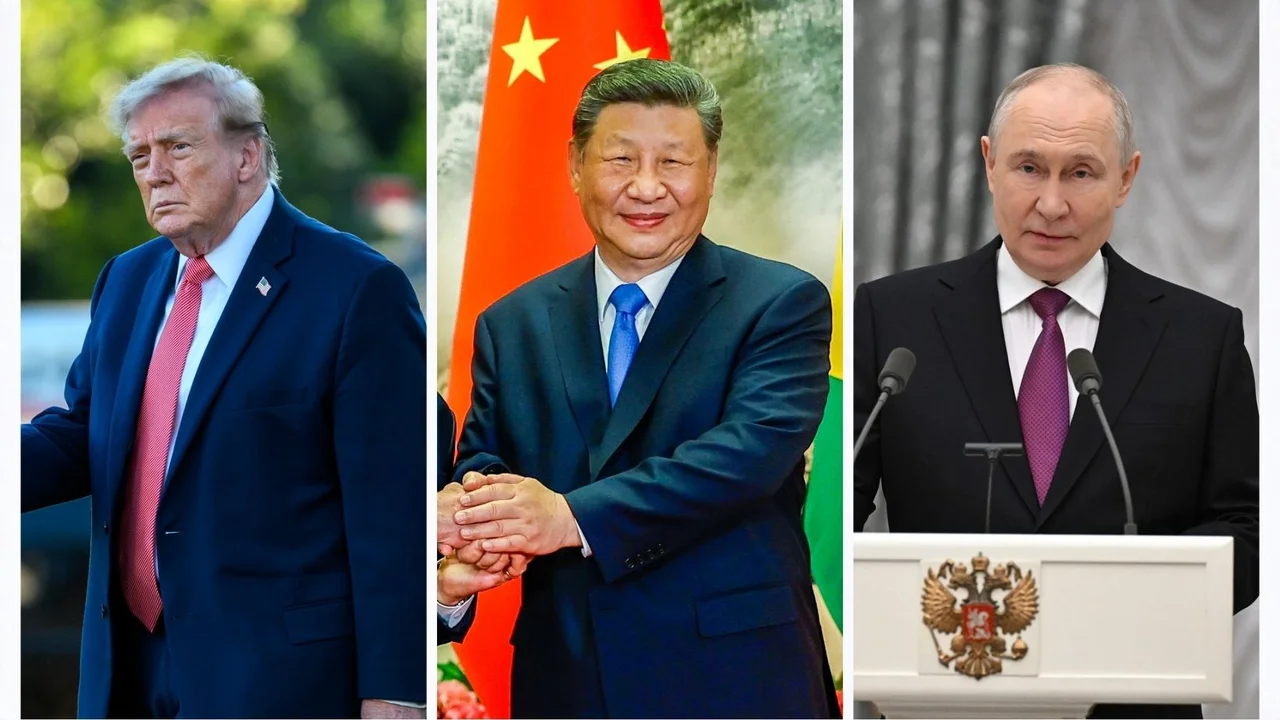
The prospect of a meeting between Donald Trump, Xi Jinping and Vladimir Putin on the sidelines of the Asia-Pacific Economic Cooperation (APEC) summit in China has raised concerns that the world’s most powerful leaders could attempt to reshape international relations through negotiations that exclude smaller nations and those directly affected by ongoing conflicts. The proposed trilateral gathering, expected to take place in Shenzhen next week, has already prompted comparisons with the historic Yalta Conference of 1945, when the victorious Allied powers negotiated the future of Europe without giving many affected countries a meaningful voice.
Ukrainian President Volodymyr Zelenskyy is among those worried that such a meeting could produce a modern version of the postwar arrangements that divided Europe into competing spheres of influence. The concern is not simply about the possibility of an agreement between Washington, Moscow and Beijing. It is about whether the interests, sovereignty and security of countries such as Ukraine, Taiwan and the Baltic states could become bargaining points in a broader geopolitical settlement.
The central question surrounding the potential summit is whether the three leaders intend to discuss practical solutions to international conflicts or establish a framework in which major powers determine the political and security arrangements of other nations. For countries excluded from the discussions, the prospect is particularly unsettling because decisions taken by powerful governments could have consequences extending far beyond the negotiating room.

The historical comparison with Yalta is significant. In February 1945, as the Second World War approached its conclusion in Europe, US President Franklin D Roosevelt, British Prime Minister Winston Churchill and Soviet leader Joseph Stalin met in Crimea to discuss the postwar international order. The conference was intended to establish arrangements for a peaceful Europe, coordinate the final stages of the war and secure cooperation among the victorious powers.
However, the decisions and compromises made at Yalta became controversial because they failed to guarantee genuine political independence for several countries in Eastern Europe. Poland became one of the most prominent examples. Its sovereignty had been central to Britain’s decision to enter the war against Germany in 1939, yet the country’s postwar political future was heavily influenced by Soviet power.
Roosevelt sought Stalin’s support for the creation of a new international organisation that would eventually become the United Nations. He also wanted Soviet participation in the war against Japan. In exchange, the American president accepted the reality of Soviet military influence in Poland and other parts of Eastern Europe, relying on assurances that liberated countries would enjoy sovereign rights and self-government.
Churchill was deeply concerned about Poland’s independence and attempted to secure stronger guarantees. During discussions, he described the issue as a matter of honour. Stalin, however, presented it as a matter of national survival and security. By that stage of the war, Soviet forces had gained enormous military strength following major victories against Nazi Germany, leaving Britain and the United States with limited ability to challenge Moscow’s position on the ground.
The consequences became increasingly clear after the war. Soviet influence expanded across much of Eastern Europe, and millions of people lived under communist governments that were closely aligned with Moscow. The promise of political self-determination was not fulfilled in the way Western leaders had hoped, leaving Yalta widely remembered outside Russia as a symbol of great-power compromise at the expense of smaller nations.
The historical legacy remained influential in Western diplomacy for decades. In 2005, former US President George W Bush criticised the Yalta settlement during a visit to Latvia marking the 60th anniversary of the end of the Second World War in Europe. He argued that the decisions made by powerful nations had effectively sacrificed the freedom of smaller countries and left Europe divided.
That criticism reflected a broader American political tradition that emphasised national sovereignty, democratic freedom and opposition to territorial domination by powerful states. However, the diplomatic approach associated with that tradition appears to have changed under Trump, whose administration has shown greater willingness to discuss international politics through the language of spheres of influence and direct negotiations between major powers.
Trump’s 2025 national security strategy presented the Western Hemisphere as America’s principal sphere of influence while adopting a more accommodating approach towards the geopolitical ambitions of Russia and China. Critics argue that such thinking risks weakening the principle that countries should be free to determine their own political and security arrangements.
The possibility of a trilateral summit therefore represents an important test of how the United States intends to define its global leadership. Trump has appeared enthusiastic about meeting Xi and Putin, while the Chinese president has taken a more cautious approach to the prospect of presenting China as a traditional global superpower. Beijing may prefer a carefully controlled diplomatic exchange rather than a highly publicised agreement that creates expectations it cannot easily fulfil.
There is also uncertainty about whether the meeting will produce substantive results. China has reportedly sought to remove nuclear disarmament from the agenda, suggesting that the discussions may be more limited than some observers expect. Even a brief meeting, however, could provide Putin with an opportunity to demonstrate that Russia remains an influential international actor despite the economic and diplomatic pressure resulting from its invasion of Ukraine.
Russia’s economy is significantly smaller than that of the European Union, but Putin continues to pursue a foreign policy designed to establish Moscow as one of the principal centres of global power. A meeting with the American and Chinese presidents would provide political recognition that could be used domestically to reinforce his image of Russia as an indispensable international player.
Putin’s ambitions appear to extend beyond a single summit. Russian officials have repeatedly called for a comprehensive restructuring of European security arrangements. Moscow’s chief negotiator, Vladimir Medinsky, has described the objective as creating a modern security system comparable to the agreements reached at Yalta or Potsdam after the Second World War. Russian foreign ministry spokesperson Maria Zakharova has also presented the proposed diplomatic process as an opportunity to move away from international instability towards a more predictable order.
Such statements have intensified concerns among European governments. Russia’s previous demands for changes to the European security architecture, including proposals made in 2021, were rejected by Western countries. Many European leaders fear that accepting Moscow’s preferred arrangements could legitimise military aggression and weaken the independence of countries that have chosen closer relationships with Western institutions.
For Ukraine, the possibility of discussions between Trump and Putin is particularly sensitive. Kyiv has repeatedly expressed concern that its future could be discussed without its participation, especially if Washington prioritises a rapid diplomatic settlement over the protection of Ukrainian sovereignty. Zelenskyy has argued that whenever Trump and Putin engage in direct discussions, Ukraine risks becoming the subject of decisions made by others.
China’s position is more complicated. Beijing maintains close strategic and economic relations with Moscow but also has significant commercial interests in Europe and the wider international economy. Any endorsement of a Russian-designed European security system could seriously damage China’s relationship with European governments, particularly Germany and the European Commission.
China has also faced criticism over industrial overcapacity and the effects of its exports on European manufacturers. As Beijing attempts to repair relations with European partners, openly supporting Moscow’s demands could create additional economic and diplomatic difficulties.
At the same time, China has shown little interest in taking responsibility for resolving conflicts that it believes were created by other governments. Professor Minghao Zhao of Fudan University has described the Russia-Ukraine war as a strategic mistake by Putin and the conflict involving Iran as a strategic mistake by Trump. In his assessment, Beijing is primarily managing the consequences of those decisions rather than accepting responsibility for them.
Nevertheless, some Chinese policy experts believe Beijing could play a constructive role in international diplomacy. Wang Huiyao, president of the Center for China and Globalization, has argued that China is needed to help strengthen multilateral cooperation and reduce instability. He has also suggested that Beijing could potentially provide guarantees in discussions involving Iran, although China’s priorities remain closely connected to global economic stability and access to essential trade routes.
The economic dimension is especially important in the Middle East, where disruptions to major waterways can threaten international energy supplies. China is one of the world’s largest oil consumers and has a direct interest in maintaining secure maritime routes. Helping to reduce tensions in the region could therefore serve its own economic interests, even if Beijing remains reluctant to become deeply involved in the political settlement of the Ukraine war.
The debate over the future international order has also divided foreign policy experts in the United States. Supporters of liberal internationalism, including political theorist John Ikenberry, believe democratic countries can still maintain a meaningful international alliance based on shared values, institutions and respect for sovereignty. From this perspective, allowing authoritarian governments to negotiate the future of other countries would undermine the foundations of the postwar international system.
Others believe the global balance of power has changed so significantly that Western governments must become more comfortable negotiating with authoritarian states. Charles Kupchan, a senior fellow at the Council on Foreign Relations, has argued that the United States and its traditional democratic allies no longer possess the same overwhelming influence they once enjoyed.
China, India, Indonesia and other major countries in the Global South are increasingly important in international affairs. Many maintain stronger economic relationships with Beijing than with Washington, making it difficult for the United States and its allies to shape global decisions without engaging with governments that have different political systems.
This argument suggests that future international stability may require greater cooperation across ideological divisions. However, critics warn that such engagement must not become an excuse for sacrificing the rights and interests of smaller countries.
Taiwan is another potential source of concern. Any discussion of global spheres of influence involving Washington and Beijing could raise questions about the future of the island, which China claims as part of its territory. Taiwan’s government and population have consistently maintained the importance of preserving their democratic system and determining their own future.
The central challenge for the international community is therefore how to balance practical diplomacy with the fundamental principle of national sovereignty. Major powers may need to negotiate over security, trade, nuclear risks and regional conflicts, but agreements that ignore the countries directly affected could create further instability rather than lasting peace.

The proposed meeting in Shenzhen may ultimately amount to little more than diplomatic theatre, with carefully prepared statements and limited substantive agreements. Yet even a symbolic gathering could influence international expectations and provide Putin with an opportunity to promote his vision of a new global order.
Whether Trump, Xi and Putin can establish a meaningful framework for cooperation remains uncertain. What is clear is that the historical memory of Yalta continues to influence how smaller nations view negotiations between powerful governments. For Ukraine, Taiwan, Eastern Europe and other countries concerned about their independence, the lesson of 1945 remains relevant: international stability cannot be built by treating the sovereignty of smaller nations as a negotiable commodity.
Related News:
 Southeast Asia Turns to Russia Amid Energy Crisis
 US Awaits Iran Reply on New Ceasefire Proposal
 Hormuz Talks Near Critical Stage
 Israeli Strike in Southern Lebanon Kills Seven
 Five Years of Taliban Rule Leave Afghanistan in Crisis
 Trump Calls Iran War ‘Small Potatoes’ Despite US Deaths
 Saudi Arabia Shuts Oil Pipeline After Drone Attack
 South Korea Rules Out Military Role in Iran War
 Iran Rejects Claims of Shift in US Talks
 Xi urges Trump to avoid US-China military conflict
 Lula accuses Trump of seeking control over Brazil
 Saudi intercepts Houthi missiles as oil fears grow
 Economic growth and political strain reshape Benin
 Trump Ads Trigger Fight Over Taxpayer Money
 Germany Pledges €1bn Military Aid to Ukraine
 Tanker Attacked Near Qatar as Hormuz Tensions Escalate
 South Korea Probes Fuel Shipments to Russia
 Report Urges UK to Rethink Overseas Military Spending
 Houthi Missile Claim Sparks Riyadh Airport Disruption
 Israel Promotes Film Challenging Controversial Gaza Documentary
 India’s Youth Movement Alleges Mass Detentions Before Protest
 Gaza War Deepens India’s Strategic Ties With Israel
 Turkey Rules Out Troops in Saudi Arabia’s Houthi Conflict
 Trump’s Russian Diesel Deal Sparks Ukraine Fury
 Delhi Braces for Youth Protests Over Voter Roll Dispute
 PTI Announces Swabi Rally Ahead of Long March Plans
 Brazil Court Scandal Threatens Lula as Bolsonaros Rise
 Millions Face Tougher Medicaid Rules From January
 UK Urges Interpol to Reject Argentina’s Falklands Arrest Requests
 India’s Voter Roll Crisis Sparks Nationwide Protests
 Gadi Eisenkot: Israel’s Anti-Netanyahu Challenger
 Serbia Leader Linked to Controversial Trump Tower Plan
 Japan’s Takaichi Faces a Crucial Second Year in Power
 Xi Jinping Tightens China’s Anti-Corruption Campaign
 Ukraine Peace Talks Set to Resume in November
 China Expels Record 33 Officials in Xi Jinping Purge
 Trump’s Global Policies Put Republicans at Risk
 Global Crises Test Diplomacy as Trump’s Policies Face Scrutiny
 Bedouin Women Drive Historic Arab Election Gains
 G20 Photo Cancelled as Russia Deepens Western Rift
 US Strikes Iran Island as Vance Signals Hope for Peace
 Australia Reviews UK Visa Rules Amid Worker Influx
 Inquiry Calls for Australia to Scrap AUKUS Submarine Deal
 South Korea Plans Expanded Naval Operations Near Hormuz
 Paraguay President Impeached and Arrested After Banking Crisis
 Qatar Pushes Iran Deal to Reopen Strait of Hormuz
 US Pushes for Final Russia-Ukraine Peace Deal
 Knesset Speaker Race Could Decide Netanyahu’s Future
 Ukraine Captures First Indonesian Fighter in Russian Army
 Eisenkot Accuses Netanyahu of Racist Anti-Arab Campaign
 Zelenskyy Warns Starshield Curbs Weaken Ukraine Defences
 Canada Passes Carney’s First Budget in Tight Parliamentary Vote
 Oil Prices Surge Above $120 Amid Iran Blockade Fears
 Trump approval plunges amid Iran war fears
 US ‘Narco Boat’ Strikes Draw Global Outcry
 Maldives Cave Diving Tragedy Raises Safety Alarm
 Discontent grows around Putin amid war strain
 Ukraine Creates Long-Range Strike Command
 Houthis Strike Saudi Arabia as Middle East Tensions Rise
 Ukraine Villagers Demand Answers After Deadly Arms Depot Strike
 Trump Hardens Canada Trade Stance as Talks Stall
 Swedish Mining Push Puts Sami Land Rights Under Pressure
 UK plans tougher Israel stance with settlement trade ban
 US Sanctions Open New Battle for Cuba Assets
 US Networks Suspend Trump White House Pool Coverage
 Trump gives Xi red-carpet welcome as trade truce extends
 Republican Senator Questions Trump Ad Spending
 Burnham Opens Door to Possible UK Return to EU
 Badenoch Raises Prospect of 2027 UK Election
 Israel Marks Three Years Since October 7 Attack
 Trump Says He Deserves Nobel Peace Prize
 Trump Rules Out Iran Attack Before US Elections
 Lula Supporters Make Final Push Ahead of Brazil Runoff
 Australia Raises Interest Rates to 18-Year High
 James Talarico Makes History with Texas Senate Victory
 Paraguay President Quits After Major Bank Collapse
 Labor Minister Defends Chalmers Amid Budget Tensions
 US Treasury Chief Moves to Military Base Over Iran Threat
Zelenskyy Sees Peace Opportunity as US Envoys Meet Putin
 Iran Death Row Boxer Wins Prestigious Human Rights Award