
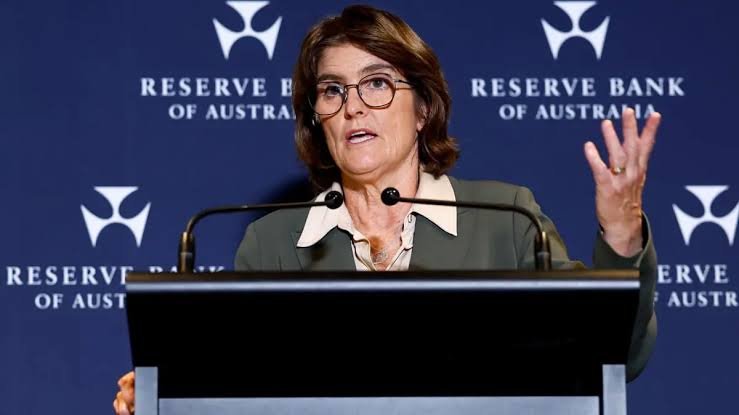
Australia’s central bank has raised interest rates for the fifth time in 2026, pushing the official cash rate to 4.85%, its highest level since 2008, as policymakers intensify efforts to contain persistent inflation. The decision is expected to increase financial pressure on millions of households with mortgages, while raising fresh questions about the country’s economic outlook and the effectiveness of government policies to address the cost-of-living crisis.
Reserve Bank of Australia Governor Michele Bullock defended the increase, arguing that taking action now could prevent more serious economic difficulties in the future. Speaking to journalists after the announcement, she acknowledged that the decision would be unwelcome for many Australians but said it was necessary to bring inflation under control.
“I know this is not the news that many Australians want to hear, but it is what’s needed to get inflation down,” Bullock said. She added that inflation remained too high and the central bank’s forecasts indicated that price pressures were likely to persist for longer than previously expected. Her central message was that accepting some economic pain in the short term could help avoid even greater difficulties later.

The latest increase represents another setback for households already struggling with high housing costs, food prices, energy bills and other everyday expenses. More than 3.3 million Australian households have home loans, leaving a substantial proportion of the population exposed to changes in borrowing costs. For mortgage holders, even a relatively small increase in the official cash rate can translate into higher monthly repayments, reducing the money available for other household spending.
According to estimates from financial comparison group Canstar, the latest decision could add approximately A$107 to the monthly interest repayment on a mortgage of A$700,000. Across all five rate increases introduced during 2026, the additional monthly repayment burden on a loan of that size has reached about A$532. The actual effect will vary depending on individual loan arrangements, interest rates, repayment structures and the remaining loan balance.
For families already managing tight budgets, the cumulative impact could be significant. Higher mortgage repayments may force households to reduce discretionary spending, postpone major purchases, limit travel and reconsider savings plans. Businesses that depend on consumer spending could also face weaker demand as households redirect more of their income towards housing costs.
The Reserve Bank’s decision was not unanimous. Six members of its monetary policy board supported the increase, while three voted to keep the cash rate unchanged. The split illustrates the difficult choices confronting policymakers as they attempt to control inflation without causing excessive damage to economic activity, employment and household finances.
Despite the latest increase, financial markets interpreted parts of the central bank’s announcement as a possible indication that another immediate rise was less likely. The Reserve Bank removed an explicit reference to the possibility of further increases from its post-meeting statement. Economists at UBS regarded the change as a relatively dovish signal, suggesting that policymakers might prefer to assess the impact of existing measures before taking additional action.
Market expectations also shifted following the announcement. The estimated probability of another rate increase before Christmas fell to approximately 12%, around half its previous level. However, investors continued to anticipate a possibility of further tightening by May, with the probability of a sixth increase remaining near 30%.
Cherelle Murphy, chief economist at EY, said the central bank was likely to adopt a wait-and-see approach over the summer period. Nevertheless, she cautioned that another increase could not be ruled out if inflation continued to exceed expectations. The coming months will therefore be important in determining whether the latest monetary policy decision is sufficient to bring price pressures under control.
The inflation outlook remains one of the biggest concerns for Australia’s economy. The Reserve Bank’s latest Statement on Monetary Policy presented a challenging forecast, suggesting that the cost-of-living crisis could continue for another year. Inflation is expected to rise towards approximately 4.5% during the final months of 2026 before gradually declining.
The central bank expects inflation to return below 3% by the end of 2027, considerably later than previously anticipated. Its official inflation target is between 2% and 3%, meaning that policymakers are likely to remain cautious until there is convincing evidence that price growth is moving sustainably towards the desired range.
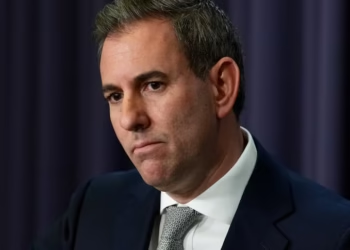
Higher global energy costs have contributed to the difficult outlook. Treasurer Jim Chalmers identified rising fuel prices associated with the conflict in the Middle East as the primary driver behind the recent increase in inflation. Expensive oil can affect the economy well beyond petrol stations, increasing transport, manufacturing and distribution costs. Businesses may pass some of those additional expenses on to consumers, adding pressure to the prices of goods and services.
Chalmers rejected suggestions that government budgets were responsible for the latest inflationary pressures. He said public spending was not the factor pushing prices higher but acknowledged that the government could play a constructive role in addressing the economic situation. His comments came as the administration faced growing political criticism over its handling of the cost-of-living crisis.
Opposition leader Angus Taylor accused the government of contributing to inflation through excessive spending. He argued that Australians deserved an honest explanation of why borrowing costs and household expenses continued to rise. Taylor said government spending was adding to inflationary pressure and that ordinary people were bearing the consequences through higher interest rates and reduced financial flexibility.
The political disagreement reflects the broader challenge facing Australia’s policymakers. The central bank is responsible for setting monetary policy independently, while the federal government manages taxation, public expenditure and other economic measures. Although both institutions influence economic conditions, their approaches can differ over how best to control inflation while protecting employment and economic growth.
The Reserve Bank’s forecasts also point to a prolonged period of relatively weak economic expansion. Australia’s economy is expected to grow by around 1.6% in 2026 and only 1.3% in 2027. Both figures are below the estimated long-term potential growth rate of approximately 2%, indicating that economic activity could remain subdued for an extended period.
Weak growth could create additional difficulties for businesses, workers and households. Companies facing higher borrowing costs may delay investment, reduce expansion plans or become more cautious about recruitment. Consumers dealing with rising mortgage repayments may cut back on spending, further limiting opportunities for businesses that depend on domestic demand.
The housing market is another source of concern. The central bank’s assessment highlighted the risk of a significant housing downturn, describing the potential adjustment as one of the steepest in approximately 50 years. Higher interest rates can weaken demand for property by making mortgages more expensive and reducing the amount prospective buyers can borrow.
However, the Reserve Bank’s economists did not forecast that Australia would enter a recession over the following two years. Although growth is expected to remain below its potential level, the central bank’s projections suggest that the economy could continue expanding, albeit at a slower pace. This distinction is important because a slowdown does not automatically mean that economic activity will contract.
Employment conditions are also expected to weaken gradually. Australia’s unemployment rate currently stands at approximately 4.7%, but the Reserve Bank expects it to reach around 4.9% by the end of 2027. The rate could rise above 5% during 2028, reflecting the possibility that businesses may become more cautious about hiring as economic conditions tighten.
For workers, the combination of slower growth and higher living costs could create additional uncertainty. If employment opportunities become harder to find while household expenses remain elevated, families may experience pressure from both sides of their finances. Lower consumer spending could also reinforce the slowdown, making the central bank’s task more complicated.
The Reserve Bank is therefore facing a delicate balancing act. Raising interest rates can help reduce inflation by making borrowing more expensive and encouraging households and businesses to limit spending. However, excessive tightening can weaken economic activity, increase unemployment and place considerable strain on people with substantial debts.

Bullock’s warning that short-term pain may prevent worse difficulties later reflects the central bank’s determination to bring inflation back within its target range. Yet the consequences of the fifth increase will become clearer only as new economic data emerge over the coming months.
For Australian mortgage holders, the immediate reality is another increase in borrowing costs. For policymakers, the priority is to determine whether the latest decision will finally slow inflation without pushing the economy towards a deeper downturn. The coming summer period will provide an important opportunity to assess how households, businesses and financial markets respond to the higher cash rate.
With inflation expected to remain elevated for several more months, economic growth projected to stay weak and unemployment likely to edge higher, Australia faces a difficult period ahead. Whether the central bank can restore price stability while limiting the damage to household finances will remain one of the country’s most important economic questions in the months leading into 2027.
Related News:
 Saudi intercepts Houthi missiles as oil fears grow
 EU-China Talks Target Surge in Hybrid Car Imports
 Ministers Push ATO to Reconsider Credit Card Ban
 Australia Delays Tax Credit Card Payment Ban After Backlash
 France Faces Debt Crisis as Protests and Markets Clash
 Cormann Warns Australia Against Populist Migration Caps
 Fed Expected to Hold Rates Steady Ahead of US Midterms
 Rate Rise Threatens Australian Jobs and Businesses
 Reeves Fights to Keep Treasury Role Amid Labour Turmoil
 Dutch Bank Moves 86 Tonnes of Gold to London
 Trump Hardens Canada Trade Stance as Talks Stall
 Oil nears $100 as Saudi attacks shake markets
 Japan Raises Rates to 31-Year High
 Trump Eyes Major Belarus Fertiliser Deal Amid Canada Trade Dispute
 Thinktank Calls for Abolition of UK State Pension
 MPs Defend UK Economic Watchdog Against Critics
 Iran Rejects Claims of Shift in US Talks
 Tony Blair Calls for Britain to Rejoin EU Within a Decade
 Ukraine Faces $45m Hourly Cost From Missile Alerts
 French Debt Fears Put Euro Markets Under Pressure
 UK Diesel Reaches £2 as Inflation Surges Across Europe
 Minister Rejects Fears of UK Diesel Shortage
 Informa Agrees £2.24bn Deal to Buy Clarion
 IMF Warns Governments Over Rising Debt Burdens
 Oil Shock Sends Markets Lower as Middle East Risks Grow
 IFS Warns UK Budget Faces £35bn Spending Gap
 Hall and Woodford Win Nobel Economics Prize
 IMF Warns Global Economy Is Nearing Its Limits
IMF Raises UK Growth Forecast Ahead of Healey’s Budget
 Business Chief Urges Burnham to Fix Brexit Damage
 UK Could Rejoin EU Through a Switzerland Plus Deal
 Australian Mortgages Now Cheaper Than Rent in Some Suburbs
UK Borrowing Hits £24.5bn Ahead of Healey’s Budget
 Jim Chalmers Navigates Hard Economic Choices as Inflation
 China’s AI Ambitions Hit $2.4 Trillion Market Setback
 Australia Inflation Surges as Trump’s Iran War Hits Households
 Albanese Faces Labor Pressure as Inflation Hits 4.3%
 G20 Photo Cancelled as Russia Deepens Western Rift
 Australia Faces Deeper Economic Slowdown
 US Awaits Iran Reply on New Ceasefire Proposal
 UK Pushes for New EU Goods Trade Deal
 Labour MPs Urge Burnham to Revive UK Aid Target
 Canada to Match Trump’s 50% Tariffs Dollar for Dollar
 Firms on both sides fear damage from US-Canada trade war
 Europe Faces Winter Gas Supply Anxiety
 Swedish Mining Push Puts Sami Land Rights Under Pressure
 UK House Prices Fall as Mortgage Rates Rise
 Saudi Arabia Shuts Oil Pipeline After Drone Attack
 Oil Prices Surge as Saudi Pipeline Closure Deepens Crisis
 UK Pay Growth Slows to 3.9% as Rate Decision Nears
 Bank Urged to Slow Bond Sales as UK Costs Rise
 Trump Threatens EU With Tariffs Over Canada Proposal
 Trump Threatens EU Over Canada Partnership Proposal
 UK Retail Sales Rebound as Consumers Spend More
 Chinese Hybrid Car Surge Raises EU Auto Industry Concerns
 Should Savers Lock Into 5.25% Fixed Rates?
 Burnham Opens Door to Possible UK Return to EU
 Poundland Rescue Bid Could Protect 11,000 Jobs
 UK house price growth slows as mortgage rates rise
 UK borrowing costs surge as global bond sell-off deepens
 UK Assures Public Over Diesel Supply
 South Korea Probes Fuel Shipments to Russia
 Tesco Raises Profit Forecast as Consumer Confidence Holds
 France Urges UK to Consider Returning to EU
 Australia Rejects Russian Fuel as Trump Strikes Deal
 Brazil Court Scandal Threatens Lula as Bolsonaros Rise
 Healey Plans £1bn Online Marketplace Tax Crackdown
 Trump Rallies GOP as Senate Democrats Boost Key Races
 Trump Halts New Russia Sanctions Amid Ukraine Rift
 Trump Fears Shock Democratic Senate Win in Kansas
 UK Unemployment Falls to 4.7% as Vacancies Decline
 UK Inflation Hits 3.5% as Middle East War Drives Fuel Costs
 Tax Online Sales to Save High Street, Burnham Urged
 Labour MPs Urge Burnham to Lead UK Reindustrialisation
 Healey Set to Scrap Planned Cut to Cash ISA Allowance
 UK Budget Leaves Households Facing Higher Energy Bills
 North Korea Linked to Record $6.3bn Binance Crypto Heist
 Global Crises Test Diplomacy as Trump’s Policies Face Scrutiny
 London Luxury Homes Face Deeper Price Declines
 UK Mortgage Holders Face Fresh Payment Shock