

Published: 02 November 2026. The English Chronicle Desk. The English Chronicle Online.
More than 2.3 million UK households are facing the prospect of significantly higher mortgage payments when their fixed-rate deals expire in 2027, as the Bank of England prepares to raise interest rates and household finances come under increasing pressure from higher energy and food costs.
The Bank’s nine-member Monetary Policy Committee is widely expected to increase the base rate from 3.75% to 4% on 5 November. The anticipated move follows a rise in UK inflation to 3.5% in September and comes at a particularly difficult time for households already dealing with elevated living costs.
Financial markets are pricing in the possibility of four quarter-point increases over the following 12 months. If those expectations materialise, borrowing costs could rise considerably for households refinancing mortgages, adding to pressure on disposable incomes and potentially weakening demand across the wider economy.

Hundreds of thousands of borrowers are already approaching the end of fixed-rate agreements. Around 700,000 households are expected to move onto new mortgage deals between July and December this year, while a further 2.3 million households are due to reach the end of their fixed-rate periods during 2027.
For many borrowers, the transition could mean replacing relatively cheap mortgage agreements secured during periods of lower interest rates with substantially more expensive deals. The precise impact will vary depending on the size of each mortgage, the remaining term and the rates available when borrowers refinance, but the scale of the refinancing wave means the consequences could extend across the housing market.
The Bank of England has kept its base rate unchanged since December last year. However, financial markets have experienced considerable volatility, partly because of higher energy prices and concerns about inflation linked to the continuing conflict in the Middle East.
Those developments have pushed up the swap rates that influence the pricing of fixed-rate mortgages. Even before an official change in the Bank’s base rate, lenders have therefore faced higher market borrowing costs that can feed through into mortgage offers.
A further increase in the Bank rate could add to those pressures.
The housing market has already shown signs of weakening as borrowing becomes more expensive. Data released recently indicated that mortgage approvals fell to a near three-year low in September, suggesting that prospective buyers are becoming increasingly cautious about taking on larger loans at higher interest rates.
The combination of weaker demand and rising mortgage costs could make the housing market more difficult for both buyers and existing homeowners. Households coming off fixed-rate deals may have to redirect a greater share of their monthly income towards mortgage repayments, leaving less money available for other spending.
That pressure is emerging alongside a broader squeeze on household finances. The Office for Budget Responsibility has warned that real disposable household incomes are expected to fall by 0.6% next year after accounting for inflation.
The forecast represents a significant deterioration from the OBR’s previous projection in March, when it had expected disposable incomes to increase by 0.6%. The change reflects the impact of higher prices and weaker economic expectations.
David Miles of the OBR described the outlook as a “pretty grim picture”, highlighting the scale of the financial challenge facing households.
Energy prices are a major factor behind the deterioration. The OBR expects consumer inflation to reach 3.5% this year, considerably above the 2% inflation rate it had forecast in March. The prolonged shock to global energy markets has made it harder for inflation to return quickly to the Bank of England’s target.
The household energy price cap is also expected to rise substantially in January. The latest forecast suggests that annual household bills could increase by more than £400, adding another significant expense just as many households are preparing for higher mortgage repayments.
The combination of mortgage, energy and food costs could therefore leave families facing several simultaneous financial pressures.
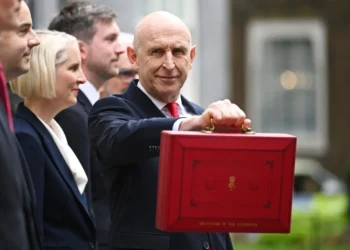
The government has attempted to cushion some of the impact through measures announced in the latest budget. Chancellor John Healey made a £100 payment to 20 million households a central element of the government’s cost-of-living package, describing it as an effort to reduce pressure during the coldest months and help families through to spring.
The package also included the cancellation of planned fuel duty increases and an extension of a VAT reduction on electricity bills. The measures are being funded through tax increases affecting banks, savers and landlords.
However, government support may not fully offset the impact of higher borrowing costs for households with large mortgages. For those refinancing in 2027, the difference between an old fixed-rate deal and a new one could translate into hundreds of pounds in additional payments depending on individual circumstances.
The Bank of England faces a difficult decision as it assesses how persistent the inflation problem has become. Governor Andrew Bailey has indicated that policymakers are watching closely for signs that higher prices are feeding into wage growth.
Such so-called second-round effects can make inflation more persistent. If businesses respond to higher costs by increasing prices and workers seek higher wages to compensate, the resulting cycle can make it more difficult for inflation to return to the central bank’s 2% target.
Before the escalation of the Middle East conflict, expectations had been very different. Financial markets had anticipated several interest rate cuts during 2026 as inflation appeared to be moving back towards the Bank’s target.
Instead, the prolonged period of unusually high oil prices has changed the outlook. The closure of the Strait of Hormuz has disrupted energy supplies and contributed to higher global oil prices, which have subsequently fed through into broader inflationary pressures.
The Bank of England has taken a cautious approach to the inflation shock since the beginning of the Iran war. Other major central banks, including the US Federal Reserve, Bank of Japan and European Central Bank, have already increased borrowing costs this year.
The Bank is now preparing to publish updated forecasts for inflation and economic growth alongside its latest interest rate decision. Those forecasts will provide important clues about how policymakers view the balance between persistent inflation and weakening economic activity.
The UK economy delivered stronger-than-expected growth during the first half of 2026 and was among the joint fastest-growing economies in the G7 over that period. Official statistics indicated that AI-related sectors were among the contributors to that performance.
However, the outlook for 2027 has weakened considerably. Economists are concerned that sustained energy costs will eventually reduce consumer spending and business activity, potentially slowing economic growth.
This creates a difficult policy environment for the Bank of England. Raising interest rates may help prevent inflation from becoming entrenched, but higher borrowing costs could further weaken an economy already facing falling real household incomes.
The mortgage market is particularly sensitive to that balance. Millions of households are approaching refinancing dates, meaning the effects of monetary policy decisions could become increasingly visible in monthly household budgets over the next year.
While financial markets currently suggest that the Bank could raise rates four times by next July, many economists in the City believe that expectation may be too aggressive. Some analysts consider two increases more likely, reflecting uncertainty over the strength of the economy and the possibility that inflationary pressures could eventually ease.

For borrowers, however, uncertainty itself presents a challenge. Households planning to refinance may find it difficult to predict how much their monthly payments will increase or what rates will be available when their current deals expire.
The coming months will therefore be closely watched by homeowners, lenders, policymakers and the wider property industry. A higher base rate, rising energy bills and falling disposable incomes could create a particularly challenging environment for households already operating with limited financial room.
The expected rate increase is not simply a decision affecting financial markets. It could influence the spending power of millions of families, the stability of the housing market and the pace of economic growth.
As more than 2.3 million households prepare to refinance in 2027, the central question will be how far borrowing costs rise and whether the economy can absorb the additional pressure without a sharp deterioration in household finances and growth.
Related News:
 UK House Prices Fall as Mortgage Rates Rise
 Oil nears $100 as Saudi attacks shake markets
 Thames Water Revises Oxfordshire Mega-Reservoir Plan
 UK Retail Sales Rebound as Consumers Spend More
 UK Borrowing Hits £18.3bn Ahead of Budget
 Thinktank Calls for Abolition of UK State Pension
 MPs Defend UK Economic Watchdog Against Critics
 UK Trade Losses Grow Without EU Product Deal
 Should Savers Lock Into 5.25% Fixed Rates?
 UK Diesel Prices Hit Record High Amid Iran Conflict
 Poundland Rescue Bid Could Protect 11,000 Jobs
 UK house price growth slows as mortgage rates rise
 UK borrowing costs surge as global bond sell-off deepens
 UK Assures Public Over Diesel Supply
 UK Diesel Reaches £2 as Inflation Surges Across Europe
 Minister Rejects Fears of UK Diesel Shortage
 Informa Agrees £2.24bn Deal to Buy Clarion
 Google Maps Brings Live Fuel Prices to UK Drivers
 IFS Warns UK Budget Faces £35bn Spending Gap
 UK Van Drivers Face £2.5bn Diesel Cost Surge
 IMF Warns Global Economy Is Nearing Its Limits
IMF Raises UK Growth Forecast Ahead of Healey’s Budget
 Healey Plans £1bn Online Marketplace Tax Crackdown
 Business Chief Urges Burnham to Fix Brexit Damage
 UK Unemployment Falls to 4.7% as Vacancies Decline
UK Borrowing Hits £24.5bn Ahead of Healey’s Budget
 Healey Set to Scrap Planned Cut to Cash ISA Allowance
 BP Profits Surge as Middle East Conflict Lifts Margins
 UK House Price Growth Slows to Two-Year Low
 London Luxury Homes Face Deeper Price Declines
 BBC News Faces Deep Cuts in 2,000 Job Plan
 UK rejects EV charging VAT cut amid Treasury clash
 EasyJet Takeover Sparks Fears Over Passengers’ Future
 Europe Faces Winter Gas Supply Anxiety
 UK Households Could Save £173 on Fixed Energy Deals
 UK Cost Squeeze Deepens as Mortgages and Gas Rise
 Billionaire Chris Rokos poised to leave UK
 JPMorgan Boss Warns Against UK Bank Tax Rise
 John Lewis Losses Widen to £124m as Confidence Falls
 UK Pay Growth Slows to 3.9% as Rate Decision Nears
 Bank Urged to Slow Bond Sales as UK Costs Rise
 UK Inflation Hits 3.1% as Household Pressure Grows
 UK Productivity Improves as Bank Weighs Interest Rates
 Japan Raises Rates to 31-Year High
 UK Rent Gap Puts Low-Income Families Under Pressure
 Calls Grow to Expand UK National Wealth Fund
 Chinese Hybrid Car Surge Raises EU Auto Industry Concerns
 Tony Blair Calls for Britain to Rejoin EU Within a Decade
 AO Acquires Jessops in Camera Retail Expansion
 Saudi intercepts Houthi missiles as oil fears grow
 Beaverbrooks Boss Calls for Relief on Business Costs
 Healey urged to act as UK energy bills rise 4%
 Boots Sale Nears as Weston Family Eyes $9bn Deal
 French Debt Fears Put Euro Markets Under Pressure
 North Sea Strike Threatens UK Fuel Supplies
 UK Weighs Chinese Car Tariffs Amid EU Trade Push
 BT Agrees £400m TalkTalk Rescue Deal
 EU-China Talks Target Surge in Hybrid Car Imports
 UK house prices stall as mortgage costs rise
 IMF Warns Governments Over Rising Debt Burdens
 Tesco Raises Profit Forecast as Consumer Confidence Holds
 Ministers Push ATO to Reconsider Credit Card Ban
 Oil Shock Sends Markets Lower as Middle East Risks Grow
 France Faces Debt Crisis as Protests and Markets Clash
 UK Savers Face Uncertainty as Rates Rise Above 5%
 Hall and Woodford Win Nobel Economics Prize
 UK Could Rejoin EU Through a Switzerland Plus Deal
 UK Inflation Hits 3.5% as Middle East War Drives Fuel Costs
 Tax Online Sales to Save High Street, Burnham Urged
 UK Consumer Confidence Plunges at Fastest Rate Since Brexit Vote
 Labour MPs Urge Burnham to Lead UK Reindustrialisation
 China’s AI Ambitions Hit $2.4 Trillion Market Setback
 UK Chancellor Moves to Scrap Gas Standing Charges
 Fed Expected to Hold Rates Steady Ahead of US Midterms
 UK Budget Leaves Households Facing Higher Energy Bills
 Lloyds Warns Against Extending Higher Bank Tax
 North Korea Linked to Record $6.3bn Binance Crypto Heist
 UK Side-Hustle Tax-Free Limit to Rise to £3,000
 Avanti West Coast Faces £70m Refund Bill
 Australia Faces Deeper Economic Slowdown