
Published: 20 October 2026. The English Chronicle Desk. The English Chronicle Online
The United Kingdom’s unemployment rate has fallen unexpectedly, offering a modestly positive signal about the labour market ahead of the government’s upcoming budget. Official figures show that unemployment dropped to 4.7 per cent in the three months to August, down from 4.9 per cent in the previous period, defying economists’ expectations of a further increase. However, the improvement comes alongside a continued decline in job vacancies, raising questions about the strength and sustainability of employment conditions across the country.
Data published by the Office for National Statistics (ONS) showed that the unemployment rate moved lower despite forecasts that it would rise to 5 per cent. The figures provide an important snapshot of the UK economy before the budget scheduled for 28 October, when the government is expected to face difficult decisions over taxation, public spending and economic growth.
The latest statistics present a mixed picture. While fewer people were unemployed as a proportion of the labour force, the number of available vacancies continued to contract. The figures also showed an increase in the number of employees receiving wages through payroll systems, suggesting that some parts of the labour market remain resilient even as employers appear more cautious about recruitment.

The number of payrolled employees rose by 13,000 between August and September, reaching approximately 30.3 million. This increase indicates that employment levels continued to edge upwards during the period, providing some reassurance that businesses were still maintaining and, in some cases, expanding their workforces.
However, the rise in payroll employment must be considered alongside the decline in vacancies. The ONS reported that the number of job vacancies fell by 21,000 to 691,000 in the three months to September, the lowest level since 2021, during the Covid-19 pandemic. The decline suggests that employers are offering fewer opportunities to jobseekers, even as the overall unemployment rate has improved.
The difference between the unemployment rate and the number of vacancies is important when assessing the health of the labour market. Unemployment measures the proportion of people in the labour force who are without work and seeking employment, while vacancies provide an indication of employers’ demand for additional workers. A falling unemployment rate can be encouraging, but a sustained reduction in vacancies may indicate that finding a new job is becoming more difficult for people entering the market or seeking to change employment.
For workers, fewer vacancies can mean greater competition for available positions, longer recruitment processes and fewer opportunities to negotiate improved pay or working conditions. Young people entering employment, individuals returning to work after a period of inactivity and workers seeking to move into different industries may be particularly affected if recruitment continues to weaken.
The latest data therefore do not necessarily signal a decisive recovery in the UK jobs market. Instead, they point to an economy in which employment remains relatively stable in some areas while businesses are becoming more restrained about creating new positions.
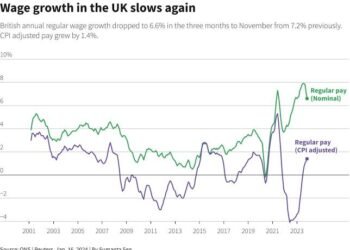
Wage growth also showed a mixed pattern. Average earnings, including bonuses, increased by 3.7 per cent over the relevant period, slowing from 3.9 per cent previously. When bonuses were excluded, however, average pay growth rose to 3.7 per cent from 3.6 per cent.
The distinction between total earnings and regular pay provides a more detailed view of how workers’ incomes are changing. Bonuses can fluctuate depending on company performance, sector-specific conditions and the timing of payments. Regular pay growth, by contrast, offers a clearer indication of changes in employees’ underlying earnings.
The latest figures suggest that overall wage growth is easing, but the increase in regular pay indicates that underlying earnings pressures have not disappeared. For households facing higher living costs, continued growth in regular wages may provide some support for spending power. Nevertheless, the benefits depend on how earnings compare with inflation and the costs of essential goods and services.
Headline inflation was reported at 3.1 per cent, meaning average wage growth remained above the rate of price increases. If earnings rise faster than consumer prices, workers can experience an improvement in their purchasing power. However, the extent of that benefit varies between households because people face different costs for housing, transport, food, energy and other necessities.
The relationship between wage growth and inflation is also a major concern for the Bank of England. Policymakers must assess whether pay increases are consistent with inflation returning towards the central bank’s target or whether persistent earnings pressures could contribute to further price increases.
Higher wages can help households cope with rising expenses, but they may also increase employers’ costs. If businesses respond by raising prices to protect their profit margins, wage growth could contribute to renewed inflationary pressure. The relationship is not automatic, as it also depends on productivity, demand, profit margins and other economic conditions, but it remains an important consideration for interest rate decisions.
The Bank of England therefore faces a delicate balancing act. A labour market that weakens too sharply could undermine household incomes and consumer confidence, while persistent wage pressures could make it more difficult to control inflation. The latest unemployment figures provide some reassurance, but the decline in vacancies and the moderation in total pay growth add complexity to the economic outlook.
The figures arrive at a crucial time for the government, with the budget due on 28 October. Ministers will be under pressure to support economic activity, encourage businesses to invest and improve opportunities for people seeking work, while also managing public finances and competing demands for government spending.
The unexpected fall in unemployment could give the government some grounds for cautious optimism. A lower jobless rate may indicate that the economy is continuing to absorb workers despite broader economic pressures. The increase in payrolled employment also suggests that the labour market has not entered a period of uniform contraction.
However, the decline in vacancies presents a more challenging message for policymakers. Employers may be reluctant to recruit because of uncertainty about demand, operating costs or future economic conditions. When businesses become cautious about hiring, the effects can take time to appear in unemployment statistics, meaning a fall in the jobless rate does not necessarily guarantee that conditions will remain favourable.
The budget could influence employers’ decisions through changes affecting business costs, investment incentives, public services and household finances. Companies will be watching for measures that could affect recruitment, wages and the overall cost of operating in the UK. Households, meanwhile, will be assessing whether government decisions improve their financial security and ability to meet everyday expenses.
The labour market is also closely connected to consumer confidence. Employment provides households with income, helping to sustain spending on goods and services. When workers fear losing their jobs or find it difficult to secure new employment, they may reduce discretionary spending. This can affect businesses, particularly in consumer-facing sectors, and may eventually influence employers’ decisions about staffing.
The latest figures offer no definitive answer about how the economy will perform over the coming months. The fall in unemployment is encouraging, but the reduction in vacancies suggests that opportunities are becoming more limited. Further data will be needed to determine whether the decline in joblessness represents a sustained improvement or a temporary movement within a labour market that remains under pressure.
The figures also highlight why headline indicators should not be viewed in isolation. A lower unemployment rate can coexist with weaker recruitment, uneven wage growth and difficulties for particular groups of workers. The overall picture depends on the interaction between employment, earnings, inflation and the number of opportunities available to people seeking work.
For jobseekers, the decline in vacancies may be especially significant. Even if the proportion of people classified as unemployed falls, fewer openings can make it harder to find a suitable position. The quality of available work, the location of vacancies, the skills employers require and the pay offered will all influence how widely the benefits of a stable labour market are felt.
Employers also face competing pressures. They need to manage costs while attracting and retaining staff with the skills required to operate effectively. Slower overall wage growth may ease some cost pressures, but the increase in regular pay indicates that businesses may still need to offer competitive salaries in areas where workers remain in demand.
Ultimately, the ONS figures present a cautiously positive headline alongside several warning signs. Unemployment has fallen more than economists expected, and payroll employment has increased, but vacancies have reached their lowest level since the pandemic period in 2021. Wage growth is moderating in some respects while remaining strong enough to attract the attention of inflation policymakers.

As the government prepares its budget, the central question will be whether the UK can sustain employment and improve opportunities without reigniting inflationary pressures or placing additional strain on businesses and households. The latest figures provide some encouragement, but they also underline the need to look beyond the unemployment rate to understand the wider condition of the labour market.
For now, the unexpected decline in unemployment offers a welcome development for the government ahead of a major fiscal announcement. Yet the continuing fall in vacancies suggests that the jobs market remains fragile, and the coming months will be important in determining whether the improvement develops into a stronger recovery or gives way to renewed pressure on workers and employers.
Related News:
 UK House Prices Fall as Mortgage Rates Rise
 Oil nears $100 as Saudi attacks shake markets
 Thames Water Revises Oxfordshire Mega-Reservoir Plan
 UK Retail Sales Rebound as Consumers Spend More
 UK Borrowing Hits £18.3bn Ahead of Budget
 Thinktank Calls for Abolition of UK State Pension
 MPs Defend UK Economic Watchdog Against Critics
 UK Trade Losses Grow Without EU Product Deal
 Should Savers Lock Into 5.25% Fixed Rates?
 UK Diesel Prices Hit Record High Amid Iran Conflict
 Poundland Rescue Bid Could Protect 11,000 Jobs
 UK house price growth slows as mortgage rates rise
 UK borrowing costs surge as global bond sell-off deepens
 UK Assures Public Over Diesel Supply
 UK Diesel Reaches £2 as Inflation Surges Across Europe
 Minister Rejects Fears of UK Diesel Shortage
 Informa Agrees £2.24bn Deal to Buy Clarion
 Google Maps Brings Live Fuel Prices to UK Drivers
 IFS Warns UK Budget Faces £35bn Spending Gap
 UK Van Drivers Face £2.5bn Diesel Cost Surge
 IMF Warns Global Economy Is Nearing Its Limits
IMF Raises UK Growth Forecast Ahead of Healey’s Budget
 Healey Plans £1bn Online Marketplace Tax Crackdown
 Business Chief Urges Burnham to Fix Brexit Damage
 Wealthy Britons Flee Gulf War but Avoid UK Taxes
 UK Wage Growth Slows as Jobs Market Holds Firm
 BBC News Faces Deep Cuts in 2,000 Job Plan
 New UK advice scheme to boost savings and investing
 Reeves Fights to Keep Treasury Role Amid Labour Turmoil
 UK rejects EV charging VAT cut amid Treasury clash
 EasyJet Takeover Sparks Fears Over Passengers’ Future
 Europe Faces Winter Gas Supply Anxiety
 UK Households Could Save £173 on Fixed Energy Deals
 Burnham Faces Mounting Budget Challenges
 Dutch Bank Moves 86 Tonnes of Gold to London
 UK Cost Squeeze Deepens as Mortgages and Gas Rise
 Billionaire Chris Rokos poised to leave UK
 JPMorgan Boss Warns Against UK Bank Tax Rise
 John Lewis Losses Widen to £124m as Confidence Falls
 UK State Pension Set to Rise 3.9% as Triple Lock Holds
 UK Parents Cut School Uniform Costs as Prices Rise
 UK Pay Growth Slows to 3.9% as Rate Decision Nears
 Bank Urged to Slow Bond Sales as UK Costs Rise
 UK Inflation Hits 3.1% as Household Pressure Grows
 UK Productivity Improves as Bank Weighs Interest Rates
 Japan Raises Rates to 31-Year High
 UK Rent Gap Puts Low-Income Families Under Pressure
 Calls Grow to Expand UK National Wealth Fund
 Chinese Hybrid Car Surge Raises EU Auto Industry Concerns
 Tony Blair Calls for Britain to Rejoin EU Within a Decade
 AO Acquires Jessops in Camera Retail Expansion
 Saudi intercepts Houthi missiles as oil fears grow
 Beaverbrooks Boss Calls for Relief on Business Costs
 Why Americans Feel Ripped Off by Rising Prices
 New UK Homes in Flood Zones Face Insurance Risk
 Ukraine Faces $45m Hourly Cost From Missile Alerts
 Healey urged to act as UK energy bills rise 4%
 Boots Sale Nears as Weston Family Eyes $9bn Deal
 French Debt Fears Put Euro Markets Under Pressure
 London Luxury Homes Face a Prolonged Property Slump
 London Council Warns of 150% Council Tax Rise
 UK Faces Calls to Review Bank Failure Bets
 North Sea Strike Threatens UK Fuel Supplies
 UK Weighs Chinese Car Tariffs Amid EU Trade Push
 BT Agrees £400m TalkTalk Rescue Deal
 Asos Investigates Hack Claims After Customer Alerts
 EU-China Talks Target Surge in Hybrid Car Imports
 UK house prices stall as mortgage costs rise
 IMF Warns Governments Over Rising Debt Burdens
 Tesco Raises Profit Forecast as Consumer Confidence Holds
 Ministers Push ATO to Reconsider Credit Card Ban
 Oil Shock Sends Markets Lower as Middle East Risks Grow
 Australia Delays Tax Credit Card Payment Ban After Backlash
 France Faces Debt Crisis as Protests and Markets Clash
 UK Savers Face Uncertainty as Rates Rise Above 5%
 Labour Fears Budget Will Fail to Lift Living Standards
 EU Caps Chinese Hybrid Car Imports at 350,000
 Hall and Woodford Win Nobel Economics Prize
 Cyber Fraud Threatens Trust in Global Financial System
 UK Could Rejoin EU Through a Switzerland Plus Deal