Published: 05 October 2026. The English Chronicle Desk. The English Chronicle Online.
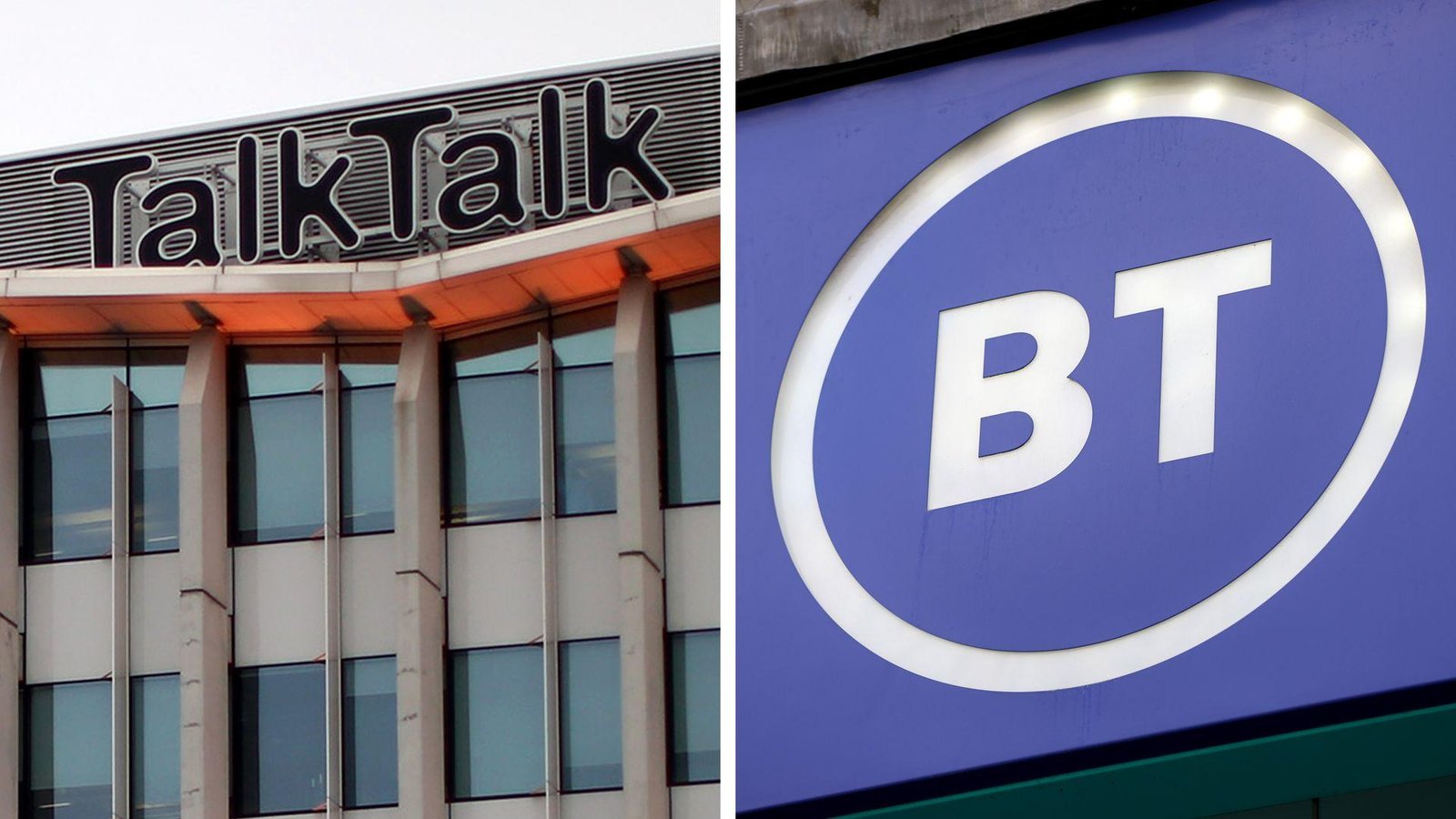
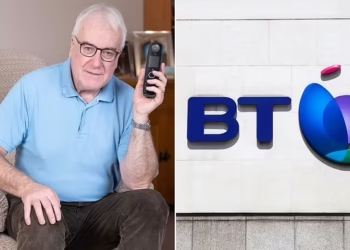
BT has agreed to acquire broadband provider TalkTalk and its wholesale division PlatformX Communications in a £400 million rescue deal designed to prevent the company from collapsing and protect around 900 jobs.
The agreement will see BT purchase the businesses on a debt-free basis after TalkTalk entered administration, adding approximately 1.5 million retail broadband customers to BT’s already substantial customer base. The transaction is expected to attract close scrutiny from regulators because of BT’s dominant position in the UK broadband market.
The deal has also prompted concerns from rival Virgin Media O2, which had explored the possibility of acquiring TalkTalk. The company has accused BT of benefiting from what it described as an unfair arrangement that could further strengthen its control over Britain’s broadband infrastructure and reduce competition.

The government has also intervened because of the wider importance of TalkTalk’s services. Lisa Nandy, the secretary for digital, culture, media and sport, has issued a public interest intervention notice requiring broader consideration of the potential effects of the takeover.
The intervention means that issues beyond conventional competition concerns will be examined as part of the regulatory process. These include public health, critical national infrastructure and the supply of communications services to vulnerable customers.
TalkTalk has around 250,000 vulnerable customers, including thousands of elderly and disabled people who depend on telecare equipment connected through traditional copper telephone networks. These devices can automatically send alerts during medical emergencies, making the continuity of communications particularly important for people living independently.
The transition from traditional copper networks to digital telephone systems has already raised concerns over the reliability of telecare services. In 2023, two vulnerable people died after their telecare devices failed during the transition from copper-based services to digital landlines.
TalkTalk’s wholesale business also has a significant role in Britain’s wider communications infrastructure. PlatformX Communications serves around one million wholesale customers, including organisations connected with critical sectors such as healthcare, emergency services, defence, education, transport, banking and government.
The government’s intervention therefore reflects concerns that the consequences of TalkTalk’s failure could extend well beyond individual broadband customers.
Under powers provided by the Enterprise Act, ministers can consider wider public-interest issues once the Competition and Markets Authority has examined potential competition concerns. The CMA is expected to report on the competition aspects of the transaction by 19 October.
BT has said it stepped in because the collapse of TalkTalk could have placed millions of households and businesses at risk. Chief executive Allison Kirkby described the circumstances as highly unusual and said the company’s immediate priority was to stabilise TalkTalk and protect the customers and organisations dependent on its services.
However, the proposed acquisition has triggered a strong response from Virgin Media O2. The rival operator said the circumstances surrounding the transaction raised serious questions about competition policy.
Virgin Media O2 argued that the deal could further strengthen BT’s position at a time when regulators are already examining the structure of the UK broadband market. The company said it intended to raise its concerns with both government and regulators.
The dispute comes shortly after the competition regulator expressed substantial concerns about another major proposed transaction involving broadband infrastructure. A planned £2 billion acquisition of Netomnia by nexfibre, a joint venture involving companies linked to Virgin Media O2, has faced potential regulatory opposition.
The contrasting treatment of the two transactions has become an important part of the debate surrounding TalkTalk’s rescue. Virgin Media O2 believes competition rules should not be relaxed simply because the acquisition is presented as a rescue of a struggling company.
BT, however, maintains that the situation surrounding TalkTalk was exceptional and that immediate action was necessary to protect customers and essential services.
The acquisition would further expand BT’s already significant presence in the British broadband market. Estimates suggest that BT currently accounts for around 30% of the UK broadband market, making it the country’s largest broadband provider.
Its Openreach network is also TalkTalk’s largest supplier, adding another layer of complexity to the proposed transaction. The relationship means that BT is already deeply connected to the infrastructure used by TalkTalk and many other communications companies.
BT shares rose by almost 2% following news of the agreement, suggesting that investors initially viewed the transaction positively despite the regulatory uncertainty.
The company expects the acquisition to result in a £400 million cash impact during its current financial year. That figure includes transaction and administration costs, working capital requirements, a £60 million trading loss and approximately £100 million in unpaid Openreach revenue.
The financial condition of TalkTalk helps explain the urgency behind the rescue. The company has struggled to maintain its customer base in an intensely competitive market. Its retail customers have fallen sharply from around four million in 2019 to approximately 1.5 million in 2026.
The business has also carried a substantial debt burden. TalkTalk founder Charles Dunstone took the company private in 2021 through a deal valued at approximately £1.1 billion, involving London-based investment firm Toscafund. The transaction left the business carrying around £1.5 billion in total debt.
Over subsequent years, control of TalkTalk effectively shifted towards its lenders, with US private credit firm Ares Management among the leading creditors.
The latest rescue agreement brings an end to a prolonged effort to find a buyer for TalkTalk and provides a route for its workforce and customer base to remain within an established telecommunications group.
Administrators from Alvarez & Marsal Europe said the transaction would transfer all 900 employees working across TalkTalk’s consumer and broadband operations and PlatformX Communications to BT.
For customers, the immediate message from BT is that there will be no major changes. The businesses are expected to remain operationally separate while the regulatory review is conducted, and the companies will continue competing with one another during that period.
Kirkby has said it is too early to determine whether TalkTalk’s existing brand will eventually be retained. For now, however, customers are not expected to take any action or make changes to their existing arrangements.
Ofcom, the telecommunications regulator, has welcomed the commercial agreement because it provides greater certainty for customers and critical communications services. At the same time, the regulator has made clear that existing regulatory requirements will remain in place.
Ofcom chief executive Melanie Dawes said the regulator would monitor the transition closely and work with the government and CMA throughout the approval process. The priority, she indicated, would be protecting consumers while maintaining effective competition.
The wider significance of the deal extends beyond the future of one broadband company. TalkTalk’s network relationships and wholesale operations mean that its stability is closely connected to a wide range of businesses and public services.
For vulnerable households, the issue is particularly sensitive because a disruption to communications can affect access to emergency assistance and essential telecare services. For major organisations, PlatformX’s role means that any prolonged disruption could have consequences across sectors that depend on reliable connectivity.
At the same time, regulators must determine whether allowing BT to acquire a major rival could weaken competition in an already concentrated market. The challenge is to protect customers from the consequences of a corporate collapse without creating a new market structure that disadvantages consumers in the longer term.
The CMA’s review and the government’s wider public-interest assessment will therefore be closely watched. The final decision could influence not only the future of TalkTalk and its employees but also the direction of competition policy in Britain’s rapidly changing broadband industry.
TalkTalk was founded by Dunstone in 2003 as a subsidiary of Carphone Warehouse and eventually became one of the UK’s most recognisable broadband brands. Its decline from four million retail customers to around 1.5 million reflects the intense pressure facing established providers as competition has increased and the industry has undergone major technological changes.

BT’s rescue bid now offers the company a potential route out of administration, but the transaction is far from being a simple corporate takeover. Regulatory approval, public-interest concerns and competition issues will all have to be addressed before the deal can be completed.
For the 900 employees whose jobs are expected to be preserved, the agreement provides immediate reassurance. For millions of customers and businesses connected to TalkTalk and its wholesale network, the priority will be ensuring that the transition takes place without disruption.
The coming weeks will determine whether BT can turn its £400 million rescue proposal into a completed acquisition while satisfying regulators and government officials that the deal serves both consumers and the wider public interest.
Related News:
 Oil nears $100 as Saudi attacks shake markets
 John Lewis Losses Widen to £124m as Confidence Falls
 Thames Water Revises Oxfordshire Mega-Reservoir Plan
 UK Trade Losses Grow Without EU Product Deal
 AO Acquires Jessops in Camera Retail Expansion
 Beaverbrooks Boss Calls for Relief on Business Costs
 Poundland Rescue Bid Could Protect 11,000 Jobs
 UK Diesel Reaches £2 as Inflation Surges Across Europe
 Minister Rejects Fears of UK Diesel Shortage
 Wealthy Britons Flee Gulf War but Avoid UK Taxes
 UK Wage Growth Slows as Jobs Market Holds Firm
 BBC News Faces Deep Cuts in 2,000 Job Plan
 New UK advice scheme to boost savings and investing
 Reeves Fights to Keep Treasury Role Amid Labour Turmoil
 UK rejects EV charging VAT cut amid Treasury clash
 UK Households Could Save £173 on Fixed Energy Deals
 Burnham Faces Mounting Budget Challenges
 Spire Healthcare Agrees £1bn Takeover by Toscafund
 UK House Prices Fall as Mortgage Rates Rise
 Billionaire Chris Rokos poised to leave UK
 JPMorgan Boss Warns Against UK Bank Tax Rise
 UK Retailers Accused of Breaking Refund Laws
 Entain Plans 400 Job Cuts After Profit Update
 Next Raises Profit Forecast After Strong Summer Sales
 UK Productivity Improves as Bank Weighs Interest Rates
 Barclays Staff Push Back Against Office Return Plan
 UK Retail Sales Rebound as Consumers Spend More
 UK Rent Gap Puts Low-Income Families Under Pressure
 Calls Grow to Expand UK National Wealth Fund
 UK Borrowing Hits £18.3bn Ahead of Budget
 Thinktank Calls for Abolition of UK State Pension
 MPs Defend UK Economic Watchdog Against Critics
 Chinese Hybrid Car Surge Raises EU Auto Industry Concerns
 Tony Blair Calls for Britain to Rejoin EU Within a Decade
 TalkTalk Races to Sell Arms as Administration Looms
 Should Savers Lock Into 5.25% Fixed Rates?
 UK Diesel Prices Hit Record High Amid Iran Conflict
 New UK Homes in Flood Zones Face Insurance Risk
 Bank Chief Calls for Power to Intervene in AI
 Healey urged to act as UK energy bills rise 4%
 UK house price growth slows as mortgage rates rise
 UK borrowing costs surge as global bond sell-off deepens
 UK Bookmakers Linked to Offshore Casino Deal
 Boots Sale Nears as Weston Family Eyes $9bn Deal
 BBC Three and Scotland Face Online-Only Future
 UK Assures Public Over Diesel Supply
 Feeld Founders Receive Record Dividend as Sales Rise
 London Council Warns of 150% Council Tax Rise
 UK Faces Calls to Review Bank Failure Bets
 UK Weighs Chinese Car Tariffs Amid EU Trade Push
 UK Doubles Steel Tariffs to 50% to Protect Domestic Plants
 Student Loan Interest May Rise Despite 6% Cap
 Albanese Rejects Gas Export Tax Push
 UK Risks Falling Behind in AI Race
 Europe Faces Winter Gas Supply Anxiety
 UK Subsidence Claims Surge After Record-Breaking Summer
 Reform Faces Fresh Financial Controversy
 UK Cost Squeeze Deepens as Mortgages and Gas Rise
 Swedish Mining Push Puts Sami Land Rights Under Pressure
 McLaren to Create 1,000 UK Jobs in £450m Investment
 Nats Boss Summoned as UK Flight Chaos Continues
 Iceland to Open First UK High Street Store in Falklands
 Farage Threatens Union Funding Ban Over Reform Donations
 North Sea Firms Urge Early End to Windfall Tax
 UK Pay Growth Slows to 3.9% as Rate Decision Nears
 Bank Urged to Slow Bond Sales as UK Costs Rise
 JLR Eyes NATO Market With New Defender Military Vehicle
 Mayors Could Gain New Powers Over UK Water Firms
 Mayors Could Gain Greater Powers Over Water Firms
 Trump Threatens EU With Tariffs Over Canada Proposal
 Trump Threatens EU Over Canada Partnership Proposal
 Reform UK Faces Internal Debate Over £72m Spending
 Labour Apprenticeship Scheme Faces Slow Start
 Saudi intercepts Houthi missiles as oil fears grow
 Avanti West Coast Set for Public Ownership in March
 Burnham Opens Door to Possible UK Return to EU
 French Debt Fears Put Euro Markets Under Pressure
 Badenoch Raises Prospect of 2027 UK Election
 BT Broadband Pauses Raise Digital Switchover Concerns
 North Sea Strike Threatens UK Fuel Supplies