Published: 17 September 2026. The English Chronicle Desk. The English Chronicle Online
British fashion and homeware retailer Next has raised its full-year profit forecast for the fourth time this year after stronger-than-expected sales during the first half, with unusually warm weather helping drive demand for summer clothing.
The FTSE 100-listed retailer increased its forecast for full-year pre-tax profit by £12m to £1.26bn after reporting a stronger first-half performance than it had originally anticipated. The company said warmer conditions in the UK had contributed to the improvement, although it also credited its own efforts to control costs and improve the business.
Next’s latest results were published on 17 September, a date confirmed in the company’s financial calendar.
Group sales increased by 9% in the six months to July, while pre-tax profit rose by 11% to £566m, according to the company’s results. The performance follows a strong previous year, making the latest improvement particularly notable for the retailer.
Next said the first half had been considerably better than expected in both the UK and overseas markets. The company also pointed to cost-cutting initiatives, particularly within its warehouse operations, as part of the factors supporting its performance.

Weather was nevertheless an important part of the story. The retailer said two unusually warm UK summers had contributed to its sales outperformance. Warmer conditions can alter shopping patterns, particularly in clothing, as consumers respond to changes in temperature by buying seasonal products.
The effect was particularly visible in online sales. Analysts cited by the company said hotter-than-expected weather and more effective marketing encouraged customers to update their summer wardrobes, helping compensate for weaker performance in physical stores.
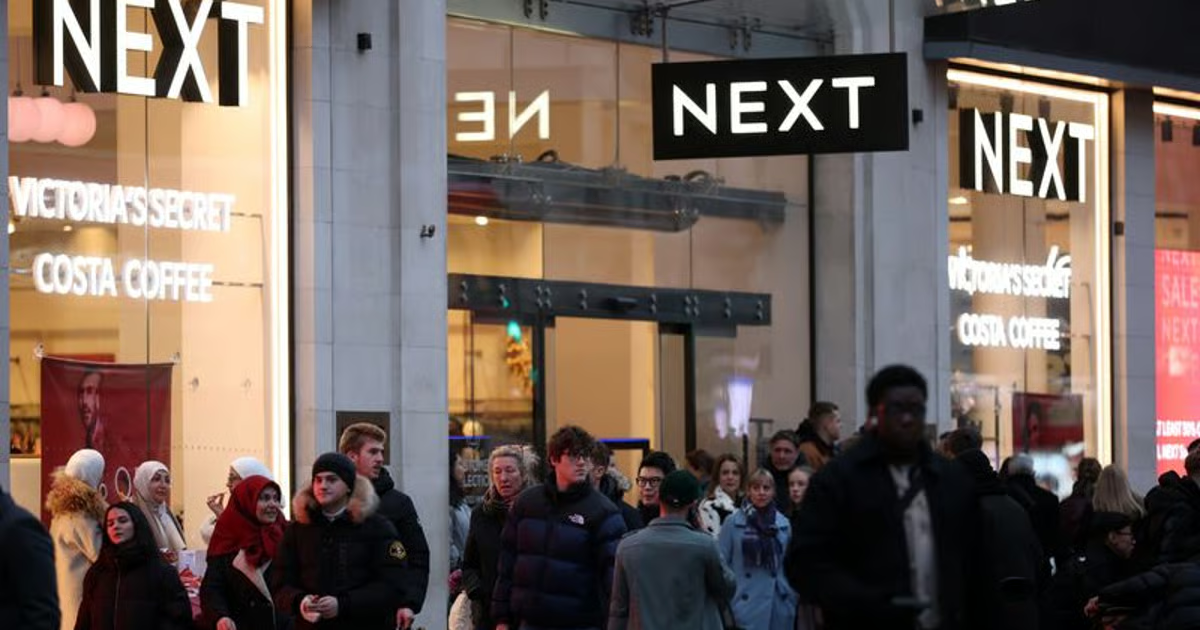
Next has more than 500 stores across the UK and operates a substantial online business. Its retail model has increasingly combined physical stores with digital sales, allowing the company to respond to changes in consumer behaviour and seasonal demand.
The company’s current portfolio extends beyond the Next brand. It holds UK rights for US fashion and lingerie brands including Gap and Victoria’s Secret and has interests in other labels, including Reiss and Joules. This broader structure gives the group exposure to several different parts of the clothing and lifestyle market.
The latest profit upgrade is the fourth issued by Next during 2026. The company had already increased its outlook in August after another period of stronger-than-expected trading. The repeated upgrades have made Next one of the more closely watched UK retailers as investors assess how consumers are responding to economic pressures and changing weather patterns.
The company has also highlighted the importance of maintaining control over costs. Warehouse and distribution operations have been among the areas where Next has sought efficiencies, helping to support profitability alongside higher sales.
However, the retailer remains cautious about the wider economic environment. Next identified inflation, higher mortgage costs and weakness in the employment market among its main concerns. It also warned that potential tax increases could add to pressure on household finances.
The comments underline the uncertain environment facing UK retailers. Strong sales during warm weather can provide a boost, but consumer spending remains sensitive to disposable income, household costs and confidence about employment.
Next also suggested that prices could rise later in the year. The prospect of higher prices comes at a time when retailers across the UK are continuing to manage increases in operating costs and the broader pressures affecting household budgets.
The company’s caution is significant because strong headline sales do not necessarily mean that consumers are facing easier financial conditions. A retailer can benefit from customers changing what they buy because of weather or seasonal needs while households remain under pressure from housing, energy, food and other costs.
The company has also been investing heavily in technology and artificial intelligence. Next said AI was being deployed in different parts of the business, including its technology operations. However, it stressed that the creative side of fashion design would continue to place importance on human designers.
The retailer said its experience suggested customers continued to value the authenticity associated with human creativity. It described greater emphasis on techniques such as painting, drawing and screen printing, alongside digital design tools.
That position reflects a broader debate within the retail and fashion industries about how artificial intelligence should be incorporated into creative work. AI can assist businesses with areas such as technology, administration and design processes, but Next says it intends to retain a significant human role in the creation of fashion products.
The company’s approach also illustrates how established retailers are attempting to balance technological investment with brand identity. For a business operating across fashion, homeware and international brands, maintaining a distinctive creative proposition remains part of its commercial strategy.
The stronger first-half results have also attracted attention from financial analysts. Aarin Chiekrie, an equity analyst at Hargreaves Lansdown, attributed part of Next’s performance to stronger UK demand during warmer weather and more effective marketing, while noting that online activity helped offset a modest decline in physical-store sales.
Next’s share price rose in early trading following the results, reflecting the market’s immediate response to the upgraded profit outlook. However, share-price movements can change rapidly and do not by themselves indicate how the company’s full-year performance will develop.
The retailer’s latest update comes at an important point in the UK retail calendar. The summer trading period is followed by autumn and winter, when consumer demand shifts towards different categories and retailers face another set of seasonal challenges.
Next’s management therefore faces the task of maintaining momentum after a period in which unusually warm weather provided an unexpected benefit. The company itself has acknowledged that weather was one factor behind the stronger performance, meaning future trading conditions may not replicate the same pattern.
At the same time, the business enters the second half with a higher profit expectation than it held earlier in the year. Its ability to maintain sales growth while controlling costs will be important in determining whether the latest forecast can be achieved.
The results also provide a snapshot of the changing UK retail landscape. Consumers are increasingly combining online shopping with visits to physical stores, while retailers are using data, technology and artificial intelligence to manage operations and understand demand.
For Next, the latest figures suggest that a combination of stronger sales, operational improvements and favourable summer weather has produced a significant improvement in expectations. The company is now forecasting £1.26bn in full-year profit, £12m more than its previous estimate.

Yet the retailer’s own warnings show that the outlook remains dependent on factors beyond its direct control. Inflation, borrowing costs, employment conditions, taxation and weather can all influence household spending and retail demand.
The coming months will therefore test whether Next can convert its strong first-half performance into sustained growth through the remainder of the financial year. The company has already raised its forecast four times in 2026, but its latest update also makes clear that unusually favourable weather and a challenging economic backdrop are both important parts of the story.
For Britain’s wider retail sector, the results offer a mixed picture. Strong consumer demand for seasonal goods can still generate substantial growth, but household pressures remain significant. Next’s performance demonstrates how quickly sales expectations can change when consumer behaviour, weather conditions and business efficiency move in the same direction.
The retailer’s next scheduled trading statement is due in November, when investors and the wider market will receive a further indication of how trading has developed beyond the summer period.
Related News:
 UK rejects EV charging VAT cut amid Treasury clash
 Spire Healthcare Agrees £1bn Takeover by Toscafund
 Oil nears $100 as Saudi attacks shake markets
 John Lewis Losses Widen to £124m as Confidence Falls
 Thames Water Revises Oxfordshire Mega-Reservoir Plan
 Fashion Firms Urge UK-Made NHS and Army Uniforms
 Entain Plans 400 Job Cuts After Profit Update
 Wealthy Britons Flee Gulf War but Avoid UK Taxes
 UK Wage Growth Slows as Jobs Market Holds Firm
 BBC News Faces Deep Cuts in 2,000 Job Plan
 New UK advice scheme to boost savings and investing
 Reeves Fights to Keep Treasury Role Amid Labour Turmoil
 Pubs and Hotels Face Business Rates Reform Review
 Shein targets $27bn valuation in Hong Kong debut
 Firms on both sides fear damage from US-Canada trade war
 UK Risks Falling Behind in AI Race
 UK Households Could Save £173 on Fixed Energy Deals
 Burnham Faces Mounting Budget Challenges
 UK Cost Squeeze Deepens as Mortgages and Gas Rise
 UK House Prices Fall as Mortgage Rates Rise
 Billionaire Chris Rokos poised to leave UK
 McLaren to Create 1,000 UK Jobs in £450m Investment
 Nats Boss Summoned as UK Flight Chaos Continues
 JPMorgan Boss Warns Against UK Bank Tax Rise
 Oil Prices Surge as Saudi Pipeline Closure Deepens Crisis
 UK Retailers Accused of Breaking Refund Laws
 Farage Threatens Union Funding Ban Over Reform Donations
 UK State Pension Set to Rise 3.9% as Triple Lock Holds
 UK Parents Cut School Uniform Costs as Prices Rise
 North Sea Firms Urge Early End to Windfall Tax
 UK Pay Growth Slows to 3.9% as Rate Decision Nears
 Bank Urged to Slow Bond Sales as UK Costs Rise
 JLR Eyes NATO Market With New Defender Military Vehicle
 UK Inflation Hits 3.1% as Household Pressure Grows
 UK Youth Jobs Gap Reveals Deep Regional Divide
 Mayors Could Gain New Powers Over UK Water Firms
 Mayors Could Gain Greater Powers Over Water Firms
 Horse Hill Oil Site Sold as New Drilling Bid Emerges
 Anthropic Backs $31.9bn Queensland Data Centre
 Horse Hill Oil Site Sold for £1m as Drilling Bid Returns
 Anglian Water Fined £63 Million Over Sewage Scandal Amid National Outrage
 How to Exit Your Broadband Contract Without Paying Exit Fees
 Permission Granted for Britain’s First Vertical Rocket Launch at Shetland Spaceport
 Ed Davey Urges Government to Block Elon Musk’s Tesla from Supplying UK Home Energy
 UK Could Generate Nearly £2bn Annually by Taxing SUVs, New Study Reveals
 Jaguar Land Rover Extends Production Halt Following Cyber-Attack
 British AI Startup Outshines Human Forecasters in Global Prediction Contest
 Royal Mail Owner Acquires Stake in Collect+ and Launches High Street Rebrand
 NHS May Pay 25% More for Medicines Amid US Drug Talks
 Watchdog Rules Red Tractor Ad Misled Public on Environmental Claims
 North Sea oil workers must lose weight or face job loss
 UK Taskforce Unveils Plan to Streamline Nuclear Reactor Rules
 MPs warn AI financial risks threaten UK stability
 AI job losses UK: Britain faces sharper employment shock
 UK New Car Discounts Near £6,000 as Prices Are Slashed
 UK Doubles Steel Tariffs to 50% to Protect Domestic Plants
 Oil and Gas Prices Surge Amid Iran-Israel Attacks on Gasfields
 OpenAI Halts Stargate UK Project Amid Energy Crisis
 Student Loan Interest May Rise Despite 6% Cap
 Carmakers Face £3bn Gap in UK Loan Payout Scandal
 Reform UK funding: mystery billionaire revealed
 Albanese Rejects Gas Export Tax Push
 UK Pushes for New EU Goods Trade Deal
 UK firms accused of ‘AI washing’ boom
 Labour MPs Urge Burnham to Revive UK Aid Target
 EasyJet Takeover Sparks Fears Over Passengers’ Future
 Weight-Loss Drugs Offer Food Savings Mainly to High Earners
 US CEOs Earn 614 Times More Than Workers
 Europe Faces Winter Gas Supply Anxiety
 London Launches First Self-Driving Taxis
 UK Subsidence Claims Surge After Record-Breaking Summer
 Reform Faces Fresh Financial Controversy
 Ukraine Moves to Seize Water Company
 Swedish Mining Push Puts Sami Land Rights Under Pressure
 Iceland to Open First UK High Street Store in Falklands
 AI CEOs Call for Slower Development
 Heathrow Expansion Faces New Climate Conditions Over CO₂
 UK Heatwaves Set to Worsen Pothole Damage, RAC Warns
 Enhertu Approved for Eligible Breast Cancer Patients in England
 Lords Call for Tobacco-Style Gambling Ad Ban