Published: 17 September 2026. The English Chronicle Desk. The English Chronicle Online
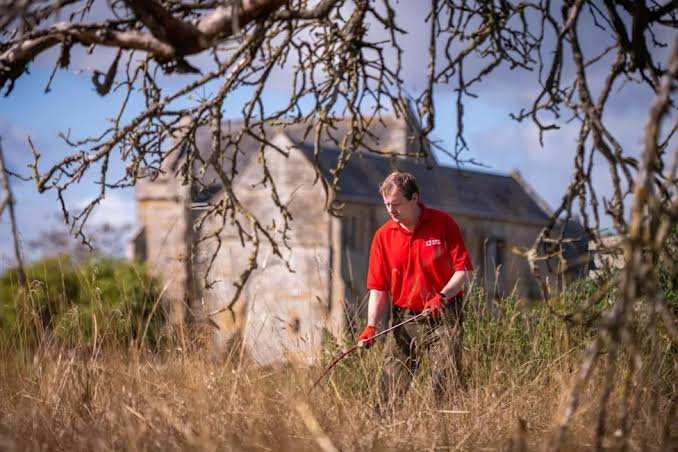
A traditional farming skill once familiar across the British countryside is being brought back into use by a new generation of volunteers as English Heritage launches a programme to maintain meadows using hand-held scythes.
The heritage organisation is training volunteers in the centuries-old craft of cutting grass by hand, with the first group beginning work at Muchelney Abbey in Somerset. The project is intended to achieve two goals at once: preserve knowledge of a traditional rural skill and improve meadow habitats for wildlife, including the increasingly rare shrill carder bee.
The initiative reflects a growing interest in traditional land-management techniques as conservation organisations look for ways to maintain species-rich grasslands while protecting the character of historic landscapes. At Muchelney, volunteers will combine practical meadow management with wildlife monitoring as part of a three-year partnership with the Bumblebee Conservation Trust.
For those learning the craft, scything offers a very different experience from modern mechanical grass-cutting. Ginny Slade, one of the volunteers who has completed the training, described the activity as both physically demanding and absorbing. The repetitive movement of the blade encourages users to develop a steady rhythm, while working slowly through a meadow creates a close connection with the landscape.

The first volunteers have been trained by professional instructors from Exmoor National Park Authority. Their instruction includes not only how to use a scythe but also how to maintain the equipment. A well-maintained scythe can remain useful for generations, making the craft itself part of the heritage that the project hopes to preserve.
Scything once played an important role in British agriculture, particularly before mechanised mowing became widespread. Workers used the long curved blade to cut grass and crops across fields and meadows, often relying on technique, rhythm and physical coordination to work efficiently.
The practice has also left a mark on British literature and cultural memory. The landscapes and agricultural communities of southwest England were central to the writing of Thomas Hardy, who portrayed rural workers and traditional farming practices in both his novels and poetry. His descriptions of haymaking and scything helped establish the activity as an enduring image of the nineteenth-century countryside.
At Muchelney Abbey, however, the purpose of bringing back scything is firmly rooted in the needs of a modern conservation project. The meadow is being managed to encourage a wider variety of flowering plants and provide better conditions for pollinators.
The shrill carder bee is one of the species at the centre of the work. The bumblebee has experienced significant declines in Britain, with the loss and fragmentation of flower-rich grasslands among the factors affecting its habitat.
The shrill carder bee depends on suitable flowering plants for food and requires appropriate nesting and foraging conditions. Maintaining a diverse meadow can therefore provide a more reliable supply of flowers throughout the season, helping create an environment in which pollinators can survive and reproduce.
English Heritage volunteers involved in the project are also receiving training from the Bumblebee Conservation Trust to carry out wildlife surveys. Their work will go beyond simply counting bees. Volunteers will record which plants are flowering, which flowers the bees are using and how the insects move through the landscape.
The surveys are intended to build a clearer picture of how the meadow ecosystem develops over time. By recording changes in vegetation and bee activity, conservationists can assess whether management techniques are producing the desired results and identify areas where additional work may be necessary.
The approach reflects a wider shift in conservation towards understanding relationships between species and their habitats rather than treating individual animals or plants in isolation. Pollinators depend on the availability of food, shelter and suitable nesting environments, while the plants themselves depend on insects and other organisms for reproduction.
For historic sites such as Muchelney Abbey, maintaining that balance can be particularly important. The landscape surrounding a heritage building is part of its wider setting, and carefully managed meadows can provide ecological benefits while also preserving a distinctive rural character.
Muchelney Abbey itself has a long history. Once a wealthy and influential monastery, the site contains a number of unusual surviving features, including a thatched two-storey monks’ lavatory described by English Heritage as unique in Britain.
The conservation project adds another chapter to the site’s history by using a traditional agricultural technique to address a contemporary environmental challenge. Instead of relying exclusively on modern machinery, volunteers will use hand tools in selected areas where this approach can support the management objectives of the meadow.
The work is part of a larger commitment by English Heritage to create or enhance 100 meadows. The programme was announced in connection with the coronation of King Charles III in 2023 and is intended to increase the amount and quality of meadow habitat associated with heritage sites.
Flower-rich grasslands are among Britain’s most valuable habitats for pollinating insects. Over recent decades, changes in agricultural practices, development and land management have contributed to the loss of many traditional grasslands. Conservation organisations have consequently placed increasing emphasis on restoring and maintaining meadows that support a wide range of plants and insects.
The project also illustrates how volunteer programmes can combine heritage education with practical environmental work. Participants learn a physical skill that has largely disappeared from everyday agricultural life while contributing directly to the management of a living landscape.
For English Heritage, the benefits extend beyond the pilot project. The organisation hopes trained volunteers will eventually be able to travel to other heritage properties and use their skills in meadow-management projects elsewhere.
That possibility could help establish a wider community of people with knowledge of scything and traditional land management. It could also give volunteers opportunities to contribute to conservation work at different historic locations while developing a deeper understanding of the landscapes surrounding those sites.
The organisers are cautious about describing the initiative as a return to the past. Modern conservation has different objectives from traditional farming, and the project uses the old technique within a contemporary scientific framework. Wildlife surveys, habitat monitoring and ecological assessment are intended to determine how effectively the meadow is supporting biodiversity.
The practical experience of the volunteers will therefore sit alongside scientific observation. Their work in the meadow can help maintain the habitat, while their survey data can contribute to understanding the response of pollinators and plants to changes in management.
There is also a cultural dimension to the project. Traditional rural skills can disappear when they are no longer passed from one generation to another. Training volunteers creates an opportunity to preserve practical knowledge that might otherwise survive only in historical records or photographs.
Scything requires practice and careful maintenance, but it does not depend on sophisticated machinery. The technique can be adapted to particular conservation settings and, when used appropriately, can provide a relatively low-impact method of cutting vegetation.
The volunteers’ experience at Muchelney suggests that the appeal is not solely practical. The rhythm of the work, the sounds of the meadow and the physical connection with the landscape have become part of the attraction for participants.
For conservationists, however, the most important measure will be what happens to the meadow and its wildlife over the three-year project. The monitoring programme should provide evidence about changes in flowering plants, pollinator activity and habitat conditions.

The shrill carder bee provides a particularly useful indicator because its survival depends on the availability of suitable flower-rich habitat. If the meadow can provide more consistent resources for the species, the project could demonstrate how traditional techniques can contribute to contemporary biodiversity management.
English Heritage says the Muchelney initiative is only the beginning. The organisation hopes that the skills developed by the first volunteers will eventually be used across other sites, expanding both the conservation work and the community of people capable of practising and teaching the traditional craft.
The project ultimately brings together two forms of preservation that are often considered separately. One concerns Britain’s physical and cultural heritage, represented by historic buildings, landscapes and traditional skills. The other concerns the natural heritage represented by wildflowers, pollinating insects and increasingly threatened habitats.
At Muchelney Abbey, the two are being managed together. Volunteers trained in an old craft are helping care for a modern conservation landscape, while monitoring the wildlife that depends on it. In doing so, the project offers a practical example of how traditional knowledge can be adapted to contemporary environmental priorities without losing its historical character.
Related News:
 Sycamore Gap Artwork Chosen After Public Vote
 Tractor Breakdown Tests Lincolnshire Farmers
 Britons Build Emergency Supplies Amid Rising Fears
 UK Schools Struggle as Classrooms Top 40C
 London Tube Heat Reaches Dangerous Levels
 Three-Quarters of England’s Riverbanks Still Off Limits
 London’s 2026 ‘Great Stink’ Raises Sewer Concerns
 Burnham unveils £65m drought aid for farmers
 Australia Races to Find Tourists Missing in Nepal
 Former Railway Line Named Britain’s Favourite Path
 Drought Raises Flood Risk as UK Autumn Approaches
 British Museum Faces Questions Over Peter Thiel’s Private Bayeux Viewing
 UK Subsidence Claims Surge After Record-Breaking Summer
 Thames Water Revises Oxfordshire Mega-Reservoir Plan
 Britain Records Second-Best Butterfly Season in 16 Years
 UK Heatwaves Set to Worsen Pothole Damage, RAC Warns
 Mayors Could Gain Greater Powers Over Water Firms
 South Africa’s Garden Route Gem Faces Looming Water Crisis
 Aberdeen Chosen for GB Energy HQ at Marischal Square
 UK Energy Reform Could Cut Bills by £200
 UK Banks Maintain £100 Contactless Limit Despite FCA Rule Change
 Rising Costs Force Families to Rethink Days Out
 Teen Admits Filming Westfield Chair Prank
 Glasgow Central Set for Full Reopening After Fire
 Archbishop Prays for Middle East Peace in First Easter Sermon
 Exhibition Revisits Life of 18th-Century Black Court Figure
 Kezia Dugdale Warns of Possible Reversal of Equal Rights Gains
 Synagogue Arson Attempt Sparks Security Fears
 NHS Safety Fears as Nurses Cover Doctor Gaps
 Crackdown Backfires on UK Climate Protesters
 Two Children Die in Wolverhampton House Fire Tragedy
 Reform UK funding: mystery billionaire revealed
 Older Than Dinosaurs: Secrets of Mayfly Dance Revealed
 Unveiling Hidden Masters: Female Artists Take Centre Stage
 John Terry Faces Backlash Over Political Posts
 Greens Face Internal Row Over Antisemitism Claims
 Barrister Criticises Trial After Suicide Case Verdict
 Labour Members Turn Against Starmer Leadership
 UK Faces Mass Water Shortages by 2055, Lords Warn
 Whistler’s Mother and why its fame frustrated artist
 Father’s diaries reveal doubts over Hawking
 Pope Meets Families in Italy Toxic Waste Zone
 UK rejects EV charging VAT cut amid Treasury clash
 Farage and Reform UK Reshape British Politics
 Starmer Leadership Under Pressure After Setbacks
 UK Nations Brace for Potential Breakup Amid Reform Surge
 British Teens in EU Face Soaring UK University Fees
 UK Power Grid Strained by Summer Heatwave
 Olympus Awaits Unesco Heritage Recognition
 Westminster Council Threatens Charing Cross Soup Kitchen
 BBC Warned About Missing Clothes of Murder Victim
 Gen Z turns to BirdTok for a gentler digital escape
 Pubs and Hotels Face Business Rates Reform Review
 Queue row erupts on Wales’ highest mountain
 Ghent Professors Questioned Cofnas Appointment
 France Eases Cheese Rules as Drought Hits Farms
 Nepal Flood Death Toll Tops 300 as Second Flood Feared
 Yayoi Kusama, Iconic Polka Dot Artist, Dies at 97
 RAF Barnham Protests Fuel Tensions in Norfolk Town
 UK Households Could Save £173 on Fixed Energy Deals
 Internal Exclusions Surge in England’s Schools
 Nepal Flood Survivors Face Unimaginable Loss
 Green Leader Targets Starmer’s Former Seat
 Bayeux Tapestry Revives Franco-British Ties
 Nepal Tunnel Rescue Offers Hope Amid Flood Devastation
 Masked Protesters Bring Dover Port Traffic to Standstill
 Typhoon Saudel Triggers Mass Evacuations in China
 UK House Prices Fall as Mortgage Rates Rise
 Councils spend £125m on illegal children’s care
 Pavlohrad Strike Kills Five, Injures 67
 UK Retailers Accused of Breaking Refund Laws
 Australia’s Indigenous Population Was Far Larger Before Colonisation
 North Sea Firms Urge Early End to Windfall Tax
 UK Pay Growth Slows to 3.9% as Rate Decision Nears
 Bank Urged to Slow Bond Sales as UK Costs Rise
 Heathrow Expansion Faces New Climate Conditions Over CO₂
 Mayors Could Gain New Powers Over UK Water Firms
 Lisa Nandy Calls for Tougher Action on Social Media Doxxing
 Entain Plans 400 Job Cuts After Profit Update
 2025 Among World’s Driest Years for Rivers