Published: 29 September 2026. The English Chronicle Desk. The English Chronicle Online
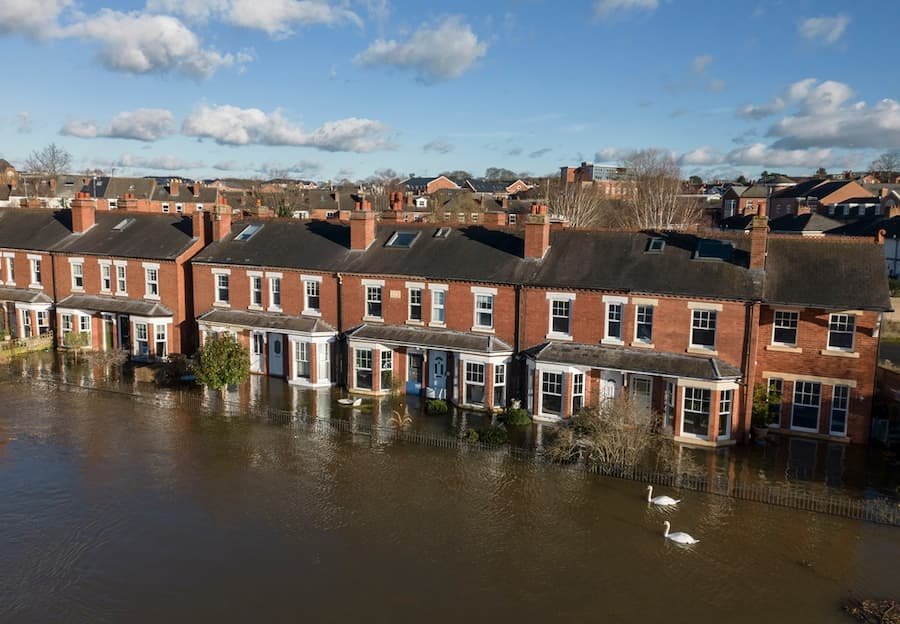
Britain’s insurance industry has warned that thousands of homes being built in areas vulnerable to flooding could face serious difficulties obtaining affordable insurance in the future, as the country experiences growing concern over the impact of increasingly severe weather.
Amanda Blanc, chief executive of Aviva, one of Britain’s largest insurers, said the threat posed by flooding was “absolutely increasing” and argued that greater attention was needed over where new homes are being constructed. She warned that if current building patterns continue, about 115,000 homes could be built in flood-risk zones over the next decade.
The warning places a fresh focus on the long-term consequences of housing development in areas already identified as vulnerable to flooding. While new housing is an important part of efforts to address Britain’s shortage of homes, the location and resilience of those properties can have consequences extending well beyond the moment a house is completed and sold.
Blanc said it was difficult to justify continuing to construct large numbers of homes in areas where the risk of flooding is already known. In comments to the BBC, she said that the locations of many flood-prone areas are well established and that greater care should therefore be taken when decisions are made about future housing developments.

Her comments also highlight a concern for people who may purchase such properties today without fully understanding how their insurance position could change over the lifetime of their home. A property that can obtain insurance when it is first built may face a different risk assessment years later if flooding becomes more frequent or severe.
The issue is particularly significant because flooding can create substantial financial costs for households. Damage to walls, floors, electrical systems, furniture and other belongings can leave homeowners facing expensive repairs. Repeated flooding can also affect the value and desirability of a property, while uncertainty over future insurance availability could add another financial burden.
Aviva has estimated that nearly one-third of homes built in 2024 could face some level of flood risk by 2050. Its research also indicated that roughly one in seven of those homes could face medium-to-high flood risk by that time.
The figures underline the longer-term challenge facing planners, developers, insurers and homeowners. Flood risk is not necessarily static. Changing weather patterns can alter the frequency and severity of extreme rainfall, while development itself can affect how quickly water moves through an area.
The Environment Agency has previously estimated that around 6.3 million properties in England, including homes and businesses, are already at risk from flooding. That figure could rise to approximately eight million properties by the middle of the century if climate-related risks continue to worsen.
For households, the consequences can be highly personal. A home is often the largest financial commitment an individual or family makes, and the possibility that insurance could become more difficult or expensive can create uncertainty over both household finances and long-term security.
Blanc stressed, however, that the situation is not simply about refusing to build homes in areas where flooding is possible. She said measures could be taken to reduce the vulnerability of properties and limit the damage caused when flooding occurs.
Buildings can be designed or adapted in ways that help protect them from water, while decisions about materials, drainage and the positioning of vulnerable equipment can influence the extent of potential damage. Such measures may become increasingly important as developers and policymakers attempt to balance the need for additional housing with the realities of a changing climate.
The warning comes against a backdrop of increasingly intense debate about Britain’s ability to prepare for extreme weather. The country experienced an exceptionally wet and stormy winter in 2023-24, and the Met Office subsequently estimated that winters with comparable rainfall characteristics had become more frequent, changing from events expected roughly once every 80 years to ones occurring around once every 20 years.
Such changes do not mean that every future winter will produce severe flooding, but they demonstrate why insurers and climate experts are paying greater attention to the long-term risks associated with extreme rainfall.
For the insurance sector, the challenge is to assess risks over periods that can stretch across decades. For homeowners, meanwhile, the immediate priority is often simply finding a suitable property at a manageable price. This can create a gap between short-term housing decisions and the long-term environmental risks that may emerge after a property has been occupied for many years.
Blanc’s comments therefore raise questions about whether future housing policy should place greater emphasis on climate resilience at the planning and construction stages rather than relying primarily on insurance and repairs after flooding occurs.
The issue also presents a challenge for the government. Britain needs new housing, but building homes that become increasingly vulnerable to extreme weather could create additional costs for households, insurers and public authorities. The location of new developments could consequently become as important as the number of homes being delivered.
At the same time, insurers face pressure to maintain coverage for households while managing the growing financial consequences of climate-related damage. If risks rise significantly in particular locations, premiums and policy conditions may change. In the most exposed areas, the availability of insurance could become an increasingly important consideration for prospective buyers.
Blanc also used her interview to issue a separate warning to ministers ahead of Chancellor John Healey’s first budget on 28 October. She urged the government to avoid what she described as policy “kite flying”, referring to the practice of publicly testing possible measures or ideas before decisions have formally been announced.
Her concern was particularly focused on pension policy. Aviva is a major provider of private pensions, and Blanc said speculation surrounding possible changes had previously contributed to a sharp increase in pension withdrawals before budgets.
She said the company had seen withdrawals at around 30 times their normal level during the past year. According to Blanc, some customers could later regret withdrawing money because once a tax-free pension lump sum has been taken, it cannot simply be returned to the pension in the same way.
Her warning reflects the sensitivity of household financial decisions to political and economic uncertainty. Even when a policy change has not been confirmed, speculation can encourage people to act before they have access to complete information about what ministers eventually decide.
Blanc urged people to be cautious about making financial decisions based on proposals that have not yet been formally announced. She said customers should think carefully about measures being discussed or tested before taking action that could have lasting consequences.
The two warnings — one concerning flood-risk housing and the other pension decisions — point to a broader concern about the importance of long-term planning. In both cases, choices made today can affect households for many years.

For housing, the question is whether properties being built now will remain financially and physically resilient as the climate changes. For pensions, the concern is whether individuals might make irreversible financial decisions in response to speculation rather than confirmed policy.
The government, insurers, developers and financial institutions all have different responsibilities in addressing these risks. For homeowners and pension savers, however, the consequences are ultimately personal. A house represents security and financial stability, while pension savings are intended to provide income later in life.
As Britain prepares for another budget and continues to confront the consequences of more volatile weather, the warnings from the insurance industry underline the importance of considering long-term risks alongside immediate economic and housing pressures. The decisions made over the coming years could shape not only how Britain builds homes, but also how securely households can insure and finance them in the decades ahead.
Related News:
 Thames Water Revises Oxfordshire Mega-Reservoir Plan
 UK rejects EV charging VAT cut amid Treasury clash
 UK Households Could Save £173 on Fixed Energy Deals
 UK Subsidence Claims Surge After Record-Breaking Summer
 UK House Prices Fall as Mortgage Rates Rise
 UK Rent Gap Puts Low-Income Families Under Pressure
 Thinktank Calls for Abolition of UK State Pension
 Wealthy Britons Flee Gulf War but Avoid UK Taxes
 UK Wage Growth Slows as Jobs Market Holds Firm
 BBC News Faces Deep Cuts in 2,000 Job Plan
 New UK advice scheme to boost savings and investing
 Britons Build Emergency Supplies Amid Rising Fears
 Reeves Fights to Keep Treasury Role Amid Labour Turmoil
 Essex valley emerges as rising English wine hub
 Burnham unveils £65m drought aid for farmers
 Burnham Faces Mounting Budget Challenges
 Oil nears $100 as Saudi attacks shake markets
 John Lewis Losses Widen to £124m as Confidence Falls
 UK Retailers Accused of Breaking Refund Laws
 UK State Pension Set to Rise 3.9% as Triple Lock Holds
 UK Parents Cut School Uniform Costs as Prices Rise
 North Sea Firms Urge Early End to Windfall Tax
 UK Pay Growth Slows to 3.9% as Rate Decision Nears
 Bank Urged to Slow Bond Sales as UK Costs Rise
 UK Inflation Hits 3.1% as Household Pressure Grows
 UK Youth Jobs Gap Reveals Deep Regional Divide
 Mayors Could Gain Greater Powers Over Water Firms
 Entain Plans 400 Job Cuts After Profit Update
 Barclays Staff Push Back Against Office Return Plan
 UK Retail Sales Rebound as Consumers Spend More
 Calls Grow to Expand UK National Wealth Fund
 Labour Apprenticeship Scheme Faces Slow Start
 UK Borrowing Hits £18.3bn Ahead of Budget
 MPs Defend UK Economic Watchdog Against Critics
 Chinese Hybrid Car Surge Raises EU Auto Industry Concerns
 Tony Blair Calls for Britain to Rejoin EU Within a Decade
 UK Trade Losses Grow Without EU Product Deal
 AO Acquires Jessops in Camera Retail Expansion
 Should Savers Lock Into 5.25% Fixed Rates?
 Beaverbrooks Boss Calls for Relief on Business Costs
 UK Diesel Prices Hit Record High Amid Iran Conflict
 Aberdeen Chosen for GB Energy HQ at Marischal Square
 UK Energy Reform Could Cut Bills by £200
 UK Banks Maintain £100 Contactless Limit Despite FCA Rule Change
 UK Doubles Steel Tariffs to 50% to Protect Domestic Plants
 Rising Costs Force Families to Rethink Days Out
 Student Loan Interest May Rise Despite 6% Cap
 Reform UK funding: mystery billionaire revealed
 Albanese Rejects Gas Export Tax Push
 Tractor Breakdown Tests Lincolnshire Farmers
 UK Pushes for New EU Goods Trade Deal
 Sycamore Gap Artwork Chosen After Public Vote
 Weight-Loss Drugs Transform Fashion Shopping Habits
 Labour MPs Urge Burnham to Revive UK Aid Target
 UK Schools Struggle as Classrooms Top 40C
 London Tube Heat Reaches Dangerous Levels
 Three-Quarters of England’s Riverbanks Still Off Limits
 Weight-Loss Drugs Offer Food Savings Mainly to High Earners
 Europe Faces Winter Gas Supply Anxiety
 Green Leader Targets Starmer’s Former Seat
 Reform Faces Fresh Financial Controversy
 UK Cost Squeeze Deepens as Mortgages and Gas Rise
 Spire Healthcare Agrees £1bn Takeover by Toscafund
 Billionaire Chris Rokos poised to leave UK
 Councils spend £125m on illegal children’s care
 JPMorgan Boss Warns Against UK Bank Tax Rise
 UK Heatwaves Set to Worsen Pothole Damage, RAC Warns
 Mayors Could Gain New Powers Over UK Water Firms
 Trump Threatens EU With Tariffs Over Canada Proposal
 UK Productivity Improves as Bank Weighs Interest Rates
 Trump Threatens EU Over Canada Partnership Proposal
 Japan Raises Rates to 31-Year High
 Reform UK Faces Internal Debate Over £72m Spending
 Australia Renewables Reach Record 80% Grid Demand
 GP List Policy Risks Cutting Off Vulnerable Patients
 Saudi intercepts Houthi missiles as oil fears grow
 Frome Community Loses Bid for Major Regeneration Site
 TalkTalk Races to Sell Arms as Administration Looms
 Most Popular UK Hybrids Miss Rapid Charging
 Burnham Opens Debate on Pension Triple Lock for Care