Published: 05 October 2026. The English Chronicle Desk. The English Chronicle Online.
A looming strike by more than 160 offshore oil workers in the North Sea could severely disrupt UK fuel supplies, according to the Unite union, which says industrial action has become unavoidable after pay negotiations with the US-based oil company Apache broke down.
The potential dispute comes at an especially sensitive time for British consumers. Fuel prices have already risen sharply amid disruption to international oil markets linked to the conflict involving the United States, Israel and Iran, while diesel prices in the UK have recently reached record levels. Any significant interruption to domestic North Sea production could therefore add further pressure to motorists, businesses and the wider economy.
Unite said Apache workers had strongly backed strike action after rejecting what the union described as an unacceptable pay offer. According to the union, the proposed increase would amount to a real-terms reduction in pay for some employees because it would fail to keep pace with inflation.

The union has also raised concerns about back pay. It claims Apache established deadlines for reaching an agreement and indicated that payments could potentially be withheld, leaving some employees thousands of pounds worse off.
Unite general secretary Sharon Graham said the union would not accept what it considers inadequate pay proposals. The dispute, however, is not simply about the size of the proposed increase. The union has portrayed the disagreement as a question of how a profitable energy company treats workers whose roles are essential to maintaining offshore production.
Apache has rejected the characterisation of its offer as unfair. The company said it had engaged constructively throughout negotiations and had offered employees a 4% pay increase.
The company also highlighted the comparatively high earnings of its offshore workforce and the nature of their working arrangements. Apache said employees already rank among the highest earners in the UK and that their offshore rotation averages 153 working days each year.
The company said its final offer was designed to recognise the contribution of offshore workers while taking into account the wider benefits included in its overall rewards package. It also said the proposed increase was consistent with the pay rise awarded to non-unionised employees earlier in the year.
The dispute could nevertheless have consequences well beyond the workers and the company directly involved.
Unite said industrial action could begin later in October and would involve a range of specialist offshore employees, including electrical personnel, production technicians and radio operators. The workers are connected to operations at the Forties and Beryl oilfields, two important components of Apache’s North Sea production activities.
According to Unite, a strike could potentially force the Charlie platform to stop operating. The union argues that such an interruption could affect the Forties pipeline system, which plays a critical role in transporting oil and gas from North Sea production facilities.
The union has warned that the consequences could extend to the wider UK energy market if disruption became sufficiently serious. It has claimed the Forties system handles almost one-third of the UK’s oil and gas and warned that a shutdown could affect other North Sea producers whose operations depend on the network.
Stevie Davies, a Unite industrial officer, said disruption to Apache’s platforms could have a direct impact on the Forties pipeline and potentially affect UK fuel supplies significantly.
The scale of that risk is disputed by Apache. The company said it has contingency arrangements in place to maintain safe operations during any industrial action and does not expect a strike to affect other producers or their ability to operate through the Forties pipeline system.
Apache said its contingency plans include retaining experienced personnel at key facilities. It also argued that any reduction in pipeline pressure resulting from industrial action would be comparable to conditions experienced during routine maintenance outages.
The company’s position is that the potential strike can be managed without creating a wider disruption across the North Sea production system. Apache nevertheless acknowledged the need to maintain safe operations throughout any industrial action.
The dispute comes as the UK energy market is already under pressure from developments overseas. International crude oil and refined-product supplies have been disrupted by the conflict involving the US, Israel and Iran, contributing to higher energy costs.
British motorists have faced particular pressure from rising diesel prices. The average price of diesel recently reached £2 a litre, putting additional strain on households and businesses that rely heavily on road transport.
The situation has prompted international efforts to increase available fuel supplies. G7 leaders have announced plans to release as much as 100 million barrels from emergency crude oil and diesel reserves, following concerns over global supply conditions.
Against that backdrop, even a relatively localised interruption in North Sea production could attract considerable attention. Britain remains dependent on a combination of domestic production and international energy markets, meaning disruptions in one part of the supply chain can affect prices and availability elsewhere.
The Forties pipeline system is particularly important because it connects multiple North Sea production operations and transports crude oil to processing and distribution infrastructure. Any prolonged reduction in throughput could therefore create logistical challenges even if other producers remain operational.
However, the actual impact of industrial action will depend on its duration, the number of workers participating, the extent to which Apache can maintain operations with contingency staff and whether other operators are affected.
Unite has indicated that the dispute could have consequences for consumers, while Apache has sought to reassure the market that it has prepared for possible disruption.
The company behind Apache’s North Sea operations is APA Corporation, a Texas-based energy group that reported approximately $1.4bn in after-tax profits and $9.2bn in revenue last year. Unite has pointed to those figures as evidence that the company has the financial capacity to offer workers what the union considers a more acceptable settlement.
Apache, however, maintains that its proposed 4% increase is fair and consistent with its broader remuneration policies. The disagreement therefore reflects a wider tension seen across the energy industry, where companies are attempting to control costs while employees seek wage increases that protect their purchasing power.
The North Sea has experienced similar industrial disputes in recent years as offshore workers have sought improved pay and working conditions. Unite recently called off planned strikes involving Neo Next offshore workers after the employees secured an agreement that the union said increased their overall pay package by more than £4,000.
That settlement was reached only days before workers were due to begin a series of strikes in July, demonstrating that offshore disputes can still be resolved through negotiations when both sides reach an agreement.
The current Apache dispute remains unresolved, leaving the possibility of industrial action later this month.
For workers, the central concern is whether the proposed pay increase adequately reflects inflation, working conditions and the profitability of the company. For Apache, the priority is maintaining operational stability while controlling employment costs and ensuring that its remuneration structure remains consistent across its workforce.
For the UK, the stakes are potentially wider. Fuel prices are already placing pressure on household budgets and transport-dependent businesses. A prolonged interruption to North Sea production could add another source of uncertainty at a time when international energy markets are already experiencing disruption.
The government and energy industry will therefore be watching developments closely. If negotiations fail and workers proceed with industrial action, the immediate question will be whether Apache can maintain production and pipeline flows through its contingency arrangements.

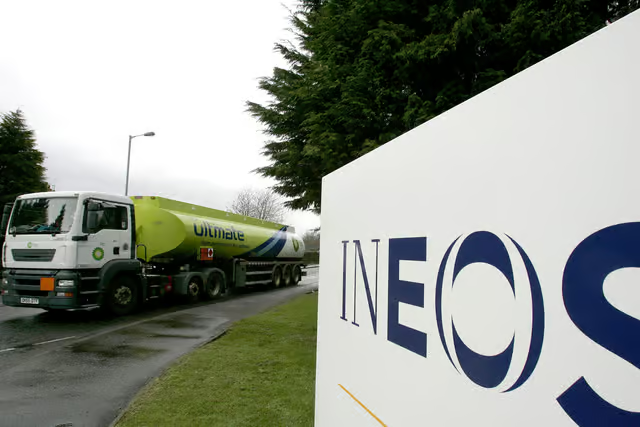
The Forties system operator Ineos has also been approached for comment on the potential impact of the dispute. Its response could provide further insight into whether a strike affecting Apache’s facilities could have consequences for the wider pipeline network.
Ultimately, the outcome may depend on whether both sides can return to negotiations before workers begin their planned action. A settlement would avoid the uncertainty facing workers and the company while reducing concerns about possible disruption to Britain’s already pressured fuel market.
But if talks remain deadlocked, the dispute could become an important test of the resilience of Britain’s North Sea energy infrastructure. At a time when motorists are already paying record prices for diesel and international oil supplies remain vulnerable to geopolitical shocks, even the threat of disruption from a relatively small group of offshore workers has the potential to become a much larger economic concern.
Related News:
 UK Diesel Prices Hit Record High Amid Iran Conflict
 UK Diesel Reaches £2 as Inflation Surges Across Europe
 Minister Rejects Fears of UK Diesel Shortage
 Europe Faces Winter Gas Supply Anxiety
 UK House Prices Fall as Mortgage Rates Rise
 Oil nears $100 as Saudi attacks shake markets
 Thames Water Revises Oxfordshire Mega-Reservoir Plan
 UK Retail Sales Rebound as Consumers Spend More
 UK Borrowing Hits £18.3bn Ahead of Budget
 Thinktank Calls for Abolition of UK State Pension
 MPs Defend UK Economic Watchdog Against Critics
 UK Trade Losses Grow Without EU Product Deal
 Should Savers Lock Into 5.25% Fixed Rates?
 Poundland Rescue Bid Could Protect 11,000 Jobs
 UK house price growth slows as mortgage rates rise
 UK borrowing costs surge as global bond sell-off deepens
 UK Assures Public Over Diesel Supply
 London Luxury Homes Face a Prolonged Property Slump
 Yorkshire Water Funding Sparks Debate Amid Fines and Pay Row
 Wealthy Britons Flee Gulf War but Avoid UK Taxes
 New £10bn rescue plan offered for Thames Water
 UK Wage Growth Slows as Jobs Market Holds Firm
 UK Doubles Steel Tariffs to 50% to Protect Domestic Plants
 Europe EV Demand Surges as Fuel Prices Rise
 BBC News Faces Deep Cuts in 2,000 Job Plan
 New UK advice scheme to boost savings and investing
 UK Pushes for New EU Goods Trade Deal
 Reeves Fights to Keep Treasury Role Amid Labour Turmoil
 UK rejects EV charging VAT cut amid Treasury clash
 UK firms accused of ‘AI washing’ boom
 Essex valley emerges as rising English wine hub
 Whitehall Steps In: The Battle Over Thames Water Deepens
 EasyJet Takeover Sparks Fears Over Passengers’ Future
 Canada to Match Trump’s 50% Tariffs Dollar for Dollar
 UK Households Could Save £173 on Fixed Energy Deals
 Burnham Faces Mounting Budget Challenges
 Dutch Bank Moves 86 Tonnes of Gold to London
 Trump Hardens Canada Trade Stance as Talks Stall
 UK Cost Squeeze Deepens as Mortgages and Gas Rise
 Swedish Mining Push Puts Sami Land Rights Under Pressure
 Billionaire Chris Rokos poised to leave UK
 JPMorgan Boss Warns Against UK Bank Tax Rise
 John Lewis Losses Widen to £124m as Confidence Falls
 Saudi Arabia Shuts Oil Pipeline After Drone Attack
 Oil Prices Surge as Saudi Pipeline Closure Deepens Crisis
 UK State Pension Set to Rise 3.9% as Triple Lock Holds
 UK Parents Cut School Uniform Costs as Prices Rise
 North Sea Firms Urge Early End to Windfall Tax
 UK Pay Growth Slows to 3.9% as Rate Decision Nears
 Bank Urged to Slow Bond Sales as UK Costs Rise
 UK Inflation Hits 3.1% as Household Pressure Grows
 Mayors Could Gain New Powers Over UK Water Firms
 UK Productivity Improves as Bank Weighs Interest Rates
 Japan Raises Rates to 31-Year High
 UK Rent Gap Puts Low-Income Families Under Pressure
 Calls Grow to Expand UK National Wealth Fund
 Labour Apprenticeship Scheme Faces Slow Start
 Trump Eyes Major Belarus Fertiliser Deal Amid Canada Trade Dispute
 Burnham Leaves Door Open to Future Brexit Reversal
 Iran Rejects Claims of Shift in US Talks
 Chinese Hybrid Car Surge Raises EU Auto Industry Concerns
 Tony Blair Calls for Britain to Rejoin EU Within a Decade
 Norfolk Broads Housing Levy Faces Environmental Criticism
 AO Acquires Jessops in Camera Retail Expansion
 Saudi intercepts Houthi missiles as oil fears grow
 UK Food Trade Deficit Hits £21bn in 2026
 Beaverbrooks Boss Calls for Relief on Business Costs
 Why Americans Feel Ripped Off by Rising Prices
 New UK Homes in Flood Zones Face Insurance Risk
 Ukraine Faces $45m Hourly Cost From Missile Alerts
 Burnham Opens Door to Possible UK Return to EU
 Healey urged to act as UK energy bills rise 4%
 Boots Sale Nears as Weston Family Eyes $9bn Deal
 French Debt Fears Put Euro Markets Under Pressure
 Badenoch Raises Prospect of 2027 UK Election
 London Council Warns of 150% Council Tax Rise
 UK Faces Calls to Review Bank Failure Bets
 Greens Call for Immediate Water Nationalisation
 Starmer Faces Parliamentary Battles Over UK-EU ‘Reset’ Plan
 Tube Strike Brings Capital to a Standstill Over Shift Disputes