Published: 24 September 2026. The English Chronicle Desk. The English Chronicle Online.
A proposed environmental levy on housebuilders in Norfolk is facing criticism from environmental lawyers, ecologists and conservation professionals, who argue that the charge is too low to adequately address the damage that could result from thousands of new homes being built in and around the protected Norfolk Broads.
The draft Environmental Delivery Plan, prepared by Natural England under the government’s new Nature Restoration Fund, is intended to provide a new route for housing development in areas where nutrient pollution has become a major obstacle to construction. The plan could support development of up to 15,780 homes across parts of Norfolk, while requiring developers to contribute a fixed levy towards large-scale environmental restoration.
Natural England has proposed a charge of £2,675 for each house or flat, which would generate about £42m if the full development capacity were used. The government says the approach is designed to move away from fragmented, project-by-project environmental mitigation and instead use pooled funding to deliver conservation work across rivers, wetlands and other habitats.
However, critics say the proposed payment does not adequately reflect the potential environmental cost of the development. They point to an earlier version of the plan in which the proposed charge was considerably higher, with figures ranging from about £5,400 to £60,500 per home depending on the level of nutrient pollution associated with development.

The dispute comes as the government seeks to establish a new balance between housing delivery and environmental protection. The Norfolk plan is the first Environmental Delivery Plan to be put forward under the new system and is therefore being closely watched by conservation organisations, developers and planning professionals. The government has described the model as a way to deliver both housing and environmental recovery, while critics fear it could establish a system in which developers effectively pay into a fund rather than preventing pollution at its source.
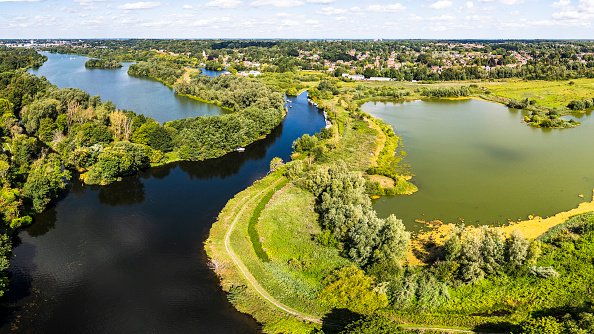
The Norfolk Broads are a nationally and internationally important wetland landscape made up of rivers, shallow lakes, marshes, fens and other habitats. The wider protected area supports a range of species and ecosystems, including otters, water voles, wetland birds, white-clawed crayfish and rare plants.
The environmental concern surrounding the proposed housing expansion is particularly linked to nitrogen and phosphorus pollution. Additional development can increase nutrient loads through wastewater and surface-water runoff. These nutrients can enter rivers and wetlands and contribute to ecological deterioration when concentrations become excessive.
The draft Environmental Delivery Plan covers nutrient pollution affecting the Broads Special Area of Conservation, the Broadland Ramsar site and the River Wensum Special Area of Conservation. The government says the plan has been designed to tackle the environmental effects associated with development in the River Wensum, Bure Broads and Marshes, and Yare Broads and Marshes catchments.
Under the proposed system, developers would be able to use a single nature restoration levy rather than individually arranging certain environmental mitigation measures covered by the plan. The money would then be pooled and used by Natural England to deliver conservation interventions at a larger scale.
Government documents say Environmental Delivery Plans are intended to provide coordinated conservation measures capable of materially outweighing the environmental impacts covered by each plan. The proposed Norfolk programme includes wetland creation and restoration, changes in land management, fen management, catch-dyke restoration, deer management and river restoration. Conservation measures are intended to be secured and maintained over the long term.
The government has presented the approach as a significant change in the way environmental obligations associated with development are managed. Instead of requiring individual developers to commission separate mitigation measures for each project, the Nature Restoration Fund allows eligible developers to contribute to a wider programme of environmental restoration.
Government officials argue that this could produce more substantial ecological benefits because restoration can be coordinated across whole landscapes rather than being confined to individual development sites. The Department for Environment, Food and Rural Affairs and Natural England have said the Norfolk plan is intended to support new housing while improving water quality and restoring wetland habitats.
The proposed levy, however, has become the central point of criticism.
Environmental professionals have questioned whether a flat charge of £2,675 per home is sufficient when the environmental impact of individual developments can vary substantially. A flat-rate system does not necessarily reflect differences in the size, location, occupancy or nutrient contribution of individual schemes. Critics argue that this could result in some developments paying less than the cost of dealing with their specific environmental effects.
The earlier draft reviewed by critics reportedly contained much higher potential charges. The difference between that earlier approach and the current flat levy has intensified concerns over whether the final calculation adequately captures the cost of dealing with additional pollution.
Another issue is the distinction between preventing pollution and compensating for its consequences. Critics argue that restoration of wetlands and habitats, while potentially valuable in its own right, does not necessarily stop additional nitrogen and phosphorus generated by new development from entering vulnerable waterways.
The government, however, maintains that the Environmental Delivery Plan is not simply an offsetting mechanism. Its stated objective is for the conservation measures funded through the levy to produce environmental benefits that materially outweigh the effects covered by the plan. Natural England has also said that the measures are intended to support long-term recovery of protected habitats and species.
The consultation process is now central to the future of the scheme. The draft Norfolk Environmental Delivery Plan was published for public consultation on 17 September, with responses due by 27 October 2026. Natural England is seeking views from residents, developers, environmental organisations and other interested parties on the evidence behind the plan, the proposed conservation measures and possible ways of strengthening the scheme.
The fact that the document remains a draft is significant. The £2,675 charge is a proposal rather than a final operating rate, and the Norfolk Environmental Delivery Plan is not yet an established mechanism that developers can automatically rely on. The consultation responses will be considered before the plan can proceed through the next stages.
The new system also does not remove all existing environmental requirements. Government guidance states that Environmental Delivery Plans address specific environmental obligations covered by an individual plan, while other environmental effects and planning requirements continue to be considered separately.
For the government, the wider issue is how to increase housing supply without repeating years of conflict between development and environmental protection. The Nature Restoration Fund has been designed to make environmental obligations more predictable for developers while allowing conservation work to be delivered at a strategic level.
The Norfolk scheme is particularly important because it is the first practical test of that model. Natural England has already identified other protected areas where Environmental Delivery Plans are being prepared or considered, meaning the experience in Norfolk could influence how similar arrangements are developed elsewhere in England.
Environmental organisations are therefore watching the consultation closely. Their concerns centre not only on the size of the levy but also on whether the conservation measures will be capable of delivering measurable improvements in waterways that are already under pressure from nutrient pollution.
The government argues that the alternative approach has struggled to deliver environmental recovery at the scale required, while the new system can pool money and coordinate restoration across entire catchments. Critics counter that a strategic approach should not come at the expense of accurate assessment of pollution generated by individual developments.

At the heart of the disagreement is a difficult question for policymakers: whether a fixed financial contribution can adequately account for the environmental consequences of thousands of new homes in a fragile wetland landscape.
With the consultation still open, the final form of the Norfolk Environmental Delivery Plan has yet to be determined. The debate is likely to continue as Natural England assesses responses and considers whether changes are required to the proposed levy, conservation programme or other elements of the plan.
What happens in Norfolk could have implications far beyond the Broads. If the government proceeds with similar Environmental Delivery Plans in other protected areas, the Norfolk model may become an important reference point for how Britain manages the competing demands of housing development, economic growth and the protection of vulnerable ecosystems.
For communities around the Norfolk Broads, the issue is ultimately about more than a financial contribution attached to each new home. It concerns whether development can take place while maintaining the ecological health of rivers and wetlands that have already experienced years of pressure. For developers, it represents a potentially simpler and more predictable route through environmental obligations. For conservationists, the challenge is ensuring that simplicity and speed do not come at the expense of genuine environmental recovery.
The consultation now provides an opportunity for those competing concerns to be tested against the evidence before the first Environmental Delivery Plan is finalised.
Related News:
 Heavier SUVs Accelerate Britain’s Pothole Crisis
 UK rejects EV charging VAT cut amid Treasury clash
 Battery Fires Cost UK Recycling Industry £1bn
 Heathrow Expansion Faces New Climate Conditions Over CO₂
 North Sea oil workers must lose weight or face job loss
 UK Taskforce Unveils Plan to Streamline Nuclear Reactor Rules
 UK Car Sales Pass 2 Million as Chinese Brands Surge
 MPs warn AI financial risks threaten UK stability
 MPs warn AI financial risks threaten UK stability
 AI job losses UK: Britain faces sharper employment shock
 UK New Car Discounts Near £6,000 as Prices Are Slashed
 Aberdeen Chosen for GB Energy HQ at Marischal Square
 Scotland’s Climate Plans Face Scrutiny Over ‘Science Fiction’ Targets
 Ocean Warming Drives Massive Marine Life Loss, Study Warns
 Yorkshire Water Funding Sparks Debate Amid Fines and Pay Row
 New £10bn rescue plan offered for Thames Water
 UK Energy Reform Could Cut Bills by £200
 UK Records Earliest Spring as Nature Awakens Fast
 North Sea Drilling to Cut UK Imports Only Slightly
 OpenAI Halts Stargate UK Project Amid Energy Crisis
 Europe EV Demand Surges as Fuel Prices Rise
 Reform UK funding: mystery billionaire revealed
 Capitalism ‘Suicidal’, Warns Petro at Climate Summit
 Record May Heat to Cold Front in Eastern Australia
 UK Faces Mass Water Shortages by 2055, Lords Warn
 UK firms accused of ‘AI washing’ boom
 Essex valley emerges as rising English wine hub
 Whitehall Steps In: The Battle Over Thames Water Deepens
 UK Seas Face Extreme Heatwave as Global Temperatures Surge
 Three-Quarters of England’s Riverbanks Still Off Limits
 London’s 2026 ‘Great Stink’ Raises Sewer Concerns
 Burnham unveils £65m drought aid for farmers
 UK Risks Falling Behind in AI Race
 Turkmenistan Begins Fixing Major Methane Mega-Leaks
 UN Warns Record El Niño Could Supercharge Global Heat
 London Launches First Self-Driving Taxis
 UK Subsidence Claims Surge After Record-Breaking Summer
 McLaren to Create 1,000 UK Jobs in £450m Investment
 Nats Boss Summoned as UK Flight Chaos Continues
 Thames Water Revises Oxfordshire Mega-Reservoir Plan
 UK Heatwaves Set to Worsen Pothole Damage, RAC Warns
 Horse Hill Oil Site Sold for £1m as Drilling Bid Returns
 Tom Watson Takes Senior Role at Palantir
 Europe Faces Climate Reckoning After Extreme Summer
 Australia Renewables Reach Record 80% Grid Demand
 Super El Niño Threatens Hundreds of Thousands of Lives
 Chinese Hybrid Car Surge Raises EU Auto Industry Concerns
 Reeves Faces Setback as Labour May Miss Homes Target
 Trump’s UK Ambassador Urges North Sea Drilling to Strengthen US Ties
 UK Bans Fake Numbers: Scammers Lose Their Trick
M&S Profits More Than Halve After Cyber-Attack
UK Bans Fake Numbers: Scammers Lose Their Trick
M&S Profits More Than Halve After Cyber-Attack
 Patients to Test Health at Home to Ease NHS Winter Pressure
 Millionaires group urge Reeves to introduce wealth tax to ‘lift kids out of poverty’
 Northern Lights may illuminate UK skies this week
 Starmer Says Labour’s Economic Plan Needs Years to Deliver
 Starmer Faces Parliamentary Battles Over UK-EU ‘Reset’ Plan
 ScottishPower Tops List of Worst UK Energy Suppliers
 City & Guilds pay surge sparks backlash amid £22m cuts
 Judi Dench Champions Fight to Save London’s Green Spaces
 BT Names New Openreach Chief Amid Major Fibre Expansion
 UK Unemployment Rate Climbs to 5.2% Peak
 Rachel Reeves Faces Middle East Conflict Test
 ‘Drinking from a Fetid Pond’: Superbug Genes in Lough Neagh
 Rising Costs Force Families to Rethink Days Out
 UK Staycations Rise as Travel Fears Grow
 Silent Tracks: Rail Line Without Passengers
 DeepMind Staff Vote to Unionize Over US Military Contract
 Tube Strike Brings Capital to a Standstill Over Shift Disputes
 EU Slashes Steel Quotas But Grants UK Favourable Rates
 Trump Faces Backlash Over $2bn Earnings Since Return
 Unions Warn Labour Over Zero-Hours Contract Reforms
 Billionaire Chris Rokos poised to leave UK
 JPMorgan Boss Warns Against UK Bank Tax Rise
 UK Retailers Accused of Breaking Refund Laws
 North Sea Firms Urge Early End to Windfall Tax
 Mayors Could Gain Greater Powers Over Water Firms
 UK Rent Gap Puts Low-Income Families Under Pressure
 Calls Grow to Expand UK National Wealth Fund
 MPs Defend UK Economic Watchdog Against Critics
 Trump gives Xi red-carpet welcome as trade truce extends