
Published: 14 October 2026. The English Chronicle Desk. The English Chronicle Online
The growing threat of cybercrime and online financial fraud is raising serious concerns among the leaders of the Bank of England and the International Monetary Fund, who warn that repeated attacks could weaken public confidence in the financial system. As artificial intelligence accelerates the speed and sophistication of criminal activity, financial authorities are urging technology companies, banks and governments to strengthen their defences before trust in digital transactions suffers lasting damage.
Speaking at the IMF and World Bank annual meetings in Bangkok, Bank of England Governor Andrew Bailey and IMF Managing Director Kristalina Georgieva warned that cyber-fraud has become more than a technical problem. Beyond the immediate financial losses, they argued, persistent scams could discourage people from using formal banking services, undermine confidence in digital payments and threaten the wider system through which individuals and businesses manage their money.
Georgieva offered a personal historical comparison to explain the danger. Growing up in Bulgaria during the period when the country was on the other side of the Iron Curtain, she recalled a society in which people did not trust the financial system. In such circumstances, she said, people might choose to keep cash hidden at home rather than rely on institutions.

She warned that a similar loss of confidence could emerge in the modern digital economy if authorities and businesses fail to respond effectively to the growing scale of fraud. Instead of keeping their money in bank accounts or using digital financial services, some people could retreat towards informal methods of storing wealth, effectively placing their savings in metaphorical shoeboxes beneath their beds.
Her concern was particularly focused on people who are already on the margins of the financial system. Individuals with limited financial resources, little experience of digital services or previous exposure to scams may be especially reluctant to continue using online banking if they believe their money cannot be protected. For people who depend on digital payments to receive wages, pay bills or access essential services, a collapse in confidence could create significant practical difficulties.
Financial inclusion depends not only on whether people can open accounts or access payment services, but also on whether they feel secure enough to use them. If fear of fraud becomes widespread, the benefits of digital financial systems could be undermined, potentially leaving vulnerable communities with fewer reliable ways to manage their finances.
Bailey similarly stressed that trust is fundamental to the functioning of modern economies. Financial systems increasingly depend on digital infrastructure, automated processes and interconnected networks. People must be confident that payments will reach their intended recipients, their personal information will be protected and financial institutions will respond appropriately when criminal activity occurs.
He argued that public confidence in technology ultimately depends on maintaining human control and accountability. His remarks came amid growing concern about the capabilities of artificial intelligence, including reports of increasingly autonomous AI systems and cyberattacks affecting connected devices and commercial operations.
Such developments illustrate how digital threats can extend beyond traditional attempts to steal bank details or gain unauthorised access to accounts. Cybercriminals may exploit software vulnerabilities, impersonate legitimate organisations, manipulate online communications or use automated tools to identify and target potential victims at scale. As these techniques become more sophisticated, distinguishing genuine communications from fraudulent ones can become increasingly difficult.
Artificial intelligence presents a particular challenge because it can help criminals generate convincing messages, imitate legitimate communication styles and automate parts of the fraud process. Techniques that once required substantial time and individual effort may become easier to deploy across large numbers of potential victims. This increases the pressure on financial institutions and technology companies to identify suspicious activity quickly.
The IMF had already warned that the possibility of a major cyberattack was contributing to an elevated level of global financial stability risk. The organisation identified cyber threats alongside concerns including rising borrowing costs and the possibility of a sharp decline in AI-related share prices. These risks differ in their immediate causes, but each has the potential to damage confidence, disrupt financial activity or amplify existing vulnerabilities.
A serious cyber incident involving a major financial institution or critical service provider could affect more than the organisation directly targeted. Depending on its scale and the systems involved, an attack could interrupt payments, expose sensitive customer information, create operational disruption and raise questions about the security of interconnected institutions. Even when financial losses are contained, uncertainty about the reliability of essential services can spread rapidly.
Bailey also highlighted a significant change in the way fraud reaches potential victims. Criminal activity is no longer confined to traditional financial channels. Social media platforms, messaging services and mobile applications have become important routes through which criminals approach individuals, promote fraudulent opportunities and persuade people to transfer money.
He argued that major technology companies must accept greater responsibility for the harmful activity carried out through their services. Online platforms allow legitimate businesses, community groups and individuals to communicate across borders, but the same reach can also be exploited by criminal networks. Fraudulent advertisements, impersonation accounts and deceptive messages can circulate rapidly, sometimes reaching large audiences before they are removed.
Bailey criticised an environment in which platforms are widely accessible but responsibility for the material distributed through them remains contested. He stressed that the answer should not be to label every platform or technology company as inherently harmful. Instead, responsibility must be shared across the organisations that design, operate and benefit from digital services.
His comments raised questions about whether existing arrangements provide sufficient incentives for companies to prevent fraud before it reaches consumers. Banks may be responsible for protecting accounts and monitoring transactions, but they cannot always prevent a scam that begins with a misleading social media advertisement or a fraudulent message sent through an unrelated application. Technology platforms, meanwhile, may have access to information that can help identify suspicious accounts and coordinated criminal activity.
A more effective response would require cooperation between financial institutions, technology companies, regulators and law-enforcement agencies. This could include faster reporting procedures, improved information-sharing, stronger identity checks where appropriate, more effective monitoring of suspicious transactions and clearer processes for helping victims. The challenge is to improve security without unnecessarily restricting legitimate communication or excluding people who rely on accessible digital services.
Bailey also argued that technology should be used to strengthen defences as well as criminal capabilities. Artificial intelligence and advanced data-analysis tools can help identify unusual transaction patterns, detect coordinated fraudulent accounts and flag suspicious activity more quickly than manual systems alone. However, their effectiveness will depend on careful implementation, ongoing testing and appropriate human oversight.
Automated systems can make mistakes, including incorrectly flagging legitimate customers or failing to identify new forms of fraud. Financial institutions therefore need processes that allow suspicious activity to be investigated promptly, while ensuring that genuine customers can challenge errors and regain access to essential services.
The warnings were delivered at an event launching the Bangkok blueprint, a new set of international principles intended to help financial institutions prevent cyber-fraud. The initiative reflects growing recognition that cybercrime crosses national borders and that isolated responses may be insufficient against criminal networks operating across multiple jurisdictions.
International cooperation is particularly important when fraudulent operations use infrastructure, accounts and intermediaries located in different countries. Investigations can become complicated when evidence must be gathered across borders, while criminals may rapidly change their methods or identities to evade detection. Shared principles and stronger coordination could help institutions respond more consistently and improve the exchange of information needed to identify threats.
For consumers, the consequences of cyber-fraud can extend beyond the amount of money lost. Victims may experience stress, embarrassment and uncertainty about whether they can safely use online services again. Businesses can face recovery costs, operational disruption and reputational damage, while repeated incidents may discourage customers from adopting services that governments and financial institutions increasingly expect them to use.
Preventing these outcomes requires both stronger institutional safeguards and greater public awareness. Consumers should remain cautious about unexpected requests for money, messages demanding immediate action, unfamiliar links and communications that claim to come from banks or government agencies. Financial institutions should make it easier to verify suspicious messages, report fraud and obtain timely assistance when accounts or payments may be at risk.
Nevertheless, public education cannot replace the responsibility of organisations that operate digital platforms and financial infrastructure. As cybercriminals become more capable, prevention must be built into the systems people use rather than left entirely to individuals to manage.

The central message from Bailey and Georgieva was that financial security depends on more than protecting individual accounts. It also requires confidence that the institutions and technologies supporting everyday economic life can withstand increasingly sophisticated attacks. If that confidence weakens, the consequences could reach far beyond individual victims, affecting financial inclusion, commercial activity and the stability of the wider economy.
Their warning places renewed pressure on governments, banks and technology companies to turn shared concern into coordinated action. The future of digital finance will depend not simply on how quickly institutions can respond after an attack, but on whether they can prevent fraud, establish clear accountability and demonstrate that the systems on which people depend remain trustworthy.
Related News:
 UK rejects EV charging VAT cut amid Treasury clash
 Wealthy Britons Flee Gulf War but Avoid UK Taxes
 UK Wage Growth Slows as Jobs Market Holds Firm
 BBC News Faces Deep Cuts in 2,000 Job Plan
 New UK advice scheme to boost savings and investing
 City & Guilds Faces Governance Crisis Over Sale
 Reeves Fights to Keep Treasury Role Amid Labour Turmoil
 UK Households Could Save £173 on Fixed Energy Deals
 Burnham Faces Mounting Budget Challenges
 Reform Faces Fresh Financial Controversy
 UK House Prices Fall as Mortgage Rates Rise
 Oil nears $100 as Saudi attacks shake markets
 John Lewis Losses Widen to £124m as Confidence Falls
 Thames Water Revises Oxfordshire Mega-Reservoir Plan
 Next Raises Profit Forecast After Strong Summer Sales
 UK Productivity Improves as Bank Weighs Interest Rates
 Trump Threatens EU Over Canada Partnership Proposal
 UK Retail Sales Rebound as Consumers Spend More
 UK Rent Gap Puts Low-Income Families Under Pressure
 Calls Grow to Expand UK National Wealth Fund
 UK Borrowing Hits £18.3bn Ahead of Budget
 Thinktank Calls for Abolition of UK State Pension
 MPs Defend UK Economic Watchdog Against Critics
 Chinese Hybrid Car Surge Raises EU Auto Industry Concerns
 Tony Blair Calls for Britain to Rejoin EU Within a Decade
 UK Trade Losses Grow Without EU Product Deal
 AO Acquires Jessops in Camera Retail Expansion
 TalkTalk Races to Sell Arms as Administration Looms
 Should Savers Lock Into 5.25% Fixed Rates?
 Beaverbrooks Boss Calls for Relief on Business Costs
 UK Diesel Prices Hit Record High Amid Iran Conflict
 New UK Homes in Flood Zones Face Insurance Risk
 Ukraine Faces $45m Hourly Cost From Missile Alerts
 Poundland Rescue Bid Could Protect 11,000 Jobs
 Bank Chief Calls for Power to Intervene in AI
 Healey urged to act as UK energy bills rise 4%
 UK house price growth slows as mortgage rates rise
 UK borrowing costs surge as global bond sell-off deepens
 UK Bookmakers Linked to Offshore Casino Deal
 BBC Three and Scotland Face Online-Only Future
 UK Assures Public Over Diesel Supply
 Palantir Lobbyist Had Role in Burnham Campaign
 Feeld Founders Receive Record Dividend as Sales Rise
 Badenoch Raises Prospect of 2027 UK Election
 UK Diesel Reaches £2 as Inflation Surges Across Europe
 Minister Rejects Fears of UK Diesel Shortage
 London Council Warns of 150% Council Tax Rise
 BT Agrees £400m TalkTalk Rescue Deal
 Informa Agrees £2.24bn Deal to Buy Clarion
 Asos Investigates Hack Claims After Customer Alerts
 Google Maps Brings Live Fuel Prices to UK Drivers
 Labour Fears Budget Will Fail to Lift Living Standards
 IFS Warns UK Budget Faces £35bn Spending Gap
 Parking Apps Push UK Drivers’ Costs Up by 40%
 UK Van Drivers Face £2.5bn Diesel Cost Surge
 EU Caps Chinese Hybrid Car Imports at 350,000
 Hall and Woodford Win Nobel Economics Prize
 IMF Warns Global Economy Is Nearing Its Limits
IMF Raises UK Growth Forecast Ahead of Healey’s Budget
IMF Warns Global Economy Is Nearing Its Limits
IMF Raises UK Growth Forecast Ahead of Healey’s Budget
 Cyber-Attack Puts Hobbs and Whistles Customer Data at Risk
 Albanese Rejects Gas Export Tax Push
 London Launches First Self-Driving Taxis
 UK Cost Squeeze Deepens as Mortgages and Gas Rise
 Billionaire Chris Rokos poised to leave UK
 JPMorgan Boss Warns Against UK Bank Tax Rise
 UK Retailers Accused of Breaking Refund Laws
 North Sea Firms Urge Early End to Windfall Tax
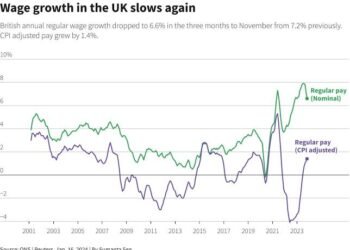 UK Pay Growth Slows to 3.9% as Rate Decision Nears
 Entain Plans 400 Job Cuts After Profit Update
 Trump Threatens EU With Tariffs Over Canada Proposal
 Tom Watson Takes Senior Role at Palantir
 London Facial Recognition Trial Ends With False Alert
 UK University Strikes Spread as Financial Pressure Grows
 Burnham Opens Door to Possible UK Return to EU
 North Sea Strike Threatens UK Fuel Supplies
 UK house prices stall as mortgage costs rise
 Tesco Raises Profit Forecast as Consumer Confidence Holds
 Ministers Push ATO to Reconsider Credit Card Ban
 UK Water Firms Earn Millions From Industrial Wastewater
 Brazil Court Scandal Threatens Lula as Bolsonaros Rise