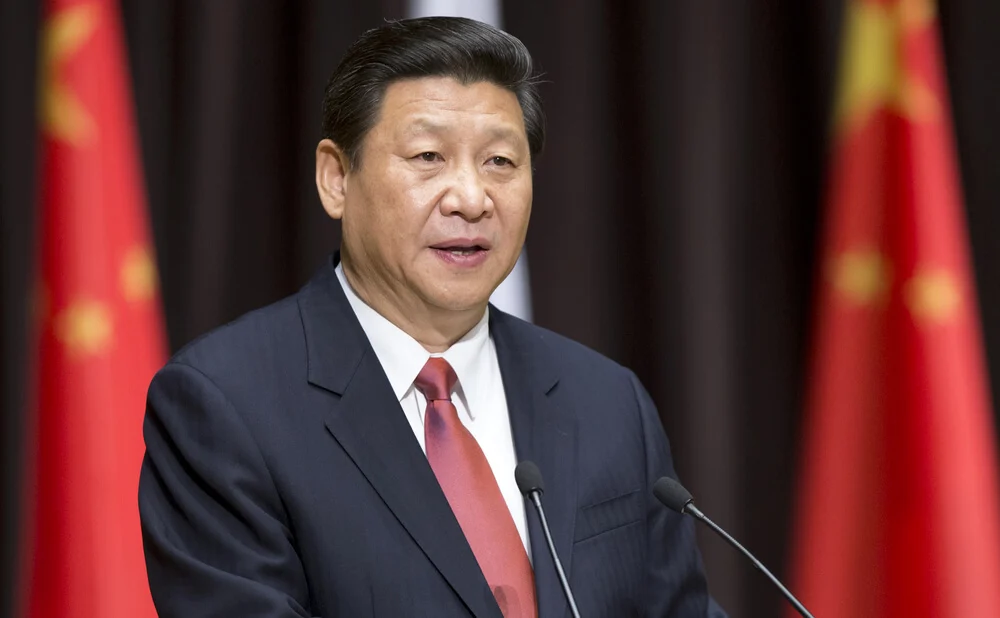
China’s President Xi Jinping is preparing to reinforce the Communist Party’s discipline and internal control as senior leaders gather in Beijing for a crucial political meeting, placing his long-running anti-corruption campaign under renewed scrutiny. More than a decade after Xi promised to eliminate corruption throughout the ruling party, investigations continue to reach senior government officials, military commanders and influential political figures, raising questions about whether the campaign is primarily an effort to improve governance or also a mechanism for enforcing absolute political loyalty.
The fifth plenum of the Chinese Communist Party’s Central Committee began on Monday and is expected to focus on what state media describes as advancing the party’s full and rigorous self-governance. Within China’s political system, the language of self-governance frequently refers to internal discipline, ideological conformity, loyalty to the party leadership and the prevention of corruption. The meeting comes at a significant moment for Xi, whose leadership has become increasingly associated with centralised authority and an extensive system of political oversight.
The scale of the anti-corruption campaign remains considerable. Chinese disciplinary authorities opened investigations into more than one million people during the previous year, including more than 100 officials at ministerial or provincial level and above. The figures demonstrate the continuing reach of the campaign, which has targeted officials across different levels of the government and party hierarchy.

When Xi assumed power in 2012, he made the fight against corruption a central feature of his leadership. He argued that misconduct among officials threatened public confidence and could ultimately undermine the Communist Party’s ability to remain in power. Since then, disciplinary investigations, dismissals and prosecutions have become a defining characteristic of Chinese politics under his administration.
However, the persistence of such investigations has raised a difficult question: if the campaign has continued for more than a decade, why has corruption not been eliminated? Analysts suggest that the answer may lie partly in the structure of China’s political system, where an enormous bureaucracy exercises authority over a population of approximately 1.4 billion people while operating within a highly centralised, one-party state.
The distinction between corruption and political disloyalty has become particularly important in understanding Xi’s approach. Critics and some China specialists argue that investigations can serve purposes beyond the recovery of misused public resources or the punishment of financial wrongdoing. The removal of senior figures can also reinforce the authority of the leadership and discourage officials from developing independent political influence.
Kerry Brown, director of the Lau China Institute at King’s College London, has argued that Xi’s political outlook places extraordinary importance on discipline and loyalty. Under this worldview, corruption and political disloyalty are closely connected rather than treated as entirely separate problems. Brown has suggested that the party’s understanding of corruption extends beyond financial misconduct to include what it regards as ideological or spiritual corruption.
This broader interpretation helps explain why the campaign has remained so extensive. An official accused of financial wrongdoing may face disciplinary action, but behaviour considered inconsistent with the leadership’s political expectations can also become a matter of concern for the party. As a result, the anti-corruption drive operates both as an accountability mechanism and as a means of maintaining political unity.
Neil Thomas, a senior fellow at the Asia Society, has argued that Xi has reduced certain forms of corruption while strengthening his personal control over the party. Nevertheless, tougher penalties alone cannot fully resolve the incentives that encourage officials to protect their own interests, build patronage networks or exploit their positions.
Thomas has observed that Xi’s response is to tighten discipline further, making the campaign a permanent feature of governance rather than a temporary operation with a clearly defined end. This approach suggests that the leadership does not expect a final declaration of victory over corruption to bring the process to a close. Instead, continued scrutiny and punishment remain central to the way the party seeks to manage its officials.
The fifth plenum provides an opportunity to reinforce that message. The gathering is part of the Communist Party’s established political cycle and brings together more than 300 members of the Central Committee, one of the most senior bodies in the party hierarchy. Its discussions can offer insight into the leadership’s priorities and the direction of policy ahead of major political decisions.
The meeting is especially significant because it is expected to be the last substantive gathering of this kind before the 21st Party Congress next year. At that congress, a new Central Committee will be selected, while Xi is widely expected to seek a fourth term as the party’s general secretary. The preparations therefore carry implications for both the party’s institutional future and the continuation of Xi’s leadership.
Maintaining control over senior officials is particularly important as the leadership approaches this transition. The party must demonstrate that its internal disciplinary system remains effective, while Xi has a strong political interest in ensuring that officials at the highest levels remain aligned with his priorities.
Recent investigations into senior military figures have brought these concerns into sharp focus. In January, Zhang Youxia, one of China’s most senior generals and previously a leading figure in the military hierarchy, was placed under investigation. He was subsequently removed from the party and had already lost his position on the Central Military Commission, the body responsible for the armed forces’ top-level leadership.
The consequences of the wider purge have been particularly striking within the Central Military Commission. A body that would normally have seven members has reportedly been reduced to just two: Xi and Zhang Shengmin, who oversees military discipline. Such a dramatic reduction raises questions about the extent of the investigations and the stability of the leadership structure responsible for China’s armed forces.
Military discipline is an especially sensitive issue for Xi, who has repeatedly emphasised the need for the armed forces to remain loyal to the party and its leadership. The removal of senior commanders can be presented as an effort to eliminate misconduct and improve operational reliability. At the same time, repeated investigations at the highest levels may create uncertainty among officers and complicate the development of a stable command structure.
The campaign has also affected influential civilian officials. Ma Xingrui, the former party secretary of Xinjiang, is among the prominent figures who have faced scrutiny. Huang Qifan, the former mayor of Chongqing, has also become a recent casualty of the wider series of political purges.
Huang’s case has attracted particular attention because of his long survival through earlier political upheavals. He had been associated with the period surrounding the downfall of Bo Xilai, the former Chongqing party chief whose political career collapsed amid a major scandal in the early 2010s. Bo was convicted of bribery and embezzlement and sentenced to life imprisonment. Huang survived the turmoil at the time, but the latest developments illustrate how even experienced and well-connected figures can remain vulnerable to the party’s disciplinary machinery.
The breadth of the investigations has prompted some analysts to question whether the purges point to underlying instability within the Chinese political system. If corruption remains widespread enough to justify repeated investigations into top officials, the campaign could suggest persistent weaknesses in oversight, recruitment and institutional accountability. The removal of senior military and political figures may also indicate that the leadership continues to identify serious risks within organisations that are supposed to serve it.
Xi, however, may interpret the same developments differently. From the leadership’s perspective, the ability to investigate and remove powerful officials demonstrates that no individual stands above the party’s disciplinary authority. Investigations can also send a warning to other officials that personal networks, seniority and previous service will not necessarily protect them from scrutiny.
Brown has described corruption investigations as a relatively straightforward and effective instrument for enforcing unity and discipline. Their political usefulness may help explain why the campaign has continued despite its duration and the repeated removal of high-ranking officials.
Nevertheless, the long-term consequences remain complex. Stronger enforcement can deter some forms of misconduct, but an atmosphere of constant investigation may also encourage officials to avoid taking decisions that could later expose them to accusations. Excessive caution within the bureaucracy could make policy implementation more difficult, particularly when officials are uncertain about which actions will be considered acceptable by senior leaders.
There is also a broader question about transparency and due process. In a political system where the ruling party exercises extensive control over disciplinary institutions, outside observers may find it difficult to independently assess the evidence behind individual investigations or determine whether political considerations have influenced particular cases. The fact that investigations frequently lead to severe disciplinary consequences does not, by itself, establish that every target was innocent or politically motivated against. Equally, official allegations alone cannot resolve wider questions about how the system operates.

For the Communist Party, the central challenge is to convince the public that the campaign improves governance rather than simply consolidating power. Corruption can weaken public services, distort economic decisions and undermine confidence in institutions. Tackling those problems requires consistent enforcement, credible procedures and safeguards against the selective use of disciplinary authority.
As the fifth plenum proceeds, Xi’s emphasis on rigorous self-governance is likely to reinforce the message that discipline will remain a defining priority. The meeting offers the party an opportunity to demonstrate unity before next year’s congress, but the scale of previous purges also underscores the difficulties of maintaining control across an enormous political and administrative system.
More than a decade after Xi launched his campaign, corruption remains an issue that the leadership continues to confront. Whether the latest investigations will produce lasting improvements in public accountability or primarily strengthen centralised political control remains a subject of debate. What is clear is that the campaign has become far more than a series of individual investigations: it is now a central instrument through which Xi seeks to shape the party, maintain loyalty and secure the future of his leadership.
Related News:
 Israeli Strike in Southern Lebanon Kills Seven
 Five Years of Taliban Rule Leave Afghanistan in Crisis
 Germany Pledges €1bn Military Aid to Ukraine
 Israel Promotes Film Challenging Controversial Gaza Documentary
 India’s Youth Movement Alleges Mass Detentions Before Protest
 Gaza War Deepens India’s Strategic Ties With Israel
 Delhi Braces for Youth Protests Over Voter Roll Dispute
 PTI Announces Swabi Rally Ahead of Long March Plans
 India’s Voter Roll Crisis Sparks Nationwide Protests
 Gadi Eisenkot: Israel’s Anti-Netanyahu Challenger
 Iran Crisis Tests Trump’s Global Leadership
 Southeast Asia Turns to Russia Amid Energy Crisis
 Cartel crackdown raises fears of fresh violence
 US states redraw maps after voting rights ruling
 Australia pushes Pacific security pact amid China tension
 US ‘Narco Boat’ Strikes Draw Global Outcry
 US Awaits Iran Reply on New Ceasefire Proposal
 Hormuz Talks Near Critical Stage
 Maldives Cave Diving Tragedy Raises Safety Alarm
 Discontent grows around Putin amid war strain
 Millions Gather for Khamenei’s Six-Day State Funeral
 Venezuela Quake Death Toll Surpasses 4,000
 Houthis Strike Saudi Arabia as Middle East Tensions Rise
 Is America Ready for an AOC Presidential Run?
 Nepal-Tibet Flood Death Toll Rises as 2,478 Remain Missing
 Ukraine Villagers Demand Answers After Deadly Arms Depot Strike
 Nepal Flood Survivors Face Unimaginable Loss
 Trump Calls Iran War ‘Small Potatoes’ Despite US Deaths
 Nepal Tunnel Rescue Offers Hope Amid Flood Devastation
 Europe’s democracies face a growing far-right threat
 Saudi Arabia Shuts Oil Pipeline After Drone Attack
 Nearly 50,000 Flee as Houthis Advance in Yemen
 Israel Accused of Undermining Palestinian Life
 Yemen War Displaces 125,000 as Fighting Intensifies
 Saudi Pact Raises Risk of Pakistan Entering War
 Lib Dems Prepare for Election Amid Reform Challenge
 Middle powers seek new alliances amid Trump era
 US Networks Suspend Trump White House Pool Coverage
 Japan PM Backs International Criminal Court
 UK Plans New Centre to Counter Information Warfare
 Iran Rejects Claims of Shift in US Talks
 Ukraine and Russia Escalate Long-Range Drone War
 Elif Eralp Emerges as Berlin’s Next Political Force
 Xi urges Trump to avoid US-China military conflict
 Lula accuses Trump of seeking control over Brazil
 Nepal PM calls deadly flood a global climate warning
 Saudi intercepts Houthi missiles as oil fears grow
 Republican Senator Questions Trump Ad Spending
 South Korea-Ukraine Row Erupts Over North Korean POWs
 Economic growth and political strain reshape Benin
 Drumcree Talks Falter as Legal Challenge Deepens
 UK-France Returns Deal Faces Expiry as Talks Stall
 New Maps Reveal Gaza’s Vast Destruction
 Green Party faces dispute over Zionism motion
 North Korea Fires Missile Amid DMZ Tensions
 Latin America women fear rollback of rights
 Former German Intelligence Chief Arrested Over Espionage
 Israel Marks Three Years Since October 7 Attack
 South Korea Probes Fuel Shipments to Russia
 Trump Says He Deserves Nobel Peace Prize
 Sri Lanka Ex-First Lady Arrested Over Donation Probe
 Houthi Missile Claim Sparks Riyadh Airport Disruption
 Turkey Rules Out Troops in Saudi Arabia’s Houthi Conflict
 Bolsonaro Gains Key Endorsement Ahead of Brazil Runoff
 Trump Rules Out Iran Attack Before US Elections
 Delhi Tightens Security Ahead of Election Protest
 Trump’s Russian Diesel Deal Sparks Ukraine Fury
 Delhi Detains Protest Leaders as Youth Rally Escalates
 French Students Protest Poor Conditions in Paris Suburbs
 UK Greens Face Crisis Over Zionism and Extremism Row
 Brazil Court Scandal Threatens Lula as Bolsonaros Rise
 Greta Thunberg Backs French Students in School Protests
 Millions Face Tougher Medicaid Rules From January
 Ohio Airports Become Key Hubs for ICE Deportation Flights
 Ukrainian Soldier Faces Trial Over Nord Stream Blast
 Judge Blocks Trump White House Media Ban
 Serbia Leader Linked to Controversial Trump Tower Plan
 Suu Kyi Appears in Rare Photos After Royal Gift
 Zelenskyy Says US Failed to Warn Kyiv of Russian Strikes
 Japan’s Takaichi Faces a Crucial Second Year in Power