Published: 03 October 2026. The English Chronicle Desk. The English Chronicle Online
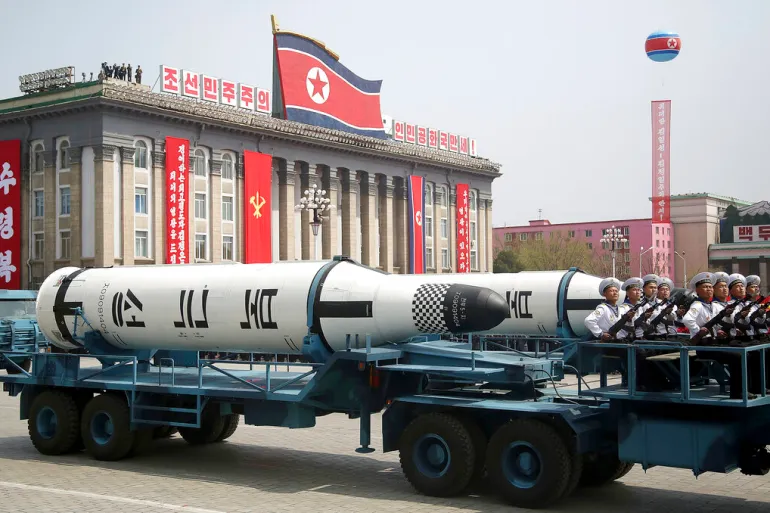
North Korea fired a ballistic missile towards the sea on Saturday, adding fresh tension to an already strained relationship with South Korea following a dispute over a landmine explosion in the Demilitarised Zone that injured three South Korean soldiers. The launch came only hours after Pyongyang again rejected Seoul’s demand for an apology and denied responsibility for the blast.
South Korea’s military said the missile was launched from the Wonsan area at about 6.30am local time and travelled more than 700 kilometres before falling into the sea. South Korean and US authorities were analysing the launch to determine more details about the weapon. Japan also detected the launch and said the object was believed to have been a ballistic missile before it came down at sea.
The timing of the launch has drawn particular attention because it followed a sharp exchange of statements between Seoul and Pyongyang over the landmine incident. South Korea has accused North Korea of being responsible for mines that exploded inside the DMZ on September 21, seriously injuring two soldiers and wounding another during a reconnaissance mission. North Korea has rejected that conclusion, describing Seoul’s assessment as groundless.

The latest missile test therefore comes against a background of heightened military and diplomatic tensions. South Korea’s Joint Chiefs of Staff said it had strengthened surveillance for possible additional launches and was sharing information with the United States and Japan. The South Korean presidential office also convened an emergency National Security Council meeting to assess the launch and consider the broader security situation.
The landmine dispute has become a particularly sensitive issue because the DMZ remains one of the most heavily fortified areas in the world and is governed by arrangements linked to the 1953 Korean War armistice. South Korean authorities, working with the United Nations Command, have said the incident represented a violation of the armistice. Seoul subsequently demanded an apology from Pyongyang and called for an end to North Korean fortification work along the border.
North Korea, however, has rejected the accusation. Kim Yo-jong, the influential sister of North Korean leader Kim Jong-un, repeated the denial in a statement issued on Friday. She dismissed South Korea’s findings and criticised Seoul’s demand for an apology, while portraying North Korea’s border construction as an effort to seal its frontier rather than an attempt to provoke the South.
Kim’s remarks also targeted South Korean President Lee Jae Myung, who has continued to call for measures aimed at reducing military tensions and reopening communication with Pyongyang. Her response suggested that North Korea remains unwilling to accept Seoul’s current approach to improving inter-Korean relations.
The disagreement has placed South Korea in a difficult position. The government has sought to reduce the possibility of accidental confrontation along the border while its military has simultaneously responded to what it considers a serious security incident. The latest missile launch adds another layer of uncertainty because military activity in the region can quickly affect calculations in Seoul, Washington and Tokyo.
The missile was launched from Wonsan, an area that has previously been associated with North Korean weapons tests. South Korea’s military said the latest projectile travelled more than 700 kilometres. The precise type and specifications of the missile were still being assessed, meaning it was too early to determine from the available information whether the test represented a major technological development or another test within North Korea’s existing missile programme.
Regional governments are closely watching the launch because North Korea has continued to develop and test ballistic missile systems despite international sanctions. Previous launches have included short-range systems, while Pyongyang has also pursued more advanced weapons intended to improve its ability to overcome regional missile-defence networks.
The latest launch follows two ballistic missile tests from the Wonsan area on September 20, according to South Korean authorities. Those launches occurred shortly before the latest dispute over the DMZ mine explosion intensified. The repeated use of the same general launch area has therefore drawn attention from regional security officials monitoring North Korea’s military activity.
Analysts have offered different explanations for the timing of the latest test. Some have suggested that Pyongyang may be using the launch to reinforce its military message after Kim Yo-jong’s criticism of Seoul. Others have pointed to the possibility that the missile test formed part of a broader weapons-development programme rather than being solely a response to the diplomatic dispute.
Whatever its immediate purpose, the launch demonstrates how quickly tensions surrounding the DMZ can spill into wider security concerns. The two Koreas remain technically at war because the 1953 conflict ended with an armistice rather than a formal peace treaty. Their military forces continue to operate in close proximity, making incidents along the border particularly sensitive.
The situation is also complicated by the limited state of direct communication between the two governments. Seoul has repeatedly expressed interest in dialogue and practical measures to reduce military risks, while Pyongyang has adopted increasingly hostile language towards the South in recent years. North Korea has abandoned the idea of eventual Korean unification as a central national objective and has increasingly described South Korea as an adversary.
For South Korean officials, the immediate priority is likely to be determining exactly what type of missile was launched and whether another test could follow. The military has already increased surveillance, while coordination with the United States and Japan is expected to remain important as intelligence agencies assess the launch.
For Japan, the test also carries a direct security dimension because North Korean missiles have repeatedly travelled over or into waters surrounding the Japanese archipelago. Japanese authorities have warned vessels to take precautions when missile activity is detected and have maintained close monitoring of launches from North Korea.
The landmine dispute itself remains unresolved. South Korea maintains that evidence gathered after the September 21 explosion supports its conclusion that North Korean mines were responsible, while Pyongyang continues to deny responsibility. The conflicting accounts have left little room for diplomatic compromise at a moment when Seoul has been calling for reduced military tensions.

The missile launch now adds another complication. Rather than easing the confrontation, the sequence of accusations, denials and military activity has highlighted the continuing fragility of relations on the Korean Peninsula. Any further military incident near the DMZ could place additional pressure on both governments and make efforts to restore dialogue more difficult.
For now, South Korea, the United States and Japan are monitoring North Korea’s military activity while Pyongyang maintains its rejection of Seoul’s accusations. The latest launch has not produced a direct military confrontation, but it has underlined the continuing risks created by weapons testing, border activity and the absence of sustained communication between the two Koreas.
The coming days are likely to be closely watched for any additional missile launches, further statements from North Korean officials or changes in South Korea’s military posture. The immediate dispute began with a landmine explosion that injured three soldiers, but the subsequent exchange has expanded into a wider confrontation involving military readiness, diplomatic relations and the long-running security tensions surrounding the Korean Peninsula.
Related News:
 Nine Killed in Karachi Consulate Protest
 Southeast Asia Turns to Russia Amid Energy Crisis
 Australia pushes Pacific security pact amid China tension
 BJP Sweeps West Bengal in Historic Breakthrough
 US Awaits Iran Reply on New Ceasefire Proposal
 One Nation Stuns Australia With Historic Farrer Win
 Hormuz Talks Near Critical Stage
 Discontent grows around Putin amid war strain
 Millions Gather for Khamenei’s Six-Day State Funeral
 Venezuela Quake Death Toll Surpasses 4,000
 Houthis Strike Saudi Arabia as Middle East Tensions Rise
 Taliban global ties grow as rights fears mount
 Seoul proposes historic peace talks to replace Korean War armistice
 Israeli Strike in Southern Lebanon Kills Seven
 Five Years of Taliban Rule Leave Afghanistan in Crisis
 North Korea Expands Uranium Facility at Yongbyon
 Saudi Arabia Shuts Oil Pipeline After Drone Attack
 Nearly 50,000 Flee as Houthis Advance in Yemen
 South Korea Rules Out Military Role in Iran War
 Saudi Pact Raises Risk of Pakistan Entering War
 Middle powers seek new alliances amid Trump era
 Japan PM Backs International Criminal Court
 Iran Rejects Claims of Shift in US Talks
 Xi urges Trump to avoid US-China military conflict
 Saudi intercepts Houthi missiles as oil fears grow
 Trump Asked Xi About Buying US Weapons
 South Korea-Ukraine Row Erupts Over North Korean POWs
 New Maps Reveal Gaza’s Vast Destruction
 BBC to Apologise Over Edited Trump Speech Amid Backlash
 Britain deploys RAF specialists to assist Belgium with drone threats
 Greene Pushes Epstein Files Amid Trump Fallout
 Trump Deploys DHS to Charlotte in Major Arrest Operation
 December Run-Off in Chile as Election Produces No Winner
 Canada Passes Carney’s First Budget in Tight Parliamentary Vote
 Shadow Fleet at Sea: Europe’s Battle Against Illicit Oil Shipping
 Georgians Defy Government Crackdown After Year of Protests
 Trump Policies Boost China’s Global Rise, Survey Finds
 Pentagon Signals Reduced Role in Deterring North Korea
 UK and US Drop in Global Corruption Index Rankings
 Canberra Poster Seizure Sparks Free Speech Row
 Evo Morales Returns After Mysterious Absence
 The Dangerous Rise of Remigration Across Modern Europe
 Jacinda Ardern Moves To Australia Following Her US Fellowships
 US to offer passport services in West Bank settlements
 Jacinda Ardern Move Sparks Kiwi Reflection
 Nick Greiner Warns Over Election Review Fallout
 Iran Defiance Grows Amid US-Israel War Pressure
 Injured Mojtaba Khamenei Elevated as Iran Leader
 Gordon Brown urges court for crimes against children
 Oil Prices Jump After Trump Claims Iran Oil Hub Destroyed
 Pakistan Targets Militant Hideouts in Afghanistan
 Danish Election Deadlock Shakes Frederiksen’s Grip
 Air Canada CEO Faces Outcry Over Recent Language Misstep
 Pope Rebukes Leaders for War as Middle East Tensions Rise
 Army Probes Apache Flyover at Kid Rock’s Nashville Estate
 Relationship with Trump may be beyond repair, Starmer warned
 Italian Town Buys Mussolini Villa to Keep Away Fascist Fans
 Report Says Pezzullo Acted ‘Recklessly’ in Dealings
 Suspected Plot Targets Pipeline Before Hungary Vote
 Trump Brokers Landmark Lebanon Ceasefire Amid Regional Hopes
 UK Stands Firm on Falklands Amid US Rift
 Oil Prices Surge Above $120 Amid Iran Blockade Fears
 Trump orders US troop pullout from Germany
 Trump approval plunges amid Iran war fears
 Trump Announces 3-Day Russia–Ukraine Ceasefire Deal
 Maldives Cave Diving Tragedy Raises Safety Alarm
 Farage and Reform UK Reshape British Politics
 Powerful 7.7-Magnitude Earthquake Hits Eastern Indonesia
 Former Diplomats Urge UK and France to Act on Palestine
 Ukraine Villagers Demand Answers After Deadly Arms Depot Strike
 Bayeux Tapestry Revives Franco-British Ties
 Trump Calls Iran War ‘Small Potatoes’ Despite US Deaths
 US Networks Suspend Trump White House Pool Coverage
 Trump gives Xi red-carpet welcome as trade truce extends
 Republican Senator Questions Trump Ad Spending
 Madrid Tent Camp Grows as Spain Housing Crisis Deepens
 Burnham Opens Door to Possible UK Return to EU
 US Sends Third Carrier to Middle East
 French School Protests Escalate as 400 Schools Close
 Lula Warns of Bolsonaro Family Return as Brazil Votes