Published: 30 October 2026. The English Chronicle Desk. The English Chronicle Online
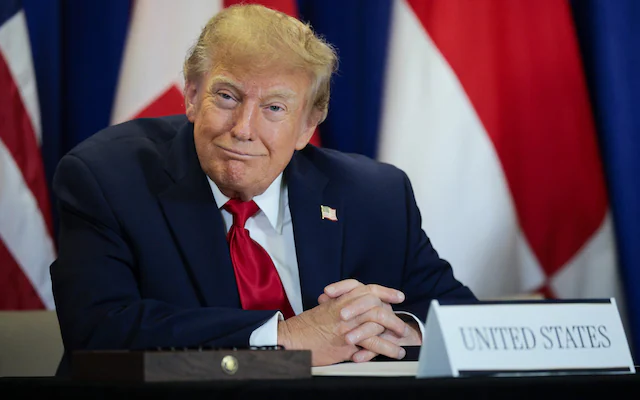
Donald Trump’s foreign policy is increasingly becoming an issue at the heart of America’s approaching midterm elections, with his decisions over Ukraine, Iran, tariffs and relations with major foreign powers raising questions about whether international affairs could cost Republicans support at the ballot box.
For some voters who backed Trump in the 2024 presidential election, the question is no longer simply whether they approve of his domestic agenda. It is whether they can continue supporting a president whose approach to international conflicts appears, in their view, to have moved sharply away from positions they once associated with the Republican Party.
That tension is particularly visible among Ukrainian Americans in Pennsylvania, where some lifelong Republican voters say they are now considering voting for Democrats because of Trump’s increasingly Russia-friendly approach to the war in Ukraine.

At a Ukrainian educational and cultural center in Jenkintown, outside Philadelphia, retired teacher Irene Skulsky described the situation in deeply personal terms. She said her son, Darko, narrowly escaped a Russian missile attack in Kyiv after several vehicles near him were struck.
For Skulsky, the experience has transformed foreign policy from an abstract Washington debate into a question of family, security and political responsibility. She urged other Ukrainian Americans to consider their position on Ukraine when voting in the 3 November midterms.
Her frustration also extended to Republican lawmakers whom she believes have been unwilling to challenge Trump. In her view, the reluctance of Republicans in Congress to publicly oppose the president has created a growing sense of political alienation among some traditional Republican voters.
The political significance of that anger may extend beyond the Ukrainian American community. Trump returned to office after promising during his 2024 campaign that he could bring the Russia-Ukraine war to an end rapidly. Instead, his administration’s relationship with Kyiv has deteriorated in recent weeks, while relations with Moscow have taken on a more prominent role.
Trump has pursued an agreement with Russian President Vladimir Putin involving the purchase of millions of tonnes of Russian diesel, despite existing US sanctions. He has also criticized Ukrainian President Volodymyr Zelenskyy and has faced accusations from Ukrainian officials that US support for Ukraine has been weakened.
The Trump administration has denied that it halted intelligence sharing with Ukraine. Nevertheless, Zelenskyy has said Ukraine did not receive advance warnings from US intelligence networks before two waves of Russian missile attacks.
For Ukrainian Americans who have historically supported Republicans because of the party’s traditional opposition to Soviet and Russian expansionism, the developments have been particularly difficult.
There are an estimated 60,000 people of Ukrainian descent in the Philadelphia metropolitan area, while Pennsylvania as a whole has a substantial Ukrainian American population. Their political influence may not be decisive by itself, but in closely contested races even relatively small shifts in voting behaviour can matter.
Peter and Orysia Hewuka, both longtime Republicans who previously supported Trump, are among those reconsidering their choices. Peter, an 88-year-old retired nuclear physicist, said he found it difficult to vote for Democrats but also felt unable to support candidates who backed Trump’s current approach to Ukraine.
His dilemma illustrates a wider political problem for Republicans: some voters may not have abandoned conservative values, but they may nevertheless be prepared to vote against Republican candidates because of the president.
That distinction could become important in November. A voter does not necessarily have to become a Democrat to punish a Republican candidate. They can simply stay home, vote for the opposing party or split their ticket.
Ukraine, however, is only one part of the broader foreign-policy challenge facing Trump and his party.
The war involving Iran and Israel is also creating political and economic difficulties. Trump entered the conflict promising a relatively short confrontation and demanding the unconditional surrender of Iran’s leadership. Yet the war has continued, while the strategic situation surrounding the Strait of Hormuz has created significant economic consequences.
The strait is a critical route for global energy supplies. Its closure following the conflict has contributed to higher international oil prices, with the effects reaching American consumers through increased petrol and diesel costs.
That matters politically because household finances remain among the most important concerns for American voters. A foreign conflict becomes much more politically consequential when voters can see its effects at the petrol station, in transportation costs and across supply chains.
Farmers and businesses that depend heavily on diesel are particularly exposed to rising energy prices. Higher fuel costs can increase the expense of moving goods and operating machinery, while manufacturers can face additional pressure from higher input costs.
Polling cited in the source material suggests that large numbers of Americans are dissatisfied with Trump’s handling of both the economy and the Iran war. If those concerns persist through election day, Republicans could face a difficult political environment.
Trump’s tariff policies add another layer to the problem.
The administration’s tariffs have increased the cost of imported goods and raw materials, including industrial commodities such as steel, copper and aluminum. Supporters argue that tariffs can strengthen American manufacturing and pressure foreign governments into changing their trade practices. Critics, however, warn that the costs are ultimately passed through supply chains and can contribute to higher consumer prices.
The political consequences have also extended to US relations with Canada.
Washington’s relationship with its northern neighbour deteriorated sharply after trade negotiations collapsed. Trump subsequently imposed tariffs on billions of dollars of Canadian imports, prompting retaliatory measures from the Canadian government.
The dispute has become particularly sensitive in Michigan, a state with deep economic connections to Canada. Republican Senate candidate Mike Rogers has publicly called for an end to the trade conflict, declaring that Canada is not America’s enemy.
That demonstrates the difficult balancing act confronting Republican candidates. Supporting Trump too closely can alienate voters worried about prices and international instability, while criticizing him too openly can risk angering his core political base.
Trump’s broader foreign-policy ambitions could create further complications after the midterms.
Following the US military action in Venezuela earlier this year and the removal of President Nicolás Maduro, Trump described his approach using the term “Donroe doctrine”, presenting an expanded vision of American influence in the Western Hemisphere.
He has also spoken enthusiastically about Venezuela’s oil resources and raised the possibility of the country becoming a US state. Such rhetoric has generated concern among observers who fear that the administration could pursue an increasingly interventionist approach elsewhere.
Cuba is another potential flashpoint. Trump has repeatedly expressed his intention to challenge the communist government that has ruled the island for decades. If the administration were to take further military or political action there after the midterms, foreign policy could become an even more dominant feature of the final years of Trump’s presidency.
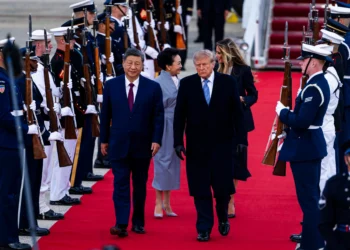
China also remains central to his international agenda. Trump has maintained a highly personal diplomatic relationship with Chinese President Xi Jinping, meeting him in Beijing and later welcoming him to Washington. Another meeting is expected during Trump’s upcoming China visit.
The president’s reliance on personal relationships with foreign leaders has become one of the defining characteristics of his foreign policy. His administration has also relied on figures such as Steve Witkoff and Jared Kushner in major diplomatic negotiations involving Ukraine, Iran and Gaza.
Supporters view Trump’s unconventional approach as a rejection of traditional diplomatic constraints. Critics argue that complicated international crises require experienced diplomats and institutional expertise rather than highly personalized negotiations.
The Ukraine issue has brought that debate back into sharp focus.
Trump’s relationship with Zelenskyy has repeatedly shifted between confrontation and cooperation. Their highly contentious White House meeting in 2025 became a defining moment in relations between Washington and Kyiv. Later, relations appeared to improve, with Trump discussing possible support for Ukraine’s domestic production of Patriot missiles.
But the latest developments have once again raised questions about whether Washington is moving closer to Moscow.
For Ukrainian Americans who once viewed Trump as preferable to his Democratic opponents, the change has been especially difficult.
Mykola Hryckowian, a Ukrainian American who previously voted for Trump three times and participated in efforts supporting his candidacy, said he could no longer vote for him. He described the latest policy changes as a breaking point.
Such reactions could matter politically because they demonstrate that foreign policy can sometimes break through traditional party loyalties.
At the same time, it would be premature to conclude that Trump’s foreign-policy decisions will automatically produce major Republican losses. Many Trump supporters continue to prioritize immigration, cultural issues, economic nationalism and opposition to Democrats over disagreements about international affairs.
The president also retains a strong political base that views his willingness to use military and economic power as evidence of strength rather than recklessness.
The midterm elections will therefore provide an important test of how Americans weigh foreign policy against domestic concerns. If voters punish Republican candidates over Ukraine, Iran, tariffs and broader international tensions, it could indicate that Trump’s foreign policy has become an electoral liability.
But if Republicans retain their support despite those controversies, Trump may interpret the result as confirmation that his approach to international affairs carries little domestic political cost.

For now, the most significant warning signs are coming from voters who have not necessarily changed their political identities but are changing their electoral choices.
The experience of Ukrainian Americans in Pennsylvania captures that uncertainty. Some remain Republicans at heart, yet say they can no longer support candidates who endorse Trump’s current approach to Ukraine.
That could ultimately be the central question of the midterms: whether voters separate their loyalty to a political party from their judgment of the president’s policies.
If enough voters decide that they can no longer do so, Trump’s foreign-policy choices could have consequences far beyond Washington’s relations with Kyiv, Tehran, Moscow or Beijing. They could reshape the balance of power in Congress and influence how much freedom Trump has to pursue his international agenda during the final two years of his presidency.
Related News:
 Trump Calls Iran War ‘Small Potatoes’ Despite US Deaths
 Lula accuses Trump of seeking control over Brazil
 Trump Ads Trigger Fight Over Taxpayer Money
 Brazil Court Scandal Threatens Lula as Bolsonaros Rise
 Millions Face Tougher Medicaid Rules From January
 Serbia Leader Linked to Controversial Trump Tower Plan
 US states redraw maps after voting rights ruling
 Trump approval plunges amid Iran war fears
 Trump Threatens UN Budget Cuts as US Pushes ‘Trade Over Aid’ Agenda
 US ‘Narco Boat’ Strikes Draw Global Outcry
 US Awaits Iran Reply on New Ceasefire Proposal
 Hormuz Talks Near Critical Stage
 Is America Ready for an AOC Presidential Run?
 Trump announces major US oil deal with Venezuela
 Trump Hardens Canada Trade Stance as Talks Stall
 Trump Pledges $5,000 if Republicans Win Midterms
 Experts Warn of Growing US Terrorism Risks 25 Years After 9/11
 Trump’s Washington Projects Face Architectural Criticism
 Trump Media Ban Triggers First Amendment Clash
 Macron and Carney deepen France-Canada ties
 US Networks Suspend Trump White House Pool Coverage
 Trump Eyes Major Belarus Fertiliser Deal Amid Canada Trade Dispute
 Xi urges Trump to avoid US-China military conflict
 Republican Senator Questions Trump Ad Spending
 Economic growth and political strain reshape Benin
 AI Deepfakes Put New Pressure on Election Trust
 Food Industry Mobilises Against the MAHA Movement
 Senators warn US childcare policies could raise costs
 Latin America women fear rollback of rights
 Tanker Attacked Near Qatar as Hormuz Tensions Escalate
 Report Urges UK to Rethink Overseas Military Spending
 Trump Says He Deserves Nobel Peace Prize
 Bolsonaro Gains Key Endorsement Ahead of Brazil Runoff
 Trump’s Russian Diesel Deal Sparks Ukraine Fury
 Trump Attacks Norway After Nobel Peace Prize Snub
 Trump Names Katie Zacharia as Next White House Spokesperson
 Ohio Airports Become Key Hubs for ICE Deportation Flights
 UK Urges Interpol to Reject Argentina’s Falklands Arrest Requests
 Judge Blocks Trump White House Media Ban
 Trump Targets Arizona and Montana Amid GOP Election Worries
 Brazil Cuts Working Week to 40 Hours in Lula Election Boost
 Trump Rallies GOP as Senate Democrats Boost Key Races
 Trump Halts New Russia Sanctions Amid Ukraine Rift
Trump Falsely Questions Ossoff’s Election Legitimacy
 Trump Fears Shock Democratic Senate Win in Kansas
 Meta Faces Election Bias Claims Ahead of Brazil Runoff
Trump’s Midterm Campaign Faces Racism and Political Backlash
 Fed Expected to Hold Rates Steady Ahead of US Midterms
 Obama Mocks Trump at Georgia Rally for Democrats
 Canada Passes Carney’s First Budget in Tight Parliamentary Vote
 Trump Fed bid heads to Supreme Court
 Thousands Protest ICE Operations in Nationwide US Day of Action
 UK Stands Firm on Falklands Amid US Rift
 Oil Prices Surge Above $120 Amid Iran Blockade Fears
 Trump orders US troop pullout from Germany
 Kevin Warsh sworn in as Fed chair amid economic backlash
 Ukraine Creates Long-Range Strike Command
 Houthis Strike Saudi Arabia as Middle East Tensions Rise
 Ukraine Villagers Demand Answers After Deadly Arms Depot Strike
 Swedish Mining Push Puts Sami Land Rights Under Pressure
 UK plans tougher Israel stance with settlement trade ban
 New Mexico Takes Facebook to Trial Over Data Scandal
 US Sanctions Open New Battle for Cuba Assets
 Democrat Says ICE Restricted Detention Camp Oversight
 Trump gives Xi red-carpet welcome as trade truce extends
 Burnham Opens Door to Possible UK Return to EU
 Badenoch Raises Prospect of 2027 UK Election
 Lula Warns of Bolsonaro Family Return as Brazil Votes
 Families Await USS Abraham Lincoln Homecoming
 US bombers leave RAF Fairford after terror threat
 Quebec separatists return to power without majority
 South Korea Probes Fuel Shipments to Russia
 Houthi Missile Claim Sparks Riyadh Airport Disruption
 Trump Rules Out Iran Attack Before US Elections
 Trump Names Katie Zachariah as Next White House Press Secretary
 India’s Voter Roll Crisis Sparks Nationwide Protests
 Lula Supporters Make Final Push Ahead of Brazil Runoff
 Xi Jinping Tightens China’s Anti-Corruption Campaign
 Flávio Bolsonaro Reportedly Leaves Brazil After Election Defeat
 Trump Again Demands Peltola Prosecution as Alaska Race Escalates