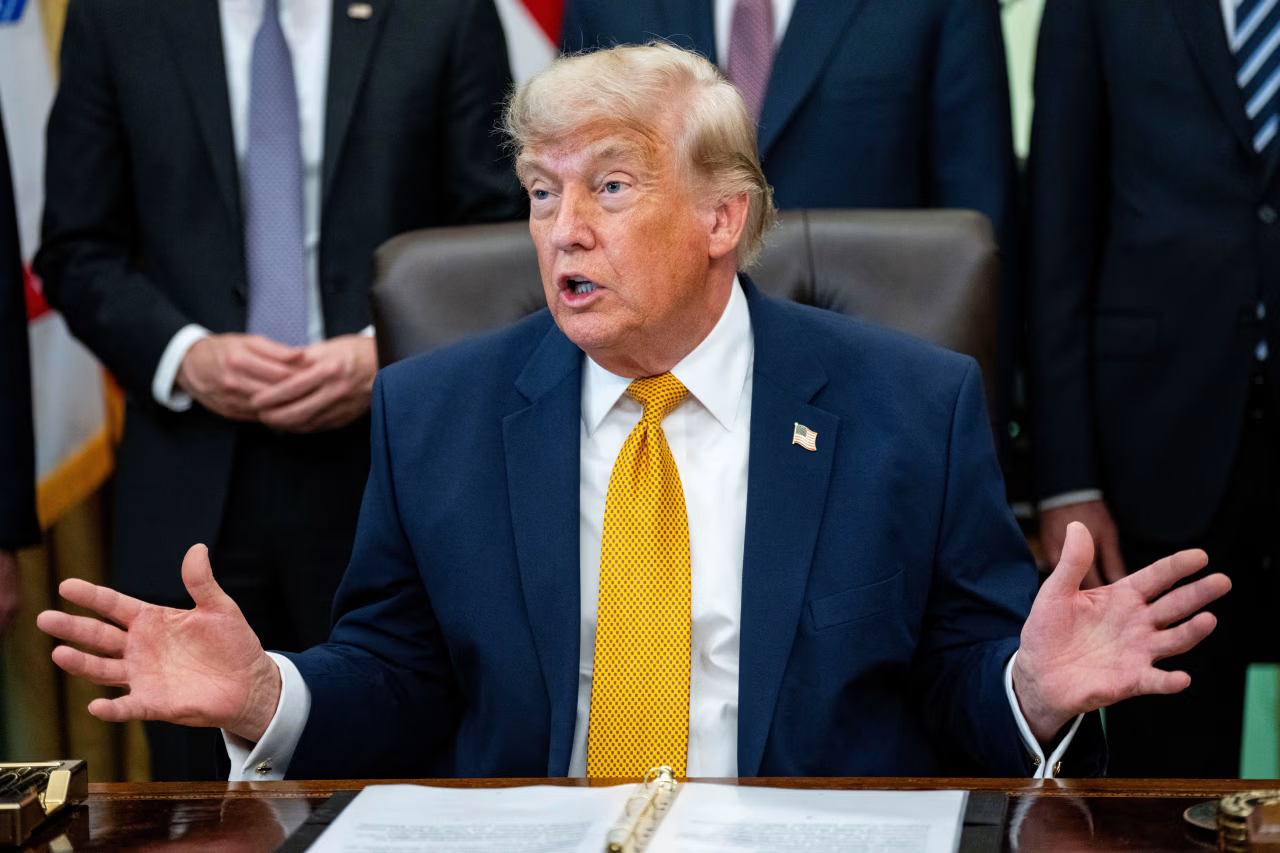
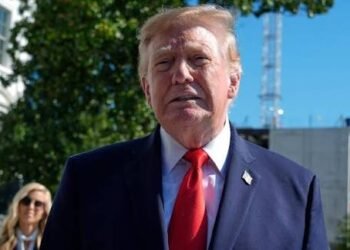
Trump appeared in Corinth on Monday to campaign for Republican Senator Cindy Hyde-Smith, presenting himself as determined to overcome the historical tendency for a president’s party to lose seats during midterm elections. His appearance, however, unfolded against a broader backdrop of political polarisation, controversy over attacks on Democratic candidates and renewed scrutiny of his public statements.
The Mississippi rally was one of several developments highlighting the increasingly confrontational atmosphere surrounding the approaching congressional elections. While Trump sought to project confidence and economic success, his critics questioned whether his message adequately addressed rising living costs, concerns about government accountability and the consequences of his administration’s policies.

The controversy has also extended beyond domestic politics. Trump challenged the legitimacy of Brazil’s recent presidential election without presenting evidence of widespread fraud, attacked former president Barack Obama over White House renovations, and continued to defend his political record amid questions about his approval ratings.
Meanwhile, civil rights advocates have condemned Islamophobic rhetoric directed at Democratic Senate candidate Abdul El-Sayed in Michigan, warning that religious identity and racial prejudice must not become instruments of electoral intimidation.
Together, these developments illustrate the competing political narratives shaping the US midterm campaign: a president determined to maintain his party’s power, an opposition seeking to capitalise on public dissatisfaction, and a country grappling with deep divisions over race, religion, the economy and democratic accountability.
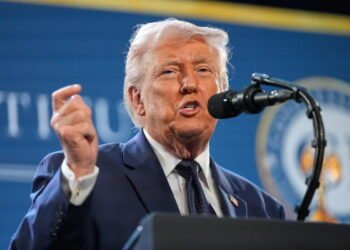
Addressing supporters at Crossroads Arena in Corinth, Trump argued that his campaign activities had changed the political dynamics surrounding the midterm elections.
“Nobody has ever campaigned like I have for midterms,” he told the crowd, insisting that his rallies had transformed the national conversation.
The president acknowledged that the party occupying the White House traditionally faces difficulties during midterm elections but maintained that his political movement could overcome that disadvantage.
Trump’s appearance was intended to strengthen support for Hyde-Smith, the Republican senator seeking to retain her seat. The rally also provided an opportunity for the president to reinforce his administration’s achievements and mobilise voters around the Republican agenda.
Midterm elections are particularly significant because all seats in the House of Representatives and approximately one-third of the Senate seats are contested. The results determine which party controls Congress and therefore has greater influence over legislation, federal spending, investigations and oversight of the executive branch.
A loss of congressional control could significantly constrain Trump’s ability to advance his domestic priorities during the remainder of his presidential term.
Historically, the president’s party has frequently lost congressional seats in midterm elections, although the scale of those losses varies. Trump’s repeated campaign appearances suggest that his administration recognises the importance of maintaining Republican enthusiasm while persuading less committed voters to remain supportive.
However, high turnout among loyal supporters does not necessarily guarantee broader electoral success. The outcome will also depend on independent voters, local concerns, candidate quality and public perceptions of the administration’s performance.
Trump’s speech also encountered a moment of confrontation when a protester interrupted his remarks about renovations to the White House.
The president had spent several minutes defending his plans for the presidential residence, including the construction of a ballroom following the demolition of the East Wing.
The renovations had become a subject of political debate after Obama joked at a public appearance that the White House was being made to resemble an extravagant restaurant.
Trump responded angrily to the criticism, arguing that the building required improvements and accusing his predecessor of failing to appreciate its condition.
As the president moved towards discussing the economy, a protester shouted an obscene objection to the ballroom project before being removed from the venue.
The interruption highlighted the extent to which Trump’s architectural plans have become part of the wider political argument about his priorities.
Supporters may view the renovations as an effort to improve and modernise an important national institution. Critics, however, have questioned the expenditure, the decision-making process and whether the project deserves so much presidential attention while Americans face economic pressures.
The disagreement has also become a vehicle for personal attacks between Trump and Obama, reflecting the intensely personalised nature of contemporary US political debate.
One of the most serious controversies surrounding the campaign concerns the rhetoric directed at Democratic candidates, particularly Abdul El-Sayed, who is running for the US Senate in Michigan.
The NAACP, a leading American civil rights organisation, condemned what it described as blatantly racist attacks associated with the Michigan Senate race.
Its president, Derrick Johnson, said the attacks were unacceptable and warned against using race to frighten voters or influence their electoral choices.
Johnson argued that such tactics were divisive and undemocratic, urging political figures and candidates to reject rhetoric that exploits racial prejudice.
The controversy has drawn attention to the challenges faced by candidates whose religious or ethnic identities become central to political attacks.
El-Sayed and other Democratic candidates have sought to make healthcare access and universal healthcare prominent elements of their campaigns. Their proposals have become part of a wider debate over the cost of medical treatment, the role of government and the responsibilities of the American healthcare system.
However, the campaign has also been overshadowed by disputes involving religion and identity, raising concerns that policy discussions are being displaced by personal attacks.
For civil rights advocates, the issue extends beyond one candidate or one election. They argue that voters should be able to evaluate candidates according to their policies and qualifications without being subjected to campaigns designed to generate fear about race, religion or cultural background.
The controversy could have broader electoral consequences if it mobilises voters who believe political discourse has become increasingly hostile or discriminatory.
During the Mississippi rally, Trump presented selected polling figures to support his claim that his political base remained firmly behind him.
He screened edited clips from CNN segments featuring the network’s chief data analyst, Harry Enten. The extracts highlighted polling suggesting exceptionally strong support for Trump among voters who identify closely with his Make America Great Again movement.
According to the material described in the live coverage, one clip showed that support for Trump among self-described MAGA Republicans remained around 98 per cent, with similarly strong intentions to support Republican congressional candidates.
However, the original September discussion also examined declining support among Republicans who did not identify as MAGA loyalists.
The omitted context was important because strong approval among a president’s most committed supporters does not necessarily indicate comparable support across the wider electorate.
Trump has repeatedly cited favourable polling figures in defending his popularity, including in a lengthy social media attack against comedian Bill Maher.
The episode highlights the importance of examining complete polling results rather than relying on selected figures. Polls measure different populations, ask different questions and can produce significantly different findings depending on the methodology and timing.
For Republicans facing competitive races, the distinction between enthusiastic supporters and the broader electorate could be especially consequential.
Trump continued to describe the United States as entering a period of prosperity, but the political debate has been complicated by concerns about inflation, fuel prices and household expenses.
Critics have linked some of the economic pressures to the administration’s tariffs and the consequences of the conflict with Iran described in the campaign coverage.
Higher prices for fuel, heating and everyday goods can affect household budgets, particularly for lower-income families and residents of colder states preparing for winter.
The economic debate was visible in Maine, where Democratic Senate candidate Troy Jackson campaigned alongside Senator Elizabeth Warren in an effort to challenge Republican incumbent Susan Collins.
Warren criticised the Republican administration and argued that economic decisions were benefiting wealthy interests at the expense of ordinary Americans.
Jackson similarly presented rising living costs as a reason voters should consider changing the political balance in Washington.
The Maine contest illustrates the potential vulnerability of established politicians when voters believe their economic circumstances are deteriorating. However, electoral outcomes will depend on a range of factors, including local political loyalties, candidates’ reputations and voters’ assessments of alternative policies.
Republicans, meanwhile, face the challenge of demonstrating that their economic programme can deliver tangible improvements before voters head to the polls.
The campaign has also unfolded alongside several high-profile legal disputes involving the Trump administration.
The Justice Department announced charges against former FBI director James Comey, accusing him of two offences related to the alleged disclosure of national defence information.
The allegations concern events dating back to 2016. Comey’s lawyers have disputed the charges and argued that the case should be dismissed, raising questions about the applicable statute of limitations and the procedure used to initiate the prosecution.
The allegations remain subject to the legal process, and the charges should not be treated as proof of guilt.
The case has attracted attention because Comey has long been a prominent target of Trump’s political criticism. It has also intensified debate over the independence of federal law enforcement and the potential for criminal proceedings to become entangled with political rivalries.
In another legal development, a US appeals court rejected the administration’s attempt to block California from counting mail ballots cast by registered voters whom the federal government alleges may be noncitizens.
The ruling was divided, with two judges rejecting the administration’s request and one dissenting. The dispute highlights continuing disagreements over election administration, voter eligibility and the limits of federal intervention in state election procedures.
Such cases are particularly sensitive in the run-up to national elections because public confidence depends on transparent procedures, credible evidence and respect for judicial decisions.
Trump’s political rhetoric has also extended to Latin America.
Speaking to reporters before travelling to Mississippi, the president questioned the legitimacy of Brazilian President Luiz Inácio Lula da Silva’s reported electoral victory over his far-right rival, Flávio Bolsonaro.
Trump suggested that the result looked like a rigged election, but the supplied report did not present evidence supporting his allegation.
The dispute centred partly on an extension of voting hours after reports that public transportation disruptions had affected some voters’ ability to reach polling stations.
According to the coverage, Brazil’s electoral authorities extended voting hours by two hours following requests from both candidates. The president of Brazil’s electoral court said the extension had not changed the election result.
Trump criticised the decision, arguing that the process looked suspicious, while also stating that he was responsible for governing the United States rather than Brazil.
His comments reflect the continuing international reach of American domestic political disputes, particularly concerning election integrity.
However, allegations of electoral misconduct require evidence and should be assessed through the relevant country’s electoral institutions and legal procedures rather than through political speculation.
The developments surrounding Trump’s Mississippi rally illustrate the increasingly complicated environment facing American voters.
Republicans are attempting to maintain congressional control while defending the president’s record on the economy, national security and governance. Democrats are seeking to turn concerns about living costs, political conduct and civil rights into electoral gains.

At the same time, disputes over racial and religious rhetoric, criminal prosecutions, voting procedures and presidential conduct have intensified questions about political accountability.
For voters, the consequences of the midterm elections will extend well beyond individual Senate or House races. The results will influence the direction of federal legislation, the scope of congressional oversight and the balance of power in Washington.
Trump’s determination to campaign aggressively demonstrates that the administration recognises the stakes. Yet the strength of his most loyal supporters will not, by itself, settle the outcome.
The decisive question will be whether his message resonates with a broader electorate concerned about economic security, democratic institutions and the tone of national political life.
As the campaign continues, the competing demands of party loyalty, public accountability and civil rights are likely to remain central to the debate over America’s political future.
Related News:
 Latin America women fear rollback of rights
 Democrat Says ICE Restricted Detention Camp Oversight
 ICE Agent Shoots Man in New York as Child Escapes Harm
 Trump Attacks Norway After Nobel Peace Prize Snub
 Ohio Airports Become Key Hubs for ICE Deportation Flights
 Serbia’s Student Victory Sparks a ‘Smell of Freedom’
 Cartel crackdown raises fears of fresh violence
 US states redraw maps after voting rights ruling
 US ‘Narco Boat’ Strikes Draw Global Outcry
 Immigration Judges Fear Pressure in Trump Era
 Trump’s Revenge Drive Deepens GOP Divide
 Gunman Killed After White House Security Shootout
 Is America Ready for an AOC Presidential Run?
 Armed Suspect Attacks Ohio Governor Candidate
 Patriot Platform Raises Concern Across Britain
 Israel Accused of Undermining Palestinian Life
 Texas Charges Seven Noncitizens in Voting Crackdown
 Iran School Strike Raises War Crimes Questions, UN Says
 Texas Transfers Raise Fears for Migrant Children
 Memphis Questions National Guard Crime Surge
 Trump Media Ban Triggers First Amendment Clash
 US Networks Suspend Trump White House Pool Coverage
 King Refers Jamaica Slavery Petition to Privy Council
 Republican Senator Questions Trump Ad Spending
 Cornell Fraternity Assault Investigation Reopened
 French Student Protests Escalate Into Violent Clashes
 Trump Ads Trigger Fight Over Taxpayer Money
 Drumcree Talks Falter as Legal Challenge Deepens
 UK-France Returns Deal Faces Expiry as Talks Stall
 Hundreds of UK prisoners released early amid overcrowding
 Drumcree Talks End Without Agreement Ahead of Appeal
 French School Protests Escalate as 400 Schools Close
 New Prosecutor Takes Over Cornell Assault Case
 Christa Pike Wakes After Failed Tennessee Execution
 Botstein Quits Bard Amid Epstein Investigation Calls
 NSW Police Bid Delays Inquiry Into Sydney Protest
 Trump Says He Deserves Nobel Peace Prize
 Bolsonaro Gains Key Endorsement Ahead of Brazil Runoff
 Navi Pillay Wins Nobel Peace Prize for Justice
 US Execution Livestream Plan Sparks Global Outrage
 UAE Says Co-Pilot Planned Suicide Attack on Israel
 Controversial Vaccine Trial Approved in Guinea-Bissau
 Delhi Braces for Youth Protests Over Voter Roll Dispute
 Trump Names Katie Zacharia as Next White House Spokesperson
 Ten US Midterm Races That Could Defy Expectations
 Brazil Court Scandal Threatens Lula as Bolsonaros Rise
 Millions Face Tougher Medicaid Rules From January
 England and Wales Begin Second Wave of Early Prison Releases
 Farage Rejects Claims Reform Would Let Troops Shoot Migrants
 Judge Blocks Trump White House Media Ban
 Camera Discovery Triggers Navy Ship Investigation
 Brazil Cuts Working Week to 40 Hours in Lula Election Boost
 Gadi Eisenkot: Israel’s Anti-Netanyahu Challenger
 Talarico Faces Tough Voter Test in Texas Senate Race
 Serbia Leader Linked to Controversial Trump Tower Plan
 French Police Face Scrutiny Over Injured Teenagers
 Trump Administration Threatens California Election Officials
 Macron Condemns Violence as France Faces 2,400 Arrests
 Marseille Activist Defies France’s Powerful Drug Gangs
 Obama Warns Against Threat to Ilhan Omar’s Citizenship
 Zelenskyy Accuses US of Delaying Ukraine Missile Supplies
 Helen Haines Loses Both Legs After Alleged Attack
 Omar Claims US Raid on Residence Was Meant to Intimidate
 US Midterms Could Reshape Trump’s Second Term
 Ben Roberts-Smith Denies War Crime Allegations in First Statement
 Barrister Criticises Trial After Suicide Case Verdict
 New Footage Revives Peter Falconio Mystery
 Ukraine Villagers Demand Answers After Deadly Arms Depot Strike
 Trump Calls Iran War ‘Small Potatoes’ Despite US Deaths
 Man Arrested in Mississippi Woman’s Death
 London Facial Recognition Trial Ends With False Alert
 Badenoch Raises Prospect of 2027 UK Election
 Gosport Protesters Clash With Police Over Migrant Rescue
 South Africa Withdraws Directive on Asylum Applications
 Trump Names Katie Zachariah as Next White House Press Secretary
 Elizabeth Struhs Inquest Examines Child Safety Failures
 India’s Voter Roll Crisis Sparks Nationwide Protests
 UK Bill Faces Warning Over Fayed Trafficking Victims
 Greens Face Leadership Test as Jordon Steele-John Misconduct Claims Leave Party in Limbo
 Lula Supporters Make Final Push Ahead of Brazil Runoff