


Published: 14 October 2026. The English Chronicle Desk. The English Chronicle Online
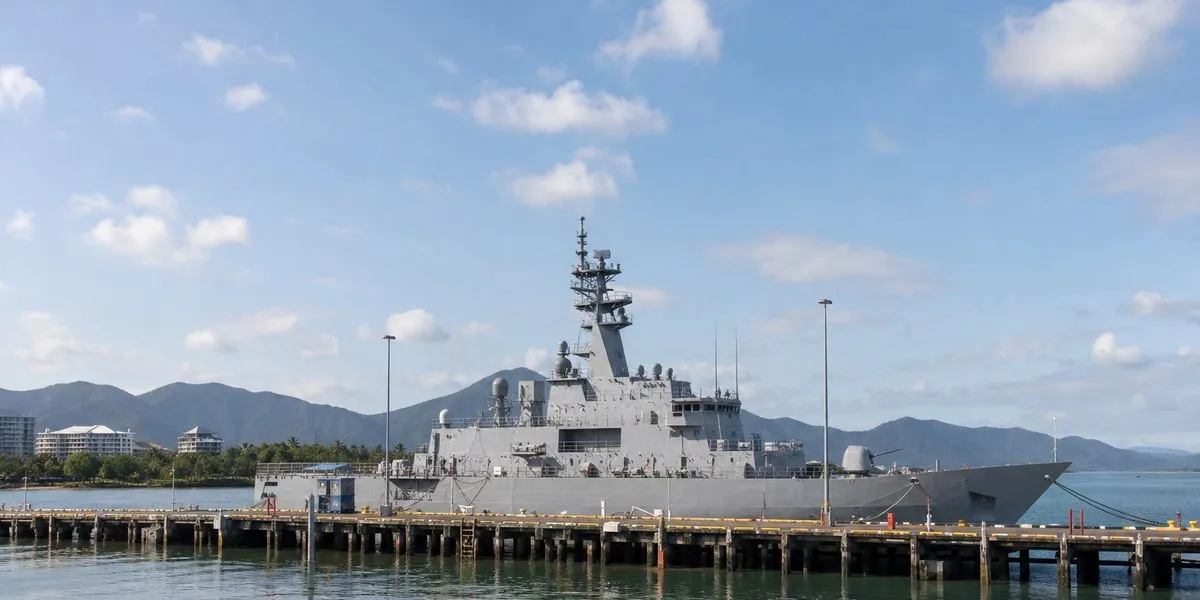
Australian defence authorities have launched an investigation after a video recording device was discovered aboard a Royal Australian Navy vessel in Cairns, raising serious concerns about privacy, the welfare of female sailors and the possibility of unauthorised surveillance within military facilities.
The device was found aboard HMAS Leeuwin on 11 October while the vessel was alongside in Cairns, Queensland, according to a statement from the Australian Department of Defence. The announcement came hours after independent senator Jacqui Lambie raised allegations in parliament that a concealed camera had been discovered in a women’s shower facility on the ship.
The Defence Department confirmed that a video recording device had been located in a cabin aboard the vessel but did not publicly confirm the precise location described in Lambie’s parliamentary statement. Authorities referred the incident to the Joint Military Police Unit, and civilian authorities are also assisting with the investigation.

The department said it was treating the matter extremely seriously and would not tolerate unacceptable behaviour. It also confirmed that HMAS Leeuwin had remained in port to allow investigators to examine the circumstances and provide immediate support to affected crew members.
The discovery has prompted questions about how the device came to be aboard the vessel, whether anyone was recorded without their knowledge or consent, and whether any material obtained through the device may have been distributed.
Lambie, a former Australian Defence Force member who has campaigned on issues affecting military personnel, brought the allegations to the Senate after being contacted by a former member of the navy. She told parliament that she had received information alleging that concealed cameras had recently been found in female sailors’ shower facilities aboard HMAS Leeuwin.
The senator also said she had been told that the discovery had prevented the vessel from sailing while investigations were under way. However, the full circumstances surrounding the ship’s continued presence in port have not been independently established, and investigators have yet to publicly confirm all the details contained in the allegations.
More troubling were claims relayed to Lambie that footage captured by the devices might have been uploaded online before the cameras were discovered. The senator raised questions about how many sailors might have been affected and whether any recordings had been retained, distributed or published without their consent.
Those claims have not been confirmed by the Defence Department. Officials have declined to provide further details while the investigation continues, citing the need to protect the privacy of the people involved.
The distinction between confirmed information and allegations remains important. The department has acknowledged that a recording device was found aboard HMAS Leeuwin and that an investigation is under way. It has not publicly established who placed the device, whether it was used to record anyone, or whether any footage was shared online.
The investigation is expected to examine the circumstances of the discovery and determine whether any laws, military regulations or workplace rules were breached. Authorities may also need to establish whether the device was installed by a member of the defence force, a contractor or another person with access to the ship.
The questions raised by Lambie extend beyond the immediate incident. She challenged defence officials to establish whether similar devices could have been placed aboard other naval vessels or in other military facilities, including submarines. She also questioned whether appropriate checks had been conducted to identify any additional surveillance equipment.
Her concerns reflect the particular vulnerability of personnel using private facilities in a military environment. Female sailors, like all service members, should be able to use showers and changing areas without fearing that their privacy may be compromised by concealed recording equipment.
If footage was captured or circulated without consent, the consequences could extend well beyond the original discovery. Affected personnel could face distress, humiliation and a loss of confidence in the institutions responsible for their safety. The possibility that intimate recordings may have reached online platforms, if substantiated, would raise additional concerns about the preservation of evidence, the identification of victims and the prevention of further distribution.
At the same time, investigators will need to establish the facts before reaching conclusions about the extent of any wrongdoing. Public allegations can help bring potential misconduct to light, but identifying those responsible and determining whether recordings exist will require evidence gathered through a formal investigation.
The Defence Department said the welfare of individuals remained its priority and that support was continuing. It declined to answer specific questions about whether a suspect had been identified, whether other naval facilities were being checked or whether investigators had discovered evidence of online distribution.
That limited response drew criticism from Lambie, who said she was dissatisfied with the department’s handling of the matter. Speaking to journalists after raising the issue in parliament, she argued that defence personnel had become increasingly willing to bring concerns to her because they wanted the organisation to take alleged misconduct seriously.
She called on Defence to establish whether similar incidents might have occurred elsewhere and to ensure that other vessels and facilities were properly examined. She also highlighted uncertainty over who might have been responsible, questioning whether access by contractors or members of the defence force could be relevant to the investigation.
Determining who had access to the vessel and its facilities may be a key part of establishing how the recording device was placed there. Naval ships can involve a range of personnel, including serving members, maintenance workers and authorised contractors. Investigators will need to examine relevant access arrangements and any available evidence without prematurely attributing responsibility.
The case also raises broader questions about safeguarding and accountability within the armed forces. Military personnel work in environments where discipline, trust and cooperation are essential. Allegations of covert recording in private facilities can undermine that trust, particularly if service members believe that their concerns will not be handled promptly or transparently.
For the Australian Defence Force, the response will involve more than identifying the origin of one device. Authorities may need to establish whether existing procedures for inspecting facilities, reporting suspected surveillance and protecting personnel are adequate. They will also need to ensure that anyone affected can access appropriate support while investigators preserve evidence and protect privacy.
The possibility of a wider problem has not been established, and there is currently no public confirmation that similar devices have been discovered on other vessels. Nevertheless, Lambie’s call for further checks has placed pressure on defence authorities to explain what safeguards are in place and whether additional inspections are warranted.
The decision to keep HMAS Leeuwin alongside while the investigation proceeds underlines the seriousness with which the matter is being handled. Keeping the vessel in port allows authorities to conduct inquiries and address crew welfare concerns, although the department has not disclosed how long the investigation is expected to take.

The case now presents defence officials with two immediate responsibilities: establishing what happened aboard HMAS Leeuwin and reassuring personnel that their privacy and safety are being protected. That requires a thorough investigation, appropriate support for anyone affected and careful communication that does not compromise the inquiry or expose individuals to further harm.
Until investigators establish the facts, major questions remain unanswered. It is not yet publicly known who placed the device, whether any sailors were recorded, whether material was distributed online or whether similar incidents have occurred elsewhere.
What is clear is that the discovery has prompted a serious investigation and renewed scrutiny of safeguards within Australia’s naval environment. The outcome will be important not only for determining individual responsibility but also for maintaining confidence that personnel serving in the armed forces can expect privacy, dignity and protection in their workplace.
Related News:
 NSW Police Bid Delays Inquiry Into Sydney Protest
 Patriot Platform Raises Concern Across Britain
 Democrat Says ICE Restricted Detention Camp Oversight
 Hundreds of UK prisoners released early amid overcrowding
 Drumcree Talks End Without Agreement Ahead of Appeal
 Latin America women fear rollback of rights
 Sam Wood Denied Bail Over Alleged Domestic Assault
 ICE Agent Shoots Man in New York as Child Escapes Harm
 Baby Boy Found Dead at Adelaide Motel: Two Charged
 Elizabeth Struhs Inquest Examines Child Safety Failures
 England and Wales Begin Second Wave of Early Prison Releases
 Undercover officer deceived women with ‘grotesque and cruel’ lies, spycops inquiry told
 Police Suspect Help in Missing Alice Springs Girl Case
 Cartel crackdown raises fears of fresh violence
 Barrister Criticises Trial After Suicide Case Verdict
 Immigration Judges Fear Pressure in Trump Era
 Murder Probe Continues After Arrest Release
 Westminster Council Threatens Charing Cross Soup Kitchen
 BBC Warned About Missing Clothes of Murder Victim
 Cambridge Professor Jason Arday Found Dead at Home
 Armed Suspect Attacks Ohio Governor Candidate
 Ministers Condemn Far-Right Unrest in Portsmouth
 Councils spend £125m on illegal children’s care
 Reform UK Receives Record £36m Donation From Crypto Billionaire
 Israel Accused of Undermining Palestinian Life
 Election Candidate Abuse Raises Alarm in England
 Fugitive Developer Rants at NSW Corruption Inquiry
 Piddington Votes for Symbolic Independence Over Asylum Plan
 Texas Charges Seven Noncitizens in Voting Crackdown
 Iran School Strike Raises War Crimes Questions, UN Says
 Texas Transfers Raise Fears for Migrant Children
 Memphis Questions National Guard Crime Surge
 Mahmood Warns Far Right Over Asylum Protests
 UK Reviews Hague Child Abduction Cases Involving Abuse
 King Refers Jamaica Slavery Petition to Privy Council
 Judge orders Trump to restore access for three media outlets
 Far-Right Activist Arrested After Channel Dinghy Incident
 Portadown protest ends after tense Orange Order standoff
 Free Speech Emerges as Key UK Election Issue
 Cornell Fraternity Assault Investigation Reopened
 Fayed Survivors Demand Inquiry Into Medical Regulator
 London Facial Recognition Trial Ends With False Alert
 French Student Protests Escalate Into Violent Clashes
 Drumcree Talks Falter as Legal Challenge Deepens
 UK-France Returns Deal Faces Expiry as Talks Stall
 Almost Half of Fayed Accusers May Be Trafficking Victims
 Badenoch Raises Prospect of 2027 UK Election
 French School Protests Escalate as 400 Schools Close
 New Prosecutor Takes Over Cornell Assault Case
 Flydubai Co-Pilot Studied in Australia Before Attack
 Gosport Protesters Clash With Police Over Migrant Rescue
 Detective Breaks Down Recalling Double Murder Scene
 Christa Pike Wakes After Failed Tennessee Execution
 Botstein Quits Bard Amid Epstein Investigation Calls
 Royal Navy Sailor Charged With Alleged Spying
 Luton Residents Reject Claims of ‘No-Go Zones’
 Sri Lanka Ex-First Lady Arrested Over Donation Probe
 South Africa Withdraws Directive on Asylum Applications
 Delhi Tightens Security Ahead of Election Protest
 Navi Pillay Wins Nobel Peace Prize for Justice
 US Execution Livestream Plan Sparks Global Outrage
 Three Convicted in Mexico Surfing Trip Murders
 UAE Says Co-Pilot Planned Suicide Attack on Israel
 Controversial Vaccine Trial Approved in Guinea-Bissau
 Trump Attacks Norway After Nobel Peace Prize Snub
 Delhi Braces for Youth Protests Over Voter Roll Dispute
 Recruitment Boss Accused of Leading Doxxing Campaign
 British Military School Abuse Victims Denied Justice
 Former Students Raise Concerns Over School Culture
 Ohio Airports Become Key Hubs for ICE Deportation Flights
 Farage Rejects Claims Reform Would Let Troops Shoot Migrants
 French Taxi Driver Cleared in David Lammy Theft Case After Fare Dispute
 Ben Roberts-Smith Denies War Crime Allegations in First Statement
 New Footage Revives Peter Falconio Mystery
 Man Arrested in Mississippi Woman’s Death
 Republican Senator Questions Trump Ad Spending
 UK University Strikes Spread as Financial Pressure Grows
 Palace Rejects Funding Andrew’s Police Legal Challenge
 Australian Advocates Seek Subsidised Drugs for PMOS
 India’s Voter Roll Crisis Sparks Nationwide Protests








