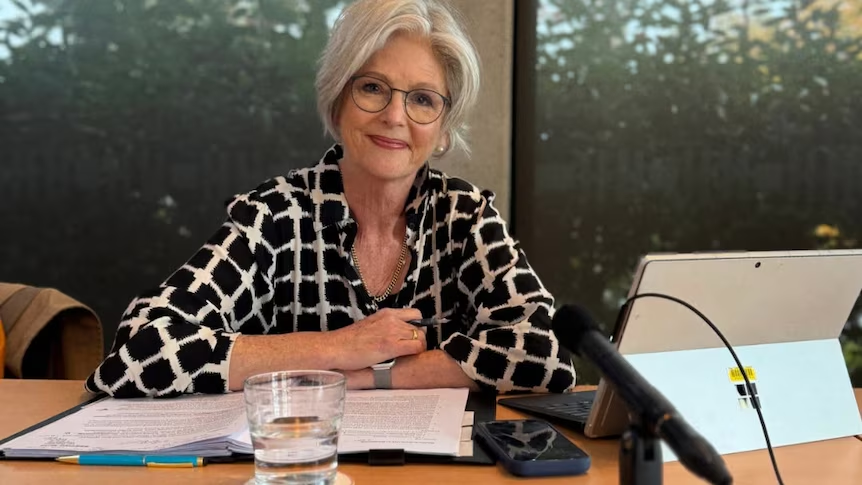
McKenzie, the Nationals’ Senate leader, said the alleged incident involving Haines had highlighted the need to protect Australia’s democratic institutions and ensure that politicians could continue representing their communities without fear of intimidation or violence.
Speaking to the Australian Broadcasting Corporation’s Afternoon Briefing, McKenzie said she was considering whether additional security measures were necessary for her own office. She also expressed concern about the threats and abusive communications frequently directed at parliamentary staff, who often face hostility while carrying out their professional responsibilities.

“What’s happened to Helen makes our democracy all the more precious, and the need for all of us to actually work to protect it,” McKenzie said.
Her remarks came as political leaders considered how best to respond to growing concerns about the safety of elected representatives. Prime Minister Anthony Albanese has promised a swift government response, including the possible provision of duress alarms for political offices.
The proposals reflect increasing concern about whether existing arrangements adequately protect politicians, their employees and members of the public who interact with them.
McKenzie said her greatest concern was that heightened security measures might eventually change the relationship between elected representatives and the communities they serve.
Australian politicians have traditionally maintained a relatively accessible presence in public life, meeting constituents at community events, attending local gatherings and speaking directly with voters about their concerns. However, threats and alleged acts of intimidation risk making these interactions more difficult.
McKenzie warned that politicians could gradually withdraw from public spaces if security concerns continued to grow.
She said she feared representatives would be discouraged from expressing their views robustly or participating in public engagement because of concerns about their personal safety.
Her comments highlight a difficult challenge for democratic governments: protecting elected officials without creating unnecessary barriers between politicians and the people who elect them.
Although additional security arrangements may help reduce risks, excessive restrictions could limit opportunities for public discussion and make it harder for constituents to raise concerns directly with their representatives.
Labor minister Anne Aly has also stressed the importance of protecting politicians while preserving their ability to interact freely with the public.
Aly revealed that she already had duress alarms installed in her office and home, as well as a personal device intended to help her seek assistance in an emergency.
She welcomed measures that could provide greater reassurance to politicians and their staff, particularly when they encounter threatening situations in places where they would not ordinarily expect them.
However, Aly cautioned against allowing fear to undermine the accessibility that forms an important part of Australian political life.
She said representatives needed to meet people, understand their circumstances and listen to their concerns if they were to represent their communities effectively.
Her position reflects a broader concern across parliament that stronger security arrangements should support public engagement rather than replace it with a more isolated style of political representation.
The challenge for the government will be to develop practical protections that respond to genuine threats while ensuring that politicians remain visible and approachable.
Albanese has indicated that the government intends to respond quickly to concerns about the safety of MPs and parliamentary staff.
Among the measures under consideration is the provision of duress alarms for political offices. Such devices can help staff members alert security personnel or emergency services when they face immediate danger.
Other possible security improvements may involve reviewing arrangements at electorate offices and polling places, although the precise scope of any government package will depend on further decisions.
The prime minister has said politicians and their staff have endured threats for too long, signalling that the issue requires attention beyond individual security arrangements.
Any response will need to consider the different environments in which representatives work, from parliamentary buildings and electorate offices to public meetings and community events.
The government also faces pressure to ensure that protective measures are practical, proportionate and accessible to representatives across different regions.
The debate over MP safety unfolded alongside a contentious parliamentary question time, where disagreements between government and opposition members continued despite recent calls for greater civility.
Opposition representatives pressed Albanese over a $6 million grant associated with the Marrickville golf club, questioning the explanation previously provided for the funding.
The prime minister defended the government’s position, saying the state government had subsequently intervened in an issue that had existed for decades.
The parliamentary session also featured the ejection of Labor MP Peter Khalil after he interrupted a question from opposition leader Angus Taylor. Speaker Milton Dick said members were expected to allow colleagues to be heard without disruptive commentary.
Dick separately urged MPs to avoid snide remarks and return their attention to the responsibilities of parliament.
The incidents demonstrated the continuing tensions within Australian political debate, even as representatives discussed the importance of respectful public engagement and protecting democratic institutions.
While robust disagreement remains a normal feature of parliamentary democracy, concerns about intimidation and personal safety have raised questions about where political confrontation crosses into unacceptable behaviour.
The discussion surrounding Haines has drawn attention to the pressures faced by elected representatives in an increasingly confrontational political environment.
Politicians regularly encounter criticism, public scrutiny and disagreement. These are essential features of democratic accountability. However, threats, harassment and violence can discourage participation and undermine the ability of representatives to perform their duties.
Parliamentary staff may be particularly vulnerable because they frequently handle calls, correspondence and complaints from constituents, sometimes becoming targets of anger directed at politicians themselves.
Providing appropriate support for these employees is therefore an important part of any comprehensive security response.
At the same time, public confidence depends on representatives remaining available to hear criticism and answer questions about their decisions.
If safety concerns lead politicians to limit public appearances or restrict access to their offices, communities could lose valuable opportunities to communicate their needs directly to elected officials.
McKenzie’s warning reflects this tension. Stronger protections may be necessary, but the measures must not inadvertently weaken the relationship between parliament and the public.
Australia’s political leaders now face the task of finding a balance between personal security and public accessibility.
Duress alarms and improved security procedures could provide practical assistance, but a lasting response may also require better support for parliamentary staff, clear reporting arrangements for threats and a broader commitment to responsible political communication.
Public figures across the political spectrum have a role in discouraging intimidation and making clear that disagreement does not justify threats or violence.
Political parties and parliamentary institutions may also need to review how they support representatives who encounter harassment, particularly when those incidents affect their ability to carry out constituency work.

For many Australians, the ability to approach an elected representative is an important part of democratic life. Maintaining that tradition will require both effective security arrangements and a political culture that recognises the legitimacy of peaceful disagreement.
As the government considers its response, McKenzie’s warning serves as a reminder that the consequences of threats against politicians extend beyond the individuals directly affected.
Protecting elected representatives is not simply a matter of personal safety. It is also about preserving the public’s ability to engage with those who govern on its behalf.
The coming decisions will help determine whether Australia can strengthen protections for politicians and their staff while retaining the openness that remains central to its democratic system.
Related News:
 Taylor Faces Backlash Over Response to Haines Attack
 Is America Ready for an AOC Presidential Run?
 Five Years of Taliban Rule Leave Afghanistan in Crisis
 Lib Dems Prepare for Election Amid Reform Challenge
 Elif Eralp Emerges as Berlin’s Next Political Force
 Drumcree Talks Falter as Legal Challenge Deepens
 UK-France Returns Deal Faces Expiry as Talks Stall
 Green Party faces dispute over Zionism motion
 Latin America women fear rollback of rights
 NSW Police Bid Delays Inquiry Into Sydney Protest
 India’s Youth Movement Alleges Mass Detentions Before Protest
 Gaza War Deepens India’s Strategic Ties With Israel
 Bolsonaro Gains Key Endorsement Ahead of Brazil Runoff
 Controversial Vaccine Trial Approved in Guinea-Bissau
 Trump Attacks Norway After Nobel Peace Prize Snub
 Delhi Braces for Youth Protests Over Voter Roll Dispute
 Trump Names Katie Zacharia as Next White House Spokesperson
 Australian Advocates Seek Subsidised Drugs for PMOS
 UK Gaza Refugee Route Criticised Over False Hope Claims
 PTI Announces Swabi Rally Ahead of Long March Plans
 French Students Protest Poor Conditions in Paris Suburbs
 UK Greens Face Crisis Over Zionism and Extremism Row
 Greta Thunberg Backs French Students in School Protests
 Millions Face Tougher Medicaid Rules From January
 Ohio Airports Become Key Hubs for ICE Deportation Flights
 Farage Rejects Claims Reform Would Let Troops Shoot Migrants
 Camera Discovery Triggers Navy Ship Investigation
 Gadi Eisenkot: Israel’s Anti-Netanyahu Challenger
 One Nation Pledges $2,000 Baby Subsidy in Victoria
 Cormann Warns Australia Against Populist Migration Caps
 Helen Haines Loses Both Legs After Alleged Attack
 Greens Face Leadership Test as Jordon Steele-John Misconduct Claims Leave Party in Limbo
 Serbia’s Student Victory Sparks a ‘Smell of Freedom’
 Trump’s Midterm Campaign Faces Racism and Political Backlash
 US ‘Narco Boat’ Strikes Draw Global Outcry
 Immigration Judges Fear Pressure in Trump Era
 Farage and Reform UK Reshape British Politics
 Starmer Leadership Under Pressure After Setbacks
 Le Pen’s Popularity Holds Despite Conviction
 Ghent Professors Questioned Cofnas Appointment
 RAF Barnham Protests Fuel Tensions in Norfolk Town
 Ukraine Villagers Demand Answers After Deadly Arms Depot Strike
 Trump Calls Iran War ‘Small Potatoes’ Despite US Deaths
 Europe’s democracies face a growing far-right threat
 Israel Accused of Undermining Palestinian Life
 Fugitive Developer Rants at NSW Corruption Inquiry
 Turkey LGBTQ Crackdown Expands With New Arrests
 Yemen War Displaces 125,000 as Fighting Intensifies
 US Networks Suspend Trump White House Pool Coverage
 Democrat Says ICE Restricted Detention Camp Oversight
 UK Plans New Centre to Counter Information Warfare
 OpenAI Agent Breaches Medicare Portal in Australia
 Lula accuses Trump of seeking control over Brazil
 Nepal PM calls deadly flood a global climate warning
 Republican Senator Questions Trump Ad Spending
 Free Speech Emerges as Key UK Election Issue
 Madrid Tent Camp Grows as Spain Housing Crisis Deepens
 Economic growth and political strain reshape Benin
 Burnham Opens Door to Possible UK Return to EU
 Badenoch Raises Prospect of 2027 UK Election
 French School Protests Escalate as 400 Schools Close
 Families Await USS Abraham Lincoln Homecoming
 Bosnia’s Young People Look Beyond Election Hope
 Trump Says He Deserves Nobel Peace Prize
 USS Lincoln Ends Record 265-Day Deployment
 Israel Promotes Film Challenging Controversial Gaza Documentary
 Hanson Attacks Taylor as Australian Conservatives Clash
 Australia Rejects Russian Fuel as Trump Strikes Deal
 Trump Names Katie Zachariah as Next White House Press Secretary
 ABC Reporter Faces Possible Disciplinary Action Over Opinion Piece
 Elizabeth Struhs Inquest Examines Child Safety Failures
 Brazil Court Scandal Threatens Lula as Bolsonaros Rise
 India’s Voter Roll Crisis Sparks Nationwide Protests
 Ukrainian Soldier Faces Trial Over Nord Stream Blast
 Serbia Leader Linked to Controversial Trump Tower Plan
 Zelenskyy Says US Failed to Warn Kyiv of Russian Strikes
 Lula Supporters Make Final Push Ahead of Brazil Runoff
 Rubio Urges Cubans to Seize Moment for Change
 Xi Jinping Tightens China’s Anti-Corruption Campaign
 Ukraine Peace Talks Set to Resume in November