


Published: 16 October 2026. The English Chronicle Desk. The English Chronicle Online
One Nation has proposed a $2,000 subsidy for new parents in Victoria, putting maternity support at the centre of its election campaign while explicitly declaring that it will not seek changes to the state’s abortion laws. The proposal comes just one day after both Labor and the Liberal-led Coalition announced plans to remove out-of-pocket costs associated with abortion care, making reproductive healthcare a prominent issue ahead of Victoria’s November state election.
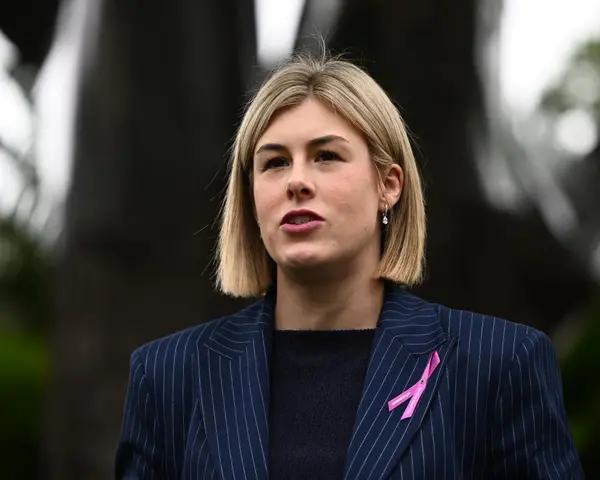
The One Nation proposal was announced on Friday by the party’s Victorian deputy leader, Colleen Harkin. It includes measures intended to reduce the financial burden associated with childbirth in the public healthcare system and provide direct assistance to families using private maternity services. Harkin said the package would include measures to remove out-of-pocket expenses for pregnant women accessing the public system, alongside a $2,000 subsidy for parents who use private maternity care.
According to Harkin, the proposed package would cost approximately $136 million over four years. However, she acknowledged that the figure remained an estimate and could change depending on the number of babies born in Victoria during the period. She described the figure as a “ballpark” calculation, highlighting that the party did not have access to all of the detailed information needed to produce a definitive costing.

The admission immediately placed questions around the financial credibility of the proposal alongside its political significance. Harkin defended the approach by saying One Nation was not attempting to present overly precise figures without access to the necessary government data. The party instead framed the proposal around providing practical financial support to families at a time when the cost of pregnancy, childbirth and raising children has become a significant concern for many households.
The announcement also carried particular political weight because of One Nation’s position on abortion. Harkin said the Victorian branch would not seek to alter the state’s existing abortion laws, despite the federal party’s broader platform supporting efforts to reverse what it regards as overly permissive abortion legislation.
Harkin insisted that abortion was not part of One Nation’s state election agenda. She said the party had no state abortion policy and argued that the issue was not its focus in Victoria. She also accused Labor of attempting to frighten voters by linking One Nation to potential changes to abortion access.
Her comments came amid an increasingly heated debate over reproductive healthcare. Labor announced on Thursday that, if returned to government in November, it would eliminate out-of-pocket costs for abortion care across Victoria. The policy would involve public funding for private providers delivering medical and surgical abortions up to 16 weeks of pregnancy.
Under Labor’s proposal, women would no longer have to bear costs associated with consultations with general practitioners and specialists, medical scans, diagnostic tests or medication. Those expenses can accumulate to around $1,000 in some circumstances, creating an additional financial barrier for women seeking care.
Labor has also proposed financial assistance for women in regional parts of Victoria who must travel significant distances to access abortion services. The government would further extend access to medical abortion from nine weeks to 10 weeks of pregnancy, while commissioning a clinical review to assess whether medical abortion could safely be made available up to 12 weeks.
The announcement was rapidly matched by the Liberal-led Coalition. Opposition leader Jess Wilson said the Liberals and Nationals would also commit to covering out-of-pocket abortion costs and providing assistance with travel expenses. The Coalition argued that Labor should not be allowed to use the issue as a political advantage during the election campaign.
The matching commitments from the two major political blocs have created an unusual situation in Victorian politics. If either Labor or the Coalition wins government, Victoria is expected to become the first Australian state to provide abortion care without out-of-pocket costs under the proposed arrangements.
For women who have faced financial barriers to reproductive healthcare, the bipartisan commitment has been welcomed by health advocates. Sally Hasler, chief executive of Women’s Health Victoria, described the agreement between Labor and the Coalition as reassuring because it reduces the likelihood that abortion access will become dependent on the election result.
Hasler argued that bipartisan support could provide greater certainty for women seeking care while also opening the door to expanded reproductive healthcare rights. She said the issue should not be viewed simply as an election contest because access to healthcare has direct consequences for women and families.
One Nation’s response, however, has introduced another dimension to the debate. Its proposal focuses on maternity and childbirth assistance rather than abortion access, presenting financial support for parents as an important part of reproductive and family policy.
Hasler criticised this framing, arguing that responding to an abortion-care announcement with a maternity-care proposal creates a misleading choice between the two forms of healthcare. She described the approach as a deliberate attempt to frame reproductive health as a contest between abortion and motherhood.
The debate has also attracted strong criticism from anti-abortion campaigners, who have expressed dissatisfaction with the major parties’ positions. Activist Joanna Howe criticised Wilson and urged supporters in Victoria to back One Nation, while the Australian Christian Lobby’s Victorian director, Jasmine Yeun, said it was becoming increasingly difficult for some voters to support the major parties because of their positions on abortion.
At the same time, health organisations have welcomed the fact that both Labor and the Coalition have committed to maintaining and expanding access to abortion care. The disagreement illustrates how reproductive healthcare has become a politically sensitive issue, even as the major parties have moved toward a common position on eliminating direct costs for patients.
One Nation’s $2,000 proposal could therefore become an important part of the broader election debate over the cost of having children, healthcare affordability and government support for families. The party is attempting to distinguish its position by placing maternity care and financial assistance for new parents at the forefront of its message.
The proposal also comes at a time when many Australian families are facing pressure from housing expenses, healthcare costs and the wider cost of raising children. Financial assistance at the time of childbirth can be particularly significant for families who are already managing reduced household income, medical expenses and the additional costs associated with a new child.
However, the policy’s ultimate political impact may depend on how voters interpret its relationship with the abortion debate. One Nation has insisted that its Victorian branch will not seek changes to abortion laws, but the national party’s broader position continues to provide a source of political controversy.
The distinction between state and federal policy is therefore likely to remain important throughout the campaign. Harkin’s comments were intended to draw a clear line around the Victorian branch’s priorities, while critics argue that voters should consider the party’s broader political platform when assessing its commitments.
For Labor and the Coalition, the bipartisan abortion-care commitments could reduce the possibility of the issue becoming a decisive difference between the two major parties. For One Nation, the challenge will be to persuade voters that maternity and family support deserve equal attention without turning reproductive healthcare into a contest between competing choices.

As Victoria moves closer to the November election, the competing announcements highlight a broader political question: how governments should support women and families across different stages of pregnancy and parenthood. The debate is no longer confined to abortion access alone. It now encompasses the affordability of healthcare, childbirth, travel for medical treatment and direct financial assistance for new parents.
One Nation’s proposed $2,000 subsidy is therefore likely to remain part of that wider conversation. Whether it becomes a significant election issue will depend on the response from voters, the major parties and community organisations as the campaign develops. What is already clear is that reproductive and maternity healthcare have emerged as significant political battlegrounds in Victoria, with parties seeking to define their positions on both access to services and the financial pressures faced by families.
Related News:
 Controversial Vaccine Trial Approved in Guinea-Bissau
 US Court Restores Abortion Pill Access Temporarily
 Trump’s Revenge Drive Deepens GOP Divide
 Le Pen’s Popularity Holds Despite Conviction
 Mystery Grows Over Mitch McConnell’s Health
 Disabled Travellers Seek Fairer UK Care Rules
 King Refers Jamaica Slavery Petition to Privy Council
 French Student Protests Escalate Into Violent Clashes
 Burnham Opens Door to Possible UK Return to EU
 Drumcree Talks Falter as Legal Challenge Deepens
 UK-France Returns Deal Faces Expiry as Talks Stall
 French School Protests Escalate as 400 Schools Close
 Latin America women fear rollback of rights
 NSW Police Bid Delays Inquiry Into Sydney Protest
 Trader Wins Unfair Dismissal Case After Overseas Work
 Navi Pillay Wins Nobel Peace Prize for Justice
 Three Convicted in Mexico Surfing Trip Murders
 Trump Attacks Norway After Nobel Peace Prize Snub
 Delhi Braces for Youth Protests Over Voter Roll Dispute
 Australian Advocates Seek Subsidised Drugs for PMOS
 Delhi Detains Protest Leaders as Youth Rally Escalates
 Ten US Midterm Races That Could Defy Expectations
 Elizabeth Struhs Inquest Examines Child Safety Failures
 Millions Face Tougher Medicaid Rules From January
 Ohio Airports Become Key Hubs for ICE Deportation Flights
 Farage Rejects Claims Reform Would Let Troops Shoot Migrants
 Camera Discovery Triggers Navy Ship Investigation
 Greens Block Labor’s Health Rebate Cuts for Pensioners
 Brazil Cuts Working Week to 40 Hours in Lula Election Boost
 Gadi Eisenkot: Israel’s Anti-Netanyahu Challenger
 Talarico Faces Tough Voter Test in Texas Senate Race
 US Justice Department Files Lawsuit Against California Over Partisan Voting Maps
 Trump Deploys DHS to Charlotte in Major Arrest Operation
 Thousands Protest ICE Operations in Nationwide US Day of Action
 Report Says Pezzullo Acted ‘Recklessly’ in Dealings
 Hungary election: Orbán faces biggest test amid scandal
 Suspected Plot Targets Pipeline Before Hungary Vote
 Judge halts deportation of Yemeni refugees in US
 Florida Surgeon ‘Devastated’ Over Fatal Surgery Error
 Barrister Criticises Trial After Suicide Case Verdict
 Immigration Judges Fear Pressure in Trump Era
 Pope Meets Families in Italy Toxic Waste Zone
 Farage and Reform UK Reshape British Politics
 Starmer Leadership Under Pressure After Setbacks
 UK plans tougher Israel stance with settlement trade ban
 Israel Accused of Undermining Palestinian Life
 Fugitive Developer Rants at NSW Corruption Inquiry
 Turkey LGBTQ Crackdown Expands With New Arrests
 Mahmood Warns Far Right Over Asylum Protests
 Lib Dems Prepare for Election Amid Reform Challenge
 US Networks Suspend Trump White House Pool Coverage
 Democrat Says ICE Restricted Detention Camp Oversight
 Japan PM Backs International Criminal Court
 OpenAI Agent Breaches Medicare Portal in Australia
 Republican Senator Questions Trump Ad Spending
 Free Speech Emerges as Key UK Election Issue
 Madrid Tent Camp Grows as Spain Housing Crisis Deepens
 Green Party faces dispute over Zionism motion
 Badenoch Raises Prospect of 2027 UK Election
 Families Await USS Abraham Lincoln Homecoming
 Bosnia’s Young People Look Beyond Election Hope
 Gosport Protesters Clash With Police Over Migrant Rescue
 UK Mission in East Jerusalem to Remain Open
 Trump Says He Deserves Nobel Peace Prize
 UK Pharmacy Body Drops Teva After Ethical Concerns
 Gaza War Deepens India’s Strategic Ties With Israel
 South Africa Withdraws Directive on Asylum Applications
 US Execution Livestream Plan Sparks Global Outrage
 Hanson Attacks Taylor as Australian Conservatives Clash
 Australia Rejects Russian Fuel as Trump Strikes Deal
 Trump Names Katie Zachariah as Next White House Press Secretary
 French Students Protest Poor Conditions in Paris Suburbs
 Seekers Condemn CPAC Use of I Am Australian
 ABC Reporter Faces Possible Disciplinary Action Over Opinion Piece
 Brazil Court Scandal Threatens Lula as Bolsonaros Rise
 Greta Thunberg Backs French Students in School Protests
 India’s Voter Roll Crisis Sparks Nationwide Protests
 Ukrainian Soldier Faces Trial Over Nord Stream Blast
 Senegal LGBTQ+ Crackdown Drives People Into Hiding
 Serbia Leader Linked to Controversial Trump Tower Plan







