Published: 07 November 2026. The English Chronicle Desk. The English Chronicle Online.
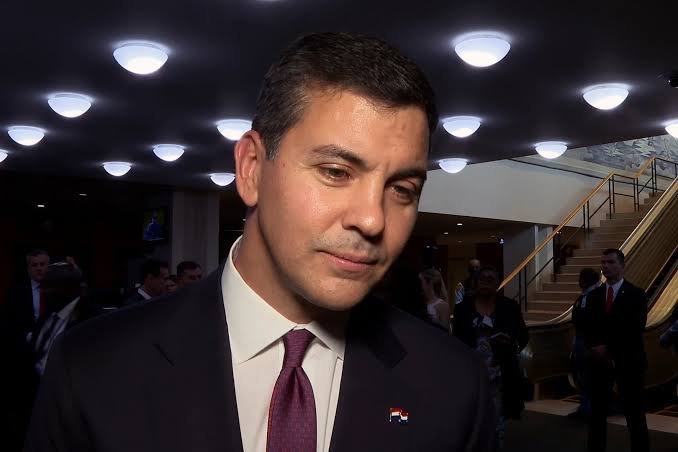
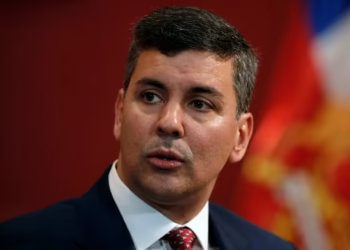
Paraguay has plunged into an unprecedented political and financial crisis after President Santiago Peña was impeached by Congress and placed under house arrest amid an investigation into alleged corruption and political interference involving one of the country’s largest banking institutions. The dramatic developments came as millions of customers lost access to their savings following the suspension of Ueno Bank, triggering widespread public anger, protests and serious concerns about the stability of the country’s financial system.
The crisis has affected approximately 2.9 million people, representing around 60% of Paraguay’s adult population. Customers who previously relied on Ueno Bank for everyday financial transactions suddenly found themselves unable to withdraw or use their money. The suspension disrupted ordinary economic activities, leaving families struggling to pay for essential goods, businesses facing difficulties completing transactions and consumers uncertain about when they would regain access to their accounts.
The political consequences were equally dramatic. Impeachment proceedings against Peña began on Wednesday and concluded on Friday, when lawmakers removed him from office. Within minutes of the parliamentary decision, authorities ordered his arrest and placed him under house arrest while prosecutors continued investigating allegations of illicit enrichment, money laundering and influence peddling.

The country’s vice-president, Pedro Alliana, was subsequently sworn in as the new president, marking a sudden transfer of political power during one of the most difficult periods in Paraguay’s recent democratic history.
The banking crisis began after financial regulators suspended Ueno Bank earlier in the week following the discovery of irregularities. The decision immediately affected millions of customers whose deposits and financial activities were connected to the institution. The scale of the disruption created widespread anxiety because Ueno had expanded rapidly over recent years and become a major participant in the country’s banking sector.
For ordinary citizens, the consequences were immediate and deeply personal. People who had deposited their salaries, savings and pension payments with the bank could no longer access their own funds. Even relatively small purchases, including essential items such as bread and drinking water, became difficult for affected customers.
As public frustration increased, demonstrations spread across different parts of the country. Protesters demanded explanations from the authorities, questioned how such a large financial institution had been allowed to operate under allegedly irregular circumstances and called for accountability from those responsible for supervising the banking system.
Some demonstrations escalated into violent confrontations with police, further intensifying the country’s political tensions. The crisis also affected commercial activity, with retail sales reportedly falling by as much as 80% as consumers lost access to money and businesses experienced disruptions in payments and transactions.
Peña’s government increasingly struggled to manage the situation as criticism expanded beyond opposition political parties. The president eventually lost support within his own political organisation, weakening his position at a time when the administration urgently needed public confidence and institutional stability.
Prosecutors had opened a formal investigation into Peña on Thursday, a day before the impeachment process was completed. Investigators are examining whether the president used his political influence to benefit Ueno Bank and whether financial arrangements involving the institution were connected to potentially unlawful activities.
The investigation also focuses on the relationship between the president and senior financial officials responsible for regulating the banking sector. One of the central figures is Carlos Carvallo Spalding, a former chief executive of Ueno who was appointed by Peña to lead Paraguay’s central bank shortly after the president assumed office.
The appointment has become particularly controversial because Spalding subsequently became responsible for overseeing a financial institution with which he had previously been professionally associated.
Approximately three months after his appointment, Spalding authorised Ueno to operate as a digital bank. That decision helped establish the conditions for the institution’s rapid expansion, allowing it to become one of Paraguay’s largest banks in terms of deposits within only a few years.
The arrest warrant issued against Peña also includes Spalding, indicating that investigators are examining the potential involvement of both political and financial authorities in the developments surrounding the bank.
Another important element of the investigation concerns Peña’s personal financial interests. Reports indicate that he held approximately $1 million in shares purchased in 2019 in a company that later became Ueno Holding in 2022. The holding company served as the parent organisation of the business group controlling Ueno Bank.
Peña retained the shares even after becoming president and reportedly disposed of them in April 2025. He maintained that the original purchase was made purely as an investment and not as part of any arrangement intended to influence government decisions.
However, the timing of the investment, his subsequent presidency and the appointment of a former Ueno executive to head the central bank have raised serious questions about possible conflicts of interest. Investigators are expected to examine whether the president’s financial relationship with the company influenced decisions made by his administration.
The bank’s rapid expansion has also attracted attention because of its aggressive efforts to attract customers. Ueno reportedly introduced an accessible account-opening system and offered returns significantly higher than those available through many competing financial institutions. These strategies helped it attract millions of customers and increase its presence in Paraguay’s financial market.
More concerningly, public pension funds and other government-linked financial resources were reportedly invested in the institution. Estimates suggest that approximately $800 million to $860 million in state and pension funds had been placed with Ueno.
Political analyst Hugo Duarte argued that the bank benefited from its relationship with the presidency, suggesting that pension funds associated with government institutions were encouraged to deposit their money there. Such allegations have intensified concerns about whether public resources were exposed to excessive financial risks because of political connections.
The involvement of pension funds is particularly sensitive because these resources are intended to protect workers and provide financial security to retired citizens. Any significant losses or prolonged restrictions affecting such funds could create consequences extending far beyond the immediate banking crisis.
During the impeachment proceedings, opposition senator Rafael Filizzola described the scandal as one of the most serious corruption controversies since Paraguay returned to democracy. He also characterised it as an unprecedented financial scandal allegedly carried out through political power.
The remarks reflected the growing anger among opposition lawmakers, who argued that the crisis demonstrated serious weaknesses in public accountability, financial regulation and the separation between political authority and private business interests.
Peña’s political position became increasingly uncertain as the investigation developed. On Thursday, he reportedly attempted to resign in an effort to retain the special legal protections associated with former Paraguayan presidents. Under the country’s political arrangements, former presidents become senators for life, receiving a distinctive institutional status.
However, lawmakers did not accept his resignation, leaving him exposed to proceedings before ordinary courts following his removal from office.
The 47-year-old economist was expected to appear before Congress and present his defence during the impeachment proceedings. Instead, he left the responsibility to his lawyers and continued communicating through social media.
Before the impeachment was completed and the arrest warrant was issued, Peña published a message expressing gratitude while acknowledging the distress experienced by customers unable to access their money. His statement appeared to recognise the scale of public anxiety, although it did little to reduce criticism of his administration.
As rumours circulated that he had fled to neighbouring Argentina, prosecutors and police officers moved to establish his whereabouts. Prosecutor Elena Fiore Franco later confirmed that Peña was inside his residence and had voluntarily allowed officers to enter. She stated that he had made himself available for the necessary legal procedures and was being placed under house arrest.
The change of leadership has placed Pedro Alliana in a challenging position. His immediate responsibilities include restoring public confidence, addressing the banking disruption and ensuring that affected customers receive clear information about their deposits. The new administration must also demonstrate that the investigation will proceed independently and that any individuals found responsible will face appropriate legal consequences.
For Paraguay’s financial sector, the crisis has raised broader concerns about banking supervision, transparency and the protection of depositors. The rapid growth of a major institution, its reported connections with government-linked funds and the subsequent suspension of its operations have highlighted the importance of independent regulation and effective risk management.

The consequences could also extend into the wider economy. When millions of people suddenly lose access to their bank accounts, household spending declines, businesses struggle to maintain operations and confidence in financial institutions weakens. Restoring that confidence may require substantial institutional reforms and a transparent explanation of what happened.
The investigation into Peña and Spalding is still developing, and the allegations against them have yet to be established through a final judicial determination. Nevertheless, the political consequences have already been extraordinary, resulting in the removal of a sitting president and a sudden change in national leadership.
Ultimately, Paraguay now faces two interconnected challenges: resolving a banking crisis affecting millions of ordinary citizens and establishing accountability for the political and financial decisions that contributed to the controversy. For customers waiting to recover their savings, the most immediate concern remains access to their own money. For the country as a whole, the crisis has become a defining test of democratic accountability, financial governance and public trust.
Related News:
 Brazil Court Scandal Threatens Lula as Bolsonaros Rise
 Trump Ads Trigger Fight Over Taxpayer Money
 Latin America women fear rollback of rights
 Trump Rallies GOP as Senate Democrats Boost Key Races
 Serbia Leader Linked to Controversial Trump Tower Plan
 Trump’s Midterm Campaign Faces Racism and Political Backlash
 Global Crises Test Diplomacy as Trump’s Policies Face Scrutiny
 Cartel crackdown raises fears of fresh violence
 US states redraw maps after voting rights ruling
 US ‘Narco Boat’ Strikes Draw Global Outcry
 Gunman Killed After White House Security Shootout
 Trump Refuses to Sign Housing Bill, But Law Takes Effect
 Trump Calls Iran War ‘Small Potatoes’ Despite US Deaths
 Trump Pledges $5,000 if Republicans Win Midterms
 Israel Accused of Undermining Palestinian Life
 Fugitive Developer Rants at NSW Corruption Inquiry
 US House Passes Russia Sanctions Bill Amid Debate
 Trump Media Ban Triggers First Amendment Clash
 US Networks Suspend Trump White House Pool Coverage
 Democrat Says ICE Restricted Detention Camp Oversight
 Lula accuses Trump of seeking control over Brazil
 Republican Senator Questions Trump Ad Spending
 Tanker Attacked Near Qatar as Hormuz Tensions Escalate
 Trump Says He Deserves Nobel Peace Prize
 ICE Agent Shoots Man in New York as Child Escapes Harm
 US Senate Debates Turn Bitter as Midterms Near
 Trump Attacks Norway After Nobel Peace Prize Snub
 Leaked Files Raise Questions Over Abramovich’s Finances
 Millions Face Tougher Medicaid Rules From January
 Ohio Airports Become Key Hubs for ICE Deportation Flights
 UK Urges Interpol to Reject Argentina’s Falklands Arrest Requests
 Judge Blocks Trump White House Media Ban
 Trump Targets Arizona and Montana Amid GOP Election Worries
 Brazil Cuts Working Week to 40 Hours in Lula Election Boost
 Trump Halts New Russia Sanctions Amid Ukraine Rift
Trump Falsely Questions Ossoff’s Election Legitimacy
 Trump Administration Threatens California Election Officials
Trump Fears Shock Democratic Senate Win in Kansas
 Alberta Voters Reject Push for Canadian Independence
 Meta Faces Election Bias Claims Ahead of Brazil Runoff
 Trump Pledges $400m to Boost Republicans in Midterms
 Omar Claims US Raid on Residence Was Meant to Intimidate
 Serbia’s Student Victory Sparks a ‘Smell of Freedom’
 Flávio Bolsonaro Reportedly Leaves Brazil After Election Defeat
 Fed Expected to Hold Rates Steady Ahead of US Midterms
 Trump’s Global Policies Put Republicans at Risk
 G20 Photo Cancelled as Russia Deepens Western Rift
 US Midterms Put Trump’s Presidency to the Test
 Paraguay President Quits After Major Bank Collapse
 Democrats Expand House Majority in Major Midterm Victory
 Thousands Protest ICE Operations in Nationwide US Day of Action
 Ben Roberts-Smith Denies War Crime Allegations in First Statement
 Trump approval plunges amid Iran war fears
 US Awaits Iran Reply on New Ceasefire Proposal
 New Footage Revives Peter Falconio Mystery
 Ukraine Creates Long-Range Strike Command
 Ukraine Villagers Demand Answers After Deadly Arms Depot Strike
 Trump Hardens Canada Trade Stance as Talks Stall
 UK plans tougher Israel stance with settlement trade ban
 Trump gives $45,000 holiday gifts to White House aides
 New Mexico Takes Facebook to Trial Over Data Scandal
 Trump Threatens EU With Tariffs Over Canada Proposal
 US Sanctions Open New Battle for Cuba Assets
 Xi urges Trump to avoid US-China military conflict
 Burnham Opens Door to Possible UK Return to EU
 Badenoch Raises Prospect of 2027 UK Election
 French School Protests Escalate as 400 Schools Close
 Okinawa US Troops Face Curfew After Murder Case
 Sri Lanka Ex-First Lady Arrested Over Donation Probe
 Delhi Tightens Security Ahead of Election Protest
 Trump’s Russian Diesel Deal Sparks Ukraine Fury
 India’s Voter Roll Crisis Sparks Nationwide Protests
 Gadi Eisenkot: Israel’s Anti-Netanyahu Challenger
 UK Could Rejoin EU Through a Switzerland Plus Deal
 Trump Again Demands Peltola Prosecution as Alaska Race Escalates
 Alan Jones Trial Paused for Melbourne Cup Viewing
 Australia Raises Interest Rates to 18-Year High
 James Talarico Makes History with Texas Senate Victory
 Hegseth Faces Growing Pressure After GOP Election Defeat
 Trump-Backed Republicans Suffer Major Midterm Defeats