Published: 07 November 2026. The English Chronicle Desk. The English Chronicle Online.
Ten years after the Paris Agreement entered into force, international efforts to tackle climate change are facing a critical moment. Although the landmark treaty created an unprecedented framework for global cooperation and encouraged countries to reduce greenhouse gas emissions, its central ambition of limiting global warming to 1.5C above pre-industrial levels is increasingly slipping out of reach. Rising temperatures, continued dependence on fossil fuels and political disagreements have raised serious questions about whether international climate negotiations can deliver the changes necessary to protect the planet.
As world leaders, environmental campaigners and climate experts gather in Turkey for the latest United Nations climate conference, COP31, the effectiveness of the international climate process is once again under scrutiny. For many observers, the central question is no longer simply whether countries recognise the climate emergency, but whether their promises can be translated into meaningful action quickly enough to prevent increasingly dangerous consequences.
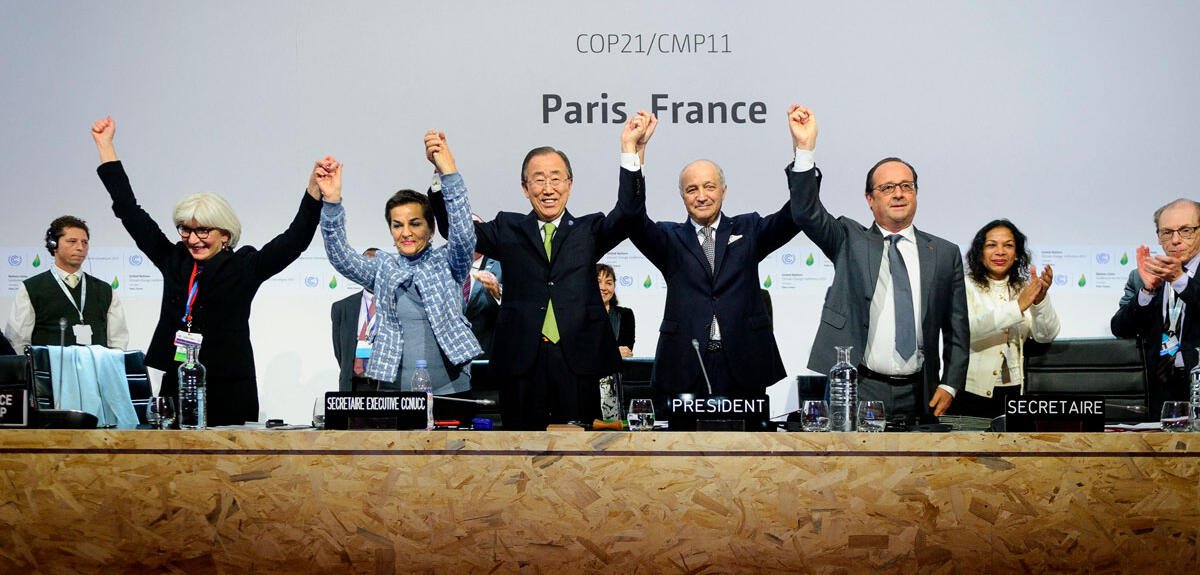
The Paris Agreement was adopted in December 2015 and entered into force in November 2016. It established a shared international commitment to hold the increase in global average temperatures well below 2C while pursuing efforts to limit warming to 1.5C. Under the agreement, participating countries are expected to submit and regularly strengthen national climate plans, outlining how they intend to reduce emissions and contribute to the global response.

At the time, the agreement was celebrated as a historic diplomatic achievement. After years of difficult negotiations, governments from developed and developing countries had finally agreed on a common framework for addressing a threat that crosses national borders. However, a decade later, the gap between international commitments and actual progress remains substantial.
One of the most troubling developments is that global temperatures have already exceeded the 1.5C threshold during individual years. The United Nations has also warned that even the most optimistic current projections suggest long-term warming could reach approximately 1.7C to 1.8C. Although a temporary breach does not automatically mean that the Paris temperature goal has been permanently abandoned, it demonstrates how rapidly the climate situation is deteriorating.
Scientists have repeatedly warned that every additional fraction of a degree increases the likelihood and severity of extreme weather events. Heatwaves, prolonged droughts, devastating floods, destructive wildfires and rising sea levels are already affecting communities across different regions. The consequences are particularly severe for developing countries and small island nations, which often have limited financial and technological resources to respond to climate-related disasters.
The growing frequency of wildfires in parts of Europe illustrates the seriousness of the problem. In July, a wildfire near Lacanau in south-west France provided another reminder of the increasing risks associated with extreme heat and changing weather conditions. Scientists have established that human-caused climate change has increased the likelihood and intensity of several types of extreme weather, including conditions that contribute to dangerous wildfires.
Despite these developments, international climate negotiations have frequently struggled to produce sufficiently ambitious agreements. One major weakness of the Paris framework is that individual governments determine their own emissions-reduction commitments. Although countries are expected to strengthen their plans over time, the agreement does not automatically guarantee that every government will meet its stated targets.
The complexity of international negotiations has also contributed to frustration. It took more than five years for countries to establish the detailed rules governing the implementation of the Paris Agreement. The requirement for consensus in major climate negotiations has created further difficulties, allowing countries with strong fossil fuel interests to delay or weaken proposed measures.
The challenge became particularly visible during COP28 in Dubai in 2023, when countries agreed for the first time to include a commitment to transition away from fossil fuels in a final climate agreement. However, the decision did not establish a specific timetable or detailed national policies to ensure that the commitment would be implemented.
Political divisions have continued to undermine progress. The United States, one of the world’s largest economies and a major contributor to carbon dioxide emissions, has withdrawn from the Paris Agreement under President Donald Trump. The absence of such an influential country has weakened international cooperation and raised concerns about the willingness of other major economies to maintain ambitious climate commitments.
Several developed countries have also faced criticism over their domestic policies. Australia has not established an end date for its fossil fuel exports, while Turkey has plans that could increase its carbon emissions. In Europe, changes to environmental and energy policies have raised questions about the consistency of governments’ climate commitments. Germany has abandoned its previous electric vehicle sales targets and scrapped a renewable heating law, while the United Kingdom continues to face criticism over decisions involving oil and gas development.
Financial support for developing countries represents another major area of disagreement. Wealthier nations have historically contributed a substantial share of global emissions, while poorer countries often experience the most damaging consequences of climate change. Developing nations therefore argue that financial assistance, technology transfers and adaptation funding are essential if they are expected to pursue cleaner development pathways without sacrificing economic progress.
The accelerating pace of global warming has made these disagreements even more concerning. Scientists previously estimated that temperatures were increasing by approximately 0.2C per decade. Current estimates suggest the rate has reached around 0.4C per decade and continues to accelerate. This means the time available for reducing emissions and preventing severe environmental damage is becoming increasingly limited.
Johan Rockström, director of the Potsdam Institute for Climate Impact Research, has warned that the world is approaching dangerous climate tipping points. He has argued that the continued trajectory towards warming of approximately 2.6C to 3C represents a serious global failure, particularly when considered against the commitments governments made under the Paris framework.
Nevertheless, climate experts are reluctant to abandon the agreement altogether. Despite its shortcomings, they argue that the Paris Agreement remains the most important international foundation for coordinating climate action. It provides a common direction, encourages governments to strengthen their national commitments and creates opportunities for countries to hold one another accountable.
Juan Carlos Monterrey, a former climate envoy for Panama, has described the agreement as a moral compass for international climate policy. Although the pace of progress remains inadequate, he believes the treaty has established a clear direction for governments and societies.
There are also signs that climate action is advancing beyond the traditional United Nations negotiation process. Following disagreements at COP30 in Brazil, nearly 60 countries participated in an alternative international meeting in Colombia in April 2026. The participating governments agreed to develop national roadmaps for transitioning away from fossil fuels. France, Germany and the Netherlands have already taken steps towards preparing such plans.
Climate specialists believe similar arrangements could help accelerate action against other dangerous pollutants, particularly methane, hydrofluorocarbons, nitrous oxide, ground-level ozone and black carbon. Reducing methane emissions by 40% could limit global warming by approximately 0.3C over the next decade, making it one of the most important opportunities for achieving relatively rapid climate benefits.
The growing adoption of renewable energy and electric transportation also demonstrates that the Paris Agreement has influenced economic and technological developments. Solar panels, wind power and electric vehicles are becoming increasingly important components of national energy strategies. These changes are helping reduce dependence on traditional fossil fuels while creating new industries and employment opportunities.
China, the world’s largest greenhouse gas emitter and the second-largest economy, has become particularly important in this transformation. Its expanding solar panel and electric vehicle industries have strengthened its economic interest in the global transition towards cleaner energy. Li Shuo, director of the China Climate Hub at the Asia Society Policy Institute, has observed that China’s growing economic interests in clean technology are encouraging it to take international climate cooperation more seriously.
Developing countries are also increasingly adopting renewable technologies without waiting for extensive international assistance. Pakistan provides an important example. Faced with electricity shortages, unreliable grid supplies and high energy costs, households and businesses have rapidly installed rooftop solar panels. Solar power now accounts for approximately a quarter of the country’s electricity use.
Vietnam has also experienced growing demand for affordable electric vehicles, particularly Chinese models, which account for more than 40% of its car sales. These developments demonstrate how economic pressures, technological improvements and consumer demand can accelerate the transition towards cleaner energy.
Another important priority is electrification. Climate and energy specialists argue that replacing fossil fuel-powered vehicles and heating systems with electricity could substantially reduce overall energy consumption. Electricity generated from renewable sources would provide even greater environmental benefits, although electrification can still improve efficiency even when some electricity comes from fossil fuels.
Jan Rosenow, professor of energy and climate policy at Oxford University, has estimated that widespread electrification could reduce the world’s total final energy demand by approximately half because electric technologies are generally more efficient than their fossil fuel-powered alternatives.
The COP31 conference could therefore provide an important opportunity for governments to agree on stronger electrification targets. One proposal under discussion is to increase the share of electricity in final energy consumption from approximately 23% currently to 35% by 2035. Supporters believe such a commitment could significantly accelerate decarbonisation.

For vulnerable nations, particularly small island developing states, the importance of international climate cooperation extends far beyond diplomatic discussions. Rising sea levels, coastal erosion, stronger storms and changing marine conditions threaten their economies, food security and long-term survival. Ilana Seid, ambassador of Palau and chair of the Pacific Small Island Developing States, has emphasised that international cooperation and societal pressure remain essential for ensuring that governments fulfil their commitments.
The Paris Agreement has clearly failed to deliver its central temperature ambition within the expected timeframe. However, its influence on renewable energy, electric transportation, national climate policies and international cooperation cannot be dismissed. The challenge now is to transform political promises into measurable action.
As COP31 begins, the international community faces a decisive choice. Governments can continue allowing disagreements and political interests to delay progress, or they can strengthen cooperation and accelerate the transition away from fossil fuels. Ten years after the Paris Agreement, the world has made important advances, but the climate crisis is moving faster than international action. Whether the agreement ultimately becomes a foundation for meaningful transformation or a symbol of missed opportunities will depend on what governments do next.
Related News:
 Europe Faces Climate Reckoning After Extreme Summer
 Norway Fjord Faces Fresh Mine Waste Dumping
 UN Warns World Must Cut Emissions by 18% by 2030
 Capitalism ‘Suicidal’, Warns Petro at Climate Summit
 Norway Doubles Down on Oil and Gas for Europe Energy Security
 Wildfires rage across Europe as hundreds arrested in France
 Turkmenistan Begins Fixing Major Methane Mega-Leaks
 UN Warns Record El Niño Could Supercharge Global Heat
 Super El Niño Threatens Hundreds of Thousands of Lives
 Norfolk Broads Housing Levy Faces Environmental Criticism
 Swiss Glaciers Lose Nearly One-Fifth of Ice in Five Years
 Berlin App Helps Residents Protect City Trees
 Drax Datacentre Faces Major Carbon Emissions Concerns
 Climate Change Makes Tap Water Unsafe in Arctic Norway
 Melting Dolomites Glaciers Reveal 250 WWI Explosives
 Denmark Seeks EU-Wide Ban on Fast-Growing Turbo Chickens
 Warming UK Seas Threaten Marine Life and Food Security
 Zelenskyy Seeks Urgent Help as Russia Hits Ukraine’s Power Grid
 UK New Car Discounts Near £6,000 as Prices Are Slashed
 Ocean Warming Drives Massive Marine Life Loss, Study Warns
 Musk’s xAI Permit Sparks Fury Over Power Plant Expansion
 The Truth Behind Rising Energy Costs and Fossil Fuel Myths
 ABC Staff Strike Over Pay and AI Concerns
 Trump to Deploy “God Squad” Over Gulf Wildlife Protections
 Apple at 50: Three Products That Changed How We Live
 Heavier SUVs Accelerate Britain’s Pothole Crisis
 Chornobyl Still at Risk 40 Years After Disaster
 Record May Heat to Cold Front in Eastern Australia
 Ukraine strikes Tuapse as oil disaster worsens
 Doomsday Clock Nears Midnight Amid Global Crises
 China mine blast death toll rises to 90
 Pope Meets Families in Italy Toxic Waste Zone
 UK rejects EV charging VAT cut amid Treasury clash
 Wildfires Force Mass Evacuations in France And Spain
 Deadly TikTok Driving Trend Alarms Ireland
 Swedish Mining Push Puts Sami Land Rights Under Pressure
 Nepal seeks $20m climate compensation after deadly floods
 Heathrow Expansion Faces New Climate Conditions Over CO₂
 Indonesia Receives First Aircraft Carrier
 Macron and Carney deepen France-Canada ties
 Australia Renewables Reach Record 80% Grid Demand
 Tropics May Wait Longest for Net-Zero Climate Benefits
 AI Takes Centre Stage in Trump-Xi Talks
 Trump gives Xi red-carpet welcome as trade truce extends
 Chinese Hybrid Car Surge Raises EU Auto Industry Concerns
 Xi urges Trump to avoid US-China military conflict
 Nepal PM calls deadly flood a global climate warning
 Russia Targets Ukraine’s Digital Economy With Strikes
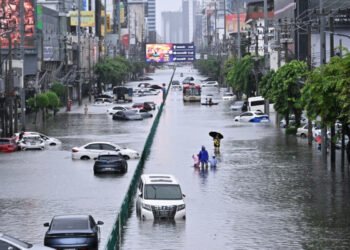 Thai downpours shift north-westwards after Bangkok floods
 UN Warns of Narrowing Window to Restore Forests
 Ukraine Faces $45m Hourly Cost From Missile Alerts
 Europe’s Record Heat Summer Signals Climate Risks
 Edinburgh Glasshouses Reopen After Major Restoration
 French Debt Fears Put Euro Markets Under Pressure
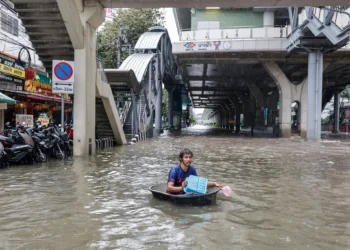 Bangkok Floods Push City to Breaking Point
 Spain Sets Snap Election as Housing Crisis Deepens
 Argentina Protesters Resist Milei’s Land Sale Drive
 Asos Investigates Hack Claims After Customer Alerts
 EU-China Talks Target Surge in Hybrid Car Imports
 Tech-Optimist Scientists Less Likely to Take Climate Action
 Britons Demand Greater Honesty on Climate Crisis
 France Urges UK to Consider Returning to EU
 NSW Leader Downplays Impact of Landmark Coal Ruling
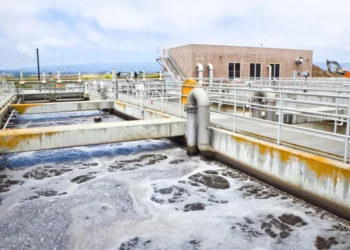 UK Water Firms Earn Millions From Industrial Wastewater
 US Moves to Restrict Chinese Labs Testing Electronics
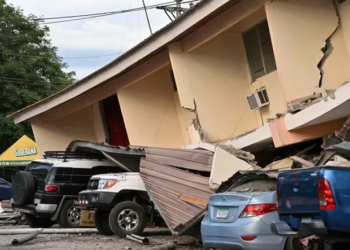 Panama Hit by Powerful 7.7-Magnitude Earthquake
 France Faces Debt Crisis as Protests and Markets Clash
 Hanson Attacks Taylor as Australian Conservatives Clash
 Australia Rejects Russian Fuel as Trump Strikes Deal
 Hall and Woodford Win Nobel Economics Prize
 UK Shoppers Urged to Avoid Hake and Coley
 Indonesia Tests Dry Ice as Toxic Haze Spreads Across Asia
 Milan Luxury Stores Shut as Italy Plans Troop Deployment
 Meta Faces Election Bias Claims Ahead of Brazil Runoff
 Magnitude-7 Earthquake Strikes Tibet, Killing at Least 16
 Spain Deepfake Ad Sparks Election Outrage
 China’s AI Ambitions Hit $2.4 Trillion Market Setback
 US Bans BYD Vehicles at Japan Military Base
 Global Crises Test Diplomacy as Trump’s Policies Face Scrutiny
 UK Warned Over Dangerous Dependence on China for Minerals