The Italian Army has recovered and neutralised 250 explosive devices uncovered during the summer of 2026, including Italian artillery shells and French-made mortar bombs dating from the First World War. The operation was conducted by the Julia Alpine Brigade following reports from hikers who spotted suspicious objects emerging from melting ice and exposed mountain terrain.
The discoveries have renewed concern about the environmental consequences of rising temperatures in high-altitude regions, where glaciers are retreating and releasing objects preserved beneath ice for more than 100 years.

What was once a frozen battlefield is increasingly becoming an unexpected archaeological site—and, at the same time, a potentially deadly landscape in which unexploded ammunition remains capable of causing serious injury or death.
According to the Italian Army, hikers reported several sightings of suspected explosives during the summer, particularly around Canal San Bovo in the Primiero Valley in eastern Trentino.
Military personnel subsequently carried out extensive searches in the area and across other high-altitude and glacier locations in Trentino-Alto Adige, a region of northeastern Italy that includes parts of the Dolomites.
The operation resulted in the recovery and neutralisation of 250 explosive devices. Among them were 18 Italian 75mm artillery shells and 37 Thevenot mortar bombs, French-designed weapons that were also supplied to the Italian Royal Army during the First World War.
The recovery operation illustrates the continuing challenges faced by explosive ordnance disposal specialists in mountainous environments. Steep slopes, unstable ground, changing weather conditions and rapidly melting ice can make locating and safely removing old ammunition particularly difficult.
Although some of the recovered devices had already exploded or deteriorated, many remained unexploded. Their age does not make them harmless. Historic munitions can remain dangerous for decades, and corrosion or damage may make their condition difficult to assess without specialist examination.
The army’s work is therefore not simply an exercise in preserving military history. It is also a public safety operation intended to prevent accidents in an increasingly accessible but potentially hazardous alpine environment.
Authorities have urged hikers and mountaineers never to touch suspicious objects that might be explosives, regardless of their apparent age or condition. Anyone who discovers such an object should keep their distance, avoid disturbing the surrounding area and promptly report the discovery to the police.
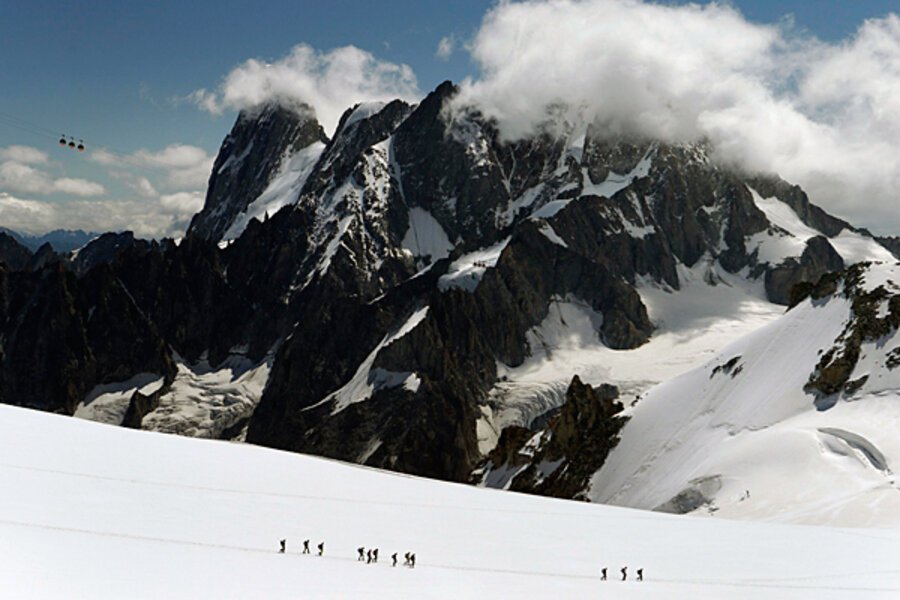
The weapons emerging from the Dolomites are remnants of what became known as the White War, a brutal mountain campaign fought between Italian and Austro-Hungarian forces from 1915 to 1918.
Unlike the trench warfare commonly associated with the Western Front, fighting in the Alps took place in some of Europe’s most unforgiving terrain. Soldiers occupied exposed ridges, snow-covered passes, rocky peaks and positions surrounded by glaciers, often at extreme altitudes.
The conditions were punishing. Troops faced freezing temperatures, heavy snowfall, shortages of supplies and the constant threat of avalanches. Moving artillery and other military equipment across steep mountain slopes required extraordinary effort, while maintaining supply routes could be a matter of survival.
The conflict also transformed the landscape. Armies constructed trenches, shelters, observation posts and tunnels, while artillery bombardments scattered ammunition and other military material across the mountains.
When the war ended in November 1918, many positions were abandoned. Some equipment remained buried beneath snow and ice, while other objects were left inside shelters that subsequently became inaccessible as glaciers advanced or accumulated around them.
For decades, the ice preserved fragments of this history. As glaciers began retreating more noticeably towards the end of the twentieth century, however, objects from the conflict started to reappear.
The latest discoveries demonstrate that the White War has not disappeared from the landscape. Its physical remains are becoming visible again, carrying both historical significance and immediate risks.
Stefano Morosini, a professor at the University of Bergamo and coordinator of heritage projects at Stelvio National Park, has linked the recurring discoveries to global heating.
He said dangerous military objects were emerging at the end of successive summers, with increasing numbers being found as the ice continued to retreat.
The glaciers of the Italian Alps have experienced substantial changes as temperatures rise. Longer periods of summer warmth and increasingly unfavourable conditions for ice accumulation are contributing to glacier loss in many locations.
When ice that has covered military remains for generations melts, the objects beneath it can become exposed to the atmosphere and the elements. Previously inaccessible areas may become reachable, while ammunition once securely embedded in frozen ground can be left on unstable slopes or exposed rock.
The resulting risks are not limited to explosives. Retreating glaciers can expose crevasses, loosen rocks and undermine terrain that previously remained frozen. Meltwater can also alter paths and mountain routes, making familiar landscapes more difficult to navigate safely.
Morosini has warned that some of the munitions remained unexploded after more than a century beneath the ice. Their reappearance creates a particularly serious hazard because hikers may encounter them unexpectedly while travelling through remote areas.
The situation highlights an unusual consequence of climate change: environmental warming is not only transforming ecosystems and water supplies but also exposing remnants of past human conflicts.
The Dolomites are not the only part of the Italian Alps where retreating ice has revealed extraordinary evidence of the First World War.
At Mount Scorluzzo, a 3,095-metre peak overlooking the Stelvio Pass in Lombardy, a wooden barracks built inside a cave re-emerged in 2015 after the ice sealing it off melted away.
The shelter had been hastily secured at the end of the war, leaving behind many of the belongings used by soldiers stationed in the mountains.
When the structure was rediscovered, researchers found objects including straw beds, clothing, lanterns, newspapers, postcards, coins and tins of food. The cold environment had helped preserve many of these materials, offering an unusually detailed glimpse into the daily lives of soldiers who served in extreme conditions.
Such discoveries provide historians with evidence that written military records cannot always capture. Personal possessions can reveal how soldiers organised their living spaces, maintained communications, managed scarce supplies and endured isolation far from civilian communities.
A White War museum is scheduled to open in Bormio in June 2027 to display historical remains from the conflict. The planned museum is expected to provide a permanent setting for interpreting the material recovered from the alpine battlefield and explaining the extraordinary environmental conditions in which the soldiers lived.
The preservation of these objects also raises questions about how best to protect historical remains as the landscape changes. Some artefacts can be carefully recovered and conserved, while others may be too fragile or difficult to remove safely.
Among the most poignant discoveries made in the Italian Alps have been the remains of soldiers whose lives ended far from their homes.
The White War is believed to have claimed more than one million lives, although the majority of deaths were reportedly caused by avalanches, falls, hypothermia and other extreme mountain conditions rather than direct combat alone.
Over the past 15 years, dozens of bodies have emerged from melting ice, including some still wearing military uniforms.
In 2017, the relatives of an Italian soldier were able to bury him after documents recovered with his body on the Presena Glacier helped establish his identity.
For families, such discoveries can bring a mixture of grief, relief and long-awaited closure. The recovery of remains allows descendants to learn what happened to relatives who disappeared during a conflict fought more than a century ago.
These individual stories also remind the public that the objects emerging from the glaciers are not merely historical curiosities. They are physical traces of human lives interrupted by war, hardship and the unforgiving environment of the Alps.
The process of identifying remains can be complicated by the passage of time, the deterioration of personal belongings and the difficulty of reaching remote locations. Nevertheless, each successful identification can restore a name and personal history to someone who might otherwise have remained missing indefinitely.
The retreat of the glaciers is also changing the experience of visiting the Dolomites and surrounding mountain ranges.
Morosini has warned that increasingly intense summer heat is making access to some glaciers less safe. Prolonged heatwaves at high altitude can destabilise ice and rock, increase meltwater flows and make routes more dangerous than they were in the past.
The risks were starkly demonstrated in July 2022, when a large section of the Marmolada Glacier broke away, killing 11 people. The disaster drew international attention to the dangers associated with changing glacier conditions and rising temperatures in the Alps.
Although individual glacier collapses have multiple contributing factors, warming temperatures can increase instability in high-mountain environments. Visitors may encounter hazards that are difficult to identify in advance, particularly when conditions change rapidly during the day.
The newly exposed munitions add another layer of danger. Hikers may be drawn towards unusual metal objects or historical remnants without realising that they could be unexploded weapons.
Mountain safety experts therefore have an important role in communicating changing risks. Visitors should follow local warnings, use established routes where appropriate, respect closures and avoid approaching suspicious objects or unstable glacier margins.
Authorities and conservation organisations also face the challenge of monitoring areas where retreating ice is likely to expose further historical material.
The discovery of 250 explosive devices in the Dolomites offers a striking example of how environmental change can reveal the consequences of earlier human activity.
For more than a century, glaciers concealed weapons and personal belongings left behind by soldiers who fought in extreme conditions. Today, the retreat of that ice is exposing the remains while simultaneously making parts of the alpine environment less predictable.
The immediate priority is public safety. Unexploded ammunition must be assessed and handled by qualified specialists, while hikers need clear advice about how to respond to discoveries.

At the same time, the emerging relics have significant historical value. Properly documented and conserved, they can help future generations understand the White War, the hardships endured by soldiers and the lasting physical footprint of conflict.
Yet the pace of glacier retreat raises difficult questions about what may be revealed next. Additional ammunition, military shelters, personal possessions and human remains could emerge as previously frozen areas become exposed.
The Dolomites are therefore becoming a place where climate science, military history and public safety increasingly intersect. The disappearing ice is revealing the past, but it is also delivering a warning about the changing environment.
More than a century after the First World War ended, the mountains continue to hold reminders of its human cost. As global temperatures rise, those reminders are becoming visible again—and some remain as dangerous today as they were when the fighting stopped.
Related News:
 Climate Change Makes Tap Water Unsafe in Arctic Norway
 Chornobyl Still at Risk 40 Years After Disaster
 Two Dead in Adelaide Airport Plane Crash Fire
 Pope Meets Families in Italy Toxic Waste Zone
 England and Norway Fans Turn Miami Into World Cup Carnival
 Olympus Awaits Unesco Heritage Recognition
 Deadly TikTok Driving Trend Alarms Ireland
 Europe Faces Climate Reckoning After Extreme Summer
 Tropics May Wait Longest for Net-Zero Climate Benefits
 French Student Protests Escalate Into Violent Clashes
 Israel-bound Plane Lands in Saudi Arabia After Cockpit Fight
 Edinburgh Glasshouses Reopen After Major Restoration
 Pilot Recalls Fight to Save Flydubai Passengers
 French School Protests Escalate as 400 Schools Close
 France Promises 3,000 Teachers as Student Protests Grow
 UAE Says Co-Pilot Planned Suicide Attack on Israel
 French Police Face Scrutiny Over Injured Teenagers
 Mexican Court Sentences Three Men to 158 Years Each
 Macron Condemns Violence as France Faces 2,400 Arrests
 Milan Luxury Stores Shut as Italy Plans Troop Deployment
 Zelenskyy Says US Failed to Warn Kyiv of Russian Strikes
 France to Deploy 70,000 Police Amid Unrest Fears
 Fire Engulfs Hitler’s Eagle’s Nest Retreat
 Older Than Dinosaurs: Secrets of Mayfly Dance Revealed
 China Fireworks Factory Blast Kills 21 in Hunan
 France Faces Record Presidential Crowded Race Amid Far-Right Surge
 Norway Doubles Down on Oil and Gas for Europe Energy Security
 London Tube Heat Reaches Dangerous Levels
 Wildfires Force Mass Evacuations in France And Spain
 Gen Z turns to BirdTok for a gentler digital escape
 Australia Races to Find Tourists Missing in Nepal
 France Eases Cheese Rules as Drought Hits Farms
 Nepal Flood Death Toll Tops 300 as Second Flood Feared
 Ukraine Villagers Demand Answers After Deadly Arms Depot Strike
 Nepal Flood Survivors Face Unimaginable Loss
 Nepal Tunnel Rescue Offers Hope Amid Flood Devastation
 Masked Protesters Bring Dover Port Traffic to Standstill
 UK Heatwaves Set to Worsen Pothole Damage, RAC Warns
 Iran School Strike Raises War Crimes Questions, UN Says
 UK Funds Gene Editing to Protect Threatened Wildlife
 British Columbia Sues OpenAI Over School Shooting
 King Refers Jamaica Slavery Petition to Privy Council
 Greece Pushes for Parthenon Marbles Reunification
 Ukraine and Russia Escalate Long-Range Drone War
 Elif Eralp Emerges as Berlin’s Next Political Force
 Nepal PM calls deadly flood a global climate warning
 Russia Targets Ukraine’s Digital Economy With Strikes
 Madrid Tent Camp Grows as Spain Housing Crisis Deepens
 London Facial Recognition Trial Ends With False Alert
 Berlin App Helps Residents Protect City Trees
 Bosnia’s Young People Look Beyond Election Hope
 Rome Cracks Down on Rising Golf Cart Tours
 Latin America women fear rollback of rights
 Former German Intelligence Chief Arrested Over Espionage
 WHO Says Russia Plague Epidemic Risk Remains Low
 Ghesquière imagines a warmer future for Louis Vuitton
 Sardinia Village Emerges as Longevity Hotspot
 Norway Fjord Faces Fresh Mine Waste Dumping
 Bendy Elm Named UK Tree of the Year
 Britons Demand Greater Honesty on Climate Crisis
 French Student Protests Grow Despite Government Pledge
 Teen Rescued After AI Gives Dangerous Hiking Route
 UK Water Firms Earn Millions From Industrial Wastewater
 EU Divisions Deepen Over Israel Policy
 Panama Hit by Powerful 7.7-Magnitude Earthquake
 Three Convicted in Mexico Surfing Trip Murders
 Controversial Vaccine Trial Approved in Guinea-Bissau
 Australian Advocates Seek Subsidised Drugs for PMOS
 Hanson Attacks Taylor as Australian Conservatives Clash
 French Students Protest Poor Conditions in Paris Suburbs
 Iguazu Falls Closed as El Niño Drives Water Surge
 Greta Thunberg Backs French Students in School Protests
 UK Shoppers Urged to Avoid Hake and Coley
 Albania’s Rama Defies Calls to Quit Amid Student Protests
 Trump Slams Ukraine Strikes as Russia Ceasefire Collapses
 Four Dead in Fast-Moving Fire at Canadian Military Base
 UN Warns World Must Cut Emissions by 18% by 2030
 Nigeria Confirms Ebola Case as Regional Outbreak Spreads
 Spain Deepfake Ad Sparks Election Outrage
 Nearly One in Four European Pilots Fly While Fatigued