Published: 07 October 2026. The English Chronicle Desk. The English Chronicle Online
Nicolas Ghesquière has turned the Louis Vuitton runway in Paris into a vision of urban life in a warmer future, combining lightweight clothing, futuristic imagery and an extraordinary setting beneath the historic architecture of the Louvre.
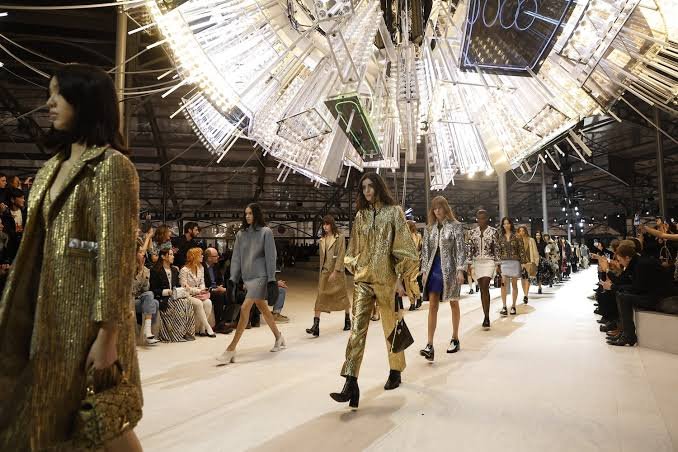
The latest Louis Vuitton show presented a striking contrast between France’s centuries-old cultural heritage and an imagined city of the future. Models moved through the Louvre courtyard in flowing silk dresses, vented tunics and translucent chiffon layers while a fleet of 34 flying cars appeared to hover above the catwalk.
The spectacle reflected one of Ghesquière’s central concerns for the collection: how fashion might respond to a world experiencing increasingly warm temperatures. Paris itself provided an immediate reminder of that reality, with temperatures still reaching 24C as the show began around sunset despite the event taking place in October.

For the Louis Vuitton artistic director, the unusually warm weather was not simply a backdrop. It became part of the creative thinking behind the collection.
Ghesquière said the warming world had strongly influenced his approach to the season. Rather than producing the heavily structured garments for which he has become known, he sought to imagine a wardrobe that could respond to changing environmental conditions and the practical realities of life in future cities.
The resulting collection was noticeably lighter and more fluid than many of his previous designs. Silk slip dresses moved easily with the models, while loose tunics featured ventilation and chiffon layers created a sense of weightlessness. The clothes appeared designed not to resist the environment but to accommodate it.
That represented a significant departure for a designer whose work has often been associated with architectural shapes, angular silhouettes and garments that resemble protective armour.
Ghesquière acknowledged the change, describing himself as a specialist in a style of fashion built around strong architecture and a sense of armour. For this collection, however, he suggested that the experience of a warmer summer had encouraged a different way of thinking about clothing.
The idea of protection remained present, but it took a different form. Instead of heavy or rigid structures, protection came through breathability, movement and fabrics capable of adapting to hot urban environments.
The futuristic presentation reinforced that concept. The flying cars positioned above the runway created the impression of a city where traditional ground-level traffic had been replaced by aerial transportation. Models became pedestrians navigating an environment where technology had transformed the urban landscape.
The setting made the concept particularly effective. The show took place in an inner courtyard of the Louvre, one of the world’s most recognisable historic cultural sites. The futuristic set stood in direct contrast to the classical buildings surrounding it.
The visual relationship recalled the Louvre’s famous glass pyramid, designed by architect I.M. Pei, which similarly combines modern technology and architectural forms with the historic character of the museum.
The effect was a deliberate conversation between past and future. Louis Vuitton presented clothing that seemed to belong to an imagined tomorrow while the models walked through one of the defining architectural environments of France’s past.
Ghesquière has long been associated with science-fiction influences, and those references were again visible throughout the collection. Silver beaded fringes around the models’ heads suggested a mixture of futuristic hair extensions and protective sun visors, reinforcing the idea of people adapting themselves to unfamiliar urban conditions.
The designer’s futuristic vision was not entirely about technology, however. At its heart was a question about vulnerability and strength in the city.
Ghesquière explained that he imagined a woman walking through traffic and considered how people can feel both vulnerable and powerful within an urban environment. That tension became part of the collection’s visual language.
The clothes moved between softness and confidence. Fluid fabrics created an impression of fragility, while tailored elements and carefully constructed silhouettes provided structure. The result suggested that future fashion may need to accommodate contradictory demands: comfort without sacrificing authority, lightness without losing identity and practicality without abandoning luxury.
Several high-profile guests helped draw attention to the collection. Zendaya appeared wearing a ruffled organza jacket that had previously been seen during her promotional tour for “The Odyssey”. Actor Bella Maclean, known for “Rivals”, attended in sleek black tailoring.
Their appearances added celebrity visibility to a show that was already attracting considerable attention because of its location and futuristic staging.
Ghesquière himself kept his appearance comparatively understated, taking his bow in jeans after the presentation. Yet the show represented a significant moment for the designer, who has led Louis Vuitton’s womenswear creative direction for around a decade.
Louis Vuitton remains the flagship fashion house of LVMH, one of the most powerful luxury groups in the world. The brand occupies an important position not only within global fashion but also within France’s economic and cultural landscape.
The significance of Ghesquière’s work was highlighted just days before the show when he received one of France’s highest forms of recognition for his contribution to the country’s creative industries.
President Emmanuel Macron awarded Ghesquière a knighthood at a ceremony at the Élysée Palace. The event demonstrated the unusually close relationship between fashion, national culture and political life in France.
The ceremony also highlighted Ghesquière’s relationship with Brigitte Macron, who has maintained a longstanding association with the designer and has attended his shows while wearing custom creations for important state occasions.
Macron used humour during the ceremony to acknowledge the designer’s connection with his wife. The light-hearted exchange reflected the unusually prominent position that Louis Vuitton and its leading designers occupy within French public life.
The guest list further demonstrated the breadth of the brand’s international influence. French cultural icon Catherine Deneuve attended alongside British designer Phoebe Philo and Felix of K-pop group Stray Kids.
Ghesquière appeared at the ceremony in a distinctive Louis Vuitton black double-breasted suit with a single-button fastening and no traditional lapel. Macron pinned the red-ribboned decoration to the designer’s chest, joking that the French Republic itself was adding a new element to his wardrobe.
The contrast between the formal ceremony and the futuristic runway illustrates the multiple worlds occupied by Ghesquière. He is simultaneously a leading figure in the international luxury industry, an influential French creative and a designer who frequently uses speculative ideas about technology and the future as inspiration.
The latest collection extends that futuristic interest into the increasingly urgent subject of climate and changing weather.
Rather than presenting climate change through an explicitly political message, Ghesquière translated the experience of a warming world into clothing. The emphasis was on how people might physically live, move and dress when hotter conditions become an increasingly normal part of urban life.
That approach gives the collection a practical dimension beneath its spectacle. The flying cars and science-fiction imagery may be fantastical, but the lightweight materials, ventilation and loose silhouettes respond to an environmental reality that consumers are already experiencing.
The collection also raises broader questions about the relationship between fashion and climate change. Designers are increasingly being challenged to consider not only the environmental impact of production but also how changing weather patterns could influence what people want to wear.
For Ghesquière, the answer appears to involve reconsidering the balance between structure and freedom. The rigid architectural garments associated with his signature style gave way to clothing that moves with the body and allows air to circulate.

The result was a collection that looked forward while remaining grounded in the present. Its futuristic imagery suggested a distant urban landscape, yet its central concern was immediate: how people adapt when the world around them becomes warmer.
The Louvre setting added another layer to that message. History and imagined technology existed side by side, suggesting that fashion, like architecture, is constantly negotiating between what has been inherited and what comes next.
Louis Vuitton’s Paris show ultimately presented the future not as a distant fantasy but as something that may already be influencing everyday life. Through fluid fabrics, breathable silhouettes and science-fiction staging, Ghesquière offered an interpretation of fashion designed for a changing city and a changing climate.
Related News:
 Pope Meets Families in Italy Toxic Waste Zone
 Chornobyl Still at Risk 40 Years After Disaster
 Older Than Dinosaurs: Secrets of Mayfly Dance Revealed
 France Faces Record Presidential Crowded Race Amid Far-Right Surge
 Norway Doubles Down on Oil and Gas for Europe Energy Security
 Tractor Breakdown Tests Lincolnshire Farmers
 Britons Build Emergency Supplies Amid Rising Fears
 Hybrid village stores fight rural decline
 Sycamore Gap Artwork Chosen After Public Vote
 Cannes filmmakers split over AI’s role in cinema
 UK Nations Brace for Potential Breakup Amid Reform Surge
 England and Norway Fans Turn Miami Into World Cup Carnival
 UK Schools Struggle as Classrooms Top 40C
 London Tube Heat Reaches Dangerous Levels
 Olympus Awaits Unesco Heritage Recognition
 Wildfires Force Mass Evacuations in France And Spain
 Three-Quarters of England’s Riverbanks Still Off Limits
 London’s 2026 ‘Great Stink’ Raises Sewer Concerns
 Wildfires rage across Europe as hundreds arrested in France
 Burnham unveils £65m drought aid for farmers
 Gen Z turns to BirdTok for a gentler digital escape
 British Man Faces Deportation Threat in Sweden
 Nepal Flood Survivors Face Unimaginable Loss
 UK Subsidence Claims Surge After Record-Breaking Summer
 Nepal Tunnel Rescue Offers Hope Amid Flood Devastation
 Typhoon Saudel Triggers Mass Evacuations in China
 British widow says deportation from Sweden feels like a death sentence
 Thames Water Revises Oxfordshire Mega-Reservoir Plan
 Europe Faces Climate Reckoning After Extreme Summer
 UK Funds Gene Editing to Protect Threatened Wildlife
 Tropics May Wait Longest for Net-Zero Climate Benefits
 Paris child pickpocketing gang leader jailed for eight years
 Greece Pushes for Parthenon Marbles Reunification
 Elif Eralp Emerges as Berlin’s Next Political Force
 Nepal PM calls deadly flood a global climate warning
 Madrid Tent Camp Grows as Spain Housing Crisis Deepens
 New UK Homes in Flood Zones Face Insurance Risk
 French Student Protests Escalate Into Violent Clashes
 Europe’s Record Heat Summer Signals Climate Risks
 Berlin App Helps Residents Protect City Trees
 Edinburgh Glasshouses Reopen After Major Restoration
 French School Protests Escalate as 400 Schools Close
 Polanski Says Leadership Not Tied to By-election Result
 Bosnia’s Young People Look Beyond Election Hope
 Rome Cracks Down on Rising Golf Cart Tours
 Experts Warn UK Food Security Is at Risk
 Spain Sets Snap Election as Housing Crisis Deepens
 Pacific Climate Summit Draws Limited Global Leaders
 The Cockroach Infestation I Still Cannot Forget
 WHO Says Russia Plague Epidemic Risk Remains Low
 EU launches Grok AI probe into X over explicit images
 Ocean Warming Drives Massive Marine Life Loss, Study Warns
 Rising Costs Force Families to Rethink Days Out
 M&S Demands Urgent Action on Rising Violent Retail Crime
 Arteta urges Arsenal to step up in Atlético semi-final
 Barrister Criticises Trial After Suicide Case Verdict
 UK Faces Mass Water Shortages by 2055, Lords Warn
 Farage and Reform UK Reshape British Politics
 EU Leadership Gathers in Tivat to Renew Balkan Ties
 British Teens in EU Face Soaring UK University Fees
 Meta Under Fire: The Battle Over Addictive Social Media Design
 A New Era Begins: Spain and Gibraltar Border Fence Falls
 Powerful 7.7-Magnitude Earthquake Hits Eastern Indonesia
 Queue row erupts on Wales’ highest mountain
 British Museum Faces Questions Over Peter Thiel’s Private Bayeux Viewing
 Bayeux Tapestry Revives Franco-British Ties
 Man Arrested in Mississippi Woman’s Death
 UK Retailers Accused of Breaking Refund Laws
 Mayors Could Gain Greater Powers Over Water Firms
 UK Rent Gap Puts Low-Income Families Under Pressure
 Democrat Says ICE Restricted Detention Camp Oversight
 Frome Community Loses Bid for Major Regeneration Site
 London Facial Recognition Trial Ends With False Alert
 UK University Strikes Spread as Financial Pressure Grows
 Healey urged to act as UK energy bills rise 4%
 Badenoch Raises Prospect of 2027 UK Election
 Salinas Struggles to Keep the American Dream Alive
 Gosport Protesters Clash With Police Over Migrant Rescue
 France Schools Protests Draw 250,000 as Police Clash
 Poland Pushes Energy Security Beyond Russian Gas