Published: 02 October 2026. The English Chronicle Desk. The English Chronicle Online
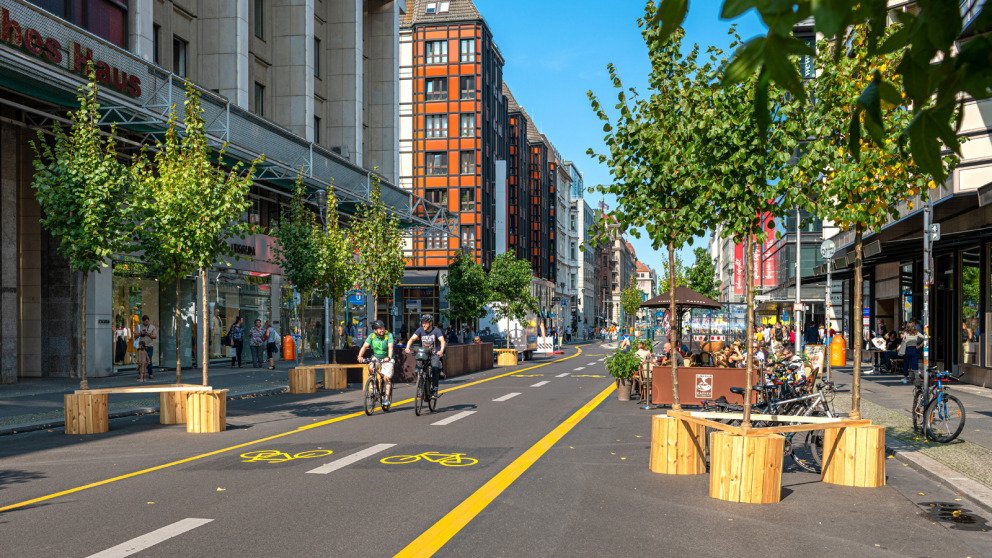
As summer temperatures rise across European cities, residents of Berlin are finding an increasingly simple way to help protect one of the most valuable parts of their urban environment: street trees. Through an open-source digital platform known as Gieß den Kiez, residents can identify trees in need of water, record when they have been watered and coordinate with other volunteers to help trees survive increasingly difficult summer conditions.
For Amanda Gläser-Bligh, the effort has become a personal routine. She has adopted an eight-year-old linden tree outside her home in Charlottenburg and affectionately named it Linda the linden. During the hottest months, she carries around 20 litres of water to the tree each week. The task requires several trips with a watering can, but she says the tree now appears healthier and no longer wilts as severely during periods of extreme heat.
The experience illustrates how a small individual action can become part of a wider community response to climate pressure. Berlin’s linden trees are particularly important to the city’s identity. They line many of its streets and avenues, including the famous Unter den Linden boulevard, while mature trees provide shade, cool surrounding areas and produce flowers that offer an important source of nectar for bees.

Gieß den Kiez, which translates roughly as “water your neighbourhood”, was developed by CityLAB Berlin as a digital tool to help residents care for the city’s extensive urban forest. The platform maps more than 900,000 trees across Berlin and uses information including species, age and local rainfall to estimate the water requirements of individual trees.
That approach gives residents more information than a conventional tree map. Users can see when a particular tree was last watered and record their own watering activity. Colour-coded indicators highlight trees considered to be in critical need of water, helping volunteers decide where their efforts may be most useful.
The system is particularly valuable for young trees. Newly planted saplings have smaller root systems than mature trees and are therefore more vulnerable when temperatures rise and rainfall becomes scarce. Regular watering can help them establish roots and survive the early stages of growth, increasing the likelihood that they will eventually develop into mature trees capable of providing substantial environmental benefits.
The platform also provides practical guidance for volunteers, including information about appropriate watering methods, rainwater collection and the locations of public water pumps. This makes the system accessible even to people who have little previous experience caring for trees.
For residents such as Gläser-Bligh, the digital element adds another attraction. She has compared the experience to a simple video game because the map provides an immediate sense of which trees need attention and allows volunteers to record their contribution. The technology can also remove some of the uncertainty surrounding responsibility. People may want to help a struggling tree but hesitate because they are unsure whether watering a street tree is something they should do.
The platform has become particularly useful as Berlin’s summers become hotter. The project began in 2020 and now has about 12,000 registered volunteers. Their work complements the efforts of local authorities, which already water thousands of trees but can struggle to maintain every tree adequately during periods of extreme heat.
The project’s popularity has fluctuated with weather and social conditions. One of its largest annual watering peaks occurred soon after its launch during the Covid-19 pandemic, when residents poured nearly half a million litres of water onto trees. The timing suggested that tree care offered people a practical reason to leave their homes, spend time outdoors and reconnect with their surroundings during a period of widespread isolation.
Watering activity continues to increase during heatwaves. On 27 June, when Berlin recorded an all-time temperature record of 39.9C, volunteers collectively poured about 8,000 litres of water onto trees across the city.
The importance of such efforts is supported by growing research into the role of urban trees. Trees can reduce temperatures by providing shade and releasing moisture into the atmosphere, helping to moderate the urban heat-island effect. Their presence can also contribute to better air quality, support biodiversity and provide habitats for insects and birds.
Urban vegetation can also help manage rainfall. Tree canopies and root systems can slow the movement of water during heavy downpours, reducing the pressure placed on drainage systems. The benefits can extend to human wellbeing as well, with access to green spaces and trees associated with improved mental health and more pleasant urban environments.
Urban forestry expert Cecil Konijnendijk has argued that trees should no longer be treated simply as decorative features of cities. He has promoted the “3:30:300” principle, suggesting that people should ideally be able to see at least three trees from their homes, live in neighbourhoods with around 30% tree-canopy cover and have access to a park or other green space within 300 metres.
The idea reflects a wider change in the way cities are beginning to view urban forests. As climate change increases the frequency of heatwaves, mature trees can function as important pieces of environmental infrastructure. Their value extends across cooling, biodiversity, air quality, water management and public health.
However, maintaining existing trees can be as important as planting new ones. Newly planted trees may take decades before they reach maturity and provide the full range of ecosystem services associated with large canopies. During that period, they remain vulnerable to drought, heat and restricted growing conditions.
The underground environment is particularly important. Trees require sufficient soil volume and space for their roots to develop. Urban construction, compacted soil and limited underground space can restrict root growth, leaving trees more vulnerable when extreme weather arrives.
Technology may increasingly help cities address these challenges. Urban forestry specialists have pointed to the potential of soil sensors, satellite data and lidar scanning to monitor tree health and identify areas where intervention is needed. Such systems could allow authorities and communities to detect drought stress earlier and allocate water more efficiently.
The open-source design of Gieß den Kiez provides another potential avenue for expansion. Because the underlying code can be copied and adapted, other cities do not necessarily need to build an entirely new platform from the beginning. They need reliable information about their own urban trees and a system for connecting that information with residents.
The concept has already spread beyond Berlin. Residents in Potsdam, Leipzig and Magdeburg have established versions of the platform, while a neighbourhood in Paris has also adopted the approach. The broader idea is that cities facing similar heat and drought problems can adapt the technology to their own local circumstances.
Such replication could be particularly valuable as heatwaves become a recurring challenge in cities around the world. The precise watering needs of trees differ according to species, age, soil and climate, but the basic principle remains straightforward: identify vulnerable trees, understand their needs and connect people willing to help.
The project also demonstrates the social value of environmental technology. Instead of relying entirely on governments or automated systems, the platform gives residents a direct role in maintaining their neighbourhoods. The map provides information, but the physical work still comes from people carrying watering cans, collecting rainwater and returning to trees week after week.
For Gläser-Bligh, that community element has become part of the appeal. She recently noticed another resident using the map to water a tree on the opposite side of her local park. The sight suggested that the idea was spreading beyond individual tree adopters and becoming a shared neighbourhood activity.

Berlin’s experience illustrates how climate adaptation does not always require enormous infrastructure projects. Large-scale investment remains important, particularly as cities confront increasingly severe heat, drought and flooding. But smaller initiatives can also provide immediate assistance while building stronger relationships between residents and their local environment.
As urban populations grow and extreme weather becomes more frequent, the survival of city trees will increasingly depend on how effectively communities prepare for prolonged heat and water shortages. A digital map cannot solve the wider climate crisis, but it can help transform a simple act of watering into an organised city-wide effort.
For the residents caring for Berlin’s trees, the result is tangible. A tree that might otherwise struggle through a hot summer receives water at the moment it needs it most. In return, residents help preserve shade, biodiversity and cooler streets for the future. What began as a digital mapping project has therefore become something more personal: a way for people to care for the living infrastructure directly outside their homes.
Related News:
 Europe’s Record Heat Summer Signals Climate Risks
 Hope for mountain bongos returns to Kenya
 Europe Faces Climate Reckoning After Extreme Summer
 Super El Niño Threatens Hundreds of Thousands of Lives
 Ocean Warming Drives Massive Marine Life Loss, Study Warns
 ‘Drinking from a Fetid Pond’: Superbug Genes in Lough Neagh
 Escobar’s Hippos May Be Moved to India Zoo
 Record May Heat to Cold Front in Eastern Australia
 Pope Meets Families in Italy Toxic Waste Zone
 Deadly H5 Bird Flu Reaches Australia’s East Coast
 UK Heatwaves Ignite Crisis of Sleep and Public Safety
 Europe Scorched as Record Heatwaves Grip the Continent
 Wildfires rage across Europe as hundreds arrested in France
 Battery Fires Cost UK Recycling Industry £1bn
 UN Warns Record El Niño Could Supercharge Global Heat
 Norfolk Broads Housing Levy Faces Environmental Criticism
 UN Warns of Narrowing Window to Restore Forests
 Swiss Glaciers Lose Nearly One-Fifth of Ice in Five Years
 Experts Urge Legal Right to Timely Cancer Care
 Patients to Test Health at Home to Ease NHS Winter Pressure
 North Sea oil workers must lose weight or face job loss
 No link found between paracetamol in pregnancy and autism
 NHS frontline staff forced to cover gaps as managers remain scarce
 Working-Class Men with Prostate Cancer Left Behind by NHS
 New AI tool could cut wasted efforts in organ transplants
 From Baby Teeth to Bioengineering: The Future of Self-Healing Teeth
 Healthy Habits in Your 30s That Boost Life in Your 70s
 Coffins Now Too Large to Cremate Amid Rising Obesity Crisis
 NHS paediatric leave parents waiting months for answers
 Google Removes Some AI Health Summaries Over Safety Concerns
 Traces of Glyphosate Found in UK Playground Tests
 Polycrisis Anxiety Leaves Many Feeling Trapped in the Present
 EU launches Grok AI probe into X over explicit images
 AI Transforms Lung Cancer Detection in NHS Trial
 AI breast screening cuts later cancer diagnoses by 12%, study finds
 Autistic Girls Often Missed in Childhood Diagnoses, Study Finds
 Baby rhythm sense found in newborn brains
 Most Statin Side-Effects Are Not Caused by Drugs, Study Confirms
 TikTok Design Faces EU Crackdown Over Addictive Features
 Chikungunya Spread in Europe Climbs as Climate Warms
 Ayahuasca Psychedelic DMT Shows Potential as Depression Therapy
 Zorevunersen Breakthrough for Dravet Syndrome
 Cancer Death Rate in Britain Falls by Nearly a Third
 Taking Multivitamins Daily Could Slightly Slow Ageing, Study Finds
 Musk’s xAI Permit Sparks Fury Over Power Plant Expansion
 Social Media Giant Trial Reaches Final Jury Decision
 Sperm Struggles in the Final Frontier of Space
 Evacuations Ordered as California Wildfires Spread Fast
 Gene Therapy Wins Major Prize for Restoring Vision
 Older Than Dinosaurs: Secrets of Mayfly Dance Revealed
 Capitalism ‘Suicidal’, Warns Petro at Climate Summit
 WHO approves first malaria drug for babies
 Ukraine strikes Tuapse as oil disaster worsens
 Norway Doubles Down on Oil and Gas for Europe Energy Security
 Bad Weather Threatens Hantavirus Cruise Ship Evacuation
 UK Faces Mass Water Shortages by 2055, Lords Warn
 UK rejects EV charging VAT cut amid Treasury clash
 Man killed in shark attack on Great Barrier Reef
 Green Lawsuits Surge as AI Expansion Strains Planet
 Sydney Records Hottest June Since 1859 as Expert Warns New High a ‘Signature’ of Global Warming
 BMA Faces Unprecedented Staff Cuts Amidst Severe Financial Turmoil
 Concerns Rise Over New Zealand’s AI Datacentre Plans
 Meta Under Fire: The Battle Over Addictive Social Media Design
 UK Schools Struggle as Classrooms Top 40C
 London Tube Heat Reaches Dangerous Levels
 Wildfires Force Mass Evacuations in France And Spain
 Three-Quarters of England’s Riverbanks Still Off Limits
 Weight-Loss Drugs Offer Food Savings Mainly to High Earners
 Gen Z turns to BirdTok for a gentler digital escape
 Deadly TikTok Driving Trend Alarms Ireland
 Heathrow Expansion Faces New Climate Conditions Over CO₂
 Nature Access Gaps Expose Inequality Across England
 UK Funds Gene Editing to Protect Threatened Wildlife
 Australia Renewables Reach Record 80% Grid Demand
 Tropics May Wait Longest for Net-Zero Climate Benefits
 Chinese Hybrid Car Surge Raises EU Auto Industry Concerns
 Nepal PM calls deadly flood a global climate warning
 Africa Urged to Transform Universities for Young Talent
 Russia Targets Ukraine’s Digital Economy With Strikes
 Drones Could Speed Up Defibrillator Delivery