Published: 02 October 2026. The English Chronicle Desk. The English Chronicle Online
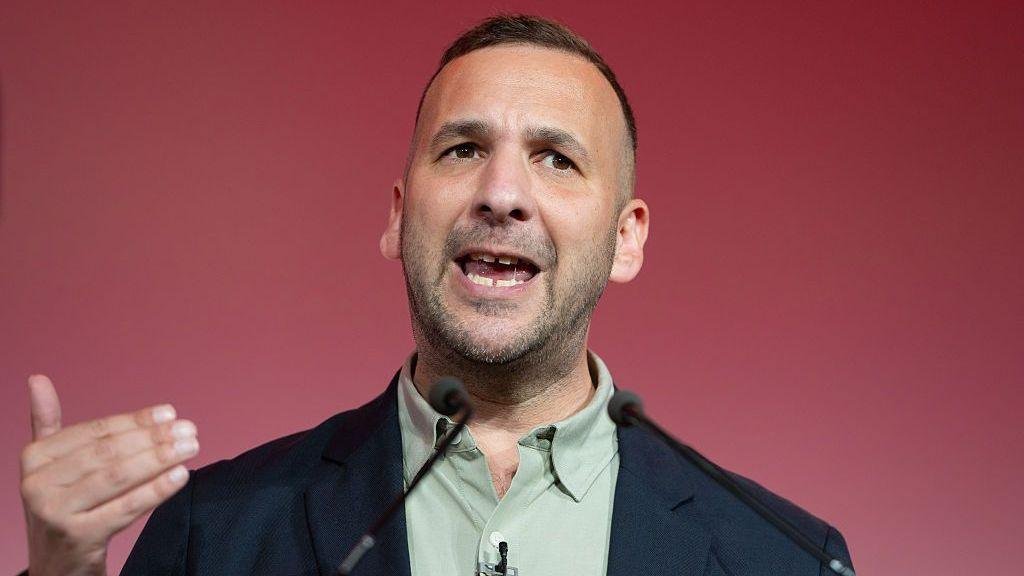
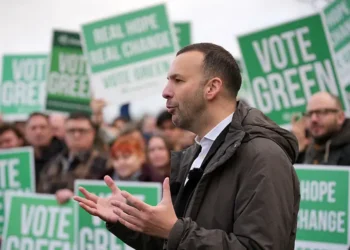
Green Party leader Zack Polanski has said his position as leader of the Green Party of England and Wales does not depend on the outcome of next week’s Holborn and St Pancras by-election, where he is seeking to win the parliamentary seat previously held by former prime minister Keir Starmer.
Polanski described the contest as being extremely close, saying he believed it was currently a roughly 50-50 race. However, he rejected suggestions that losing the seat would automatically threaten his position as party leader.
Speaking ahead of the vote, Polanski said the by-election had significant implications for national politics but insisted that the result would not determine his future as Green leader. He also acknowledged that he wanted to win the constituency and believed the Greens had a realistic opportunity to take the seat.
The contest has attracted considerable attention because Polanski has never served as a member of the House of Commons and is attempting to combine his role as national party leader with a direct campaign for parliamentary office. The by-election is scheduled for 8 October and follows Starmer’s departure from Parliament.

Polanski was formally selected as the Green candidate in September after a local party selection process. The Green Party has presented the contest as an opportunity to increase its representation at Westminster, while Labour is defending a constituency that has historically been strongly associated with the party.
The result is also being closely watched because of the wider political relationship between Labour and the Greens. The Greens have sought to attract voters concerned about climate change, housing costs, public services and other progressive issues, while Labour under Prime Minister Andy Burnham has been attempting to broaden its support among voters on the centre-left and left of British politics.
Polanski has argued that the by-election should be viewed in the context of broader national debates rather than simply as a contest between individual candidates. He has repeatedly highlighted climate policy and the government’s approach to North Sea oil and gas as central issues for voters.
He has criticised Burnham’s approach to future North Sea drilling, particularly the government’s handling of proposed developments including Rosebank and Jackdaw. Polanski argues that continued support for fossil fuel projects would conflict with the scale of action he believes is required to address climate change.
The government has faced competing pressures over energy policy, including concerns about energy security, employment and the transition towards lower-carbon sources. The projects mentioned by Polanski already received licences under the previous Conservative government, meaning any subsequent approval by Labour would not constitute the issuing of new exploration licences.
Polanski has argued that the government’s position will be closely watched by voters who want stronger climate action. He has also sought to connect the issue with broader questions about investment in renewable energy and the creation of new employment opportunities associated with the transition to a lower-carbon economy.
The Green leader has also used the campaign to promote policies focused on the cost of living and housing. Among his priorities are stronger measures on rents, public ownership of utilities and policies aimed at reducing household financial pressures.
At the same time, the by-election has exposed tensions within the Green Party over how its resources should be deployed. Polanski previously sought to have the party’s annual conference postponed so that greater attention and resources could be directed towards the Holborn and St Pancras campaign. The proposal was rejected by the party’s executive committee.
The decision illustrated the competing demands facing a political party preparing for a national conference while simultaneously fighting a high-profile parliamentary contest. For Polanski, the campaign represents an opportunity to enter Parliament and strengthen his ability to challenge government policy directly from the Commons.
He has also argued that there can be advantages to leading a political party without being an MP, pointing to the ability to campaign nationally and maintain a focus outside Westminster. However, he has said that entering Parliament would provide another platform from which to scrutinise and challenge the Labour government.
The question of Polanski’s leadership has nevertheless become part of the political discussion surrounding the by-election. Some senior Green figures have privately expressed concern about whether the party’s increased membership and support in national polling have translated into sufficient organisational strength at constituency level.
The Greens have experienced growth in membership and electoral support in recent years, but converting that support into parliamentary representation remains a central challenge for the party. A by-election in a high-profile London constituency therefore carries significance beyond the immediate result.
Polanski has rejected the idea that his leadership should be judged solely by whether he becomes an MP. His comments indicate that he intends to continue leading the party regardless of the result, while recognising that the campaign could influence perceptions of the Greens and their position within Britain’s wider political landscape.
He has also sought to distinguish the Green Party’s approach from Labour’s policies under Burnham. Polanski argues that voters should judge governments by actions rather than promises and has questioned whether Labour’s stated ambitions on climate, social policy and public services will translate into immediate measures.
Burnham has presented his government as pursuing a different approach to the previous Labour administration, with greater emphasis on public services, regional government and economic intervention. The Greens have welcomed some areas of that agenda while criticising Labour on issues including energy policy and its approach to the Middle East.
Polanski has also referred to recent protests involving supporters of Palestine Action and arrests outside the Labour Party conference. He has used the issue to argue that there is a gap between statements made by Labour politicians on the conflict in Gaza and the government’s broader approach to protests and security.
Another contentious issue facing the Greens is a motion at the party’s annual conference concerning Zionism. The proposal has generated disagreement within the party, including concern among some Jewish Green members about how the motion could affect their participation and relationship with the party.
Polanski has said the motion is not among his immediate priorities, placing greater emphasis on the cost of living, public ownership, climate policy and the situation in Gaza. He has also said that the motion would not result in disciplinary action against Jewish members simply because they attend a synagogue associated with Zionism.
The debate has nevertheless created another challenge for the party leadership during an already significant period. The annual conference provides a platform for members to debate policy, but disagreements over the motion have highlighted tensions over the party’s approach to Israel and Palestine.
For Polanski, the immediate focus remains the Holborn and St Pancras campaign. He has repeatedly argued that the constituency is competitive and that voters have an opportunity to send a Green representative to Parliament.
The election will also provide a snapshot of how voters in the constituency respond to Labour’s change of leadership and the Greens’ recent expansion. The result may offer information about the level of support each party can mobilise in a constituency with a politically diverse electorate.

However, the wider implications of the result will depend on how it is interpreted by the parties themselves and whether the campaign’s issues remain prominent after polling day.
For Polanski, the central message is that his leadership is not conditional on securing a parliamentary seat. He has made clear that he wants to win the by-election but maintains that his responsibility as Green leader extends beyond the outcome of a single constituency contest.
With polling day approaching, the contest is therefore being watched both as a parliamentary election in its own right and as an important moment for the Green Party’s developing role in British politics. The result will determine whether Polanski enters the Commons, while the party’s longer-term direction will continue to depend on its membership, elected representatives, policy debates and future electoral performance.
Related News:
 Three-Quarters of England’s Riverbanks Still Off Limits
 Scotland’s Climate Plans Face Scrutiny Over ‘Science Fiction’ Targets
 NHS Safety Fears as Nurses Cover Doctor Gaps
 Tractor Breakdown Tests Lincolnshire Farmers
 UK Schools Struggle as Classrooms Top 40C
 Burnham unveils £65m drought aid for farmers
 Edinburgh Glasshouses Reopen After Major Restoration
 England’s Special Needs Support Faces Breaking Point
 Water firms may avoid fines under UK water reform plan
 UK Ministers Drop Foreign Student Targets for Global Education Push
 No Gas Boiler Ban as UK Warm Homes Plan Backs Heat Pumps
 SEND Plan Gains Cautious Support Amid England Schools’ Workload Concerns
 Student Loan Crisis Sparks Outrage Among Graduates in England
 Net Zero Cheaper Than One Fossil Fuel Crisis, UK Told
 UK Records Earliest Spring as Nature Awakens Fast
 Kezia Dugdale Warns of Possible Reversal of Equal Rights Gains
 Canadian astronaut French words ease language row
 Crackdown Backfires on UK Climate Protesters
 Reform UK funding: mystery billionaire revealed
 Older Than Dinosaurs: Secrets of Mayfly Dance Revealed
 Capitalism ‘Suicidal’, Warns Petro at Climate Summit
 John Terry Faces Backlash Over Political Posts
 UK may ban protests amid rising antisemitism fears
 Labour Members Turn Against Starmer Leadership
 Britons Build Emergency Supplies Amid Rising Fears
 UK Faces Mass Water Shortages by 2055, Lords Warn
 Sycamore Gap Artwork Chosen After Public Vote
 Farage and Reform UK Reshape British Politics
 Starmer Leadership Under Pressure After Setbacks
 Public Confidence in University Degrees Plummets in the UK
 School Bosses Face Strict Pay Cap
 UK Nations Brace for Potential Breakup Amid Reform Surge
 British Teens in EU Face Soaring UK University Fees
 UK Seas Face Extreme Heatwave as Global Temperatures Surge
 London Tube Heat Reaches Dangerous Levels
 Cambridge Professor Jason Arday Found Dead at Home
 London’s 2026 ‘Great Stink’ Raises Sewer Concerns
 Battery Fires Cost UK Recycling Industry £1bn
 Ghent Professors Questioned Cofnas Appointment
 RAF Barnham Protests Fuel Tensions in Norfolk Town
 Exeter Approves Saudi Military Training Partnership
 Internal Exclusions Surge in England’s Schools
 Green Leader Targets Starmer’s Former Seat
 UK Subsidence Claims Surge After Record-Breaking Summer
 Masked Protesters Bring Dover Port Traffic to Standstill
 Councils spend £125m on illegal children’s care
 Patriot Platform Raises Concern Across Britain
 Reform UK Receives Record £36m Donation From Crypto Billionaire
 Thames Water Revises Oxfordshire Mega-Reservoir Plan
 Election Candidate Abuse Raises Alarm in England
 Mayors Could Gain Greater Powers Over Water Firms
 Mahmood Warns Far Right Over Asylum Protests
 Disabled Travellers Seek Fairer UK Care Rules
 Lib Dems Prepare for Election Amid Reform Challenge
 Headteachers Warn New Ofsted System Is Harming Wellbeing
 Labour Apprenticeship Scheme Faces Slow Start
 UK Reviews Hague Child Abduction Cases Involving Abuse
 King Refers Jamaica Slavery Petition to Privy Council
 Far-Right Activist Slashes Dinghy in Channel
 Elif Eralp Emerges as Berlin’s Next Political Force
 Norfolk Broads Housing Levy Faces Environmental Criticism
 Far-Right Activist Arrested After Channel Dinghy Incident
 Nepal PM calls deadly flood a global climate warning
 Labour Urged to Rebuild Progressive Coalition
 Portadown protest ends after tense Orange Order standoff
 Free Speech Emerges as Key UK Election Issue
 Three Die in Channel Crossing Attempt Near France
 Burnham Opens Debate on Pension Triple Lock for Care
 New UK Homes in Flood Zones Face Insurance Risk
 French Student Protests Escalate Into Violent Clashes
 UK University Strikes Spread as Financial Pressure Grows
 Burnham Opens Door to Possible UK Return to EU
 Drumcree Talks Falter as Legal Challenge Deepens
 UK-France Returns Deal Faces Expiry as Talks Stall
 Green Party faces dispute over Zionism motion
 Senators warn US childcare policies could raise costs
 Hundreds of UK prisoners released early amid overcrowding
 Drumcree Talks End Without Agreement Ahead of Appeal
 Badenoch Raises Prospect of 2027 UK Election
 French School Protests Escalate as 400 Schools Close