Published: 24 October 2026. The English Chronicle Desk. The English Chronicle Online
A fire has engulfed Adolf Hitler’s former mountain retreat, the Eagle’s Nest, in Bavaria, prompting a major emergency response and the temporary detention of a suspect by German police. Around 200 firefighters were deployed to battle the blaze at the historic site, which stands high above the Bavarian Alps in one of southern Germany’s most remote and difficult-to-access locations.
The fire broke out at the Kehlsteinhaus, the mountain residence commonly known as the Eagle’s Nest, on the summit of Obersalzberg at an altitude of approximately 1,834 metres. The location, combined with the severe weather and difficult terrain, created major challenges for emergency crews attempting to reach and contain the flames.
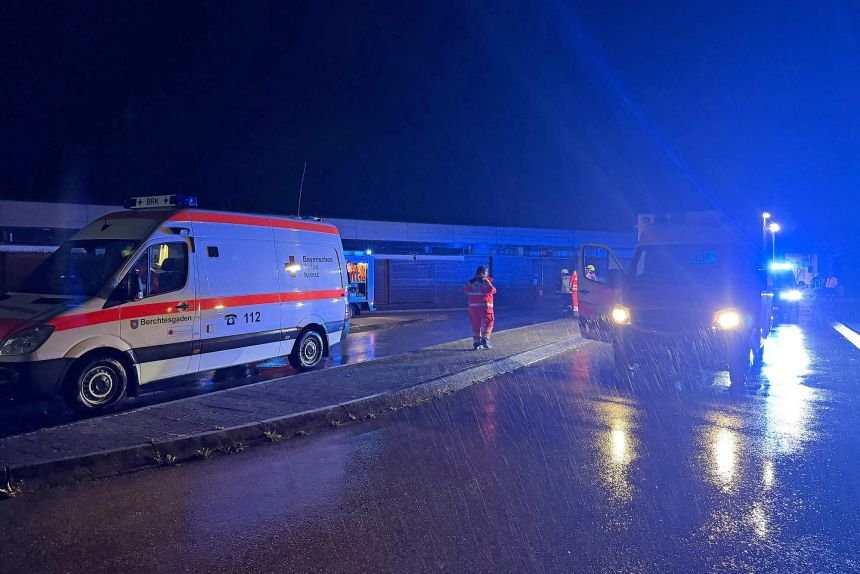
German police said firefighters saw flames rising high into the night sky as they approached the site. When they arrived, the building was already completely ablaze. Despite the intensity of the fire, authorities said nobody was injured and firefighters found no one inside the building.

A suspicious person was taken into temporary custody, police said, while investigators continued to examine the circumstances surrounding the incident. Authorities have not publicly identified the individual or confirmed that the person was responsible for the fire.
German media reports have suggested that investigators suspect arson, although police have not yet announced a definitive cause. Officials are expected to provide further information as the investigation progresses.
The emergency response began after a smoke detector triggered a fire alarm at approximately 9.50pm local time on Friday. The alert immediately brought emergency services into action, but reaching the building proved difficult because of its remote position high in the Alps.
Police spokesperson Lisa Maier said firefighters had to work under particularly demanding conditions. Access to the building required the use of heavy breathing apparatus, while the high altitude and weather conditions complicated efforts to fight the flames.
Snow was falling over the Alpine peak as the fire continued into the early hours of Saturday. Images from a weather camera showed the historic building still surrounded by flames, creating a dramatic scene against the dark, snow-covered mountain landscape.
Authorities subsequently blocked access to the road leading to the retreat. Emergency crews and investigators were given priority access while police secured the surrounding area and continued examining the site.
According to police, no one was found inside the building. The absence of casualties was one of the few positive developments in an incident that has raised significant concern because of the site’s historical importance.
Police said a suspicious person had been detained temporarily, while German media reported that officers had arrested a motorcyclist encountered while travelling towards the scene. Investigators have not yet established publicly whether the motorcyclist is connected to the fire.
A police news conference was expected later on Saturday, when authorities were due to provide additional information about the investigation and the circumstances leading to the blaze.
The Eagle’s Nest occupies a complicated place in Germany’s history. Constructed between 1937 and 1938 during the Nazi era, the building was developed as part of a complex associated with Hitler and the leadership of the Third Reich. Its existence remains closely connected to one of the darkest periods of modern European history.
The Nazi regime was responsible for the systematic persecution and murder of millions of people, including six million Jews during the Holocaust. Roma people, LGBTQ people, political opponents, Communists and other groups were also persecuted, imprisoned and murdered under Nazi rule.
The Eagle’s Nest was designed as a monument to Hitler’s power and was incorporated into the wider Nazi complex at Obersalzberg. Despite its symbolic importance, Hitler himself reportedly visited the building relatively rarely.
The site nevertheless became associated internationally with the Nazi leadership because of its striking location and its connection to the regime. Unlike many other structures associated with the Third Reich, the Eagle’s Nest survived the Second World War without being destroyed.
That survival eventually led to a difficult question for postwar Germany: how should places associated with Nazi crimes and dictatorship be preserved, interpreted and presented to the public?
Since 1952, the building has operated in a very different role. It has housed an exhibition explaining the site’s Nazi history and has also operated as a restaurant, turning the former retreat into a destination for visitors travelling through the Bavarian Alps.
The historical exhibition has formed part of Germany’s broader effort to confront the legacy of the Nazi period. Rather than simply presenting the mountain retreat as a tourist attraction, the site has sought to explain its historical context and its connection to the dictatorship that plunged Europe into war and carried out the Holocaust.
The fire therefore carries significance beyond the physical damage to an old building. Any destruction at a site so closely associated with Nazi history inevitably raises questions about the preservation of historical evidence and the protection of locations connected with the country’s past.
The authorities now face the task of determining whether the fire was accidental or deliberately started. If investigators confirm arson, the case could take on additional significance because of the building’s historical symbolism.
At the same time, officials must assess the extent of the structural damage and determine whether portions of the building can be preserved. The remote mountain setting may make both the investigation and any future restoration considerably more complicated.
The response also highlights the continuing difficulties involved in maintaining historic sites in challenging environments. The Eagle’s Nest stands at a high elevation where winter conditions can rapidly change and where access for emergency vehicles is significantly more difficult than at locations in populated areas.
For firefighters, the priority during the incident was to control the blaze and prevent further danger. For investigators, the focus has now shifted towards identifying how the fire began and determining whether the detained individual has any connection to it.
The incident comes at a time when the historical memory of the Nazi era remains an important part of Germany’s public life. Across the country, museums, memorials and historic sites continue to educate visitors about the consequences of dictatorship, war and genocide.

The Eagle’s Nest itself has become an unusual example of how a location created to glorify Nazi power can later be transformed into a place where that history is examined critically. Its survival after the war allowed subsequent generations to encounter the physical setting associated with the regime while also learning about the crimes committed in its name.
For now, the full consequences of Saturday’s fire remain unclear. Investigators must establish the cause, assess the damage and determine whether anyone should face criminal charges. Authorities have stressed that the investigation remains ongoing.
The immediate fact, however, is that a building once intended as a symbol of Nazi power has again become the centre of international attention, this time because of a devastating fire at a remote Alpine summit. As police continue their investigation, questions about the cause of the blaze and the future of the historic site are likely to remain at the forefront of public attention.
Related News:
 French Student Protests Escalate Into Violent Clashes
 French School Protests Escalate as 400 Schools Close
 France Promises 3,000 Teachers as Student Protests Grow
 French Police Face Scrutiny Over Injured Teenagers
 Macron Condemns Violence as France Faces 2,400 Arrests
 Milan Luxury Stores Shut as Italy Plans Troop Deployment
 France to Deploy 70,000 Police Amid Unrest Fears
 Two Dead in Adelaide Airport Plane Crash Fire
 China Fireworks Factory Blast Kills 21 in Hunan
 France Faces Record Presidential Crowded Race Amid Far-Right Surge
 Pope Meets Families in Italy Toxic Waste Zone
 Irish Gangland Figure Fails in Dublin Election Bid
 Dreyfus Statue Finally Gets Permanent Paris Home
 Teen Charged After Layla Jeffery Found Dead
 England and Norway Fans Turn Miami Into World Cup Carnival
 Deadly TikTok Driving Trend Alarms Ireland
 Ukraine Villagers Demand Answers After Deadly Arms Depot Strike
 British Man Faces Deportation Threat in Sweden
 Masked Protesters Bring Dover Port Traffic to Standstill
 Renoir Museum hit by €9m art theft on French Riviera
 British widow says deportation from Sweden feels like a death sentence
 Gaza Strike Kills Child and Paramedic
 South Africa’s Femicide Crisis Deepens
 Briton Faces Cyprus Court Over Son’s Fatal Fall
 King Refers Jamaica Slavery Petition to Privy Council
 Paris child pickpocketing gang leader jailed for eight years
 Greece Pushes for Parthenon Marbles Reunification
 Elif Eralp Emerges as Berlin’s Next Political Force
 Three Die in Channel Crossing Attempt Near France
 Madrid Tent Camp Grows as Spain Housing Crisis Deepens
 Israel-bound Plane Lands in Saudi Arabia After Cockpit Fight
 Pilot Recalls Fight to Save Flydubai Passengers
 Bosnia’s Young People Look Beyond Election Hope
 Latin America women fear rollback of rights
 Spain Sets Snap Election as Housing Crisis Deepens
 Former German Intelligence Chief Arrested Over Espionage
 WHO Says Russia Plague Epidemic Risk Remains Low
 South Sudan Trauma Wards Struggle as Fighting Intensifies
 French Student Protests Grow Despite Government Pledge
 EU Divisions Deepen Over Israel Policy
 Navi Pillay Wins Nobel Peace Prize for Justice
 Three Convicted in Mexico Surfing Trip Murders
 UAE Says Co-Pilot Planned Suicide Attack on Israel
 France Faces Debt Crisis as Protests and Markets Clash
 French Students Protest Poor Conditions in Paris Suburbs
 Greta Thunberg Backs French Students in School Protests
 Albania’s Rama Defies Calls to Quit Amid Student Protests
 Trump Slams Ukraine Strikes as Russia Ceasefire Collapses
 Mexican Court Sentences Three Men to 158 Years Each
 Climate Change Makes Tap Water Unsafe in Arctic Norway
 Marseille Activist Defies France’s Powerful Drug Gangs
 Zelenskyy Accuses US of Delaying Ukraine Missile Supplies
 Zelenskyy Says US Failed to Warn Kyiv of Russian Strikes
 Helen Haines Loses Both Legs After Alleged Attack
 French Fast-Track Courts Face Backlash Over Riot Cases
 Milan Braces for Unrest as Debate Intensifies Over Lost Generation
 Greene Pushes Epstein Files Amid Trump Fallout
 American Mother Extradited From UK to U.S. on Murder Charges
 SA Police Intensify Search in Gus Lamont Case
 El Mencho Killed as Mexico Faces Violence
 Kelly Wilkinson Inquest Reveals Bail Failure
 Ben Roberts-Smith Denies War Crime Allegations in First Statement
 Farage and Reform UK Reshape British Politics
 New Footage Revives Peter Falconio Mystery
 Olympus Awaits Unesco Heritage Recognition
 Bayeux Tapestry Revives Franco-British Ties
 Man Arrested in Mississippi Woman’s Death
 British Columbia Sues OpenAI Over School Shooting
 Democrat Says ICE Restricted Detention Camp Oversight
 London Facial Recognition Trial Ends With False Alert
 Gosport Protesters Clash With Police Over Migrant Rescue
 France Schools Protests Draw 250,000 as Police Clash
 South Africa Withdraws Directive on Asylum Applications
 Australian Advocates Seek Subsidised Drugs for PMOS
 Trump Names Katie Zachariah as Next White House Press Secretary
 Elizabeth Struhs Inquest Examines Child Safety Failures
 UK Bill Faces Warning Over Fayed Trafficking Victims
 UK Visa Refusal Threatens Baby’s Family Christmas
 Greens Face Leadership Test as Jordon Steele-John Misconduct Claims Leave Party in Limbo
 Lula Supporters Make Final Push Ahead of Brazil Runoff