Published: 22 October 2026. The English Chronicle Desk. The English Chronicle Online
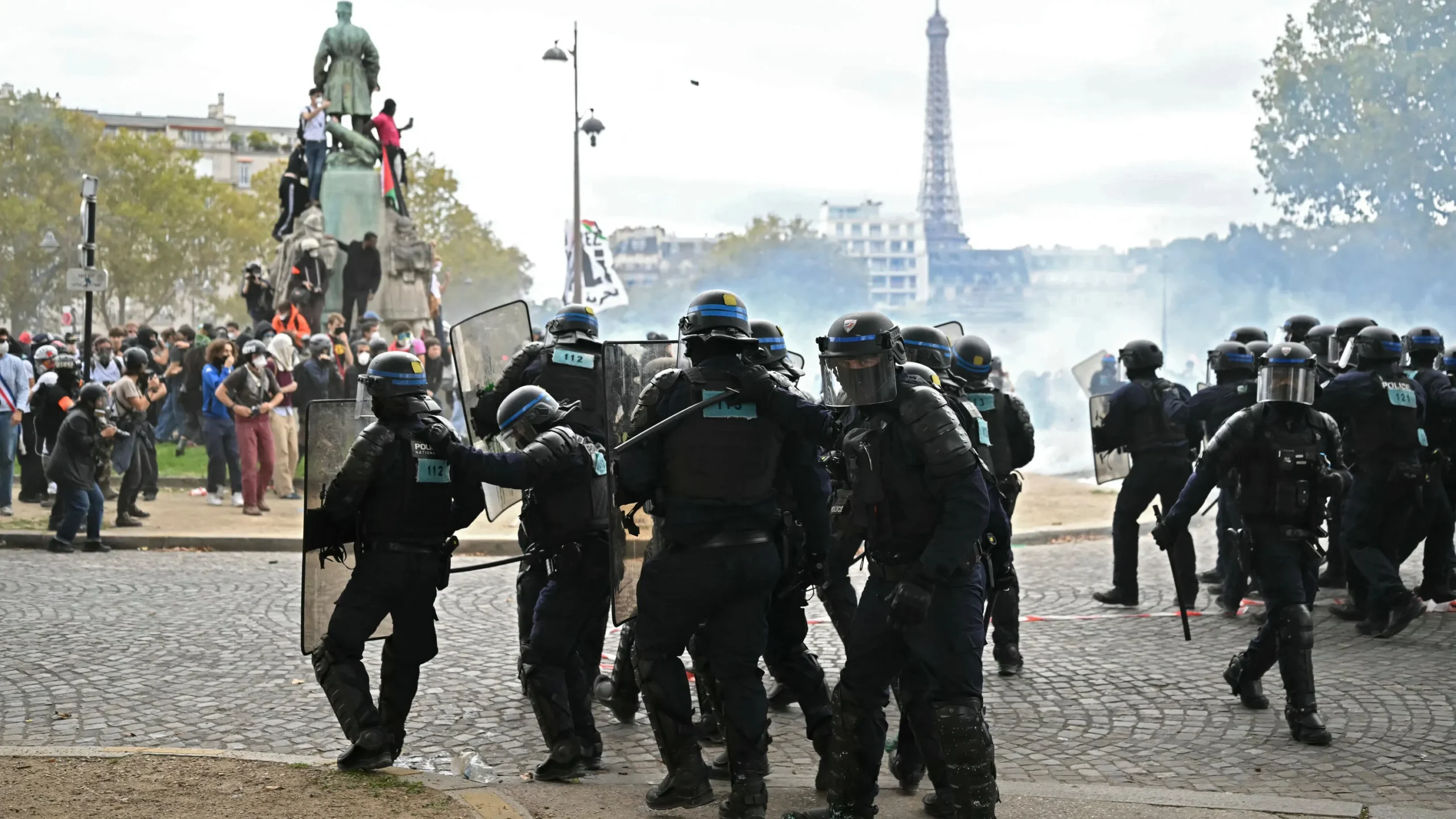
A wave of intense judicial fallout has engulfed the French legal system following a massive crackdown on widespread civil unrest and opportunistic looting that recently swept through major cities across the nation. In courtrooms throughout Paris, Lyon, and peripheral urban centers, defense lawyers, human rights advocates, and overwhelmed judicial officials are voicing deep frustration over the government’s aggressive reliance on expedited legal proceedings to process thousands of detainee cases. While political figures and government ministers continue to demand strict and uncompromising sentences to deter further lawlessness, defense attorneys argue that fast-tracked trials obscure the underlying socioeconomic pressures driving young citizens into chaotic criminal activity, substituting meaningful political solutions with heavy-handed judicial repression.
The scale of the judicial challenge became starkly apparent in the tribunal de Paris, where defense attorneys found themselves confronting an unrelenting stream of defendants processed through the emergency mechanism known as comparution immédiate, or immediate court appearance. Under this fast-track framework, individuals brought into custody can be sent directly to trial within hours or up to three days if held in pre-trial detention. Among those standing before the bench was Awa, an eighteen-year-old student appearing before the judge in a state of visible shock. The young woman was arrested by law enforcement officers at a Paris Metro station following the ransacking of a luxury Yves Saint Laurent boutique on Boulevard Saint Germain, carrying a black balaclava alongside four designer handbags valued at five thousand euros.

Appearing in court wearing the same black garments in which she was apprehended days earlier, Awa appeared utterly overwhelmed by the swift legal process. Clutched by panic and unable to answer routine questions from the bench, she wept uncontrollably while her defense counsel struggled to present a comprehensive defense within the severely compressed timeframes mandated by expedited hearings. Awa represents just one individual among more than two thousand five hundred people arrested nationwide during recent outbursts of street violence and commercial destruction, with over nine hundred detainees subjected to immediate court appearances.
The rapid influx of cases has severely strained court infrastructure, sparking outcry from legal professionals who contend that the accelerated schedule compromises the constitutional right to an adequate defense. The violence itself erupted on the sidelines of organized high-school and trade union demonstrations. While authorized march routes across the capital proceeded without major incident, radicalized elements and opportunists broke away along the fringes. Masked individuals rampaged through municipal streets, setting fire to public infrastructure, burning refuse bins, smashing storefronts, and systematically looting both neighborhood businesses and high-end luxury retailers.
Although initial commentary blamed the destruction on ultra-left political disrupters and ideological agitators, judicial data paints a far more complex picture of those caught up in the sweeps. Officials from the Paris public prosecutor’s office confirmed that the majority of those brought before the courts were opportunistic delinquents driven by mundane economic motives rather than clear political manifestos. Furthermore, statistics indicate that sixty-eight percent of those taken into custody in the capital were young adults rather than high-school teenagers, highlighting a broad demographic mix of unemployed youth, working-class laborers, and students with no prior criminal histories.
Inside the crowded courtrooms, the diverse backgrounds of the defendants defied simple categorization. In Paris, law enforcement escorted individuals like Aboubacar, a twenty-three-year-old worker employed by a prominent charitable foundation, and Boumedine, a twenty-five-year-old social media content creator, alongside delivery drivers and university students. Similar scenes unfolded in Lyon, where courts handled cases involving young restaurant workers caught with stacks of stolen designer apparel, alongside freelance artists accused of targeting law enforcement vehicles with makeshift projectiles. The Paris public prosecutor noted that the vast majority of those brought before judges had never been convicted of a criminal offense prior to these events.
In one prominent case, a thirty-eight-year-old construction worker and a thirty-four-year-old logistics employee were apprehended inside a major department store luxury concession as emergency lockdown grills closed around them. Found in possession of thirty-seven thousand euros worth of high-end consumer merchandise, the pair received sentences combining partial custody arrangements and electronic monitoring. In another case, a nineteen-year-old student returning home from an authorized march was arrested with stolen designer knitwear. Handed a fourteen-month suspended sentence, the student admitted to succumbing to moment-by-moment peer pressure, expressing deep regret over his impulsive actions.
The uncompromising judicial stance reflects explicit directives from the Ministry of Justice. Justice Minister Gérald Darmanin extended the allowable duration of police custody from forty-eight to seventy-two hours and publicly instructed magistrates to show ruthless firmness toward rioters and vandals. In response to these ministerial directives, a coalition of one hundred and twenty-five defense lawyers issued an open letter to the president of the Paris bar association, sharply condemning what they described as an ultra-repressive turn by prosecutorial authorities. The attorneys asserted that summary trials must not be used as a political weapon to suppress or bypass genuine social anger rooted in systemic economic distress.
The tension between strict judicial enforcement and social reality culminated in Awa’s emotional hearing in Paris. Defense attorney Hamma Bouchareb revealed that her client, who was studying international business, had recently escaped a severely abusive home environment and was living in sheltered accommodation. Bouchareb argued that Awa’s theft was driven by desperation and poverty rather than malicious intent, urging the court to recognize that the outbreak of social anger requires a comprehensive political response addressing cost-of-living crises rather than purely punitive legal sanctions.
Acknowledging the tragic circumstances surrounding the case, the prosecutor declined to seek an immediate custodial sentence. The court ultimately handed down a twelve-month suspended prison sentence, ordering Awa to perform one hundred and forty hours of community service alongside financial penalties. However, as hundreds of similar fast-track cases continue to move through the French court system, the wider debate over judicial fairness, police powers, and the underlying causes of urban unrest shows no sign of abating.

The vast scale of the judicial emergency became starkly apparent inside courtroom number 6.04 at the tribunal de Paris, where defense attorneys found themselves struggling to manage an unrelenting stream of defendants processed through the emergency mechanism known as comparution immédiate, or immediate court appearance. Under this accelerated legal framework, individuals brought into police custody can be dispatched directly to trial within hours of arrest or within three days if held in pre-trial detention, severely compressing the time available for legal counsel to prepare proper defenses.
Among those standing before the bench was Awa, an eighteen-year-old student who appeared before the judge in a state of visible trauma and utter bewilderment. The young woman had been apprehended by law enforcement officers at a nearby Paris Metro station following the systematic ransacking of a luxury Yves Saint Laurent boutique situated on Boulevard Saint Germain on the city’s Left Bank. Upon her arrest, officers searched her backpack and discovered a black balaclava, black protective gloves, and four stolen YSL designer handbags carrying a combined commercial value of five thousand euros.
Related News:
 French Student Protests Escalate Into Violent Clashes
 French School Protests Escalate as 400 Schools Close
 Macron Condemns Violence as France Faces 2,400 Arrests
 Irish Gangland Figure Fails in Dublin Election Bid
 Armed Suspect Attacks Ohio Governor Candidate
 Ministers Condemn Far-Right Unrest in Portsmouth
 Patriot Platform Raises Concern Across Britain
 Texas Transfers Raise Fears for Migrant Children
 Memphis Questions National Guard Crime Surge
 Mahmood Warns Far Right Over Asylum Protests
 UK Reviews Hague Child Abduction Cases Involving Abuse
 Democrat Says ICE Restricted Detention Camp Oversight
 King Refers Jamaica Slavery Petition to Privy Council
 Paris child pickpocketing gang leader jailed for eight years
 Far-Right Activist Arrested After Channel Dinghy Incident
 Portadown protest ends after tense Orange Order standoff
 Hundreds of UK prisoners released early amid overcrowding
 Drumcree Talks End Without Agreement Ahead of Appeal
 Latin America women fear rollback of rights
 Gosport Protesters Clash With Police Over Migrant Rescue
 Botstein Quits Bard Amid Epstein Investigation Calls
 NSW Police Bid Delays Inquiry Into Sydney Protest
 ICE Agent Shoots Man in New York as Child Escapes Harm
 France Promises 3,000 Teachers as Student Protests Grow
 South Africa Withdraws Directive on Asylum Applications
 EU Divisions Deepen Over Israel Policy
 Navi Pillay Wins Nobel Peace Prize for Justice
 US Execution Livestream Plan Sparks Global Outrage
 Recruitment Boss Accused of Leading Doxxing Campaign
 England and Wales Begin Second Wave of Early Prison Releases
 Camera Discovery Triggers Navy Ship Investigation
 French Police Face Scrutiny Over Injured Teenagers
 Marseille Activist Defies France’s Powerful Drug Gangs
 Milan Luxury Stores Shut as Italy Plans Troop Deployment
 Helen Haines Loses Leg in Alleged Targeted Attack
 Zelenskyy Accuses US of Delaying Ukraine Missile Supplies
 Helen Haines Loses Both Legs After Alleged Attack
 Jess Phillips Urges Supreme Court to Reverse Abuse Ruling
 French Taxi Driver Cleared in David Lammy Theft Case After Fare Dispute
 Hungary election: Orbán faces biggest test amid scandal
 Melania Trump Epstein remarks spark survivor backlash
 Barrister Criticises Trial After Suicide Case Verdict
 Immigration Judges Fear Pressure in Trump Era
 Le Pen’s Popularity Holds Despite Conviction
 Westminster Council Threatens Charing Cross Soup Kitchen
 BBC Warned About Missing Clothes of Murder Victim
 Ukraine Villagers Demand Answers After Deadly Arms Depot Strike
 Councils spend £125m on illegal children’s care
 Israel Accused of Undermining Palestinian Life
 Texas Charges Seven Noncitizens in Voting Crackdown
 Disabled Travellers Seek Fairer UK Care Rules
 Clancy Defense Seeks Inquiry Into Lone Juror
 Japan PM Backs International Criminal Court
 Free Speech Emerges as Key UK Election Issue
 Madrid Tent Camp Grows as Spain Housing Crisis Deepens
 Tennessee Set to Execute Woman After Clemency Denied
 Cornell Fraternity Assault Investigation Reopened
 London Facial Recognition Trial Ends With False Alert
 Burnham Opens Door to Possible UK Return to EU
 Drumcree Talks Falter as Legal Challenge Deepens
 Badenoch Raises Prospect of 2027 UK Election
 New Prosecutor Takes Over Cornell Assault Case
 Bosnia’s Young People Look Beyond Election Hope
 Palace Rejects Funding Andrew’s Police Legal Challenge
 Police accused of failing abuse victims
 Royal Navy Sailor Charged With Alleged Spying
 Sri Lanka Ex-First Lady Arrested Over Donation Probe
 Delhi Tightens Security Ahead of Election Protest
 British Military School Abuse Victims Denied Justice
 French Students Protest Poor Conditions in Paris Suburbs
 Elizabeth Struhs Inquest Examines Child Safety Failures
 Greta Thunberg Backs French Students in School Protests
 Iranian Woman Faces Death Sentence Over Social Media Post
 Ukrainian Soldier Faces Trial Over Nord Stream Blast
 Senegal LGBTQ+ Crackdown Drives People Into Hiding
 Gadi Eisenkot: Israel’s Anti-Netanyahu Challenger
 UK Bill Faces Warning Over Fayed Trafficking Victims
 UK Pledges Stronger Protections for Disabled Air Passengers
 Zelenskyy Says US Failed to Warn Kyiv of Russian Strikes
 Omar Claims US Raid on Residence Was Meant to Intimidate